

Dessert sauce
Common food

Photo: Wikipedia
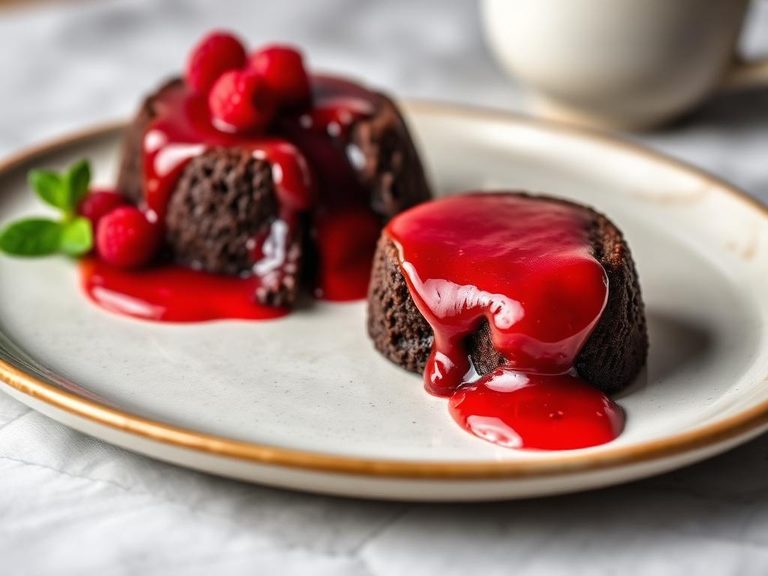
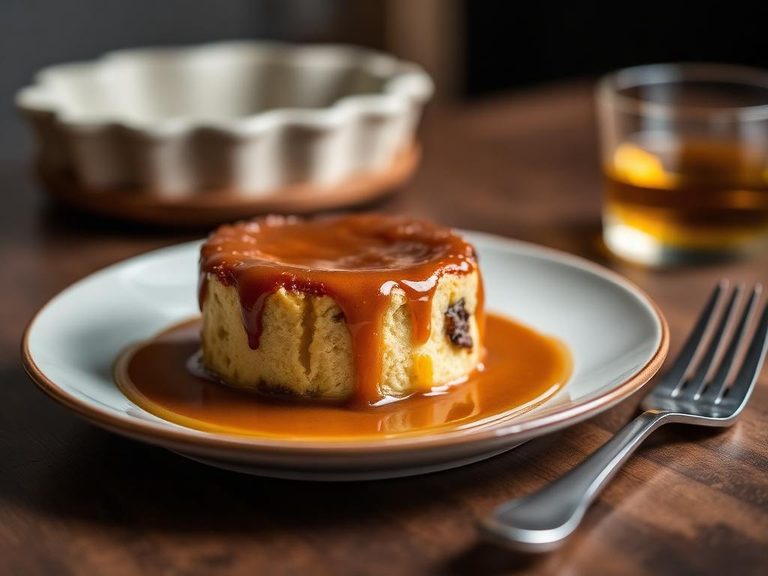
Dessert sauce is a thick, glossy, and intensely sweet liquid condiment, typically with a smooth, pourable texture that ranges from syrupy to custard-like. It's a concentrated burst of flavor, often made from sugar, cream, butter, or fruit purées, designed to elevate and finish a dish. Nutritionally, it's a high-energy, sugar-dense addition, providing quick calories with minimal protein or fiber.
Calorie split: 0% protein · 52% carbs · 48% fat
↓ Full nutrition💚 Why it's loved
People love dessert sauce for its transformative power, capable of turning a simple bowl of ice cream or a plain cake into a decadent treat. Its versatility allows it to be paired with countless desserts, from warm pies to cold parfaits, making it a beloved staple for adding a final, luxurious touch.
⚠️ Watch-outs & how to enjoy it better
The high sugar content can lead to rapid blood-sugar spikes, making it a concern for individuals managing diabetes or those monitoring glycemic load. To counteract this, pair it with a source of protein or healthy fat (like nuts or Greek yogurt) to slow sugar absorption, and practice strict portion control. Some sauces may also contain common allergens like dairy, nuts, or soy.
Key benefits
- Provides a quick source of energy from carbohydrates.
- Enhances the palatability and enjoyment of otherwise plain foods.
- Offers a wide variety of flavors, from chocolate to fruit to caramel.
- Can be used in small amounts to add a sense of indulgence and satisfaction.
- Serves as a versatile component in both home cooking and professional pastry.
🍽️ Popular dishes




🌍 Where it's eaten
💡 Did you know?
The classic French 'sauce anglaise' (a vanilla custard sauce) is technically a dessert sauce, but its base recipe is identical to that of a crème anglaise, which is also used as a base for ice cream and other frozen desserts.
Full nutrition (USDA data · scales with serving)
| Water | 72.0 g |
| Energy | 150 kcal |
| Protein | 0.09 g |
| Total lipid (fat) | 8.0 g |
| Carbohydrate, by difference | 19.5 g |
| Fiber, total dietary | 0.00 g |
| Total Sugars | 17.1 g |
| Calcium, Ca | 5.0 mg |
| Iron, Fe | 0.03 mg |
| Magnesium, Mg | 1.0 mg |
| Phosphorus, P | 2.0 mg |
| Potassium, K | 3.0 mg |
| Sodium, Na | 103 mg |
| Zinc, Zn | 0.02 mg |
| Copper, Cu | 0.01 mg |
| Selenium, Se | 0.20 ug |
| Vitamin C, total ascorbic acid | 0.00 mg |
| Thiamin | 0.00 mg |
| Riboflavin | 0.00 mg |
| Niacin | 0.00 mg |
| Vitamin B-6 | 0.00 mg |
| Folate, total | 0.00 ug |
| Folic acid | 0.00 ug |
| Folate, food | 0.00 ug |
| Folate, DFE | 0.00 ug |
| Choline, total | 1.8 mg |
| Vitamin B-12 | 0.00 ug |
| Vitamin B-12, added | 0.00 ug |
| Vitamin A, RAE | 73.0 ug |
| Retinol | 71.0 ug |
| Carotene, beta | 16.0 ug |
| Carotene, alpha | 0.00 ug |
| Cryptoxanthin, beta | 1.0 ug |
| Lycopene | 0.00 ug |
| Lutein + zeaxanthin | 0.00 ug |
| Vitamin E (alpha-tocopherol) | 0.00 mg |
| Vitamin E, added | 0.00 mg |
| Vitamin D (D2 + D3) | 0.00 ug |
| Vitamin K (phylloquinone) | 0.70 ug |
| Alcohol, ethyl | 0.00 g |
| Caffeine | 0.00 mg |
| Theobromine | 0.00 mg |
Fat & fatty acid profile (per 100g)
| Fatty acids, total saturated | 4.4 g |
| SFA 4:0 | 0.20 g |
| SFA 6:0 | 0.14 g |
| SFA 8:0 | 0.08 g |
| SFA 10:0 | 0.18 g |
| SFA 12:0 | 0.21 g |
| SFA 14:0 | 0.69 g |
| SFA 16:0 | 2.0 g |
| SFA 18:0 | 0.71 g |
| Fatty acids, total monounsaturated | 1.6 g |
| MUFA 16:1 | 0.10 g |
| MUFA 18:1 | 1.4 g |
| MUFA 20:1 | 0.01 g |
| MUFA 22:1 | 0.00 g |
| Fatty acids, total polyunsaturated | 0.24 g |
| PUFA 18:2 | 0.22 g |
| PUFA 18:3 | 0.03 g |
| PUFA 18:4 | 0.00 g |
| PUFA 20:4 | 0.01 g |
| PUFA 20:5 n-3 (EPA) | 0.00 g |
| PUFA 22:5 n-3 (DPA) | 0.00 g |
| PUFA 22:6 n-3 (DHA) | 0.00 g |
| Cholesterol | 23.0 mg |
FAQ
What's the difference between a dessert sauce and a syrup?
Dessert sauces are generally thicker, richer, and often contain dairy, eggs, or pureed fruit, giving them a more complex flavor and texture. Syrups are typically thinner, sugar-based liquids (like maple syrup or simple syrup) and are more about pure sweetness than creamy or fruity depth.
Can I make dessert sauce ahead of time?
Yes, many sauces (like caramel, chocolate, or fruit-based) can be made in advance and refrigerated for several days. Some may thicken upon chilling and may need gentle reheating or a splash of liquid to restore the proper consistency.
How do I fix a broken or grainy sauce?
For a broken cream-based sauce, try whisking in a teaspoon of cold water or cream. For grainy caramel, you can add a small amount of water and reheat gently, stirring constantly, to help re-dissolve the sugar crystals.
Nutrient density (calculated · NRF9.3)
Nutrient Rich Foods index: beneficial nutrients (protein, fiber, vitamins, minerals) minus saturated fat, added sugar & sodium, per 100 kcal.
NRF9.3 index — Fulgoni, Keast & Drewnowski, 2009. Computed from USDA nutrients.
Weight-loss friendliness (composite index)
Energy density 1.50 kcal/g · 0% calories from protein · 0.0 g fiber · 17.1 g sugar per 100 g.
Composite of energy density (Rolls et al., 1999), protein & fiber satiety, minus sugar. A calculated heuristic — ranks satiety-per-calorie, not a clinical measure.
Dietary load (calculated from USDA values)
Potential renal acid load. Positive = acid-forming, negative = alkaline-forming.
Sodium-to-potassium ratio: 34.33 (lower is better — aim for ≤ 1)
Sodium:potassium per WHO potassium guidance. Computed from USDA nutrients.