

Cornmeal mush, fat added
Common food

Photo: Wikipedia
Cornmeal mush is a comforting, porridge-like dish made by simmering cornmeal in water or milk until it thickens into a creamy, spoonable consistency. Its texture is smooth yet slightly grainy, with a mild, earthy corn flavor that becomes more pronounced when served warm. With just 71 kcal per 100g, it's a light, low-calorie base that provides quick energy from its carbohydrate content.
Calorie split: 6% protein · 70% carbs · 24% fat
↓ Full nutrition💚 Why it's loved
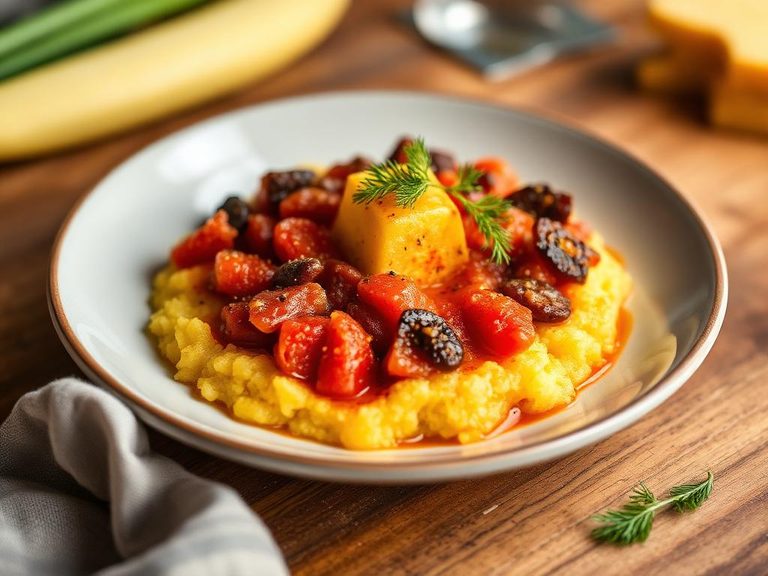
People love cornmeal mush for its nostalgic, home-cooked warmth and its chameleon-like ability to adapt to any meal—sweetened with maple syrup for breakfast or topped with savory gravy for dinner. It's a staple comfort food in many cultures, offering a simple, satisfying canvas for regional flavors.
⚠️ Watch-outs & how to enjoy it better
Its high carbohydrate content can cause blood-sugar spikes if eaten alone, especially for those with insulin resistance. To counteract this, always pair it with a source of protein (like eggs or cheese) or healthy fat (like nuts or avocado) to slow digestion. Those watching sodium should prepare it from scratch rather than using pre-packaged mixes.
Key benefits
- Quick and inexpensive source of energy
- Naturally low in fat and sugar
- Gluten-free, suitable for celiac diets
- Can be easily fortified with vitamins
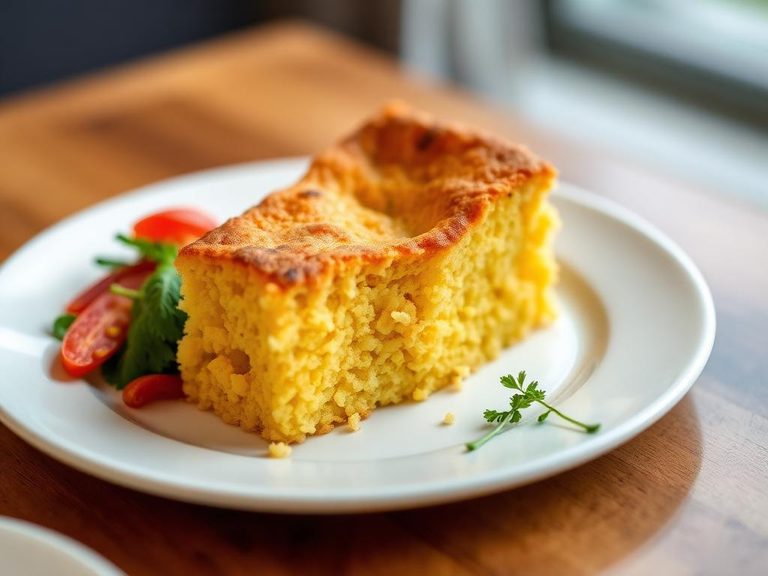
- Versatile base for both sweet and savory meals
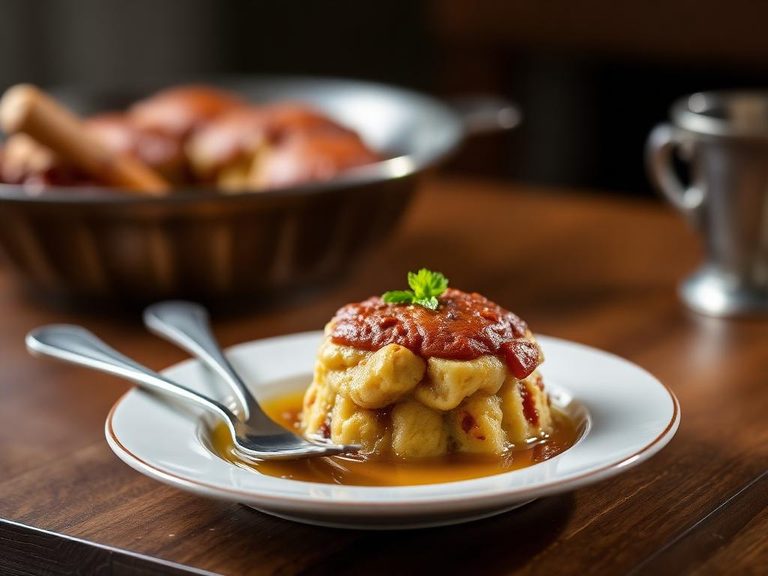
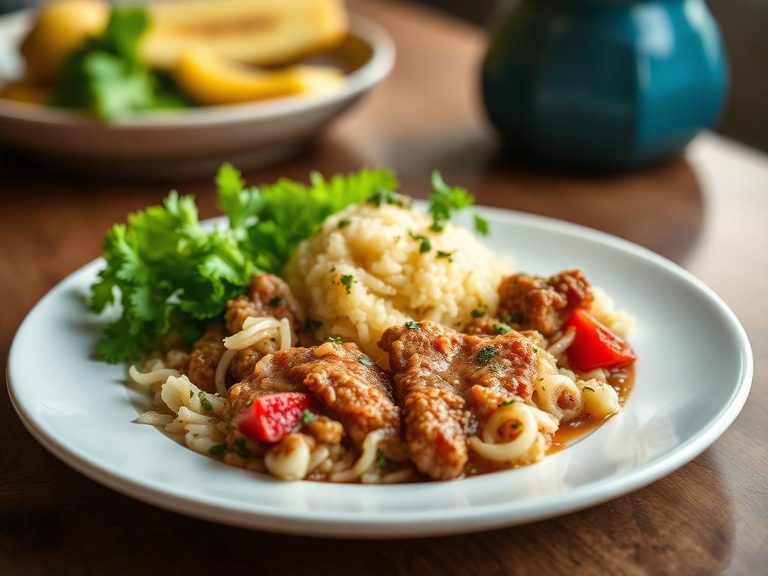
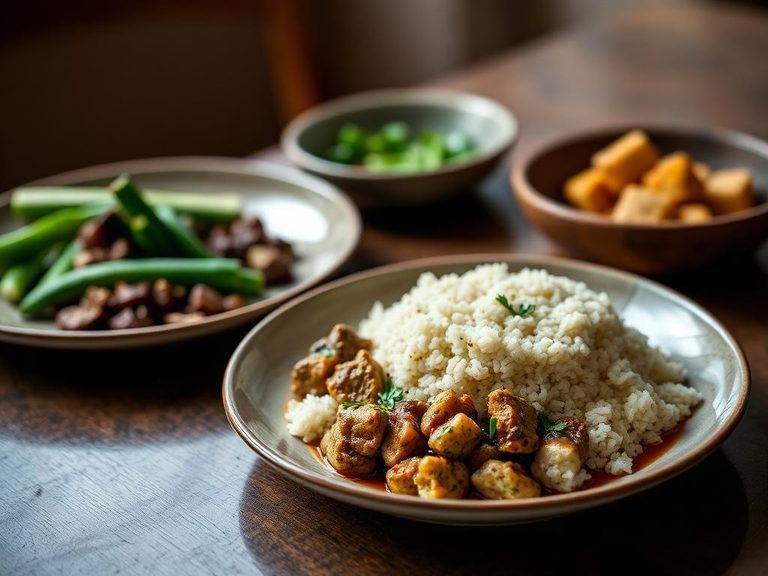
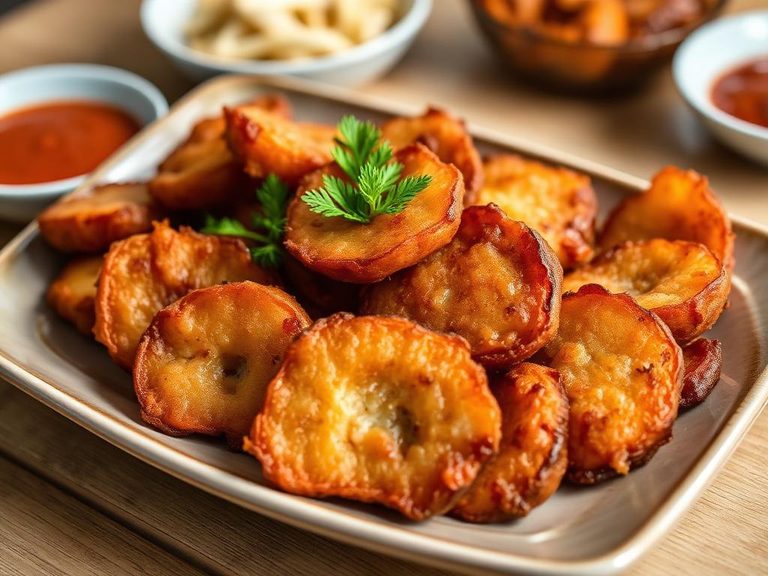
🍽️ Popular dishes
🌍 Where it's eaten
💡 Did you know?
In the 18th-century American colonies, 'hasty pudding' was so ubiquitous it was celebrated in a famous poem by John Adams' wife, Abigail, who wrote, 'I wish our Bashaws would send us a little of their hasty pudding.'
Full nutrition (USDA data · scales with serving)
| Water | 84.4 g |
| Energy | 71.0 kcal |
| Protein | 1.1 g |
| Total lipid (fat) | 1.8 g |
| Carbohydrate, by difference | 12.3 g |
| Fiber, total dietary | 0.60 g |
| Total Sugars | 0.26 g |
| Calcium, Ca | 4.0 mg |
| Iron, Fe | 0.64 mg |
| Magnesium, Mg | 6.0 mg |
| Phosphorus, P | 15.0 mg |
| Potassium, K | 21.0 mg |
| Sodium, Na | 82.0 mg |
| Zinc, Zn | 0.11 mg |
| Copper, Cu | 0.02 mg |
| Selenium, Se | 1.6 ug |
| Vitamin C, total ascorbic acid | 0.00 mg |
| Thiamin | 0.07 mg |
| Riboflavin | 0.05 mg |
| Niacin | 0.69 mg |
| Vitamin B-6 | 0.05 mg |
| Folate, total | 23.0 ug |
| Folic acid | 19.0 ug |
| Folate, food | 3.0 ug |
| Folate, DFE | 36.0 ug |
| Choline, total | 1.6 mg |
| Vitamin B-12 | 0.00 ug |
| Vitamin B-12, added | 0.00 ug |
| Vitamin A, RAE | 18.0 ug |
| Retinol | 16.0 ug |
| Carotene, beta | 21.0 ug |
| Carotene, alpha | 9.0 ug |
| Cryptoxanthin, beta | 0.00 ug |
| Lycopene | 0.00 ug |
| Lutein + zeaxanthin | 226 ug |
| Vitamin E (alpha-tocopherol) | 0.17 mg |
| Vitamin E, added | 0.00 mg |
| Vitamin D (D2 + D3) | 0.00 ug |
| Vitamin K (phylloquinone) | 0.90 ug |
| Alcohol, ethyl | 0.00 g |
| Caffeine | 0.00 mg |
| Theobromine | 0.00 mg |
Fat & fatty acid profile (per 100g)
| Fatty acids, total saturated | 0.71 g |
| SFA 4:0 | 0.03 g |
| SFA 6:0 | 0.02 g |
| SFA 8:0 | 0.01 g |
| SFA 10:0 | 0.02 g |
| SFA 12:0 | 0.03 g |
| SFA 14:0 | 0.09 g |
| SFA 16:0 | 0.35 g |
| SFA 18:0 | 0.14 g |
| Fatty acids, total monounsaturated | 0.47 g |
| MUFA 16:1 | 0.01 g |
| MUFA 18:1 | 0.45 g |
| MUFA 20:1 | 0.00 g |
| MUFA 22:1 | 0.00 g |
| Fatty acids, total polyunsaturated | 0.38 g |
| PUFA 18:2 | 0.35 g |
| PUFA 18:3 | 0.03 g |
| PUFA 18:4 | 0.00 g |
| PUFA 20:4 | 0.00 g |
| PUFA 20:5 n-3 (EPA) | 0.00 g |
| PUFA 22:5 n-3 (DPA) | 0.00 g |
| PUFA 22:6 n-3 (DHA) | 0.00 g |
| Cholesterol | 3.0 mg |
FAQ
What's the difference between cornmeal mush and polenta?
They are essentially the same thing. 'Polenta' is the Italian name for the dish and often implies the use of coarser-ground cornmeal, while 'mush' is a more general, North American term. The preparation is identical: simmering cornmeal in liquid until thick.
Can I make it ahead of time?
Yes. Pour the hot mush into a loaf pan or container to cool and set. Once firm, you can slice it and pan-fry it in butter or oil for a crispy exterior, a popular way to serve leftovers.
Is it the same as grits?
Very similar, but not identical. Grits are typically made from hominy (corn treated with an alkali), which gives them a distinct flavor and texture. Cornmeal mush is made from regular cornmeal. Both are porridges.
Nutrient density (calculated · NRF9.3)
Nutrient Rich Foods index: beneficial nutrients (protein, fiber, vitamins, minerals) minus saturated fat, added sugar & sodium, per 100 kcal.
NRF9.3 index — Fulgoni, Keast & Drewnowski, 2009. Computed from USDA nutrients.
Weight-loss friendliness (composite index)
Energy density 0.71 kcal/g · 6% calories from protein · 0.6 g fiber · 0.3 g sugar per 100 g.
Composite of energy density (Rolls et al., 1999), protein & fiber satiety, minus sugar. A calculated heuristic — ranks satiety-per-calorie, not a clinical measure.
Dietary load (calculated from USDA values)
Potential renal acid load. Positive = acid-forming, negative = alkaline-forming.
Sodium-to-potassium ratio: 3.90 (lower is better — aim for ≤ 1)
Sodium:potassium per WHO potassium guidance. Computed from USDA nutrients.