

Classic mixed vegetables, frozen, cooked with butter or margarine
Common food
A colorful medley of frozen vegetables like carrots, corn, green beans, and peas, quickly cooked in butter or margarine. The butter adds a rich, savory coating that softens the vegetables to a tender-crisp texture while enhancing their natural sweetness. At just 83 kcal per 100g, it's a light yet nutrient-dense side dish with a good 4.3g of fiber.
Calorie split: 13% protein · 61% carbs · 25% fat
↓ Full nutrition💚 Why it's loved
People love it for its ultimate convenience and comforting, familiar taste—a quick way to get a serving of vegetables with a satisfying, savory buttery flavor. It's a versatile, crowd-pleasing staple that fits into countless weeknight meals.
⚠️ Watch-outs & how to enjoy it better
The main downside is the potential for added sodium in pre-seasoned frozen mixes and the extra saturated fat from butter or margarine. To counteract, choose low-sodium or plain frozen vegetables, use a modest amount of butter, or opt for heart-healthy olive oil. Those monitoring blood sugar should be mindful of the 3g of sugar per 100g, especially from starchy corn and peas.
Key benefits
- Provides a convenient source of dietary fiber for digestive health.
- Offers a mix of vitamins (like vitamin A from carrots) and minerals.
- Low in calories (83 kcal/100g), supporting weight management.
- Quick to prepare, reducing cooking time and food waste.
- Cooking in butter can aid absorption of fat-soluble vitamins (A, K).
🍽️ Popular dishes
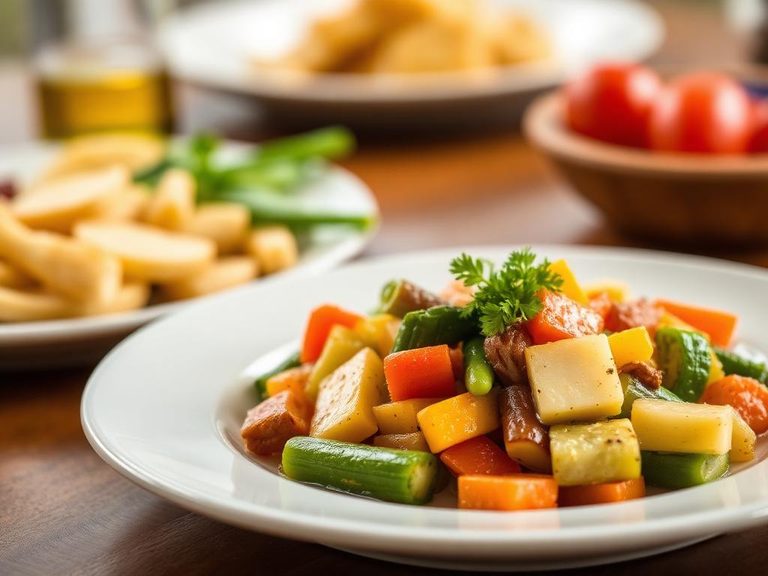

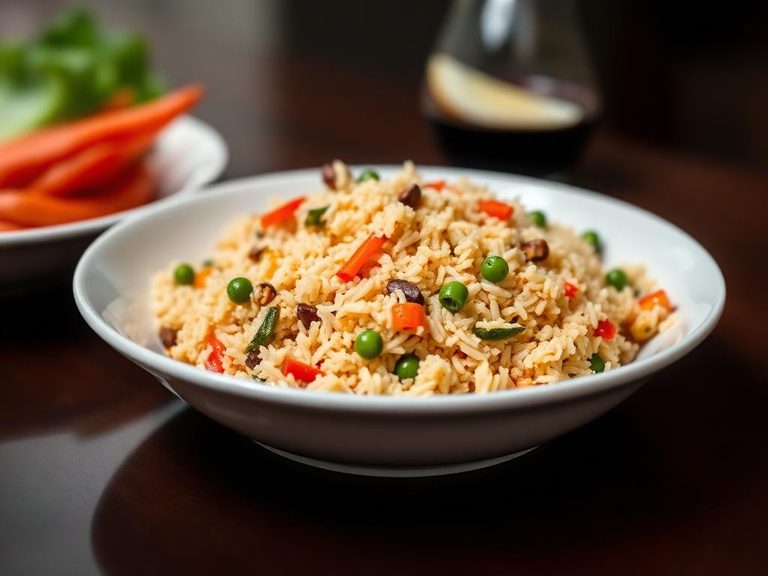
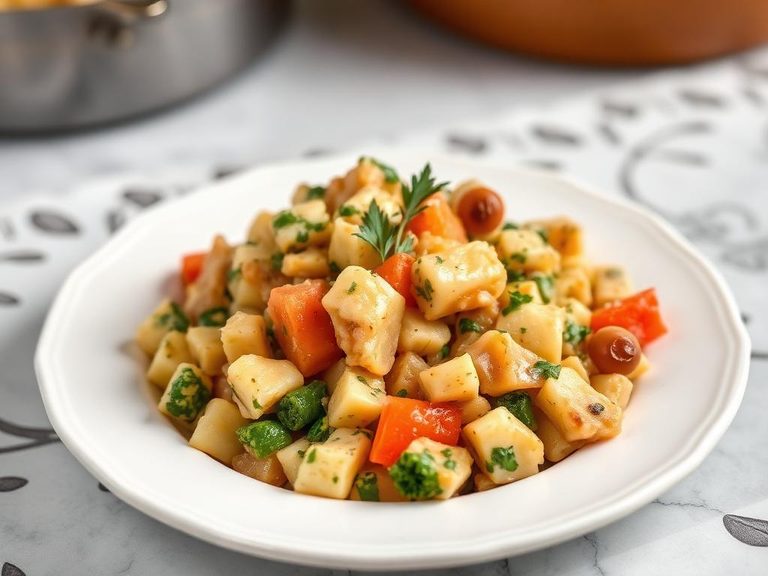
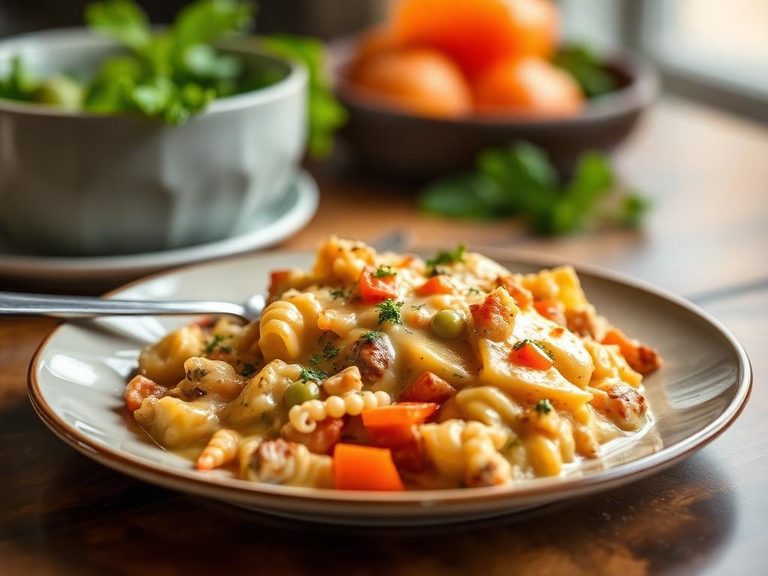
🌍 Where it's eaten
💡 Did you know?
The standard frozen 'mixed vegetable' blend is a relatively modern invention, popularized in the 1940s-50s with the rise of home freezers, designed to offer year-round access to a balanced mix of vegetables.
Full nutrition (USDA data · scales with serving)
| Water | 81.2 g |
| Energy | 83.0 kcal |
| Protein | 2.8 g |
| Total lipid (fat) | 2.3 g |
| Carbohydrate, by difference | 12.7 g |
| Fiber, total dietary | 4.3 g |
| Total Sugars | 3.0 g |
| Calcium, Ca | 25.0 mg |
| Iron, Fe | 0.80 mg |
| Magnesium, Mg | 21.0 mg |
| Phosphorus, P | 50.0 mg |
| Potassium, K | 164 mg |
| Sodium, Na | 163 mg |
| Zinc, Zn | 0.48 mg |
| Copper, Cu | 0.08 mg |
| Selenium, Se | 0.30 ug |
| Vitamin C, total ascorbic acid | 3.1 mg |
| Thiamin | 0.07 mg |
| Riboflavin | 0.12 mg |
| Niacin | 0.82 mg |
| Vitamin B-6 | 0.10 mg |
| Folate, total | 18.0 ug |
| Folic acid | 0.00 ug |
| Folate, food | 18.0 ug |
| Folate, DFE | 18.0 ug |
| Choline, total | 23.8 mg |
| Vitamin B-12 | 0.00 ug |
| Vitamin B-12, added | 0.00 ug |
| Vitamin A, RAE | 230 ug |
| Retinol | 22.0 ug |
| Carotene, beta | 2026 ug |
| Carotene, alpha | 937 ug |
| Cryptoxanthin, beta | 0.00 ug |
| Lycopene | 0.00 ug |
| Lutein + zeaxanthin | 617 ug |
| Vitamin E (alpha-tocopherol) | 0.58 mg |
| Vitamin E, added | 0.00 mg |
| Vitamin D (D2 + D3) | 0.00 ug |
| Vitamin K (phylloquinone) | 24.0 ug |
| Alcohol, ethyl | 0.00 g |
| Caffeine | 0.00 mg |
| Theobromine | 0.00 mg |
Fat & fatty acid profile (per 100g)
| Fatty acids, total saturated | 0.97 g |
| SFA 4:0 | 0.04 g |
| SFA 6:0 | 0.03 g |
| SFA 8:0 | 0.01 g |
| SFA 10:0 | 0.03 g |
| SFA 12:0 | 0.04 g |
| SFA 14:0 | 0.13 g |
| SFA 16:0 | 0.47 g |
| SFA 18:0 | 0.19 g |
| Fatty acids, total monounsaturated | 0.59 g |
| MUFA 16:1 | 0.02 g |
| MUFA 18:1 | 0.55 g |
| MUFA 20:1 | 0.00 g |
| MUFA 22:1 | 0.00 g |
| Fatty acids, total polyunsaturated | 0.41 g |
| PUFA 18:2 | 0.36 g |
| PUFA 18:3 | 0.05 g |
| PUFA 18:4 | 0.00 g |
| PUFA 20:4 | 0.00 g |
| PUFA 20:5 n-3 (EPA) | 0.00 g |
| PUFA 22:5 n-3 (DPA) | 0.00 g |
| PUFA 22:6 n-3 (DHA) | 0.00 g |
| Cholesterol | 4.0 mg |
FAQ
Is it healthier than fresh vegetables?
Not necessarily. Frozen vegetables are picked at peak ripeness and flash-frozen, preserving nutrients well. They can be just as nutritious as fresh, especially if the 'fresh' produce has traveled long distances. The healthiness depends more on the cooking method (butter vs. oil) and any added salt.
Why does my frozen mix get mushy?
Overcooking is the usual cause. For best texture, cook from frozen directly in a hot pan with butter, just until heated through and tender-crisp (3-5 minutes). Avoid boiling them in water, which leaches nutrients and texture.
Can I use this in soups or stews?
Absolutely. It's a perfect time-saver for soups, stews, and braises. Add it during the last 10-15 minutes of cooking so it doesn't become overly soft.
Nutrient density (calculated · NRF9.3)
Nutrient Rich Foods index: beneficial nutrients (protein, fiber, vitamins, minerals) minus saturated fat, added sugar & sodium, per 100 kcal.
NRF9.3 index — Fulgoni, Keast & Drewnowski, 2009. Computed from USDA nutrients.
Weight-loss friendliness (composite index)
Energy density 0.83 kcal/g · 13% calories from protein · 4.3 g fiber · 3.0 g sugar per 100 g.
Composite of energy density (Rolls et al., 1999), protein & fiber satiety, minus sugar. A calculated heuristic — ranks satiety-per-calorie, not a clinical measure.
Dietary load (calculated from USDA values)
Potential renal acid load. Positive = acid-forming, negative = alkaline-forming.
Sodium-to-potassium ratio: 0.99 (lower is better — aim for ≤ 1)
Sodium:potassium per WHO potassium guidance. Computed from USDA nutrients.