

Churros
Common food

Photo: Wikipedia
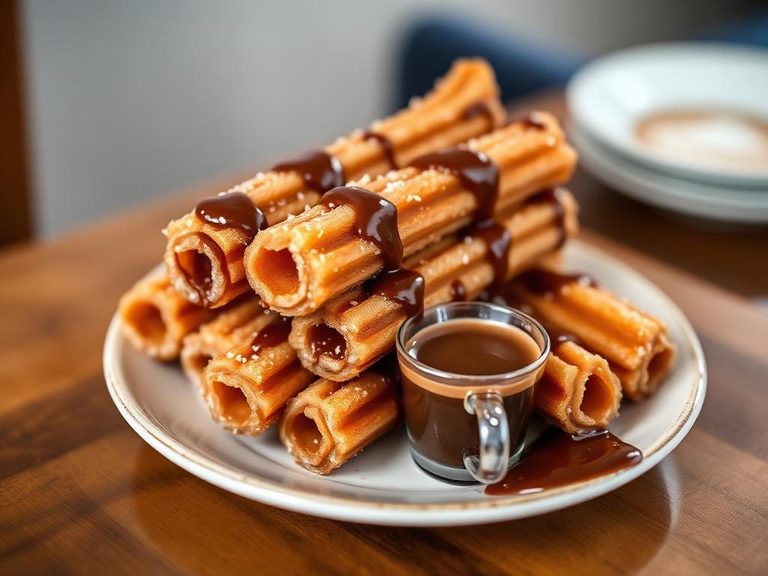
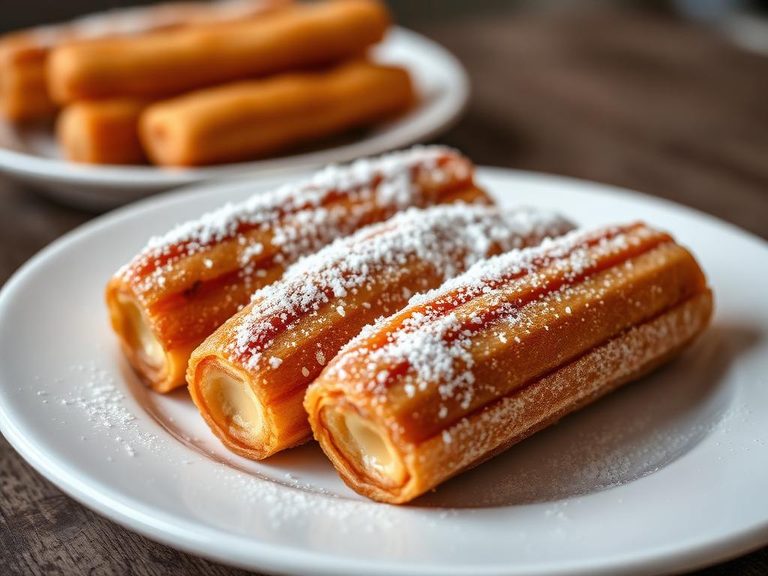
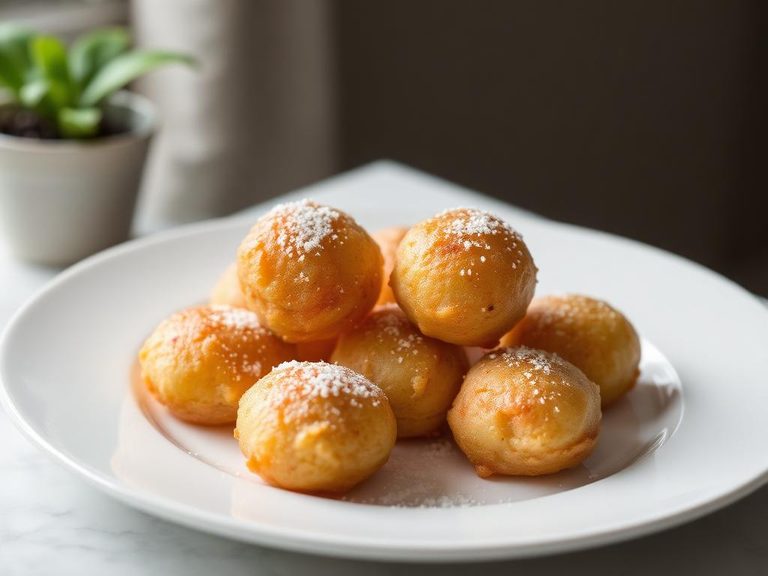
Churros are golden, ridged sticks of fried dough, crispy on the outside and tender within, traditionally dusted with cinnamon sugar. They deliver a satisfying crunch followed by a soft, slightly chewy interior, offering a rich, sweet, and buttery flavor profile. Nutritionally, they are a high-energy treat, providing a significant source of carbohydrates and fats for quick fuel.
Calorie split: 6% protein · 47% carbs · 48% fat
↓ Full nutrition💚 Why it's loved
People adore churros for their addictive contrast of textures—the shattering crispness giving way to a warm, doughy center—and the simple, nostalgic flavor of cinnamon and sugar. They are deeply woven into social and festive occasions across Latin America, Spain, and beyond, often enjoyed dipped in thick hot chocolate or caramel.
⚠️ Watch-outs & how to enjoy it better
As a deep-fried food high in refined carbs and sugar, churros can cause rapid blood-sugar spikes and are calorie-dense, making them a concern for those managing diabetes or weight. To enjoy them more mindfully, pair with a protein-rich dip like Greek yogurt or a small portion of nuts, practice strict portion control, and consider sharing a single serving.
Key benefits
- Provides quick energy from carbohydrates
- Contains some dietary fiber
- Source of iron and B vitamins from wheat flour
- A comforting, traditional treat in many cultures
🍽️ Popular dishes
🌍 Where it's eaten
💡 Did you know?
The characteristic ridged shape of a churro is not just for texture; it's created by the star-shaped nozzle of the churrera (the dough press), which increases the surface area for a crispier fry and better cinnamon-sugar adhesion.
Full nutrition (USDA data · scales with serving)
| Water | 21.6 g |
| Energy | 419 kcal |
| Protein | 6.0 g |
| Total lipid (fat) | 22.2 g |
| Carbohydrate, by difference | 48.9 g |
| Fiber, total dietary | 2.6 g |
| Total Sugars | 23.4 g |
| Calcium, Ca | 110 mg |
| Iron, Fe | 2.4 mg |
| Magnesium, Mg | 17.0 mg |
| Phosphorus, P | 115 mg |
| Potassium, K | 105 mg |
| Sodium, Na | 309 mg |
| Zinc, Zn | 0.62 mg |
| Copper, Cu | 0.09 mg |
| Selenium, Se | 15.4 ug |
| Vitamin C, total ascorbic acid | 1.2 mg |
| Thiamin | 0.30 mg |
| Riboflavin | 0.18 mg |
| Niacin | 2.6 mg |
| Vitamin B-6 | 0.04 mg |
| Folate, total | 106 ug |
| Folic acid | 66.0 ug |
| Folate, food | 39.0 ug |
| Folate, DFE | 152 ug |
| Choline, total | 28.6 mg |
| Vitamin B-12 | 0.11 ug |
| Vitamin B-12, added | 0.00 ug |
| Vitamin A, RAE | 5.0 ug |
| Retinol | 5.0 ug |
| Carotene, beta | 4.0 ug |
| Carotene, alpha | 1.0 ug |
| Cryptoxanthin, beta | 2.0 ug |
| Lycopene | 0.00 ug |
| Lutein + zeaxanthin | 38.0 ug |
| Vitamin E (alpha-tocopherol) | 1.4 mg |
| Vitamin E, added | 0.00 mg |
| Vitamin D (D2 + D3) | 0.10 ug |
| Vitamin K (phylloquinone) | 11.6 ug |
| Alcohol, ethyl | 0.00 g |
| Caffeine | 0.00 mg |
| Theobromine | 0.00 mg |
Fat & fatty acid profile (per 100g)
| Fatty acids, total saturated | 9.2 g |
| SFA 4:0 | 0.00 g |
| SFA 6:0 | 0.00 g |
| SFA 8:0 | 0.01 g |
| SFA 10:0 | 0.01 g |
| SFA 12:0 | 0.11 g |
| SFA 14:0 | 0.20 g |
| SFA 16:0 | 7.2 g |
| SFA 18:0 | 1.6 g |
| Fatty acids, total monounsaturated | 7.1 g |
| MUFA 16:1 | 0.04 g |
| MUFA 18:1 | 7.0 g |
| MUFA 20:1 | 0.05 g |
| MUFA 22:1 | 0.00 g |
| Fatty acids, total polyunsaturated | 3.5 g |
| PUFA 18:2 | 3.3 g |
| PUFA 18:3 | 0.20 g |
| PUFA 18:4 | 0.00 g |
| PUFA 20:4 | 0.00 g |
| PUFA 20:5 n-3 (EPA) | 0.00 g |
| PUFA 22:5 n-3 (DPA) | 0.00 g |
| PUFA 22:6 n-3 (DHA) | 0.01 g |
| Cholesterol | 29.0 mg |
FAQ
What is churro dough made of?
Traditional churro dough is a simple mixture of flour, water, and salt, which is piped into hot oil and fried. Sweet versions add sugar and sometimes egg or butter to the dough itself, before the final cinnamon-sugar coating.
Are churros gluten-free?
No, classic churros are made with wheat flour and contain gluten. While gluten-free versions using alternative flours exist, they are not the traditional preparation.
Why are churros sometimes hollow?
The high heat of the frying oil causes the water in the dough to steam rapidly, creating internal pockets. This can result in a partially hollow interior, which is desirable for holding dips like chocolate sauce.
Nutrient density (calculated · NRF9.3)
Nutrient Rich Foods index: beneficial nutrients (protein, fiber, vitamins, minerals) minus saturated fat, added sugar & sodium, per 100 kcal.
NRF9.3 index — Fulgoni, Keast & Drewnowski, 2009. Computed from USDA nutrients.
Weight-loss friendliness (composite index)
Energy density 4.19 kcal/g · 6% calories from protein · 2.6 g fiber · 23.4 g sugar per 100 g.
Composite of energy density (Rolls et al., 1999), protein & fiber satiety, minus sugar. A calculated heuristic — ranks satiety-per-calorie, not a clinical measure.
Dietary load (calculated from USDA values)
Potential renal acid load. Positive = acid-forming, negative = alkaline-forming.
Sodium-to-potassium ratio: 2.94 (lower is better — aim for ≤ 1)
Sodium:potassium per WHO potassium guidance. Computed from USDA nutrients.