

Chicken cornbread
Common food

Photo: Wikipedia
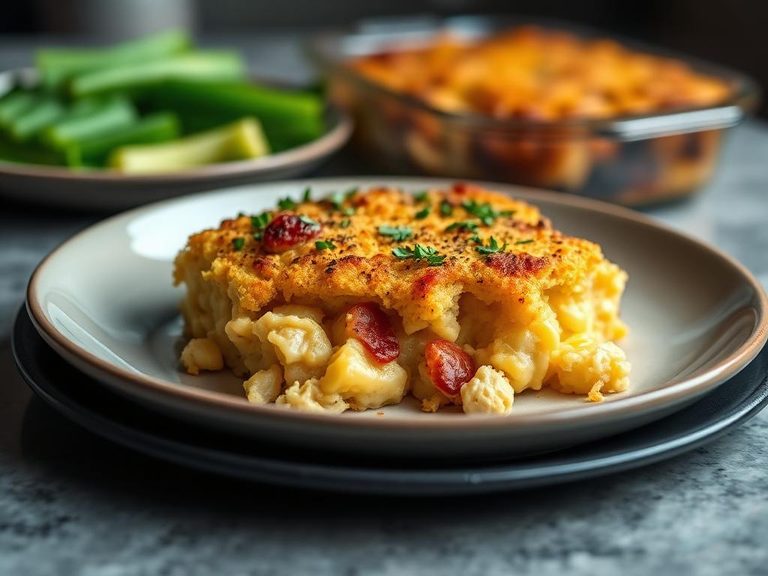
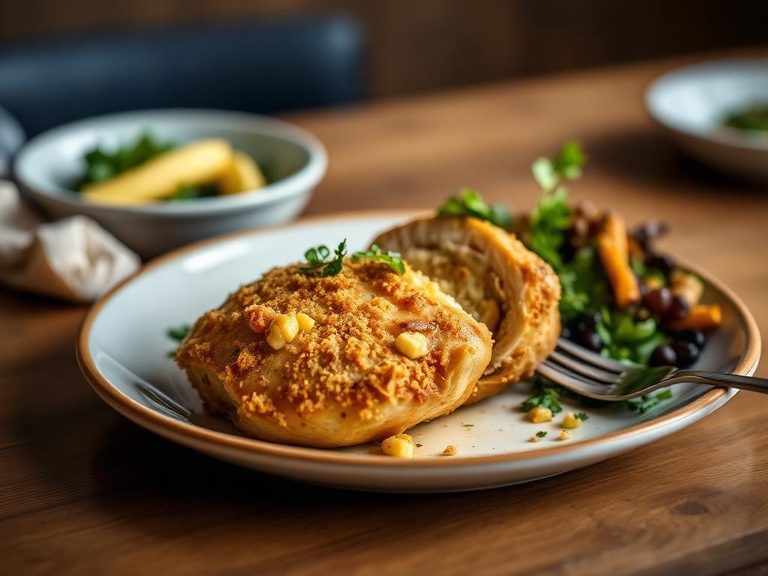
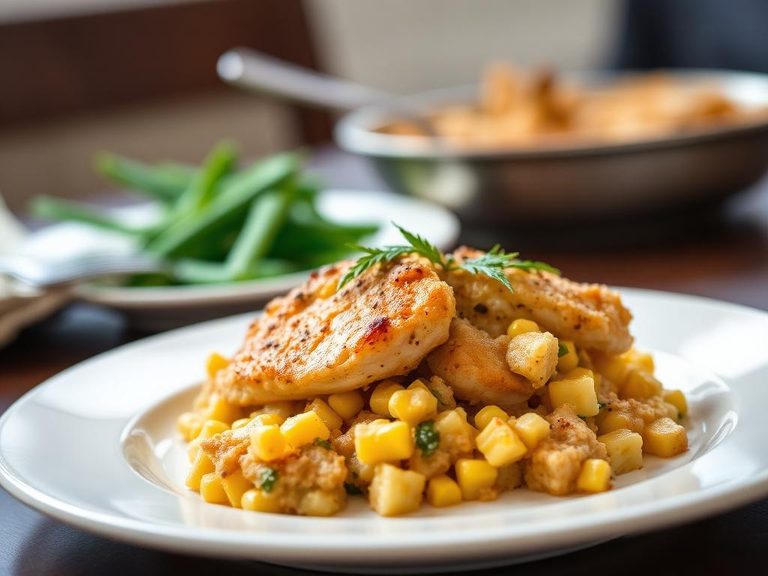
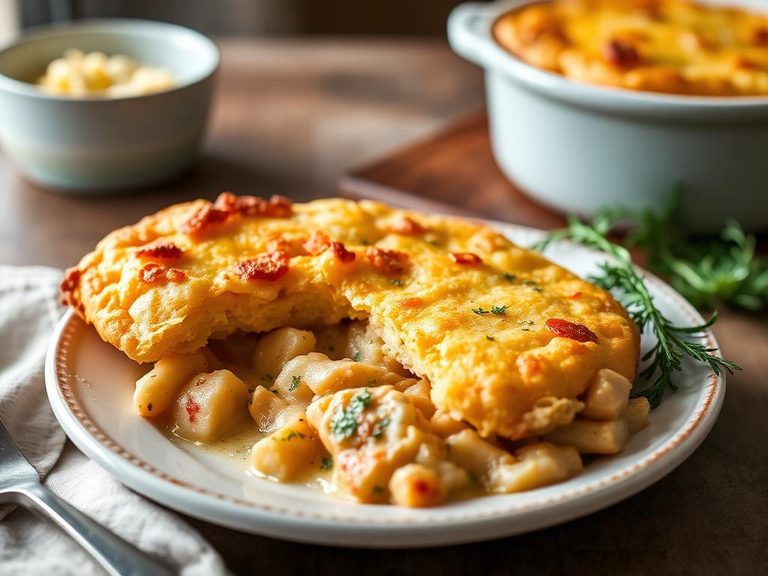
Chicken cornbread is a savory, golden-baked quick bread where tender, shredded chicken is folded directly into a moist, slightly sweet cornmeal batter. It offers a delightful textural contrast between the crumbly, buttery cornbread and the hearty, protein-rich chicken. Nutritionally, it stands out as a balanced, single-dish meal with a strong protein punch relative to its calorie count.
Calorie split: 33% protein · 23% carbs · 44% fat
↓ Full nutrition💚 Why it's loved
People adore it for its comforting, soulful flavor that perfectly marries the savory, juicy chicken with the slightly sweet, crumbly cornbread. It's a beloved staple in Southern U.S. cuisine, often served as a hearty main dish or a crowd-pleasing side at potlucks and family gatherings.
⚠️ Watch-outs & how to enjoy it better
The combination of refined cornmeal and added fats can make it calorie-dense and may cause a quicker blood-sugar rise for some. Those watching sodium should be cautious, as the chicken and any added broth or seasoning can contribute significantly. To counteract this, pair a modest portion with a fiber-rich green salad or roasted vegetables, and opt for low-sodium chicken broth in the recipe.
Key benefits
- High-quality protein from chicken supports muscle maintenance.
- Provides a balanced mix of protein, carbs, and fats for sustained energy.
- Cornmeal offers essential minerals like magnesium and selenium.
- A convenient all-in-one meal, reducing the need for separate sides.
- Can be a vehicle for added vegetables like jalapeños or corn kernels.
🍽️ Popular dishes

🌍 Where it's eaten
💡 Did you know?
Traditional Southern cornbread recipes often contain no sugar at all, relying solely on the natural sweetness of the cornmeal and the browning reaction (Maillard reaction) for flavor, making the sweetened version a more modern or regional variation.
Full nutrition (USDA data · scales with serving)
| Water | 67.3 g |
| Energy | 167 kcal |
| Protein | 13.8 g |
| Total lipid (fat) | 8.2 g |
| Carbohydrate, by difference | 9.4 g |
| Fiber, total dietary | 0.40 g |
| Total Sugars | 0.24 g |
| Calcium, Ca | 17.0 mg |
| Iron, Fe | 1.0 mg |
| Magnesium, Mg | 15.0 mg |
| Phosphorus, P | 138 mg |
| Potassium, K | 152 mg |
| Sodium, Na | 458 mg |
| Zinc, Zn | 0.94 mg |
| Copper, Cu | 0.04 mg |
| Selenium, Se | 16.1 ug |
| Vitamin C, total ascorbic acid | 0.00 mg |
| Thiamin | 0.08 mg |
| Riboflavin | 0.18 mg |
| Niacin | 3.6 mg |
| Vitamin B-6 | 0.13 mg |
| Folate, total | 28.0 ug |
| Folic acid | 13.0 ug |
| Folate, food | 14.0 ug |
| Folate, DFE | 36.0 ug |
| Choline, total | 73.1 mg |
| Vitamin B-12 | 0.29 ug |
| Vitamin B-12, added | 0.00 ug |
| Vitamin A, RAE | 73.0 ug |
| Retinol | 69.0 ug |
| Carotene, beta | 37.0 ug |
| Carotene, alpha | 6.0 ug |
| Cryptoxanthin, beta | 2.0 ug |
| Lycopene | 0.00 ug |
| Lutein + zeaxanthin | 232 ug |
| Vitamin E (alpha-tocopherol) | 0.78 mg |
| Vitamin E, added | 0.00 mg |
| Vitamin D (D2 + D3) | 0.60 ug |
| Vitamin K (phylloquinone) | 4.4 ug |
| Alcohol, ethyl | 0.00 g |
| Caffeine | 0.00 mg |
| Theobromine | 0.00 mg |
Fat & fatty acid profile (per 100g)
| Fatty acids, total saturated | 1.9 g |
| SFA 4:0 | 0.00 g |
| SFA 6:0 | 0.00 g |
| SFA 8:0 | 0.00 g |
| SFA 10:0 | 0.00 g |
| SFA 12:0 | 0.00 g |
| SFA 14:0 | 0.02 g |
| SFA 16:0 | 1.3 g |
| SFA 18:0 | 0.54 g |
| Fatty acids, total monounsaturated | 3.6 g |
| MUFA 16:1 | 0.23 g |
| MUFA 18:1 | 3.3 g |
| MUFA 20:1 | 0.01 g |
| MUFA 22:1 | 0.00 g |
| Fatty acids, total polyunsaturated | 1.9 g |
| PUFA 18:2 | 1.7 g |
| PUFA 18:3 | 0.12 g |
| PUFA 18:4 | 0.00 g |
| PUFA 20:4 | 0.01 g |
| PUFA 20:5 n-3 (EPA) | 0.00 g |
| PUFA 22:5 n-3 (DPA) | 0.00 g |
| PUFA 22:6 n-3 (DHA) | 0.00 g |
| Cholesterol | 114 mg |
FAQ
Is chicken cornbread the same as cornbread dressing?
Not exactly. Chicken cornbread is a baked bread with chicken mixed into the batter. Cornbread dressing (or stuffing) is a softer, moister side dish where crumbled cornbread is combined with broth, aromatics, and often chicken, then baked until set.
Can I make it gluten-free?
Yes, but you must use certified gluten-free cornmeal and ensure all other ingredients (like broth or seasonings) are gluten-free. Cornmeal itself is naturally gluten-free, but cross-contamination is common.
What's the best way to store leftovers?
Store in an airtight container in the refrigerator for up to 3-4 days. Reheat slices in a toaster oven or skillet to help restore some crispness to the cornbread exterior.
Nutrient density (calculated · NRF9.3)
Nutrient Rich Foods index: beneficial nutrients (protein, fiber, vitamins, minerals) minus saturated fat, added sugar & sodium, per 100 kcal.
NRF9.3 index — Fulgoni, Keast & Drewnowski, 2009. Computed from USDA nutrients.
Weight-loss friendliness (composite index)
Energy density 1.67 kcal/g · 33% calories from protein · 0.4 g fiber · 0.2 g sugar per 100 g.
Composite of energy density (Rolls et al., 1999), protein & fiber satiety, minus sugar. A calculated heuristic — ranks satiety-per-calorie, not a clinical measure.
Dietary load (calculated from USDA values)
Potential renal acid load. Positive = acid-forming, negative = alkaline-forming.
Sodium-to-potassium ratio: 3.01 (lower is better — aim for ≤ 1)
Sodium:potassium per WHO potassium guidance. Computed from USDA nutrients.