

Champagne punch
Common food

Photo: Wikipedia
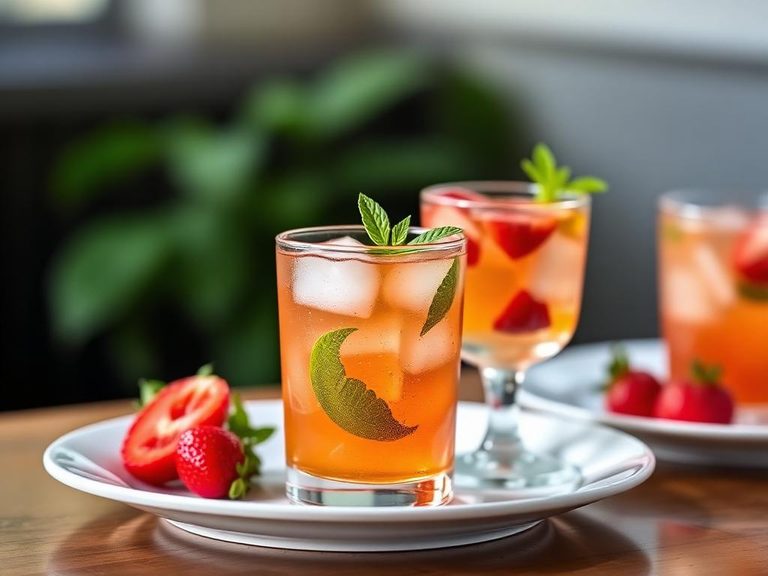
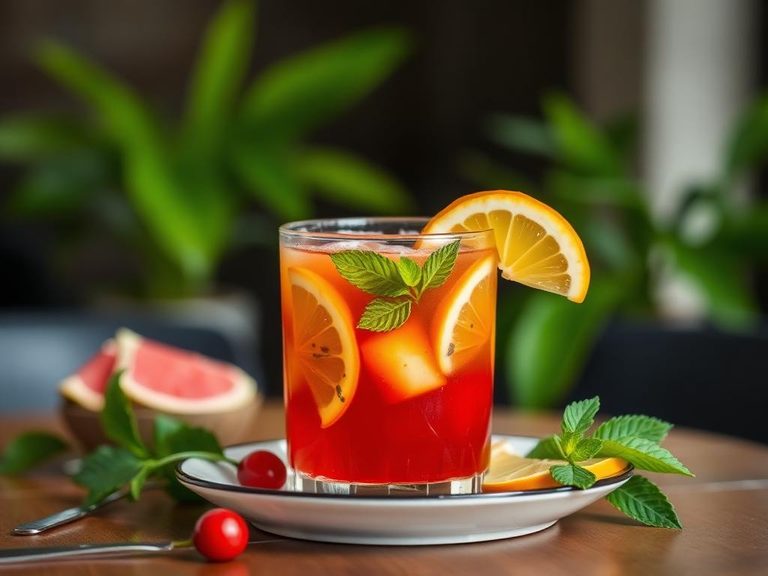
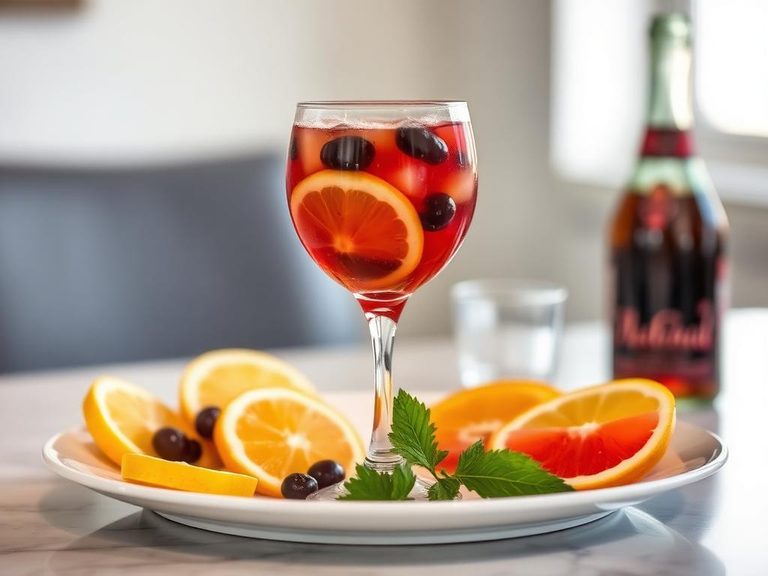
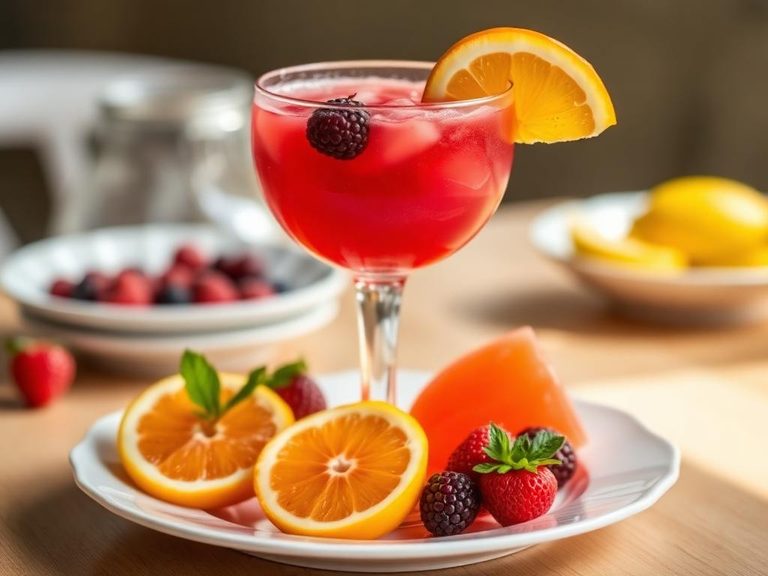
Champagne punch is a sparkling, celebratory cocktail that blends effervescent champagne with fruit juices, liqueurs, and often sliced fruit. It offers a light, refreshing texture with a balanced sweetness and a lively fizz. Nutritionally, it's a low-protein, low-fat beverage where the calories come almost entirely from carbohydrates, primarily from sugars.
Calorie split: 1% protein · 97% carbs · 1% fat
↓ Full nutrition💚 Why it's loved
People love it for its festive, elegant presentation and the way the bubbles enhance the fruity flavors, making it a versatile centerpiece for brunches, weddings, and holiday gatherings.
⚠️ Watch-outs & how to enjoy it better
The high sugar content can lead to rapid blood sugar spikes, and the alcohol may not be suitable for everyone. To counteract this, consider serving smaller portions, pairing it with a protein-rich appetizer like cheese or nuts, or diluting it with more sparkling water.
Key benefits
- Low in fat and protein
- Source of quick energy from carbohydrates
- Light and refreshing for social occasions
- Easily customizable with various fruits and juices
🍽️ Popular dishes


🌍 Where it's eaten
💡 Did you know?
A classic champagne punch recipe from the 19th century often included a 'pony' of brandy and was traditionally served in a large punch bowl with a block of ice to keep it chilled without diluting it too quickly.
Full nutrition (USDA data · scales with serving)
| Water | 77.4 g |
| Energy | 120 kcal |
| Protein | 0.16 g |
| Total lipid (fat) | 0.06 g |
| Carbohydrate, by difference | 11.5 g |
| Fiber, total dietary | 0.10 g |
| Total Sugars | 9.5 g |
| Calcium, Ca | 8.0 mg |
| Iron, Fe | 0.25 mg |
| Magnesium, Mg | 8.0 mg |
| Phosphorus, P | 11.0 mg |
| Potassium, K | 83.0 mg |
| Sodium, Na | 4.0 mg |
| Zinc, Zn | 0.10 mg |
| Copper, Cu | 0.03 mg |
| Selenium, Se | 0.10 ug |
| Vitamin C, total ascorbic acid | 4.0 mg |
| Thiamin | 0.02 mg |
| Riboflavin | 0.02 mg |
| Niacin | 0.14 mg |
| Vitamin B-6 | 0.06 mg |
| Folate, total | 7.0 ug |
| Folic acid | 0.00 ug |
| Folate, food | 7.0 ug |
| Folate, DFE | 7.0 ug |
| Choline, total | 3.0 mg |
| Vitamin B-12 | 0.00 ug |
| Vitamin B-12, added | 0.00 ug |
| Vitamin A, RAE | 0.00 ug |
| Retinol | 0.00 ug |
| Carotene, beta | 1.0 ug |
| Carotene, alpha | 0.00 ug |
| Cryptoxanthin, beta | 1.0 ug |
| Lycopene | 0.00 ug |
| Lutein + zeaxanthin | 0.00 ug |
| Vitamin E (alpha-tocopherol) | 0.01 mg |
| Vitamin E, added | 0.00 mg |
| Vitamin D (D2 + D3) | 0.00 ug |
| Vitamin K (phylloquinone) | 0.10 ug |
| Alcohol, ethyl | 10.7 g |
| Caffeine | 0.00 mg |
| Theobromine | 0.00 mg |
Fat & fatty acid profile (per 100g)
| Fatty acids, total saturated | 0.00 g |
| SFA 4:0 | 0.00 g |
| SFA 6:0 | 0.00 g |
| SFA 8:0 | 0.00 g |
| SFA 10:0 | 0.00 g |
| SFA 12:0 | 0.00 g |
| SFA 14:0 | 0.00 g |
| SFA 16:0 | 0.00 g |
| SFA 18:0 | 0.00 g |
| Fatty acids, total monounsaturated | 0.01 g |
| MUFA 16:1 | 0.00 g |
| MUFA 18:1 | 0.00 g |
| MUFA 20:1 | 0.00 g |
| MUFA 22:1 | 0.00 g |
| Fatty acids, total polyunsaturated | 0.01 g |
| PUFA 18:2 | 0.01 g |
| PUFA 18:3 | 0.01 g |
| PUFA 18:4 | 0.00 g |
| PUFA 20:4 | 0.00 g |
| PUFA 20:5 n-3 (EPA) | 0.00 g |
| PUFA 22:5 n-3 (DPA) | 0.00 g |
| PUFA 22:6 n-3 (DHA) | 0.00 g |
| Cholesterol | 0.00 mg |
FAQ
Is champagne punch the same as just champagne with juice?
Not exactly. While it includes champagne, a true punch is a blended cocktail that typically combines a base spirit (like brandy or rum), a sweetener, citrus, water or tea, and spices or fruit, with champagne often added last for fizz.
Can I make a non-alcoholic version?
Yes, you can substitute the champagne and any liqueurs with sparkling white grape juice or a non-alcoholic sparkling wine, and use fruit juices and syrups for flavor.
How long can I keep champagne punch?
It's best served immediately to retain the carbonation. If you must prepare it ahead, mix all ingredients except the champagne, refrigerate, and add the champagne just before serving.
Nutrient density (calculated · NRF9.3)
Nutrient Rich Foods index: beneficial nutrients (protein, fiber, vitamins, minerals) minus saturated fat, added sugar & sodium, per 100 kcal.
NRF9.3 index — Fulgoni, Keast & Drewnowski, 2009. Computed from USDA nutrients.
Weight-loss friendliness (composite index)
Energy density 1.20 kcal/g · 1% calories from protein · 0.1 g fiber · 9.5 g sugar per 100 g.
Composite of energy density (Rolls et al., 1999), protein & fiber satiety, minus sugar. A calculated heuristic — ranks satiety-per-calorie, not a clinical measure.
Dietary load (calculated from USDA values)
Potential renal acid load. Positive = acid-forming, negative = alkaline-forming.
Sodium-to-potassium ratio: 0.05 (lower is better — aim for ≤ 1)
Sodium:potassium per WHO potassium guidance. Computed from USDA nutrients.