

Cantaloupe nectar
Common food

Photo: Wikipedia
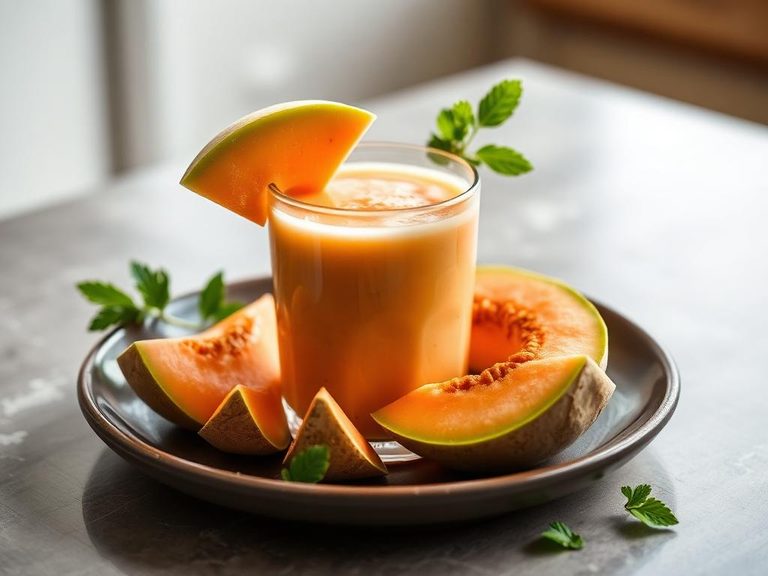
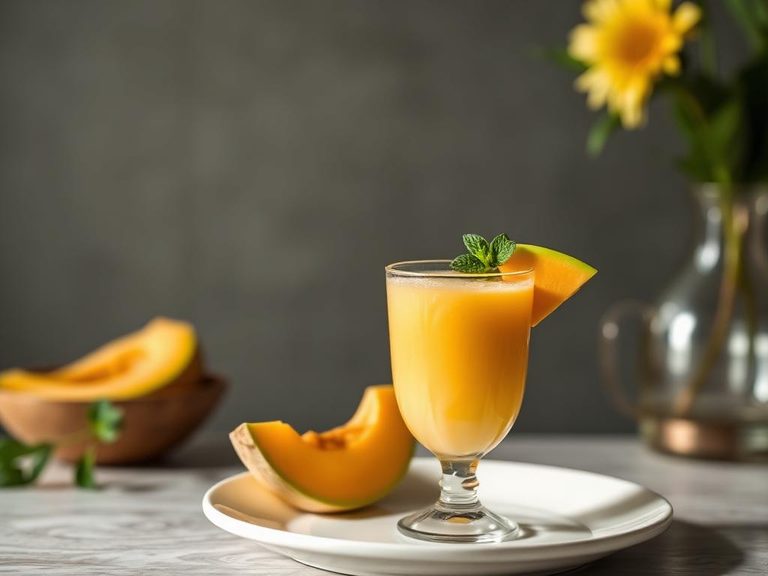
Cantaloupe nectar is a smooth, golden-orange fruit drink made by blending and straining ripe cantaloupe melon, often with a touch of water or sweetener. It delivers a lush, honeyed melon flavor with a velvety, slightly thick texture that is more substantial than juice. Nutritionally, it is a light, low-fat source of quick energy, primarily from natural sugars, with minimal protein and fiber.
Calorie split: 2% protein · 96% carbs · 2% fat
↓ Full nutrition💚 Why it's loved
People love cantaloupe nectar for its intensely sweet, floral, and refreshing melon flavor, which captures the essence of summer in a drinkable form. Its smooth, pourable consistency makes it incredibly versatile for sipping chilled, mixing into cocktails, or using as a base for smoothies and desserts.
⚠️ Watch-outs & how to enjoy it better
The high natural sugar content (15.55g per 100g) can cause rapid blood-sugar spikes, which is a concern for individuals with diabetes or insulin resistance. To mitigate this, pair it with a source of protein or healthy fat (like a handful of nuts or yogurt) to slow sugar absorption, and practice strict portion control. Additionally, some commercial nectars may contain added sugars or preservatives, so checking labels is advisable.
Key benefits
- Provides a quick source of natural energy from carbohydrates.
- Contains beta-carotene, a precursor to vitamin A, supporting eye health.
- Offers hydration due to its high water content.
- Low in fat and protein, making it a light beverage option.
- Provides a small amount of dietary fiber.
🍽️ Popular dishes


🌍 Where it's eaten
💡 Did you know?
Cantaloupe nectar is often made from the 'muskmelon' variety, and its distinctive netted rind is actually a result of the fruit's skin growing faster than the flesh underneath, creating a corky, web-like texture.
Full nutrition (USDA data · scales with serving)
| Water | 83.6 g |
| Energy | 65.0 kcal |
| Protein | 0.33 g |
| Total lipid (fat) | 0.11 g |
| Carbohydrate, by difference | 15.6 g |
| Fiber, total dietary | 0.30 g |
| Total Sugars | 15.6 g |
| Calcium, Ca | 5.0 mg |
| Iron, Fe | 0.16 mg |
| Magnesium, Mg | 6.0 mg |
| Phosphorus, P | 7.0 mg |
| Potassium, K | 57.0 mg |
| Sodium, Na | 13.0 mg |
| Zinc, Zn | 0.18 mg |
| Copper, Cu | 0.04 mg |
| Selenium, Se | 0.80 ug |
| Vitamin C, total ascorbic acid | 3.0 mg |
| Thiamin | 0.02 mg |
| Riboflavin | 0.01 mg |
| Niacin | 0.25 mg |
| Vitamin B-6 | 0.01 mg |
| Folate, total | 3.0 ug |
| Folic acid | 0.00 ug |
| Folate, food | 3.0 ug |
| Folate, DFE | 3.0 ug |
| Choline, total | 3.0 mg |
| Vitamin B-12 | 0.00 ug |
| Vitamin B-12, added | 0.00 ug |
| Vitamin A, RAE | 69.0 ug |
| Retinol | 0.00 ug |
| Carotene, beta | 830 ug |
| Carotene, alpha | 0.00 ug |
| Cryptoxanthin, beta | 0.00 ug |
| Lycopene | 0.00 ug |
| Lutein + zeaxanthin | 10.0 ug |
| Vitamin E (alpha-tocopherol) | 0.02 mg |
| Vitamin E, added | 0.00 mg |
| Vitamin D (D2 + D3) | 0.00 ug |
| Vitamin K (phylloquinone) | 1.1 ug |
| Alcohol, ethyl | 0.00 g |
| Caffeine | 0.00 mg |
| Theobromine | 0.00 mg |
Fat & fatty acid profile (per 100g)
| Fatty acids, total saturated | 0.02 g |
| SFA 4:0 | 0.00 g |
| SFA 6:0 | 0.00 g |
| SFA 8:0 | 0.00 g |
| SFA 10:0 | 0.00 g |
| SFA 12:0 | 0.00 g |
| SFA 14:0 | 0.00 g |
| SFA 16:0 | 0.02 g |
| SFA 18:0 | 0.00 g |
| Fatty acids, total monounsaturated | 0.00 g |
| MUFA 16:1 | 0.00 g |
| MUFA 18:1 | 0.00 g |
| MUFA 20:1 | 0.00 g |
| MUFA 22:1 | 0.00 g |
| Fatty acids, total polyunsaturated | 0.03 g |
| PUFA 18:2 | 0.01 g |
| PUFA 18:3 | 0.02 g |
| PUFA 18:4 | 0.00 g |
| PUFA 20:4 | 0.00 g |
| PUFA 20:5 n-3 (EPA) | 0.00 g |
| PUFA 22:5 n-3 (DPA) | 0.00 g |
| PUFA 22:6 n-3 (DHA) | 0.00 g |
| Cholesterol | 0.00 mg |
FAQ
Is cantaloupe nectar the same as cantaloupe juice?
No. Nectar is typically made by blending the fruit pulp with water and sometimes sweeteners, resulting in a thicker, more opaque drink. Juice is the extracted liquid, which is thinner and more translucent.
Can I make cantaloupe nectar at home?
Yes. Simply blend ripe cantaloupe chunks with a small amount of water (and optional sweetener like honey or sugar) until smooth, then strain through a fine-mesh sieve for a silkier texture.
Does cantaloupe nectar contain added sugar?
It depends on the brand. Some commercial nectars are sweetened with added sugars, while others are 100% fruit. Always check the nutrition label for 'added sugars' to make an informed choice.
Nutrient density (calculated · NRF9.3)
Nutrient Rich Foods index: beneficial nutrients (protein, fiber, vitamins, minerals) minus saturated fat, added sugar & sodium, per 100 kcal.
NRF9.3 index — Fulgoni, Keast & Drewnowski, 2009. Computed from USDA nutrients.
Weight-loss friendliness (composite index)
Energy density 0.65 kcal/g · 2% calories from protein · 0.3 g fiber · 15.6 g sugar per 100 g.
Composite of energy density (Rolls et al., 1999), protein & fiber satiety, minus sugar. A calculated heuristic — ranks satiety-per-calorie, not a clinical measure.
Dietary load (calculated from USDA values)
Potential renal acid load. Positive = acid-forming, negative = alkaline-forming.
Sodium-to-potassium ratio: 0.23 (lower is better — aim for ≤ 1)
Sodium:potassium per WHO potassium guidance. Computed from USDA nutrients.