

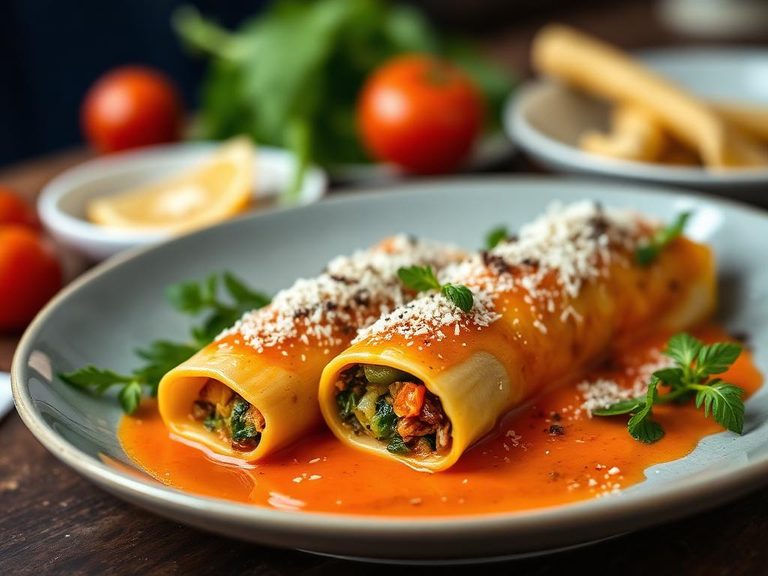
Cannelloni, cheese- and spinach-filled, no sauce
Common food

Photo: Wikipedia
Cannelloni are large, smooth pasta tubes, traditionally made from egg dough, here filled with a savory blend of creamy ricotta and earthy spinach. The pasta itself offers a satisfyingly firm yet tender bite, encasing a soft, rich filling. At 157 kcal per 100g, it provides a balanced source of energy with a notable protein content from the cheese and wheat.
Calorie split: 16% protein · 47% carbs · 37% fat
↓ Full nutrition💚 Why it's loved
People love cannelloni for its comforting, hearty nature and the perfect textural contrast between the al dente pasta shell and the creamy, flavorful filling. It's a beloved centerpiece of Italian home cooking, often associated with family gatherings and celebratory meals.
⚠️ Watch-outs & how to enjoy it better
The pasta's refined carbohydrate content can lead to blood-sugar spikes, especially without sauce to add fiber and fat. The cheese filling is high in saturated fat and sodium, and spinach contains oxalates which may affect mineral absorption. To counteract, pair with a fiber-rich tomato or vegetable sauce, control portion size to 2-3 pieces, and ensure a balanced meal with a side salad or steamed vegetables.
Key benefits
- Good source of protein for muscle maintenance
- Provides calcium from the cheese filling
- Contains iron from the spinach component
- Offers complex carbohydrates for sustained energy
- Can be a vehicle for nutrient-dense vegetables
🍽️ Popular dishes
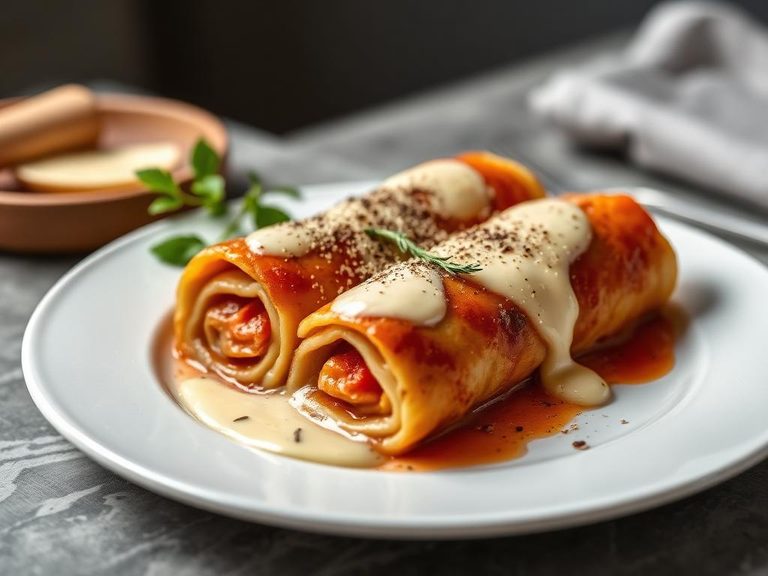
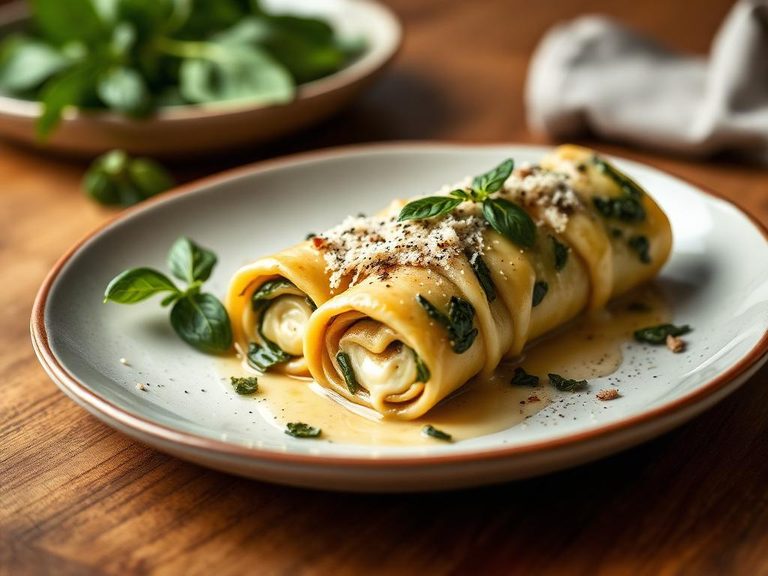
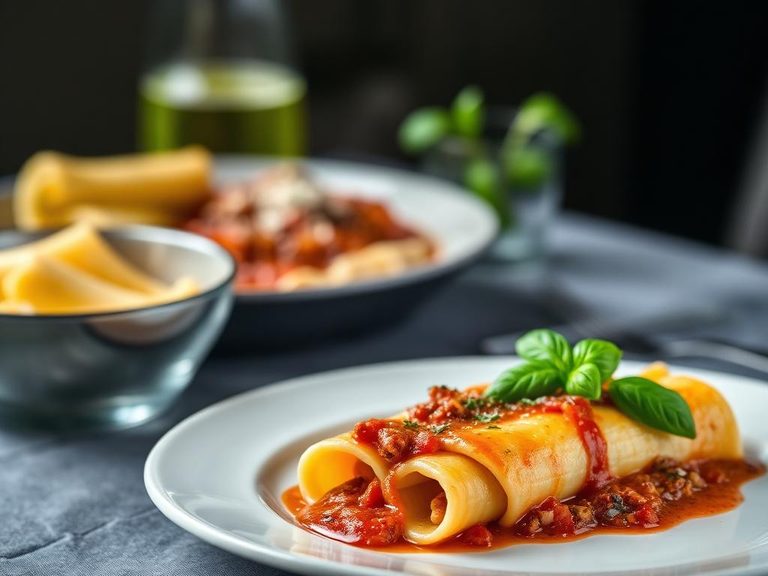
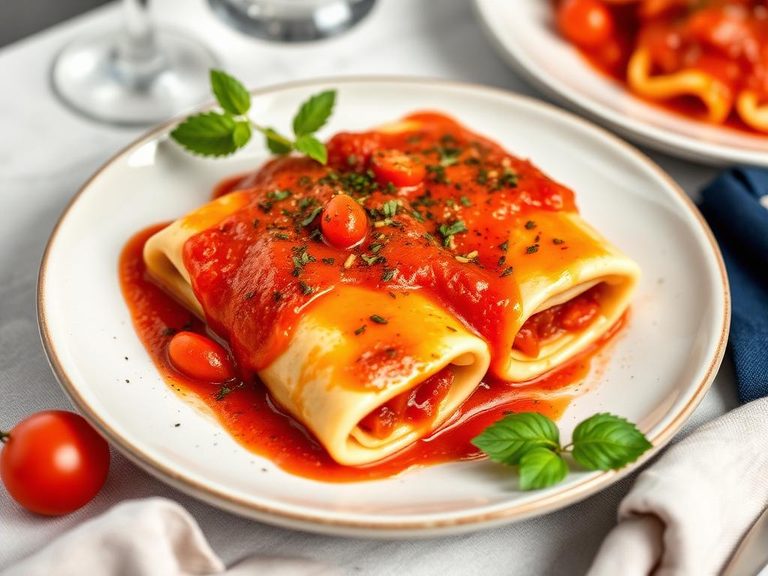
🌍 Where it's eaten
💡 Did you know?
The name 'cannelloni' comes from the Italian word 'cannella,' meaning 'little cane,' a direct reference to the pasta's distinctive tubular shape.
Full nutrition (USDA data · scales with serving)
| Water | 66.4 g |
| Energy | 157 kcal |
| Protein | 6.3 g |
| Total lipid (fat) | 6.5 g |
| Carbohydrate, by difference | 18.4 g |
| Fiber, total dietary | 1.1 g |
| Total Sugars | 0.75 g |
| Calcium, Ca | 99.0 mg |
| Iron, Fe | 1.5 mg |
| Magnesium, Mg | 35.0 mg |
| Phosphorus, P | 100 mg |
| Potassium, K | 225 mg |
| Sodium, Na | 618 mg |
| Zinc, Zn | 0.57 mg |
| Copper, Cu | 0.06 mg |
| Selenium, Se | 7.4 ug |
| Vitamin C, total ascorbic acid | 5.8 mg |
| Thiamin | 0.18 mg |
| Riboflavin | 0.24 mg |
| Niacin | 1.3 mg |
| Vitamin B-6 | 0.11 mg |
| Folate, total | 48.0 ug |
| Folic acid | 18.0 ug |
| Folate, food | 30.0 ug |
| Folate, DFE | 60.0 ug |
| Choline, total | 32.0 mg |
| Vitamin B-12 | 0.28 ug |
| Vitamin B-12, added | 0.00 ug |
| Vitamin A, RAE | 118 ug |
| Retinol | 49.0 ug |
| Carotene, beta | 831 ug |
| Carotene, alpha | 0.00 ug |
| Cryptoxanthin, beta | 3.0 ug |
| Lycopene | 0.00 ug |
| Lutein + zeaxanthin | 1833 ug |
| Vitamin E (alpha-tocopherol) | 1.1 mg |
| Vitamin E, added | 0.00 mg |
| Vitamin D (D2 + D3) | 0.20 ug |
| Vitamin K (phylloquinone) | 116 ug |
| Alcohol, ethyl | 0.00 g |
| Caffeine | 0.00 mg |
| Theobromine | 0.00 mg |
Fat & fatty acid profile (per 100g)
| Fatty acids, total saturated | 2.6 g |
| SFA 4:0 | 0.07 g |
| SFA 6:0 | 0.06 g |
| SFA 8:0 | 0.04 g |
| SFA 10:0 | 0.09 g |
| SFA 12:0 | 0.10 g |
| SFA 14:0 | 0.33 g |
| SFA 16:0 | 1.4 g |
| SFA 18:0 | 0.42 g |
| Fatty acids, total monounsaturated | 2.5 g |
| MUFA 16:1 | 0.10 g |
| MUFA 18:1 | 2.4 g |
| MUFA 20:1 | 0.01 g |
| MUFA 22:1 | 0.00 g |
| Fatty acids, total polyunsaturated | 0.57 g |
| PUFA 18:2 | 0.49 g |
| PUFA 18:3 | 0.06 g |
| PUFA 18:4 | 0.00 g |
| PUFA 20:4 | 0.01 g |
| PUFA 20:5 n-3 (EPA) | 0.00 g |
| PUFA 22:5 n-3 (DPA) | 0.00 g |
| PUFA 22:6 n-3 (DHA) | 0.00 g |
| Cholesterol | 44.0 mg |
FAQ
What is the difference between cannelloni and manicotti?
While often used interchangeably, traditional Italian cannelloni are typically made from thin pasta sheets rolled into tubes, whereas manicotti (an Italian-American term) often refers to pre-formed, ridged pasta tubes.
Can I freeze uncooked, filled cannelloni?
Yes. Assemble the filled cannelloni on a baking sheet, freeze until solid, then transfer to a freezer bag. Bake directly from frozen, adding 10-15 minutes to the cooking time.
Why is my cannelloni filling watery?
This is usually due to excess moisture in the spinach. To prevent it, thoroughly squeeze all water from cooked spinach before mixing with the cheese, and ensure your ricotta is well-drained.
Nutrient density (calculated · NRF9.3)
Nutrient Rich Foods index: beneficial nutrients (protein, fiber, vitamins, minerals) minus saturated fat, added sugar & sodium, per 100 kcal.
NRF9.3 index — Fulgoni, Keast & Drewnowski, 2009. Computed from USDA nutrients.
Weight-loss friendliness (composite index)
Energy density 1.57 kcal/g · 16% calories from protein · 1.1 g fiber · 0.8 g sugar per 100 g.
Composite of energy density (Rolls et al., 1999), protein & fiber satiety, minus sugar. A calculated heuristic — ranks satiety-per-calorie, not a clinical measure.
Dietary load (calculated from USDA values)
Potential renal acid load. Positive = acid-forming, negative = alkaline-forming.
Sodium-to-potassium ratio: 2.75 (lower is better — aim for ≤ 1)
Sodium:potassium per WHO potassium guidance. Computed from USDA nutrients.