

Brioche
Common food

Photo: Wikipedia
Brioche is a rich, golden-hued French bread distinguished by its high butter and egg content, yielding a tender, flaky crumb and a subtly sweet, delicate flavor. Its nutrition is characterized by a high calorie and fat density, primarily from the generous butter used in its preparation.
Calorie split: 8% protein · 34% carbs · 58% fat
↓ Full nutrition💚 Why it's loved
People adore brioche for its luxurious, melt-in-the-mouth texture and rich, buttery flavor that straddles the line between bread and pastry. Its versatility makes it a beloved base for everything from simple toast with jam to elaborate sandwiches and French toast.
⚠️ Watch-outs & how to enjoy it better
Its high calorie, fat, and refined carbohydrate content can contribute to blood sugar spikes and may not suit low-fat or diabetic diets. To counteract this, enjoy it in strict moderation, pair it with protein (like eggs) or healthy fats (like avocado) to slow sugar absorption, and choose whole-grain brioche versions when available for added fiber.
Key benefits
- Excellent source of quick energy from carbohydrates and fats
- Provides a moderate amount of protein from eggs and flour
- Offers small amounts of B vitamins like thiamine and folate from enriched flour
- Can be a palatable option for those with poor appetite needing calorie-dense foods
🍽️ Popular dishes
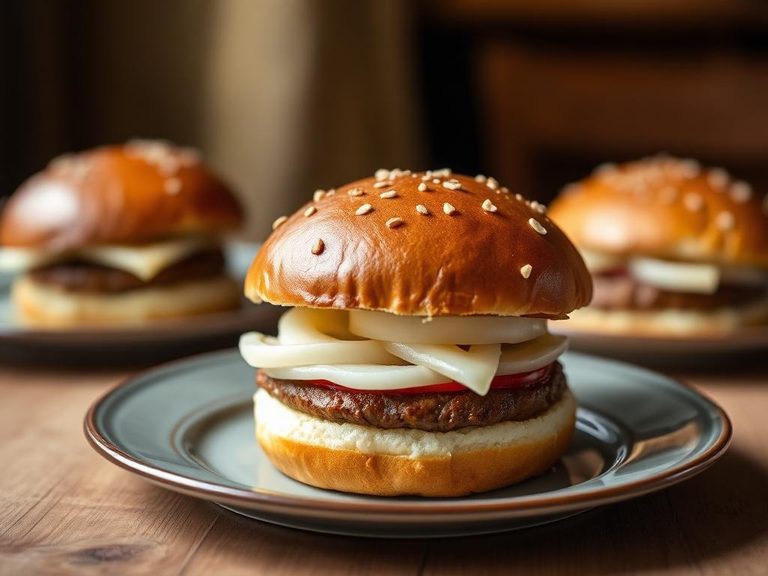



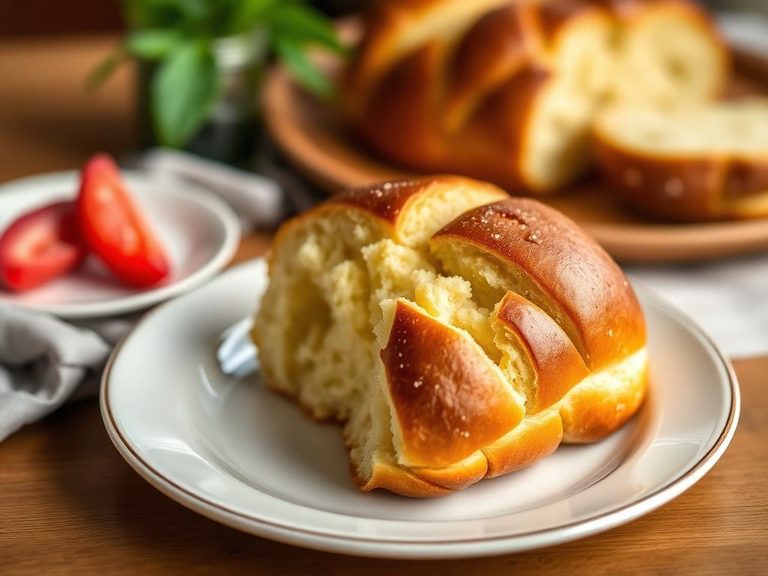

🌍 Where it's eaten
💡 Did you know?
During the French Revolution, a baker named Nicolas Stohrer is credited with inventing the brioche à tête (brioche with a head) to honor the Polish king Stanisław I Leszczyński, who had a sweet tooth.
Full nutrition (USDA data · scales with serving)
| Water | 25.3 g |
| Energy | 427 kcal |
| Protein | 9.0 g |
| Total lipid (fat) | 27.5 g |
| Carbohydrate, by difference | 36.3 g |
| Fiber, total dietary | 1.5 g |
| Total Sugars | 3.1 g |
| Calcium, Ca | 44.0 mg |
| Iron, Fe | 2.9 mg |
| Magnesium, Mg | 17.0 mg |
| Phosphorus, P | 121 mg |
| Potassium, K | 130 mg |
| Sodium, Na | 437 mg |
| Zinc, Zn | 0.79 mg |
| Copper, Cu | 0.07 mg |
| Selenium, Se | 15.0 ug |
| Vitamin C, total ascorbic acid | 0.00 mg |
| Thiamin | 0.47 mg |
| Riboflavin | 0.34 mg |
| Niacin | 3.1 mg |
| Vitamin B-6 | 0.07 mg |
| Folate, total | 90.0 ug |
| Folic acid | 41.0 ug |
| Folate, food | 50.0 ug |
| Folate, DFE | 119 ug |
| Choline, total | 80.1 mg |
| Vitamin B-12 | 0.25 ug |
| Vitamin B-12, added | 0.00 ug |
| Vitamin A, RAE | 269 ug |
| Retinol | 265 ug |
| Carotene, beta | 50.0 ug |
| Carotene, alpha | 1.0 ug |
| Cryptoxanthin, beta | 6.0 ug |
| Lycopene | 0.00 ug |
| Lutein + zeaxanthin | 135 ug |
| Vitamin E (alpha-tocopherol) | 0.30 mg |
| Vitamin E, added | 0.00 mg |
| Vitamin D (D2 + D3) | 0.90 ug |
| Vitamin K (phylloquinone) | 2.3 ug |
| Alcohol, ethyl | 0.00 g |
| Caffeine | 0.00 mg |
| Theobromine | 0.00 mg |
Fat & fatty acid profile (per 100g)
| Fatty acids, total saturated | 14.3 g |
| SFA 4:0 | 0.60 g |
| SFA 6:0 | 0.42 g |
| SFA 8:0 | 0.25 g |
| SFA 10:0 | 0.57 g |
| SFA 12:0 | 0.65 g |
| SFA 14:0 | 2.1 g |
| SFA 16:0 | 6.9 g |
| SFA 18:0 | 2.4 g |
| Fatty acids, total monounsaturated | 6.0 g |
| MUFA 16:1 | 0.38 g |
| MUFA 18:1 | 5.3 g |
| MUFA 20:1 | 0.03 g |
| MUFA 22:1 | 0.00 g |
| Fatty acids, total polyunsaturated | 1.4 g |
| PUFA 18:2 | 1.2 g |
| PUFA 18:3 | 0.11 g |
| PUFA 18:4 | 0.00 g |
| PUFA 20:4 | 0.03 g |
| PUFA 20:5 n-3 (EPA) | 0.01 g |
| PUFA 22:5 n-3 (DPA) | 0.01 g |
| PUFA 22:6 n-3 (DHA) | 0.00 g |
| Cholesterol | 174 mg |
FAQ
What makes brioche different from regular bread?
Brioche is an enriched dough, meaning it contains significant amounts of butter and eggs, which regular bread does not. This creates a richer flavor, softer texture, and higher fat and calorie content.
Can I make brioche at home?
Yes, but it requires patience. The dough is very soft and sticky due to the high butter content, requiring careful kneading and a long, cold rise (often overnight) to develop its structure and flavor.
Is brioche gluten-free?
No, traditional brioche is made with wheat flour and therefore contains gluten. Gluten-free versions can be made using alternative flour blends, but they will have a different texture.
Nutrient density (calculated · NRF9.3)
Nutrient Rich Foods index: beneficial nutrients (protein, fiber, vitamins, minerals) minus saturated fat, added sugar & sodium, per 100 kcal.
NRF9.3 index — Fulgoni, Keast & Drewnowski, 2009. Computed from USDA nutrients.
Weight-loss friendliness (composite index)
Energy density 4.27 kcal/g · 8% calories from protein · 1.5 g fiber · 3.1 g sugar per 100 g.
Composite of energy density (Rolls et al., 1999), protein & fiber satiety, minus sugar. A calculated heuristic — ranks satiety-per-calorie, not a clinical measure.
Dietary load (calculated from USDA values)
Potential renal acid load. Positive = acid-forming, negative = alkaline-forming.
Sodium-to-potassium ratio: 3.36 (lower is better — aim for ≤ 1)
Sodium:potassium per WHO potassium guidance. Computed from USDA nutrients.