

Breakfast bar, cereal crust with fruit filling, lowfat
Common food

Photo: Wikipedia
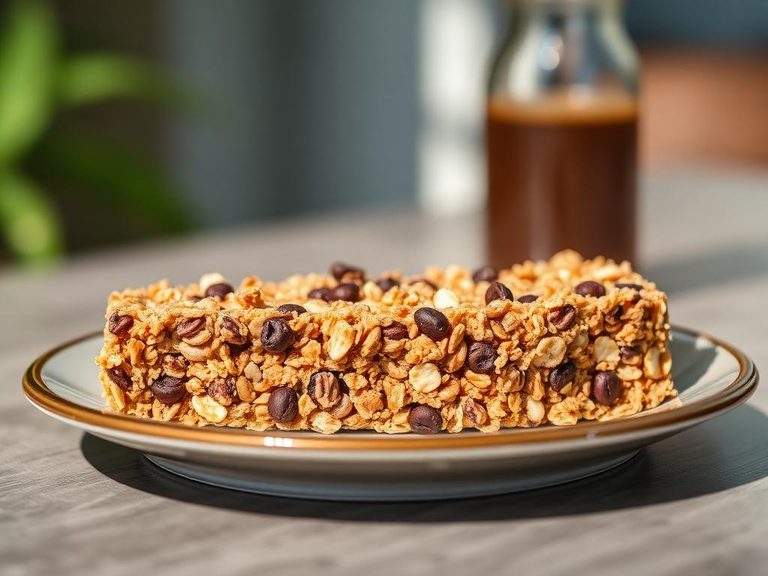
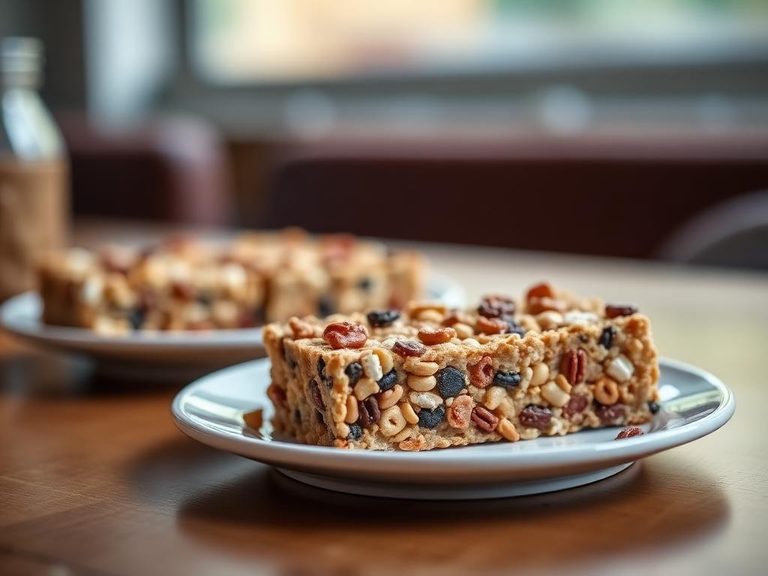
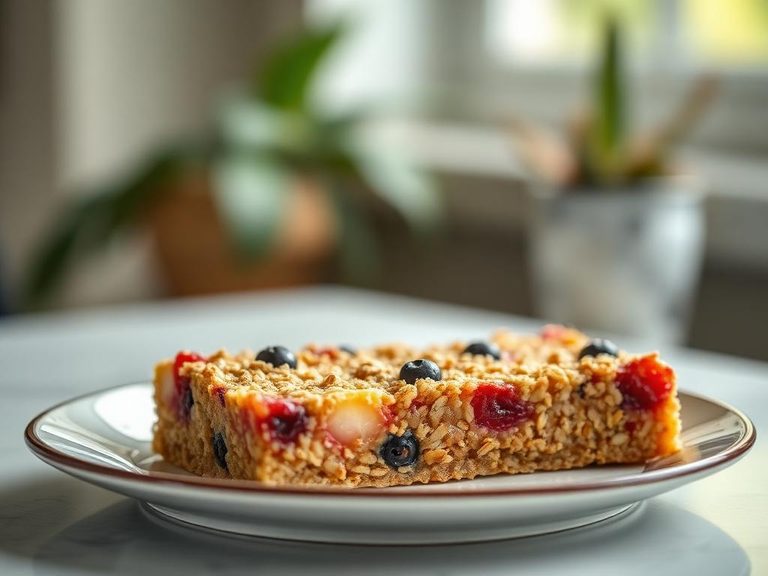
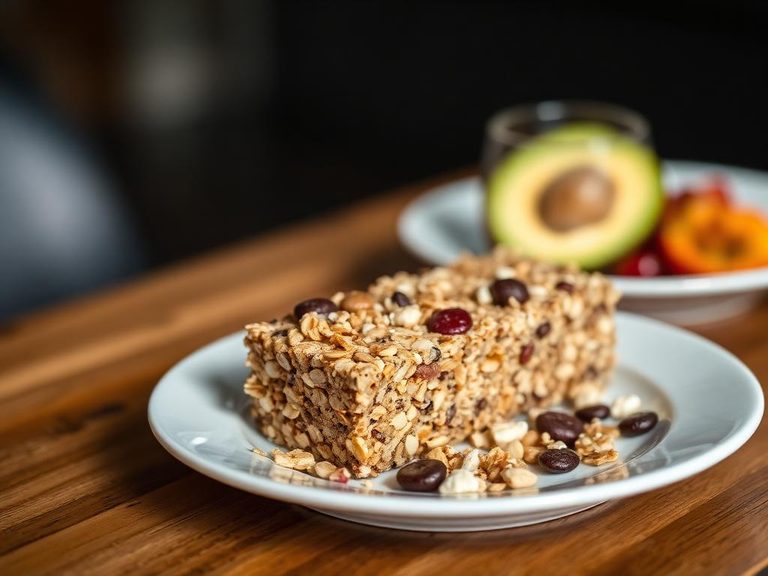
This is a convenient, pre-packaged breakfast bar with a crunchy cereal-based crust and a sweet fruit filling. It offers a chewy, slightly crunchy texture with a burst of fruity sweetness, providing a quick energy source with 376 kcal per 100g, primarily from carbohydrates.
Calorie split: 5% protein · 77% carbs · 18% fat
↓ Full nutrition💚 Why it's loved
People love it for its satisfying combination of textures and its ability to satisfy a sweet craving quickly, making it a popular grab-and-go breakfast or snack option that fits easily into a busy lifestyle.
⚠️ Watch-outs & how to enjoy it better
The high sugar content (35.1g per 100g) can lead to a rapid blood-sugar spike and subsequent crash, leaving you hungry soon after. To counteract this, pair it with a source of protein or healthy fat (like a handful of nuts or a yogurt) to slow sugar absorption and promote satiety.
Key benefits
- Quick and portable energy source
- Provides a sweet, satisfying fruit flavor
- Convenient for busy mornings or on-the-go snacking
- Low in fat per serving
🍽️ Popular dishes

🌍 Where it's eaten
💡 Did you know?
The modern, mass-produced breakfast bar as we know it was largely popularized in the 1980s and 1990s, evolving from earlier health food concepts like the granola bar.
Full nutrition (USDA data · scales with serving)
| Water | 14.5 g |
| Energy | 376 kcal |
| Protein | 4.4 g |
| Total lipid (fat) | 7.5 g |
| Carbohydrate, by difference | 72.8 g |
| Fiber, total dietary | 2.1 g |
| Total Sugars | 35.1 g |
| Calcium, Ca | 41.0 mg |
| Iron, Fe | 4.9 mg |
| Magnesium, Mg | 27.0 mg |
| Phosphorus, P | 103 mg |
| Potassium, K | 197 mg |
| Sodium, Na | 337 mg |
| Zinc, Zn | 4.1 mg |
| Copper, Cu | 0.10 mg |
| Selenium, Se | 15.0 ug |
| Vitamin C, total ascorbic acid | 0.00 mg |
| Thiamin | 1.0 mg |
| Riboflavin | 1.1 mg |
| Niacin | 13.5 mg |
| Vitamin B-6 | 1.4 mg |
| Folate, total | 108 ug |
| Folic acid | 95.0 ug |
| Folate, food | 13.0 ug |
| Folate, DFE | 174 ug |
| Choline, total | 34.3 mg |
| Vitamin B-12 | 0.00 ug |
| Vitamin B-12, added | 0.00 ug |
| Vitamin A, RAE | 608 ug |
| Retinol | 608 ug |
| Carotene, beta | 0.00 ug |
| Carotene, alpha | 0.00 ug |
| Cryptoxanthin, beta | 0.00 ug |
| Lycopene | 0.00 ug |
| Lutein + zeaxanthin | 40.0 ug |
| Vitamin E (alpha-tocopherol) | 0.76 mg |
| Vitamin E, added | 0.00 mg |
| Vitamin D (D2 + D3) | 0.00 ug |
| Vitamin K (phylloquinone) | 13.8 ug |
| Alcohol, ethyl | 0.00 g |
| Caffeine | 0.00 mg |
| Theobromine | 0.00 mg |
Fat & fatty acid profile (per 100g)
| Fatty acids, total saturated | 1.5 g |
| SFA 4:0 | 0.00 g |
| SFA 6:0 | 0.00 g |
| SFA 8:0 | 0.00 g |
| SFA 10:0 | 0.00 g |
| SFA 12:0 | 0.00 g |
| SFA 14:0 | 0.00 g |
| SFA 16:0 | 0.86 g |
| SFA 18:0 | 0.15 g |
| Fatty acids, total monounsaturated | 5.0 g |
| MUFA 16:1 | 0.05 g |
| MUFA 18:1 | 5.0 g |
| MUFA 20:1 | 0.02 g |
| MUFA 22:1 | 0.00 g |
| Fatty acids, total polyunsaturated | 0.90 g |
| PUFA 18:2 | 0.85 g |
| PUFA 18:3 | 0.06 g |
| PUFA 18:4 | 0.00 g |
| PUFA 20:4 | 0.00 g |
| PUFA 20:5 n-3 (EPA) | 0.00 g |
| PUFA 22:5 n-3 (DPA) | 0.00 g |
| PUFA 22:6 n-3 (DHA) | 0.00 g |
| Cholesterol | 0.00 mg |
FAQ
Is this a healthy breakfast option?
It's a convenient option but is high in sugar and refined carbs. For a more balanced breakfast, consider it as part of a meal that includes protein (like eggs or Greek yogurt) and fiber (like fresh fruit) to improve satiety and blood sugar response.
How does it differ from a granola bar?
While similar, a 'cereal crust' often implies a base made from processed cereal grains (like rice or wheat) rather than whole rolled oats, which are typical in traditional granola bars. The texture may be lighter and more uniform.
Can I eat this if I'm watching my sugar intake?
Given its high sugar content (35.1g per 100g), it's best enjoyed in moderation. Check the nutrition label for the sugar content per bar and consider it an occasional treat rather than a daily staple if you're monitoring sugar.
Nutrient density (calculated · NRF9.3)
Nutrient Rich Foods index: beneficial nutrients (protein, fiber, vitamins, minerals) minus saturated fat, added sugar & sodium, per 100 kcal.
NRF9.3 index — Fulgoni, Keast & Drewnowski, 2009. Computed from USDA nutrients.
Weight-loss friendliness (composite index)
Energy density 3.76 kcal/g · 5% calories from protein · 2.1 g fiber · 35.1 g sugar per 100 g.
Composite of energy density (Rolls et al., 1999), protein & fiber satiety, minus sugar. A calculated heuristic — ranks satiety-per-calorie, not a clinical measure.
Dietary load (calculated from USDA values)
Potential renal acid load. Positive = acid-forming, negative = alkaline-forming.
Sodium-to-potassium ratio: 1.71 (lower is better — aim for ≤ 1)
Sodium:potassium per WHO potassium guidance. Computed from USDA nutrients.