

Blueberries, wild, canned, heavy syrup, drained
Whole food · Fruits and Fruit Juices

Photo: Wikipedia
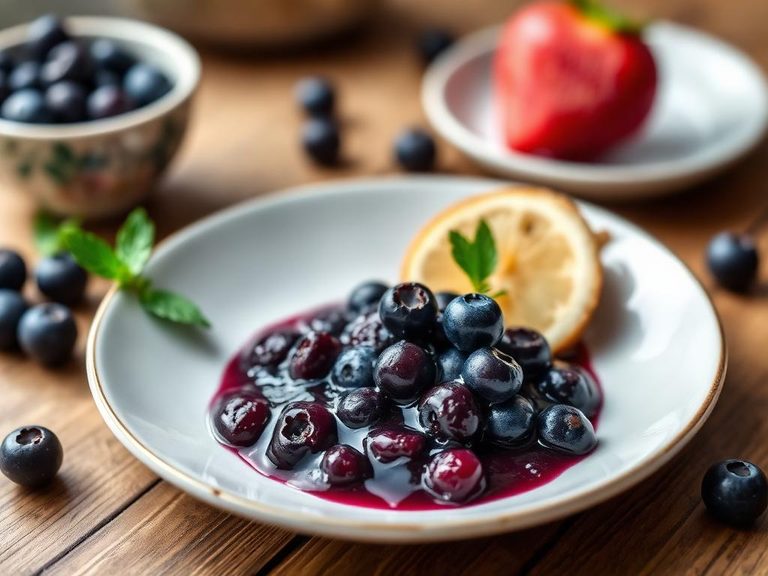
Wild blueberries, preserved in a sweet, heavy syrup and then drained, offer a burst of concentrated, jammy sweetness with a tender, slightly yielding texture. Their deep indigo color comes from potent anthocyanins, and the draining process leaves them glistening but not swimming in liquid. Nutritionally, they are a notable source of dietary fiber and natural sugars, providing a quick energy boost with a lower fat content.
Calorie split: 2% protein · 96% carbs · 3% fat
↓ Full nutrition💚 Why it's loved
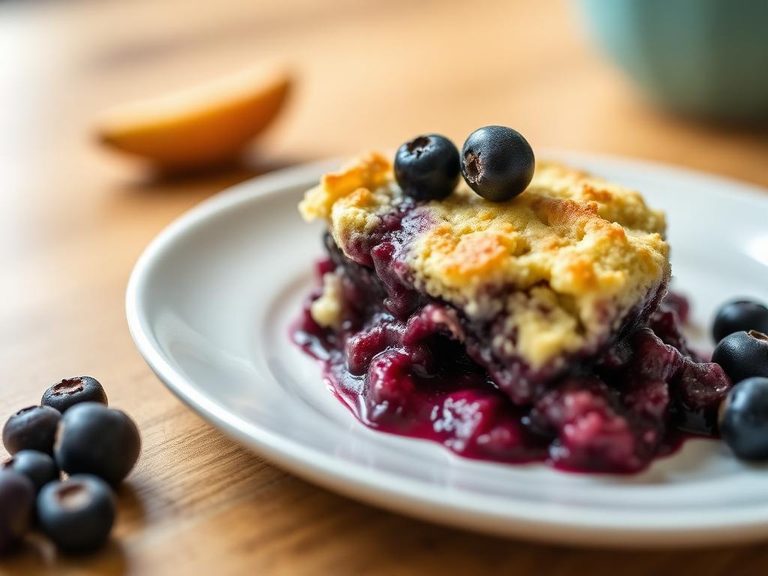
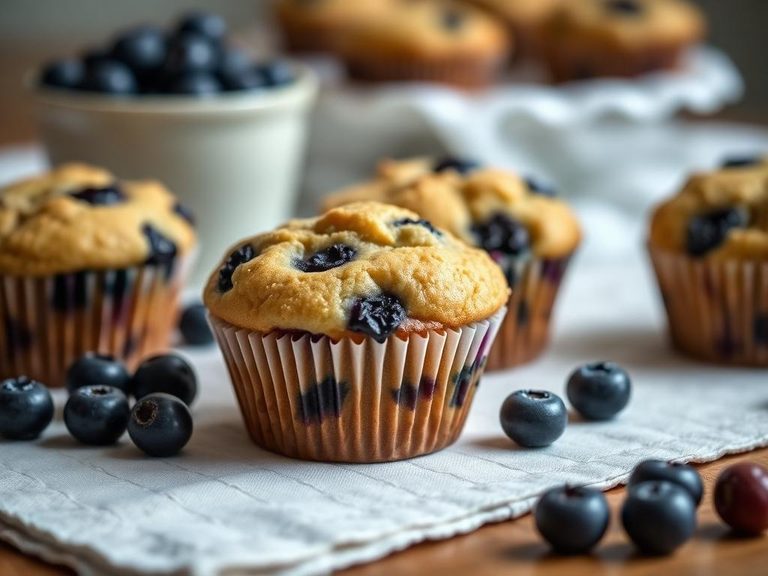
People love them for their intense, sweet-tart flavor that's more complex than cultivated blueberries, and their soft, spoonable texture that blends seamlessly into both breakfasts and desserts. They are a nostalgic staple in quick breads, cobblers, and as a simple topping, valued for their year-round availability and deep, fruity essence.
⚠️ Watch-outs & how to enjoy it better
The primary downside is the high added sugar content from the heavy syrup, which can cause rapid blood-sugar spikes and adds empty calories. To counteract this, pair them with a source of protein or fat (like Greek yogurt, nuts, or cottage cheese) to slow sugar absorption, and practice portion control by using them as a flavorful accent rather than the main component.
Key benefits
- High in dietary fiber for digestive health
- Rich in anthocyanin antioxidants
- Provides a quick source of natural carbohydrates
- Low in fat and protein
- Convenient and shelf-stable form of wild fruit
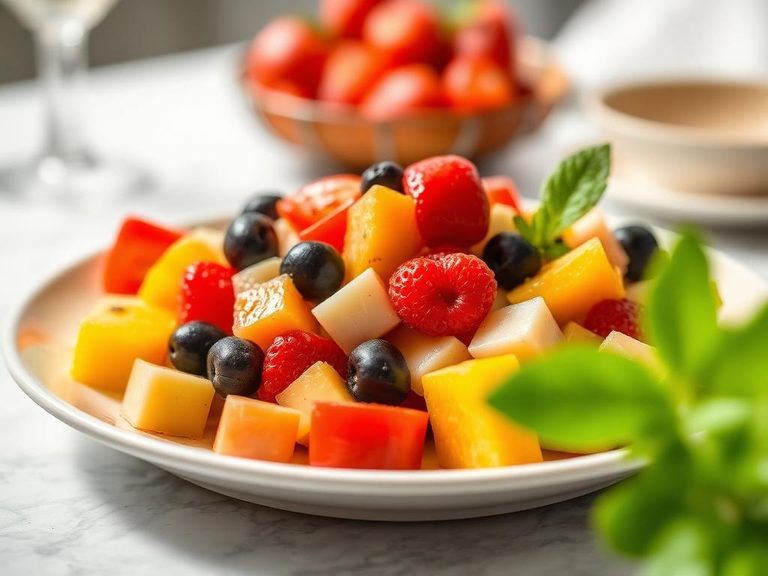
🍽️ Popular dishes


🌍 Where it's eaten
💡 Did you know?
Wild blueberries are often smaller than their cultivated counterparts but have a more intense flavor and higher concentration of antioxidants, as they are not bred for size or shelf life.
Full nutrition (USDA data · scales with serving)
| Water | 70.6 g |
| Energy | 107 kcal |
| Energy | 446 kj |
| Protein | 0.56 g |
| Total lipid (fat) | 0.34 g |
| Ash | 0.15 g |
| Carbohydrate, by difference | 28.3 g |
| Fiber, total dietary | 4.9 g |
| Total Sugars | 19.3 g |
| Sucrose | 0.01 g |
| Glucose | 10.1 g |
| Fructose | 9.0 g |
| Lactose | 0.00 g |
| Maltose | 0.12 g |
| Galactose | 0.00 g |
| Calcium, Ca | 19.0 mg |
| Iron, Fe | 2.2 mg |
| Magnesium, Mg | 6.0 mg |
| Phosphorus, P | 14.0 mg |
| Potassium, K | 46.0 mg |
| Sodium, Na | 1.0 mg |
| Zinc, Zn | 0.12 mg |
| Manganese, Mn | 2.3 mg |
| Vitamin C, total ascorbic acid | 0.30 mg |
| Thiamin | 0.03 mg |
| Riboflavin | 0.31 mg |
| Niacin | 0.47 mg |
| Pantothenic acid | 0.04 mg |
| Vitamin B-6 | 0.04 mg |
| Folate, total | 8.0 ug |
| Folic acid | 0.00 ug |
| Folate, food | 8.0 ug |
| Folate, DFE | 8.0 ug |
| Vitamin K (phylloquinone) | 14.8 ug |
| Vitamin K (Dihydrophylloquinone) | 0.00 ug |
| Vitamin K (Menaquinone-4) | 0.00 ug |
Fat & fatty acid profile (per 100g)
| Fatty acids, total trans | 0.00 g |
Amino acid profile (per 100g)
Estimated from Blueberries, raw — USDA does not publish this profile for Blueberries.
| Tryptophan | 0.00 g |
| Threonine | 0.02 g |
| Isoleucine | 0.02 g |
| Leucine | 0.04 g |
| Lysine | 0.01 g |
| Methionine | 0.01 g |
| Cystine | 0.01 g |
| Phenylalanine | 0.03 g |
| Tyrosine | 0.01 g |
| Valine | 0.03 g |
| Arginine | 0.04 g |
| Histidine | 0.01 g |
| Alanine | 0.03 g |
| Aspartic acid | 0.06 g |
| Glutamic acid | 0.09 g |
| Glycine | 0.03 g |
| Proline | 0.03 g |
| Serine | 0.02 g |
FAQ
How do canned wild blueberries differ from fresh or frozen?
Canned wild blueberries are softer, sweeter, and have a more concentrated flavor due to the syrup and preservation process. They lack the firm texture of fresh berries but are convenient and available year-round.
Can I reduce the sugar content when using them?
Yes, you can thoroughly rinse the drained berries under cold water to remove some surface syrup, or use them in cooked dishes where you can control additional sweeteners.
Are they a good source of vitamins?
While they contain some vitamin C and vitamin K, their main nutritional highlight is fiber and antioxidants. For a significant vitamin boost, pair them with other fruits or fortified foods.
Nutrient density (calculated · NRF9.3)
Nutrient Rich Foods index: beneficial nutrients (protein, fiber, vitamins, minerals) minus saturated fat, added sugar & sodium, per 100 kcal.
NRF9.3 index — Fulgoni, Keast & Drewnowski, 2009. Computed from USDA nutrients.
Weight-loss friendliness (composite index)
Energy density 1.07 kcal/g · 2% calories from protein · 4.9 g fiber · 19.3 g sugar per 100 g.
Composite of energy density (Rolls et al., 1999), protein & fiber satiety, minus sugar. A calculated heuristic — ranks satiety-per-calorie, not a clinical measure.
Dietary load (calculated from USDA values)
Potential renal acid load. Positive = acid-forming, negative = alkaline-forming.
Sodium-to-potassium ratio: 0.02 (lower is better — aim for ≤ 1)
Sodium:potassium per WHO potassium guidance. Computed from USDA nutrients.