

Beverages, tea, black, brewed, prepared with distilled water
Whole food · Beverages
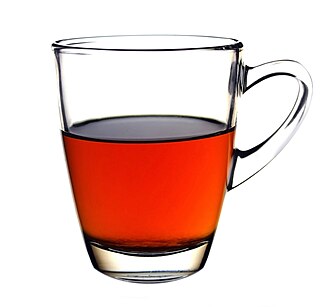
Photo: Wikipedia
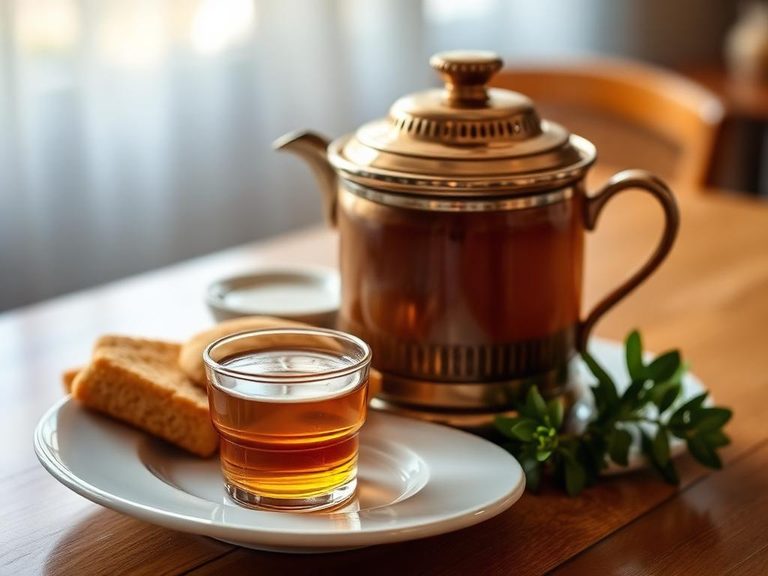
This is a cup of pure, brewed black tea made with distilled water, resulting in a clean, crisp, and robust infusion. Its flavor profile is distinctly malty and brisk, with a subtle astringency and a clear, amber-to-dark-brown hue. Nutritionally, it is virtually calorie-free, providing zero protein, fat, or sugar, making it an exceptionally light beverage.
Calorie split: 0% protein · 100% carbs · 0% fat
↓ Full nutrition💚 Why it's loved
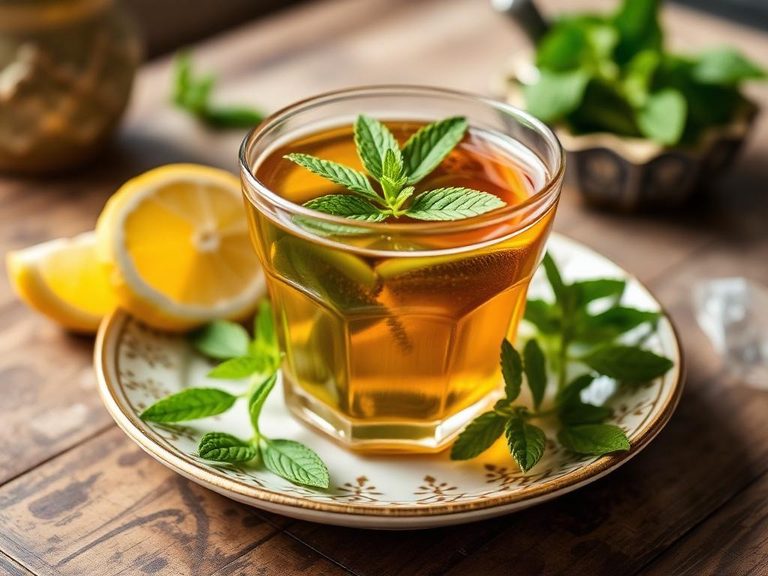
People love it for its deep, complex flavor that can be enjoyed plain or as a versatile base for countless variations, from sweet iced tea to spiced chai. It is a cultural staple in many societies, offering a moment of ritual and comfort, whether in a British afternoon tea or a Moroccan mint tea ceremony.
⚠️ Watch-outs & how to enjoy it better
The high tannin content can cause a dry, astringent mouthfeel and may inhibit iron absorption if consumed with meals, so it's best to drink it between meals. For those sensitive to caffeine, it can cause jitters or disrupt sleep, so limiting intake to the morning or early afternoon is advisable. Using distilled water, while pure, can sometimes yield a flatter taste compared to spring water, which some enthusiasts may find less appealing.
Key benefits
- Contains potent antioxidants like catechins and theaflavins
- Naturally calorie-free, supporting hydration and weight management
- Provides a moderate caffeine boost for alertness without a heavy calorie load
- May support cardiovascular health due to flavonoid content
- The use of distilled water can result in a purer, less mineralized flavor
🍽️ Popular dishes
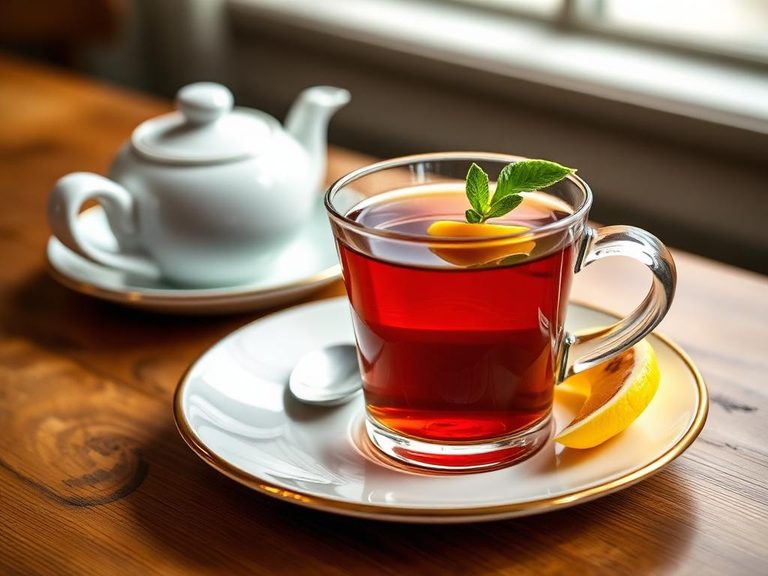
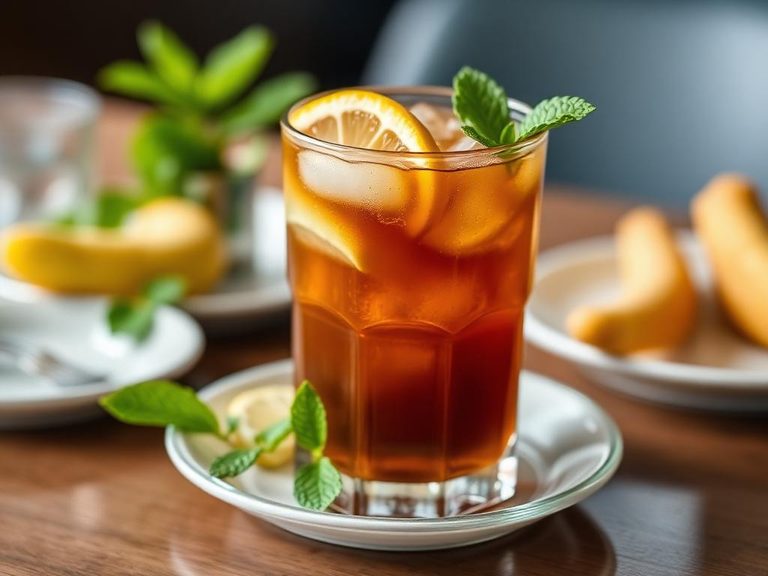
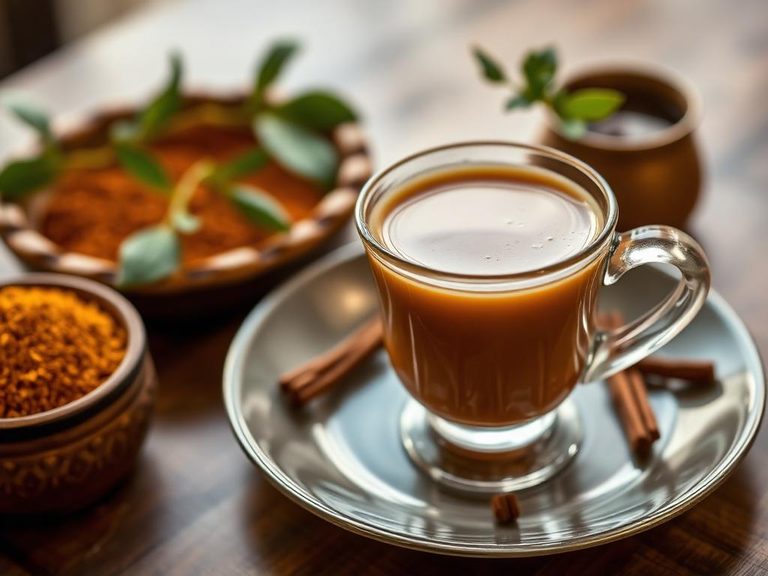
🌍 Where it's eaten
💡 Did you know?
The practice of brewing black tea with distilled water is sometimes used in scientific taste tests to eliminate mineral interference, allowing the pure flavor of the tea leaves to be evaluated without the influence of water chemistry.
Full nutrition (USDA data · scales with serving)
| Water | 99.7 g |
| Energy | 1.0 kcal |
| Energy | 4.0 kj |
| Protein | 0.00 g |
| Total lipid (fat) | 0.00 g |
| Ash | 0.02 g |
| Carbohydrate, by difference | 0.30 g |
| Fiber, total dietary | 0.00 g |
| Calcium, Ca | 0.00 mg |
| Iron, Fe | 0.01 mg |
| Magnesium, Mg | 1.0 mg |
| Phosphorus, P | 1.0 mg |
| Potassium, K | 21.0 mg |
| Sodium, Na | 0.00 mg |
| Zinc, Zn | 0.01 mg |
| Copper, Cu | 0.01 mg |
| Manganese, Mn | 0.22 mg |
| Selenium, Se | 0.00 ug |
| Vitamin C, total ascorbic acid | 0.00 mg |
| Thiamin | 0.00 mg |
| Riboflavin | 0.01 mg |
| Niacin | 0.00 mg |
| Pantothenic acid | 0.01 mg |
| Vitamin B-6 | 0.00 mg |
| Folate, total | 5.0 ug |
| Folic acid | 0.00 ug |
| Folate, food | 5.0 ug |
| Folate, DFE | 5.0 ug |
| Vitamin B-12 | 0.00 ug |
| Retinol | 0.00 ug |
| Vitamin A, IU | 0.00 iu |
| Caffeine | 20.0 mg |
Fat & fatty acid profile (per 100g)
| Fatty acids, total saturated | 0.00 g |
| SFA 16:0 | 0.00 g |
| SFA 18:0 | 0.00 g |
| Fatty acids, total monounsaturated | 0.00 g |
| MUFA 16:1 | 0.00 g |
| MUFA 18:1 | 0.00 g |
| Fatty acids, total polyunsaturated | 0.00 g |
| PUFA 18:2 | 0.00 g |
| PUFA 18:3 | 0.00 g |
| Fatty acids, total trans | 0.00 g |
| Cholesterol | 0.00 mg |
Amino acid profile (per 100g)
| Tryptophan | 0.00 g |
| Threonine | 0.00 g |
| Isoleucine | 0.00 g |
| Leucine | 0.00 g |
| Lysine | 0.00 g |
| Methionine | 0.00 g |
| Cystine | 0.00 g |
| Phenylalanine | 0.00 g |
| Tyrosine | 0.00 g |
| Valine | 0.00 g |
| Arginine | 0.00 g |
| Histidine | 0.00 g |
| Alanine | 0.00 g |
| Aspartic acid | 0.00 g |
| Glutamic acid | 0.00 g |
| Glycine | 0.00 g |
| Proline | 0.00 g |
| Serine | 0.00 g |
FAQ
What does distilled water do to the taste of black tea?
Distilled water is free of minerals, which can result in a cleaner, more pronounced tea flavor. However, it may lack the subtle mouthfeel that minerals like calcium and magnesium provide, potentially making the tea taste slightly flatter or less 'full' to some palates.
Is black tea brewed with distilled water completely calorie-free?
Yes, as per the provided data, it contains only 1 kcal per 100g, which is negligible. The brewing process extracts flavor compounds but adds no significant calories, protein, fat, or sugar.
Can I use distilled water for all types of tea?
While distilled water is pure, many tea connoisseurs recommend filtered or spring water with a balanced mineral content for optimal flavor. Distilled water is excellent for testing tea quality but may not be the best for everyday enjoyment of complex teas.
Nutrient density (calculated · NRF9.3)
Nutrient Rich Foods index: beneficial nutrients (protein, fiber, vitamins, minerals) minus saturated fat, added sugar & sodium, per 100 kcal.
NRF9.3 index — Fulgoni, Keast & Drewnowski, 2009. Computed from USDA nutrients.
Weight-loss friendliness (composite index)
Energy density 0.01 kcal/g · 0% calories from protein · 0.0 g fiber · 0.0 g sugar per 100 g.
Composite of energy density (Rolls et al., 1999), protein & fiber satiety, minus sugar. A calculated heuristic — ranks satiety-per-calorie, not a clinical measure.
Dietary load (calculated from USDA values)
Potential renal acid load. Positive = acid-forming, negative = alkaline-forming.
Sodium-to-potassium ratio: 0.00 (lower is better — aim for ≤ 1)
Sodium:potassium per WHO potassium guidance. Computed from USDA nutrients.