Beef, short loin, t-bone steak, bone-in, separable lean only, trimmed to 1/8" fat, choice, cooked, grilled
Whole food · Beef Products
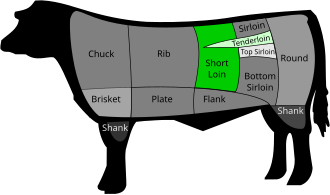
Photo: Wikipedia
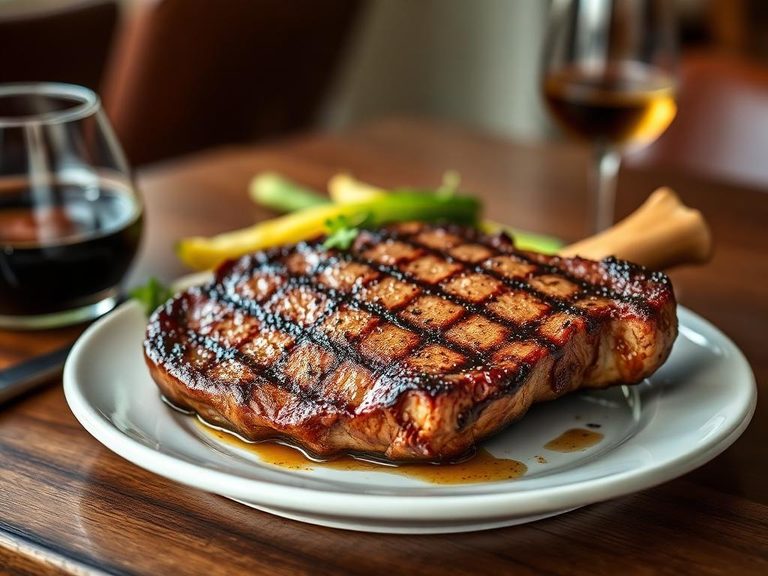
This is a premium, bone-in steak cut from the short loin, featuring the iconic T-shaped bone that separates the larger strip loin from the smaller tenderloin. When grilled, it develops a rich, caramelized crust while the lean meat inside remains juicy and beefy with a firm yet tender texture. It's a high-protein, zero-carb powerhouse, delivering over 27 grams of protein per 100 grams with a moderate fat content for flavor.
💚 Why it's loved
People love the T-bone for the best-of-both-worlds experience: the robust, beefy flavor of the strip side and the buttery tenderness of the filet, all from one steak. It's a celebratory centerpiece, synonymous with grilling culture and the ultimate reward for steak enthusiasts.
⚠️ Watch-outs & how to enjoy it better
As a red meat, it's high in saturated fat and cholesterol, which may be a concern for those managing heart health. It can also be a pricey cut, and improper cooking can lead to a tough chew on the strip side. Counteract this by trimming external fat before cooking, practicing portion control (a 4-6 oz serving is ample), and pairing it with fiber-rich vegetables like grilled asparagus or a leafy salad to balance the meal.
Key benefits
- Excellent source of complete protein for muscle maintenance and satiety
- Naturally zero in carbohydrates and sugars, suitable for ketogenic and low-carb diets
- Rich in bioavailable iron and zinc, essential minerals for energy and immune function
- Contains B vitamins, particularly B12 and niacin, crucial for nerve function and metabolism
- Provides conjugated linoleic acid (CLA), a fatty acid studied for potential health benefits
🍽️ Popular dishes
🌍 Where it's eaten
💡 Did you know?
The 'T' in T-bone is literally the shape of the lumbar vertebra bone left in the cut; a Porterhouse is simply a larger T-bone with a bigger section of tenderloin.
Full nutrition (scales with serving)
| Water | 60.3 g |
| Energy (Atwater General Factors) | 212 kcal |
| Energy (Atwater Specific Factors) | 219 kcal |
| Energy | 219 kcal |
| Energy | 918 kj |
| Protein | 27.3 g |
| Total lipid (fat) | 11.4 g |
| Total fat (NLEA) | 10.5 g |
| Ash | 1.0 g |
| Carbohydrate, by difference | 0.00 g |
| Calcium, Ca | 19.0 mg |
| Iron, Fe | 3.5 mg |
| Magnesium, Mg | 20.0 mg |
| Phosphorus, P | 211 mg |
| Potassium, K | 283 mg |
| Sodium, Na | 67.0 mg |
| Zinc, Zn | 4.7 mg |
| Copper, Cu | 0.08 mg |
| Manganese, Mn | 0.00 mg |
| Selenium, Se | 29.7 ug |
| Riboflavin | 0.27 mg |
| Niacin | 6.4 mg |
| Vitamin B-6 | 0.75 mg |
| Vitamin B-12 | 1.9 ug |
| Fatty acids, total saturated | 4.7 g |
| SFA 10:0 | 0.01 g |
| SFA 12:0 | 0.01 g |
| SFA 14:0 | 0.30 g |
| SFA 15:0 | 0.05 g |
| SFA 16:0 | 2.7 g |
| SFA 17:0 | 0.13 g |
| SFA 18:0 | 1.5 g |
| SFA 20:0 | 0.01 g |
| SFA 24:0 | 0.00 g |
| Fatty acids, total monounsaturated | 4.7 g |
| MUFA 14:1 c | 0.07 g |
| MUFA 16:1 c | 0.35 g |
| MUFA 17:1 | 0.09 g |
| MUFA 17:1 c | 0.09 g |
| MUFA 18:1 c | 4.2 g |
| MUFA 20:1 | 0.02 g |
| MUFA 20:1 c | 0.02 g |
| Fatty acids, total polyunsaturated | 0.51 g |
| PUFA 18:2 c | 0.41 g |
| PUFA 18:2 n-6 c,c | 0.37 g |
| PUFA 18:2 CLAs | 0.04 g |
| PUFA 18:3 c | 0.02 g |
| PUFA 18:3 n-3 c,c,c (ALA) | 0.02 g |
| PUFA 20:2 c | 0.00 g |
| PUFA 20:2 n-6 c,c | 0.00 g |
| PUFA 20:3 c | 0.02 g |
| PUFA 20:3 n-6 | 0.02 g |
| PUFA 20:4 | 0.05 g |
| PUFA 20:4c | 0.05 g |
| PUFA 20:5c | 0.00 g |
| PUFA 20:5 n-3 (EPA) | 0.00 g |
| PUFA 22:5 c | 0.01 g |
| PUFA 22:5 n-3 (DPA) | 0.01 g |
| PUFA 22:6 c | 0.00 g |
| PUFA 22:6 n-3 (DHA) | 0.00 g |
| Fatty acids, total trans | 0.59 g |
| Fatty acids, total trans-monoenoic | 0.53 g |
| TFA 16:1 t | 0.03 g |
| TFA 18:1 t | 0.50 g |
| Fatty acids, total trans-dienoic | 0.06 g |
| TFA 18:2 t not further defined | 0.06 g |
| Cholesterol | 80.0 mg |
FAQ
What's the difference between a T-bone and a Porterhouse?
They are the same cut from the same part of the cow. The USDA defines a Porterhouse as having a tenderloin section at least 1.25 inches wide at its widest, while a T-bone's tenderloin is narrower.
How should I cook a T-bone steak for the best results?
For a thick-cut T-bone, a reverse sear is ideal: bake at a low temperature (225°F) until the internal temp is 10-15°F below your target, then sear in a screaming-hot cast-iron skillet or on the grill to develop a crust. Rest for 5-10 minutes before slicing.
Is the bone edible?
The meat attached to the bone, especially near the ends, is often the most flavorful and tender part. While the bone itself isn't eaten, it's common to gnaw on it or use it later to make a rich beef stock.