

Beef and noodles with gravy
Common food
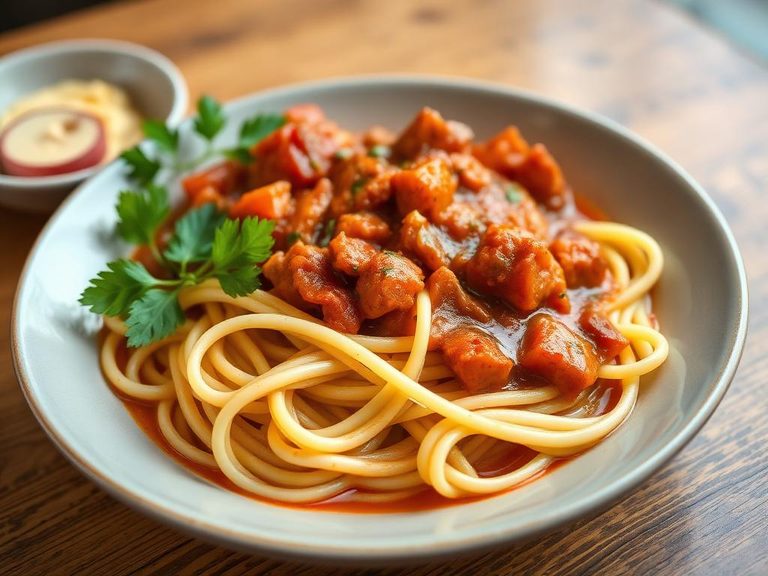
Beef and noodles with gravy is a hearty, savory comfort food featuring tender beef strips or chunks simmered in a rich, brown gravy, typically served over soft egg noodles or wheat noodles. The dish offers a satisfying, umami-forward flavor with a velvety sauce that clings to the noodles, creating a warm, filling texture. With 139 kcal per 100g, it provides a moderate energy source with 7.7g of protein and 15.39g of carbs, making it a balanced yet indulgent meal.
Calorie split: 22% protein · 45% carbs · 33% fat
↓ Full nutrition💚 Why it's loved
People love this dish for its comforting, nostalgic appeal, often associated with home-cooked meals and family gatherings. The rich, savory gravy and tender beef create a satisfying, indulgent experience that warms both body and soul, making it a popular choice in many cultures.
⚠️ Watch-outs & how to enjoy it better
The dish can be high in sodium and saturated fat, especially if made with processed gravy or fatty beef cuts, which may concern those watching blood pressure or cholesterol. To counteract this, opt for lean beef, use low-sodium broth in the gravy, and pair with fiber-rich vegetables like broccoli or green beans to slow digestion and balance blood sugar spikes.
Key benefits
- Provides a good source of protein from beef, supporting muscle maintenance
- Offers quick energy from carbohydrate-rich noodles
- Contains iron and B vitamins from beef, essential for energy metabolism
- The gravy adds moisture and flavor, enhancing palatability and satiety
- A versatile dish that can be adapted with vegetables for added nutrition
🍽️ Popular dishes
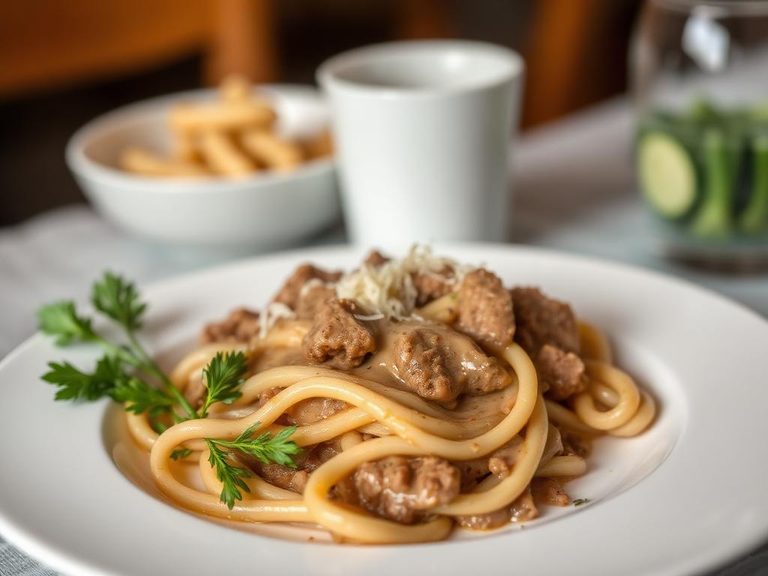
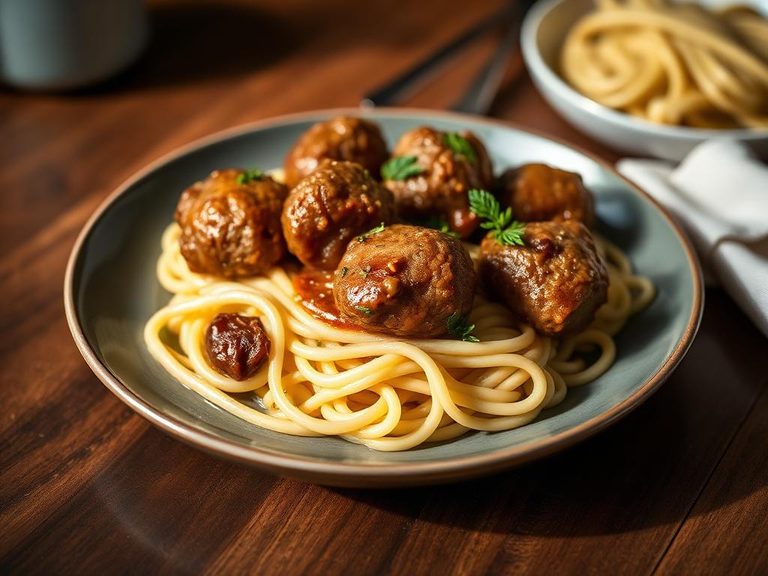

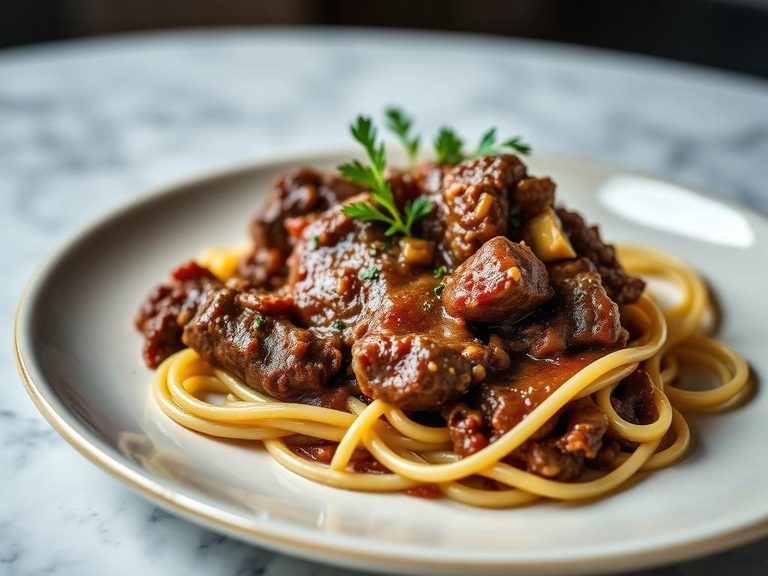
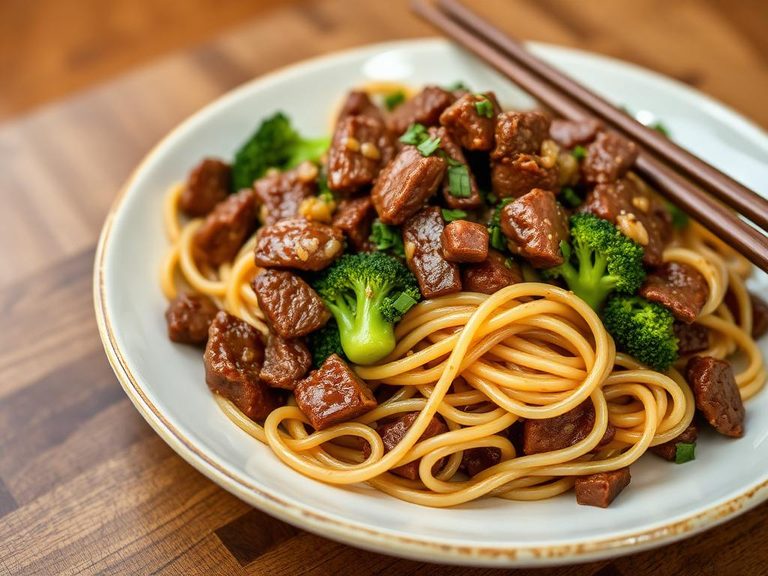
🌍 Where it's eaten
💡 Did you know?
The word 'stroganoff' in Beef Stroganoff comes from the Russian Stroganov family, and the dish was reportedly created in the 19th century by a French chef working for them, blending French culinary techniques with Russian ingredients.
Full nutrition (USDA data · scales with serving)
| Water | 70.7 g |
| Energy | 139 kcal |
| Protein | 7.7 g |
| Total lipid (fat) | 5.1 g |
| Carbohydrate, by difference | 15.4 g |
| Fiber, total dietary | 0.70 g |
| Total Sugars | 0.32 g |
| Calcium, Ca | 11.0 mg |
| Iron, Fe | 1.2 mg |
| Magnesium, Mg | 16.0 mg |
| Phosphorus, P | 79.0 mg |
| Potassium, K | 75.0 mg |
| Sodium, Na | 304 mg |
| Zinc, Zn | 1.2 mg |
| Copper, Cu | 0.07 mg |
| Selenium, Se | 18.3 ug |
| Vitamin C, total ascorbic acid | 0.00 mg |
| Thiamin | 0.18 mg |
| Riboflavin | 0.12 mg |
| Niacin | 2.1 mg |
| Vitamin B-6 | 0.10 mg |
| Folate, total | 48.0 ug |
| Folic acid | 42.0 ug |
| Folate, food | 6.0 ug |
| Folate, DFE | 77.0 ug |
| Choline, total | 34.2 mg |
| Vitamin B-12 | 0.33 ug |
| Vitamin B-12, added | 0.00 ug |
| Vitamin A, RAE | 4.0 ug |
| Retinol | 4.0 ug |
| Carotene, beta | 1.0 ug |
| Carotene, alpha | 0.00 ug |
| Cryptoxanthin, beta | 0.00 ug |
| Lycopene | 0.00 ug |
| Lutein + zeaxanthin | 21.0 ug |
| Vitamin E (alpha-tocopherol) | 0.50 mg |
| Vitamin E, added | 0.00 mg |
| Vitamin D (D2 + D3) | 0.10 ug |
| Vitamin K (phylloquinone) | 2.1 ug |
| Alcohol, ethyl | 0.00 g |
| Caffeine | 0.00 mg |
| Theobromine | 0.00 mg |
Fat & fatty acid profile (per 100g)
| Fatty acids, total saturated | 1.2 g |
| SFA 4:0 | 0.00 g |
| SFA 6:0 | 0.00 g |
| SFA 8:0 | 0.00 g |
| SFA 10:0 | 0.00 g |
| SFA 12:0 | 0.00 g |
| SFA 14:0 | 0.05 g |
| SFA 16:0 | 0.85 g |
| SFA 18:0 | 0.29 g |
| Fatty acids, total monounsaturated | 2.0 g |
| MUFA 16:1 | 0.13 g |
| MUFA 18:1 | 1.8 g |
| MUFA 20:1 | 0.02 g |
| MUFA 22:1 | 0.00 g |
| Fatty acids, total polyunsaturated | 1.1 g |
| PUFA 18:2 | 1.00 g |
| PUFA 18:3 | 0.11 g |
| PUFA 18:4 | 0.00 g |
| PUFA 20:4 | 0.01 g |
| PUFA 20:5 n-3 (EPA) | 0.00 g |
| PUFA 22:5 n-3 (DPA) | 0.00 g |
| PUFA 22:6 n-3 (DHA) | 0.00 g |
| Cholesterol | 32.0 mg |
FAQ
Is beef and noodles with gravy a healthy meal?
It can be part of a balanced diet if made with lean beef, whole-grain noodles, and low-sodium gravy. However, it may be high in sodium and saturated fat, so moderation and mindful preparation are key.
Can I make beef and noodles with gravy gluten-free?
Yes, by using gluten-free noodles (like rice or buckwheat noodles) and thickening the gravy with cornstarch instead of flour, you can adapt the dish for gluten-free diets.
How can I reduce the calorie content of this dish?
Use lean cuts of beef, reduce the amount of gravy, and increase the proportion of vegetables like carrots or peas. Opting for whole-wheat noodles can also add fiber and help with satiety.
Nutrient density (calculated · NRF9.3)
Nutrient Rich Foods index: beneficial nutrients (protein, fiber, vitamins, minerals) minus saturated fat, added sugar & sodium, per 100 kcal.
NRF9.3 index — Fulgoni, Keast & Drewnowski, 2009. Computed from USDA nutrients.
Weight-loss friendliness (composite index)
Energy density 1.39 kcal/g · 22% calories from protein · 0.7 g fiber · 0.3 g sugar per 100 g.
Composite of energy density (Rolls et al., 1999), protein & fiber satiety, minus sugar. A calculated heuristic — ranks satiety-per-calorie, not a clinical measure.
Dietary load (calculated from USDA values)
Potential renal acid load. Positive = acid-forming, negative = alkaline-forming.
Sodium-to-potassium ratio: 4.05 (lower is better — aim for ≤ 1)
Sodium:potassium per WHO potassium guidance. Computed from USDA nutrients.