

Bean cake
Common food

Photo: Wikipedia
Bean cake, often known as Akara, is a savory, deep-fried fritter made from a seasoned paste of peeled black-eyed peas. It boasts a delightful contrast of a crisp, golden-brown exterior and a soft, fluffy interior, with a rich, nutty flavor profile. Nutritionally, it's a high-energy food, providing significant carbohydrates and fats for sustained fuel, alongside a modest protein boost.
Calorie split: 6% protein · 48% carbs · 46% fat
↓ Full nutrition💚 Why it's loved
People adore bean cake for its satisfying, savory crunch and hearty, comforting flavor that serves as a perfect snack or breakfast staple. Its versatility allows it to be enjoyed plain, with spicy pepper sauce, or as a component in larger meals, making it a beloved cultural touchstone in West African cuisine.
⚠️ Watch-outs & how to enjoy it better
The deep-frying process makes it high in fat and calories, which can be a concern for those managing weight or heart health. To mitigate this, pair it with a fresh vegetable salad or grilled protein to balance the meal, and practice portion control by limiting servings to one or two cakes. Additionally, the high carbohydrate content can cause blood sugar spikes; consuming it with fiber-rich sides or a source of fat can slow glucose absorption.
Key benefits
- High in energy-dense carbohydrates for quick fuel
- Provides plant-based protein from black-eyed peas
- Contains dietary fiber for digestive health
- Source of essential minerals like iron and magnesium
- Naturally gluten-free, suitable for gluten-sensitive diets
🍽️ Popular dishes
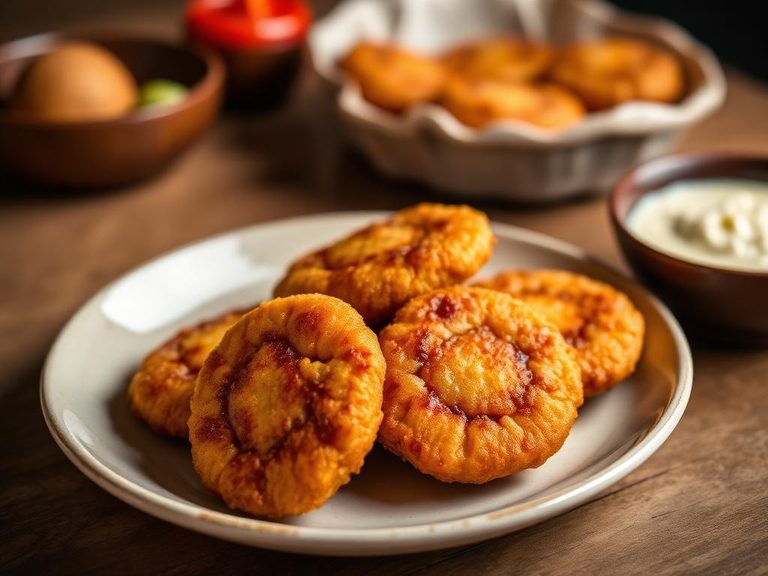
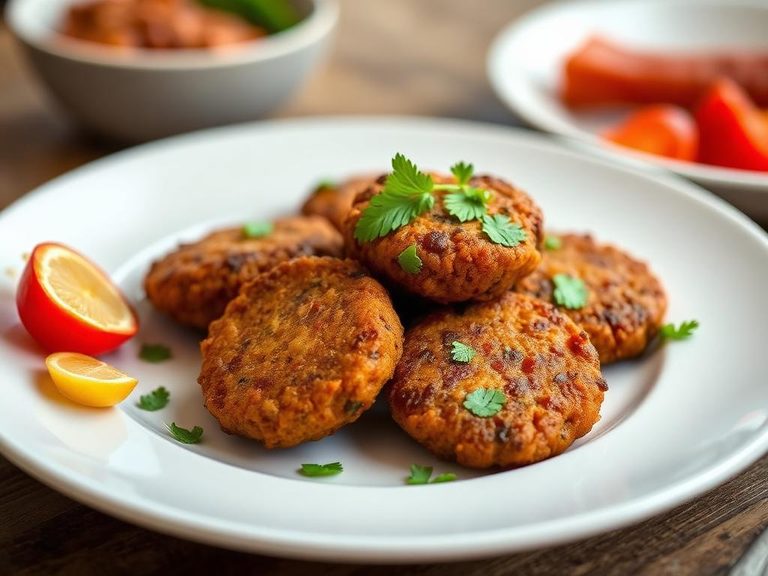
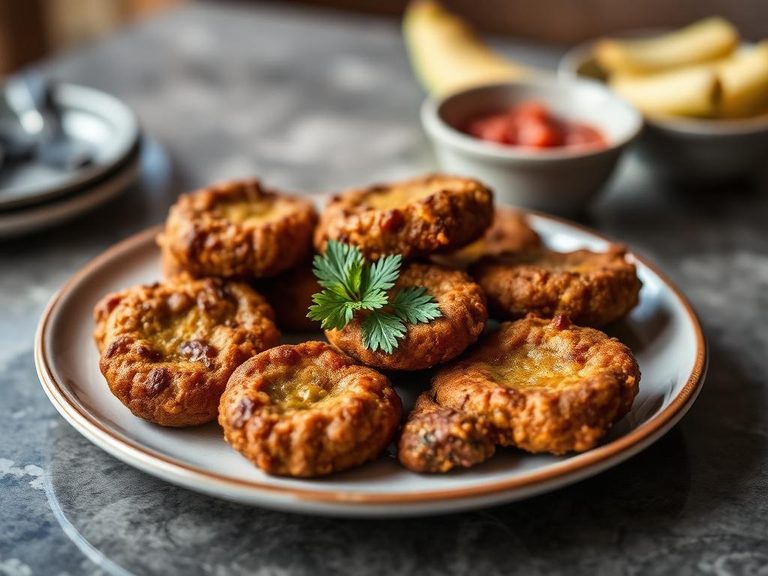
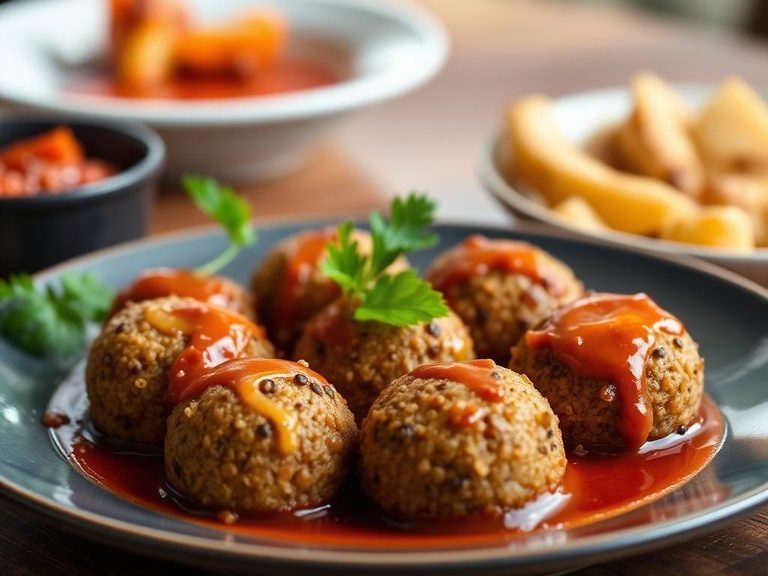
🌍 Where it's eaten
💡 Did you know?
The black-eyed peas used in bean cake are traditionally soaked and blended without water to create a thick, airy batter, and the frying process causes the batter to puff up, creating a light, almost meringue-like interior.
Full nutrition (USDA data · scales with serving)
| Water | 22.0 g |
| Energy | 414 kcal |
| Protein | 5.8 g |
| Total lipid (fat) | 21.4 g |
| Carbohydrate, by difference | 49.9 g |
| Fiber, total dietary | 3.0 g |
| Total Sugars | 20.4 g |
| Calcium, Ca | 15.0 mg |
| Iron, Fe | 2.6 mg |
| Magnesium, Mg | 21.0 mg |
| Phosphorus, P | 74.0 mg |
| Potassium, K | 160 mg |
| Sodium, Na | 186 mg |
| Zinc, Zn | 0.53 mg |
| Copper, Cu | 0.12 mg |
| Selenium, Se | 5.1 ug |
| Vitamin C, total ascorbic acid | 0.30 mg |
| Thiamin | 0.27 mg |
| Riboflavin | 0.14 mg |
| Niacin | 2.0 mg |
| Vitamin B-6 | 0.05 mg |
| Folate, total | 70.0 ug |
| Folic acid | 29.0 ug |
| Folate, food | 41.0 ug |
| Folate, DFE | 90.0 ug |
| Choline, total | 12.0 mg |
| Vitamin B-12 | 0.00 ug |
| Vitamin B-12, added | 0.00 ug |
| Vitamin A, RAE | 0.00 ug |
| Retinol | 0.00 ug |
| Carotene, beta | 0.00 ug |
| Carotene, alpha | 0.00 ug |
| Cryptoxanthin, beta | 0.00 ug |
| Lycopene | 0.00 ug |
| Lutein + zeaxanthin | 5.0 ug |
| Vitamin E (alpha-tocopherol) | 4.0 mg |
| Vitamin E, added | 0.00 mg |
| Vitamin D (D2 + D3) | 0.00 ug |
| Vitamin K (phylloquinone) | 23.4 ug |
| Alcohol, ethyl | 0.00 g |
| Caffeine | 0.00 mg |
| Theobromine | 0.00 mg |
Fat & fatty acid profile (per 100g)
| Fatty acids, total saturated | 2.8 g |
| SFA 4:0 | 0.00 g |
| SFA 6:0 | 0.00 g |
| SFA 8:0 | 0.00 g |
| SFA 10:0 | 0.00 g |
| SFA 12:0 | 0.00 g |
| SFA 14:0 | 0.01 g |
| SFA 16:0 | 2.1 g |
| SFA 18:0 | 0.60 g |
| Fatty acids, total monounsaturated | 8.8 g |
| MUFA 16:1 | 0.07 g |
| MUFA 18:1 | 8.6 g |
| MUFA 20:1 | 0.14 g |
| MUFA 22:1 | 0.00 g |
| Fatty acids, total polyunsaturated | 8.2 g |
| PUFA 18:2 | 7.2 g |
| PUFA 18:3 | 0.96 g |
| PUFA 18:4 | 0.00 g |
| PUFA 20:4 | 0.00 g |
| PUFA 20:5 n-3 (EPA) | 0.00 g |
| PUFA 22:5 n-3 (DPA) | 0.00 g |
| PUFA 22:6 n-3 (DHA) | 0.00 g |
| Cholesterol | 0.00 mg |
FAQ
What is the difference between bean cake and bean fritter?
Bean cake and bean fritter are often used interchangeably, but bean cake typically refers to a denser, more cake-like texture made from a thick paste, while bean fritter may be lighter and more airy. In West African cuisine, 'Akara' is the common term for bean cake.
Is bean cake gluten-free?
Yes, traditional bean cake made from black-eyed peas is naturally gluten-free, as it contains no wheat or gluten-based ingredients. However, always check for cross-contamination if prepared in a shared kitchen.
Can I bake bean cake instead of frying it?
While traditional bean cake is deep-fried for its signature crispness, you can bake it in a muffin tin or on a baking sheet for a healthier alternative. The texture will be less crispy but still flavorful, and you'll reduce the fat content significantly.
What is the best way to store leftover bean cake?
Store leftover bean cake in an airtight container in the refrigerator for up to 3 days. To reheat, use an oven or toaster oven to restore crispness, or microwave for a softer texture. Avoid freezing as the texture may become soggy upon thawing.
Nutrient density (calculated · NRF9.3)
Nutrient Rich Foods index: beneficial nutrients (protein, fiber, vitamins, minerals) minus saturated fat, added sugar & sodium, per 100 kcal.
NRF9.3 index — Fulgoni, Keast & Drewnowski, 2009. Computed from USDA nutrients.
Weight-loss friendliness (composite index)
Energy density 4.14 kcal/g · 6% calories from protein · 3.0 g fiber · 20.4 g sugar per 100 g.
Composite of energy density (Rolls et al., 1999), protein & fiber satiety, minus sugar. A calculated heuristic — ranks satiety-per-calorie, not a clinical measure.
Dietary load (calculated from USDA values)
Potential renal acid load. Positive = acid-forming, negative = alkaline-forming.
Sodium-to-potassium ratio: 1.16 (lower is better — aim for ≤ 1)
Sodium:potassium per WHO potassium guidance. Computed from USDA nutrients.