Falafel, home-prepared
Whole food · Legumes and Legume Products

Photo: Wikipedia
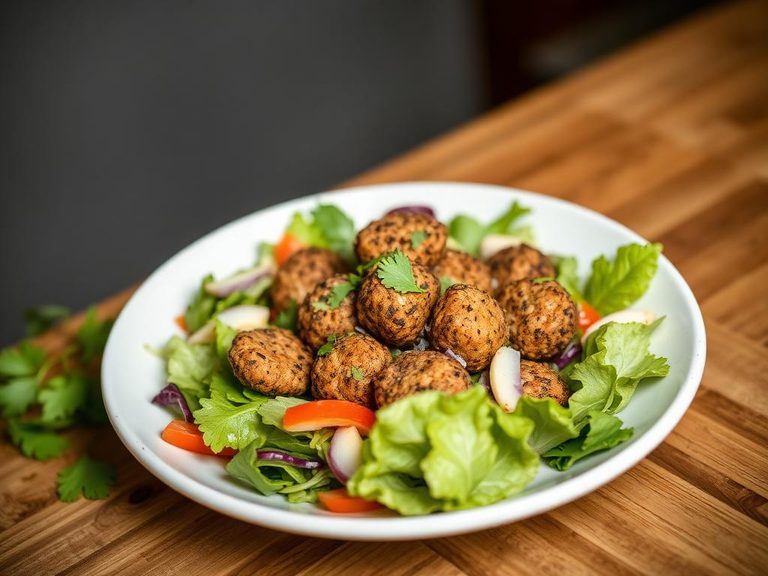
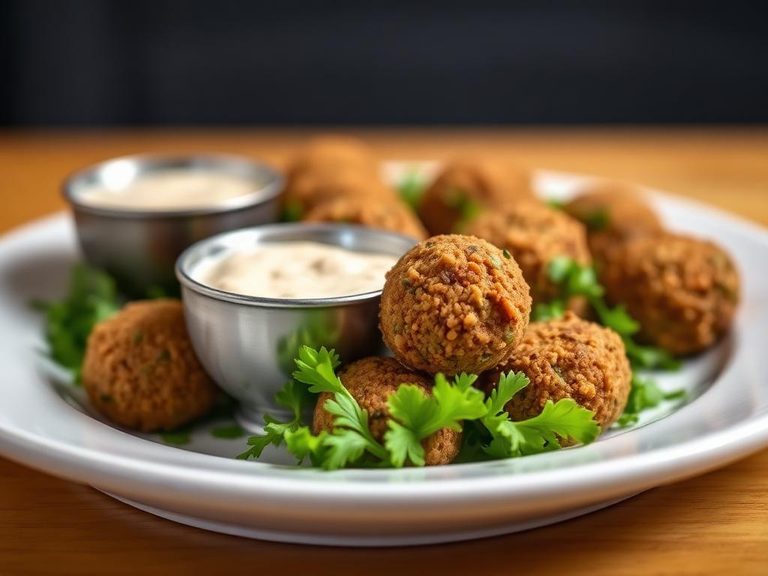
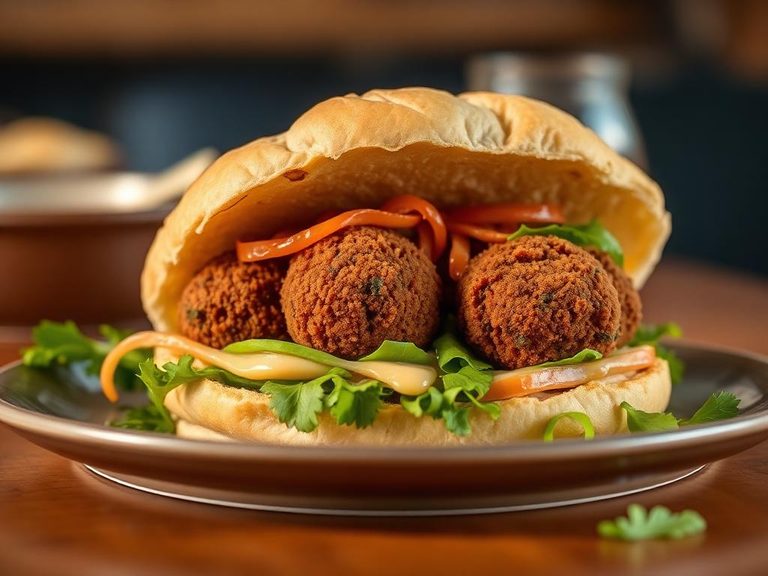
Falafel is a deep-fried ball or patty made from ground chickpeas (or fava beans), herbs, and spices, offering a crispy golden exterior and a tender, earthy interior. This home-prepared version provides a substantial 13.31g of plant-based protein per 100g, making it a satisfying meat alternative. Its rich flavor profile comes from ingredients like cumin, coriander, and garlic, often served in a pita with fresh vegetables.
💚 Why it's loved
People love falafel for its irresistible contrast of crunchy texture and savory, herbaceous flavor, which makes it a satisfying centerpiece for meals. It's also celebrated for its incredible versatility, serving as the heart of everything from quick street food wraps to elaborate mezze platters.
⚠️ Watch-outs & how to enjoy it better
Deep-fried falafel can be high in fat and calories, and its low fiber content (as per the provided data) may lead to quicker blood sugar spikes compared to whole chickpeas. Those watching sodium intake should be mindful, as restaurant or pre-made versions can be salty. To counteract this, opt for baking instead of frying, pair with fiber-rich salads or whole-grain pita, and control portion size.
Key benefits
- Excellent source of plant-based protein
- Naturally cholesterol-free
- Good source of iron and folate from chickpeas
- Can be baked for a lower-fat preparation
- Versatile base for many meal formats
🍽️ Popular dishes

🌍 Where it's eaten
💡 Did you know?
While often associated with chickpeas, the original Egyptian falafel, known as ta'amiya, is made entirely from fava beans.
Full nutrition (scales with serving)
| Water | 34.6 g |
| Energy | 333 kcal |
| Energy | 1393 kj |
| Protein | 13.3 g |
| Total lipid (fat) | 17.8 g |
| Ash | 2.4 g |
| Carbohydrate, by difference | 31.8 g |
| Calcium, Ca | 54.0 mg |
| Iron, Fe | 3.4 mg |
| Magnesium, Mg | 82.0 mg |
| Phosphorus, P | 192 mg |
| Potassium, K | 585 mg |
| Sodium, Na | 294 mg |
| Zinc, Zn | 1.5 mg |
| Copper, Cu | 0.26 mg |
| Manganese, Mn | 0.69 mg |
| Selenium, Se | 1.0 ug |
| Vitamin C, total ascorbic acid | 1.6 mg |
| Thiamin | 0.15 mg |
| Riboflavin | 0.17 mg |
| Niacin | 1.0 mg |
| Pantothenic acid | 0.29 mg |
| Vitamin B-6 | 0.13 mg |
| Folate, total | 93.0 ug |
| Folic acid | 15.0 ug |
| Folate, food | 78.0 ug |
| Folate, DFE | 104 ug |
| Vitamin B-12 | 0.00 ug |
| Vitamin A, RAE | 1.0 ug |
| Retinol | 0.00 ug |
| Vitamin A, IU | 13.0 iu |
| Vitamin D (D2 + D3), International Units | 0.00 iu |
| Vitamin D (D2 + D3) | 0.00 ug |
Fat & fatty acid profile (per 100g)
| Fatty acids, total saturated | 2.4 g |
| SFA 14:0 | 0.01 g |
| SFA 16:0 | 1.8 g |
| SFA 18:0 | 0.53 g |
| Fatty acids, total monounsaturated | 10.2 g |
| MUFA 16:1 | 0.10 g |
| MUFA 18:1 | 9.7 g |
| MUFA 20:1 | 0.04 g |
| Fatty acids, total polyunsaturated | 4.2 g |
| PUFA 18:2 | 0.49 g |
| PUFA 18:3 | 0.11 g |
| Fatty acids, total trans | 0.00 g |
| Cholesterol | 0.00 mg |
Amino acid profile (per 100g)
| Tryptophan | 0.13 g |
| Threonine | 0.49 g |
| Isoleucine | 0.57 g |
| Leucine | 0.94 g |
| Lysine | 0.86 g |
| Methionine | 0.19 g |
| Cystine | 0.18 g |
| Phenylalanine | 0.71 g |
| Tyrosine | 0.34 g |
| Valine | 0.56 g |
| Arginine | 1.3 g |
| Histidine | 0.36 g |
| Alanine | 0.57 g |
| Aspartic acid | 1.5 g |
| Glutamic acid | 2.3 g |
| Glycine | 0.57 g |
| Proline | 0.55 g |
| Serine | 0.67 g |
FAQ
Can falafel be made without frying?
Yes, falafel can be baked in an oven or cooked in an air fryer. This significantly reduces the fat content while still achieving a crispy exterior.
Why do my homemade falafel fall apart?
This is often due to the mixture being too wet or not binding properly. Ensure chickpeas are dried well after soaking, don't over-process the mixture, and let it rest in the fridge for an hour before forming and cooking.
Is falafel gluten-free?
The falafel mixture itself is typically gluten-free. However, it is often served in wheat-based pita bread or with sauces that may contain gluten, so always check ingredients.