Peaches, canned, extra light syrup, solids and liquids (Includes foods for USDA's Food Distribution Program)
Whole food · Fruits and Fruit Juices
These are peach halves or slices preserved in a light, sweetened syrup, offering a tender, juicy bite with a delicate, sunny sweetness. Nutritionally, they are a low-calorie, low-fat option, providing a modest 42 calories and 1 gram of fiber per 100g serving. The extra light syrup keeps the sugar content minimal compared to heavier syrups.
💚 Why it's loved
People love them for their consistent, mellow sweetness and soft, spoonable texture that requires no prep. They are a nostalgic, versatile staple for quick desserts, salads, and breakfasts.
⚠️ Watch-outs & how to enjoy it better
The primary caution is the added sugar from the syrup, which can cause blood-sugar spikes, especially for those with diabetes or insulin sensitivity. To counteract, practice portion control, drain the peaches well, and pair them with a source of protein or fat, like yogurt or nuts, to slow sugar absorption.
Key benefits
- Low in calories and fat
- Source of dietary fiber
- Convenient, year-round fruit option
- No added sugar beyond light syrup
- Retains some vitamins from fresh peaches
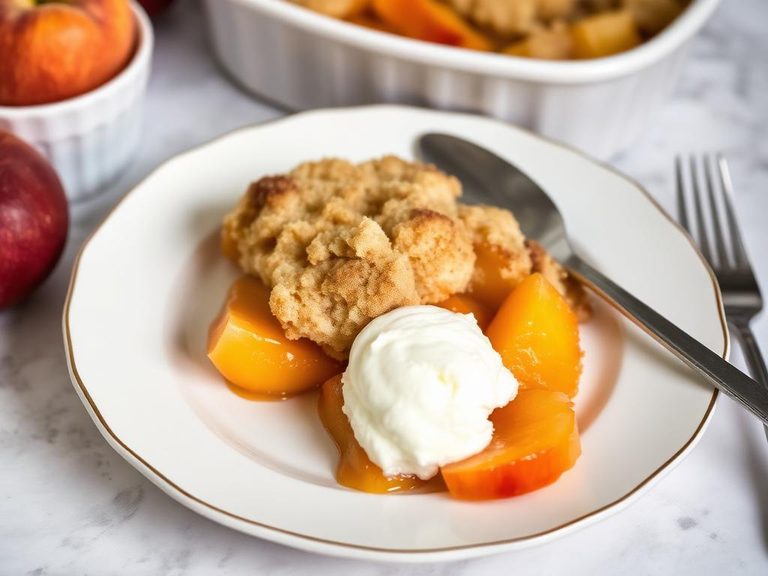
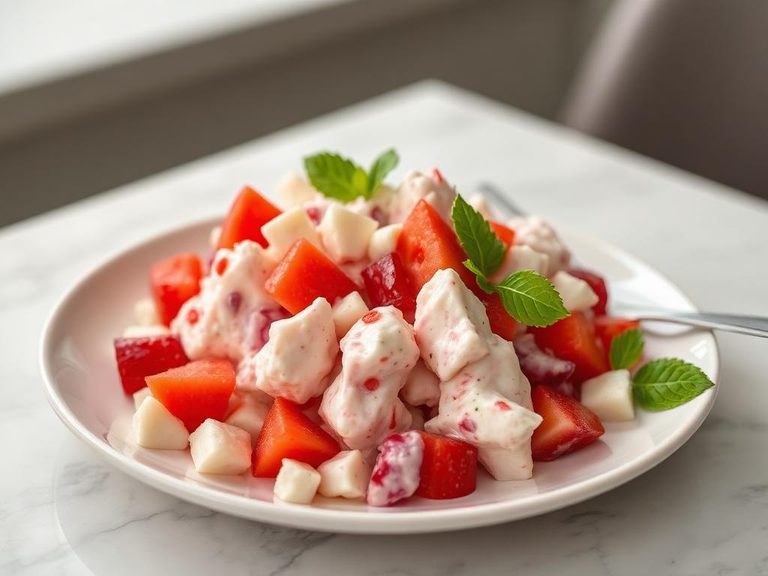
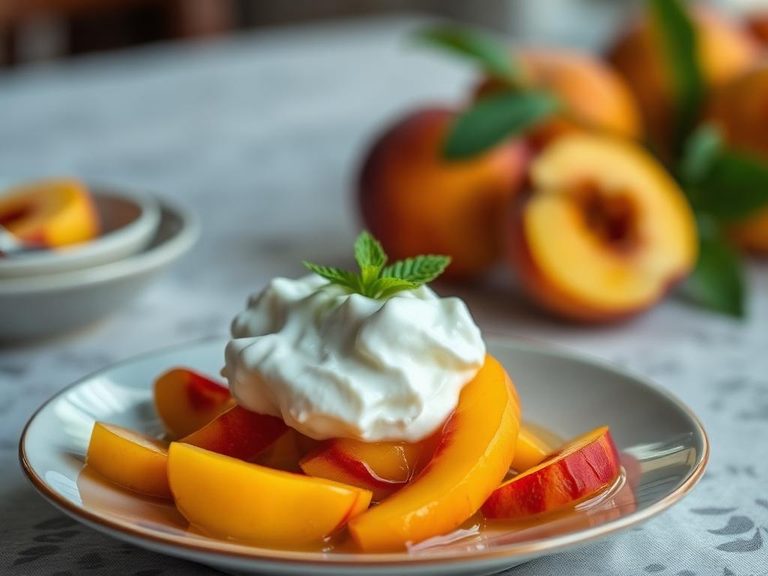
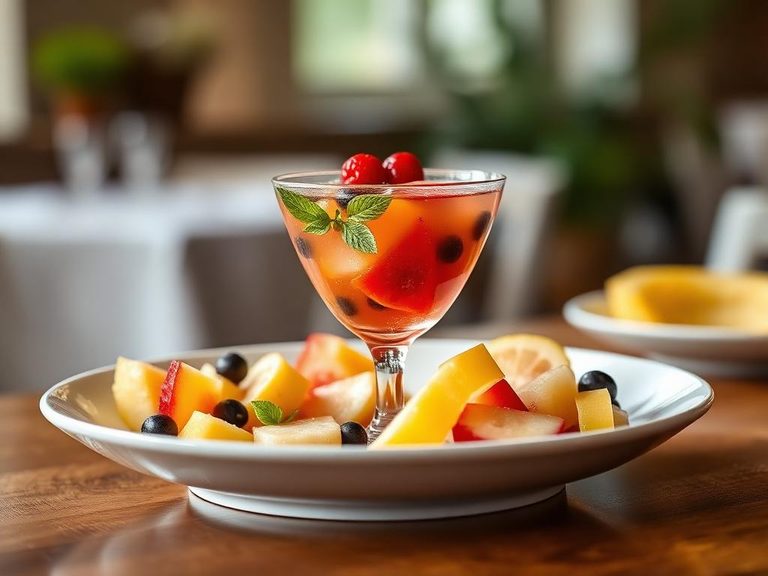
🍽️ Popular dishes
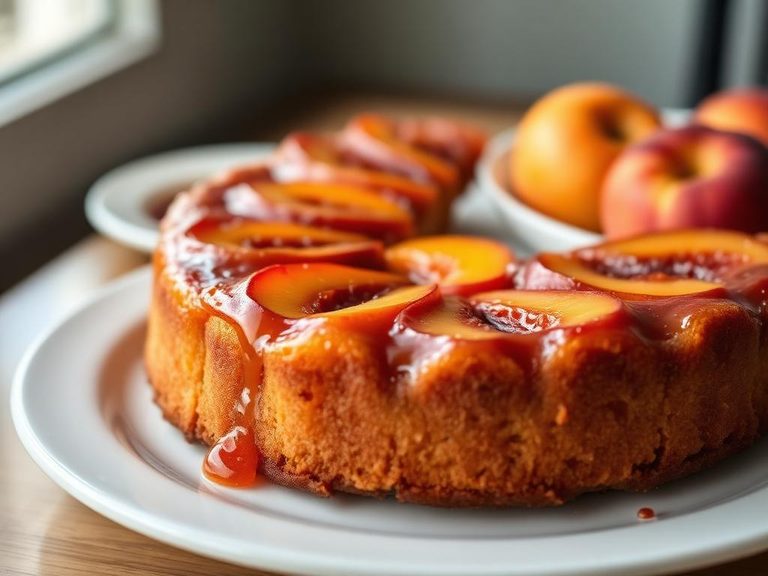
🌍 Where it's eaten
💡 Did you know?
The practice of canning peaches in syrup was a major innovation by Nicolas Appert in the early 19th century, helping to preserve the summer fruit for armies and explorers on long voyages.
Full nutrition (scales with serving)
| Water | 88.2 g |
| Energy | 42.0 kcal |
| Energy | 176 kj |
| Protein | 0.40 g |
| Total lipid (fat) | 0.10 g |
| Ash | 0.24 g |
| Carbohydrate, by difference | 11.1 g |
| Fiber, total dietary | 1.0 g |
| Calcium, Ca | 5.0 mg |
| Iron, Fe | 0.30 mg |
| Magnesium, Mg | 5.0 mg |
| Phosphorus, P | 11.0 mg |
| Potassium, K | 74.0 mg |
| Sodium, Na | 5.0 mg |
| Zinc, Zn | 0.09 mg |
| Copper, Cu | 0.05 mg |
| Manganese, Mn | 0.05 mg |
| Vitamin C, total ascorbic acid | 3.0 mg |
| Thiamin | 0.02 mg |
| Riboflavin | 0.02 mg |
| Niacin | 0.80 mg |
| Pantothenic acid | 0.05 mg |
| Vitamin B-6 | 0.02 mg |
| Folate, total | 3.0 ug |
| Folic acid | 0.00 ug |
| Folate, food | 3.0 ug |
| Folate, DFE | 3.0 ug |
| Vitamin B-12 | 0.00 ug |
| Vitamin A, RAE | 14.0 ug |
| Retinol | 0.00 ug |
| Vitamin A, IU | 270 iu |
| Vitamin D (D2 + D3), International Units | 0.00 iu |
| Vitamin D (D2 + D3) | 0.00 ug |
Fat & fatty acid profile (per 100g)
| Fatty acids, total saturated | 0.01 g |
| SFA 16:0 | 0.01 g |
| SFA 18:0 | 0.00 g |
| Fatty acids, total monounsaturated | 0.04 g |
| MUFA 16:1 | 0.00 g |
| MUFA 18:1 | 0.04 g |
| Fatty acids, total polyunsaturated | 0.05 g |
| PUFA 18:2 | 0.05 g |
| PUFA 18:3 | 0.00 g |
| Fatty acids, total trans | 0.00 g |
| Cholesterol | 0.00 mg |
Amino acid profile (per 100g)
| Tryptophan | 0.00 g |
| Threonine | 0.02 g |
| Isoleucine | 0.01 g |
| Leucine | 0.02 g |
| Lysine | 0.01 g |
| Methionine | 0.01 g |
| Cystine | 0.00 g |
| Phenylalanine | 0.01 g |
| Tyrosine | 0.01 g |
| Valine | 0.02 g |
| Arginine | 0.01 g |
| Histidine | 0.01 g |
| Alanine | 0.02 g |
| Aspartic acid | 0.07 g |
| Glutamic acid | 0.06 g |
| Glycine | 0.01 g |
| Proline | 0.02 g |
| Serine | 0.02 g |
FAQ
Are canned peaches in light syrup as healthy as fresh?
They are a convenient, lower-sugar alternative to heavy syrup or juice-packed varieties. While fresh peaches have more vitamin C and no added sugar, canned peaches retain fiber and some nutrients, making them a healthy choice when drained and eaten in moderation.
What's the difference between light syrup and extra light syrup?
Extra light syrup has significantly less sugar than light syrup. According to USDA standards, extra light syrup contains about 10-14% sugar, while light syrup is 14-18% sugar, resulting in fewer calories and a less sweet taste.
Can I use the syrup from the can?
Yes, the syrup is edible and can be used in recipes like smoothies, cocktail mixers, or to poach other fruits. However, it contains added sugar, so using it adds calories and carbohydrates to your dish.