

Vegetable dip, regular
Common food
Vegetable dip, regular, is a rich, creamy condiment typically made from a base of sour cream, mayonnaise, or cream cheese, blended with herbs and seasonings. Its texture is smooth and thick, designed to cling to raw vegetables or chips, offering a savory, tangy flavor profile. Nutritionally, it is extremely high in fat, providing over 45g per 100g, making it a very calorie-dense addition to a meal.
Calorie split: 2% protein · 3% carbs · 95% fat
↓ Full nutrition💚 Why it's loved
People love it for its ability to transform a simple platter of raw vegetables or chips into a flavorful, indulgent snack. Its creamy texture and savory, tangy taste make it a social staple at parties and gatherings, where it serves as a crowd-pleasing, easy-to-prepare appetizer.
⚠️ Watch-outs & how to enjoy it better
The extremely high fat and calorie density can be a concern for those monitoring their weight or fat intake, and the lack of fiber means it doesn't contribute to digestive health. To counteract this, pair it with high-fiber vegetables like carrots or celery, practice strict portion control (using a tablespoon to measure), and consider mixing it with Greek yogurt to reduce fat and increase protein.
Key benefits
- Provides a quick source of energy from its high fat content
- Enhances the palatability of raw vegetables, encouraging vegetable consumption
- Contains small amounts of protein from dairy or egg-based ingredients
- Offers a satisfying, savory flavor that can make healthy snacks more appealing
- Acts as a versatile base that can be customized with various herbs and spices
🍽️ Popular dishes
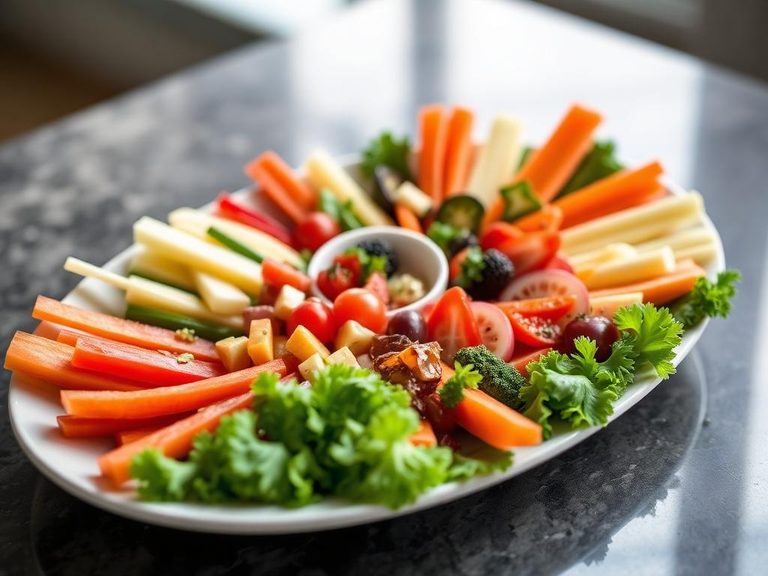




🌍 Where it's eaten
💡 Did you know?
The popularity of vegetable dip surged in the 1950s and 60s in the United States, coinciding with the rise of the 'party platter' and the widespread availability of pre-made, shelf-stable dips in grocery stores.
Full nutrition (USDA data · scales with serving)
| Water | 46.6 g |
| Energy | 429 kcal |
| Protein | 2.2 g |
| Total lipid (fat) | 45.1 g |
| Carbohydrate, by difference | 3.6 g |
| Fiber, total dietary | 0.30 g |
| Total Sugars | 2.0 g |
| Calcium, Ca | 68.0 mg |
| Iron, Fe | 0.32 mg |
| Magnesium, Mg | 9.0 mg |
| Phosphorus, P | 64.0 mg |
| Potassium, K | 112 mg |
| Sodium, Na | 713 mg |
| Zinc, Zn | 0.32 mg |
| Copper, Cu | 0.02 mg |
| Selenium, Se | 3.1 ug |
| Vitamin C, total ascorbic acid | 1.7 mg |
| Thiamin | 0.03 mg |
| Riboflavin | 0.11 mg |
| Niacin | 0.15 mg |
| Vitamin B-6 | 0.03 mg |
| Folate, total | 7.0 ug |
| Folic acid | 0.00 ug |
| Folate, food | 7.0 ug |
| Folate, DFE | 7.0 ug |
| Choline, total | 26.9 mg |
| Vitamin B-12 | 0.09 ug |
| Vitamin B-12, added | 0.00 ug |
| Vitamin A, RAE | 82.0 ug |
| Retinol | 81.0 ug |
| Carotene, beta | 14.0 ug |
| Carotene, alpha | 0.00 ug |
| Cryptoxanthin, beta | 2.0 ug |
| Lycopene | 0.00 ug |
| Lutein + zeaxanthin | 31.0 ug |
| Vitamin E (alpha-tocopherol) | 1.9 mg |
| Vitamin E, added | 0.00 mg |
| Vitamin D (D2 + D3) | 0.10 ug |
| Vitamin K (phylloquinone) | 93.1 ug |
| Alcohol, ethyl | 0.00 g |
| Caffeine | 0.00 mg |
| Theobromine | 0.00 mg |
Fat & fatty acid profile (per 100g)
| Fatty acids, total saturated | 10.9 g |
| SFA 4:0 | 0.01 g |
| SFA 6:0 | 0.10 g |
| SFA 8:0 | 0.07 g |
| SFA 10:0 | 0.18 g |
| SFA 12:0 | 0.27 g |
| SFA 14:0 | 0.88 g |
| SFA 16:0 | 6.3 g |
| SFA 18:0 | 2.3 g |
| Fatty acids, total monounsaturated | 10.0 g |
| MUFA 16:1 | 0.18 g |
| MUFA 18:1 | 10.0 g |
| MUFA 20:1 | 0.13 g |
| MUFA 22:1 | 0.01 g |
| Fatty acids, total polyunsaturated | 22.1 g |
| PUFA 18:2 | 19.2 g |
| PUFA 18:3 | 2.7 g |
| PUFA 18:4 | 0.00 g |
| PUFA 20:4 | 0.04 g |
| PUFA 20:5 n-3 (EPA) | 0.00 g |
| PUFA 22:5 n-3 (DPA) | 0.01 g |
| PUFA 22:6 n-3 (DHA) | 0.00 g |
| Cholesterol | 46.0 mg |
FAQ
Is vegetable dip a healthy snack?
While it can be part of a balanced diet, regular vegetable dip is very high in fat and calories. It's best enjoyed in moderation, paired with nutrient-dense vegetables like carrots, celery, or bell peppers.
Can I make a healthier version at home?
Yes, you can create a healthier dip by using Greek yogurt or cottage cheese as a base instead of sour cream or mayonnaise. This reduces fat and increases protein and calcium content.
What vegetables are best for dipping?
Crunchy, low-calorie vegetables like carrot sticks, celery, cucumber slices, bell pepper strips, and broccoli florets are ideal. They provide fiber and vitamins that complement the dip's richness.
How long does homemade vegetable dip last?
Homemade dip made with dairy or mayonnaise should be stored in an airtight container in the refrigerator and consumed within 3-5 days for optimal freshness and safety.
Nutrient density (calculated · NRF9.3)
Nutrient Rich Foods index: beneficial nutrients (protein, fiber, vitamins, minerals) minus saturated fat, added sugar & sodium, per 100 kcal.
NRF9.3 index — Fulgoni, Keast & Drewnowski, 2009. Computed from USDA nutrients.
Weight-loss friendliness (composite index)
Energy density 4.29 kcal/g · 2% calories from protein · 0.3 g fiber · 2.0 g sugar per 100 g.
Composite of energy density (Rolls et al., 1999), protein & fiber satiety, minus sugar. A calculated heuristic — ranks satiety-per-calorie, not a clinical measure.
Dietary load (calculated from USDA values)
Potential renal acid load. Positive = acid-forming, negative = alkaline-forming.
Sodium-to-potassium ratio: 6.37 (lower is better — aim for ≤ 1)
Sodium:potassium per WHO potassium guidance. Computed from USDA nutrients.