

Turkey sandwich or sub, restaurant
Common food
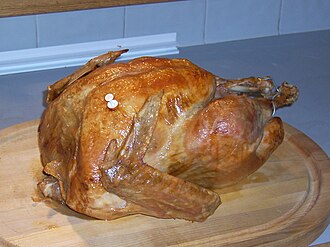
Photo: Wikipedia
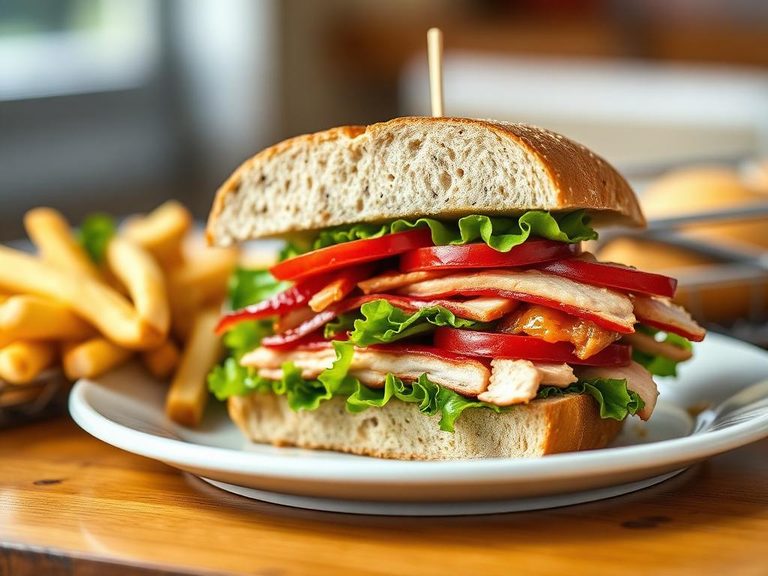
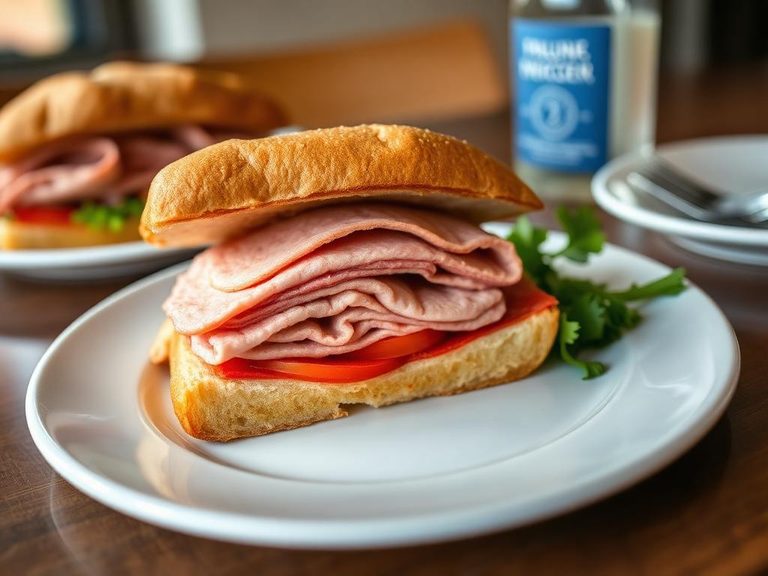
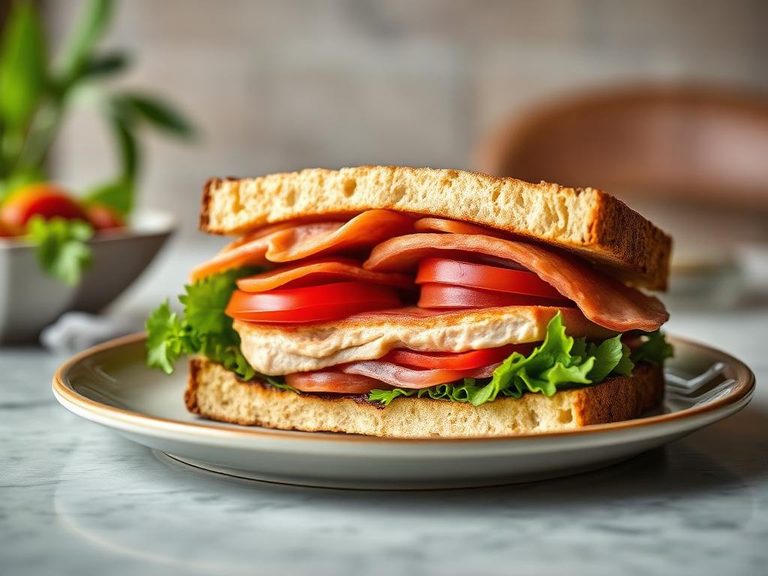
A classic Turkey sandwich or sub is a handheld staple featuring sliced or shredded turkey breast nestled in soft bread, often accented with crisp lettuce, juicy tomato, and a light spread. Its texture is a satisfying contrast between the tender, lean protein and the soft, yielding bread, with a clean, savory flavor profile. Nutritionally, it's a high-protein, moderate-carb option that provides a solid energy boost without excessive fat.
Calorie split: 28% protein · 54% carbs · 19% fat
↓ Full nutrition💚 Why it's loved
People love it for its reliable, savory comfort and customizable nature—it's a blank canvas that can be dressed up with avocado, cheese, or mustard. It holds a special place in casual dining culture as a quick, satisfying lunch that feels both wholesome and familiar.
⚠️ Watch-outs & how to enjoy it better
The primary downside is the potential for high sodium content from deli turkey and condiments, which can be a concern for blood pressure management. The refined white bread in many versions can also lead to a quicker blood-sugar spike. To counteract this, choose whole-grain or low-sodium turkey, load up on non-starchy veggies like spinach and peppers, and pair with a side of fruit or a small handful of nuts to slow digestion.
Key benefits
- Excellent source of lean protein for muscle maintenance
- Provides B vitamins like niacin and B6 for energy metabolism
- Moderate calorie count makes it suitable for portion-controlled meals
- Versatile base for adding vegetables to increase fiber and micronutrients
- Convenient and portable for on-the-go nutrition
🍽️ Popular dishes
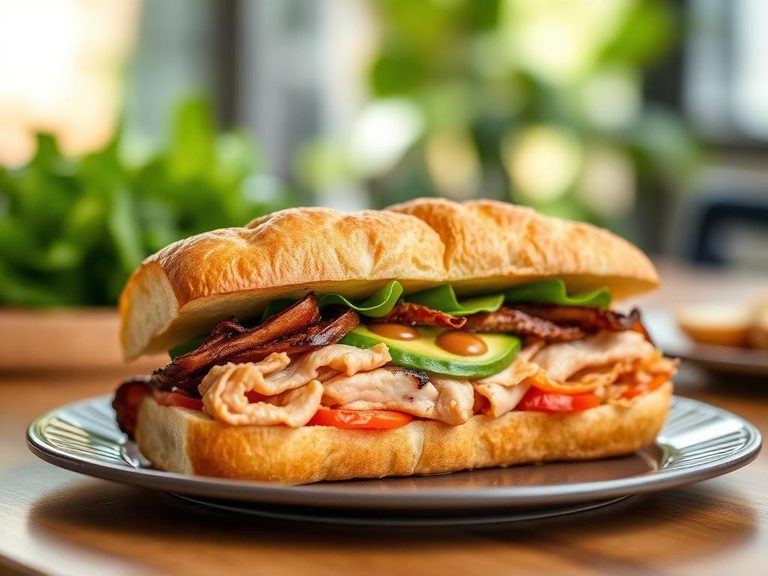
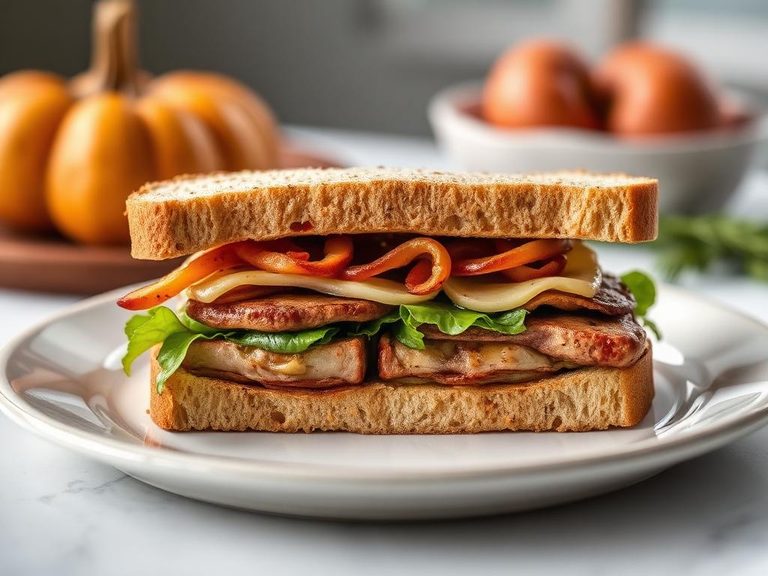
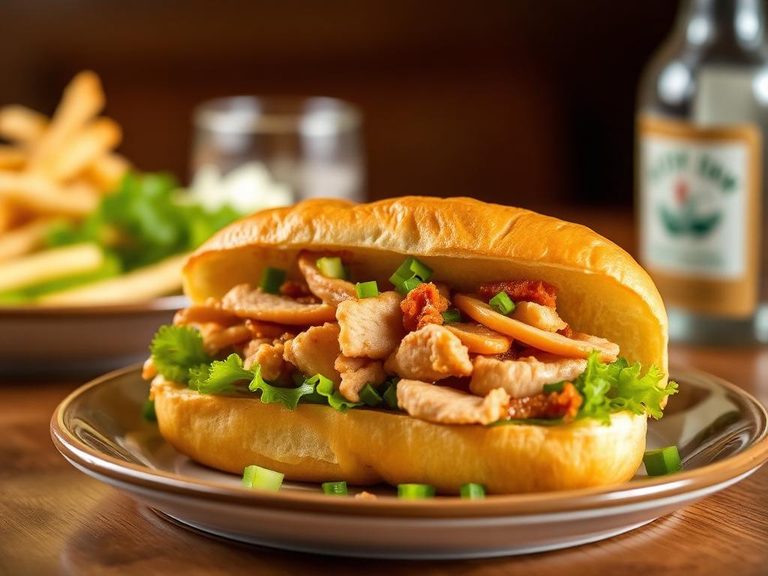
🌍 Where it's eaten
💡 Did you know?
The turkey sandwich is so iconic in American culture that it was the official post-game meal for players at the first Super Bowl in 1967, chosen for being a lean, protein-rich option.
Full nutrition (USDA data · scales with serving)
| Water | 57.4 g |
| Energy | 180 kcal |
| Protein | 12.3 g |
| Total lipid (fat) | 3.7 g |
| Carbohydrate, by difference | 23.9 g |
| Fiber, total dietary | 1.1 g |
| Total Sugars | 3.0 g |
| Calcium, Ca | 105 mg |
| Iron, Fe | 1.8 mg |
| Magnesium, Mg | 23.0 mg |
| Phosphorus, P | 186 mg |
| Potassium, K | 254 mg |
| Sodium, Na | 644 mg |
| Zinc, Zn | 0.91 mg |
| Copper, Cu | 0.07 mg |
| Selenium, Se | 17.7 ug |
| Vitamin C, total ascorbic acid | 0.00 mg |
| Thiamin | 0.25 mg |
| Riboflavin | 0.19 mg |
| Niacin | 6.0 mg |
| Vitamin B-6 | 0.26 mg |
| Folate, total | 53.0 ug |
| Folic acid | 40.0 ug |
| Folate, food | 14.0 ug |
| Folate, DFE | 81.0 ug |
| Choline, total | 22.9 mg |
| Vitamin B-12 | 0.20 ug |
| Vitamin B-12, added | 0.00 ug |
| Vitamin A, RAE | 0.00 ug |
| Retinol | 0.00 ug |
| Carotene, beta | 0.00 ug |
| Carotene, alpha | 0.00 ug |
| Cryptoxanthin, beta | 0.00 ug |
| Lycopene | 0.00 ug |
| Lutein + zeaxanthin | 20.0 ug |
| Vitamin E (alpha-tocopherol) | 0.17 mg |
| Vitamin E, added | 0.00 mg |
| Vitamin D (D2 + D3) | 0.10 ug |
| Vitamin K (phylloquinone) | 0.10 ug |
| Alcohol, ethyl | 0.00 g |
| Caffeine | 0.00 mg |
| Theobromine | 0.00 mg |
Fat & fatty acid profile (per 100g)
| Fatty acids, total saturated | 0.87 g |
| SFA 4:0 | 0.00 g |
| SFA 6:0 | 0.00 g |
| SFA 8:0 | 0.00 g |
| SFA 10:0 | 0.00 g |
| SFA 12:0 | 0.01 g |
| SFA 14:0 | 0.02 g |
| SFA 16:0 | 0.56 g |
| SFA 18:0 | 0.24 g |
| Fatty acids, total monounsaturated | 0.95 g |
| MUFA 16:1 | 0.07 g |
| MUFA 18:1 | 0.87 g |
| MUFA 20:1 | 0.01 g |
| MUFA 22:1 | 0.00 g |
| Fatty acids, total polyunsaturated | 1.4 g |
| PUFA 18:2 | 1.3 g |
| PUFA 18:3 | 0.12 g |
| PUFA 18:4 | 0.00 g |
| PUFA 20:4 | 0.03 g |
| PUFA 20:5 n-3 (EPA) | 0.00 g |
| PUFA 22:5 n-3 (DPA) | 0.00 g |
| PUFA 22:6 n-3 (DHA) | 0.00 g |
| Cholesterol | 26.0 mg |
FAQ
Is a turkey sandwich healthy?
It can be a very healthy choice, especially when made with whole-grain bread, lean low-sodium turkey, and plenty of vegetables. Its high protein content supports satiety and muscle health. However, it can become less healthy with high-fat cheeses, creamy spreads, or refined white bread.
How does it compare to a chicken sandwich?
Nutritionally, they are very similar, with turkey often being slightly leaner in fat. The choice often comes down to flavor preference; turkey has a milder, slightly sweeter taste, while chicken can be more neutral and adaptable to strong seasonings.
Can I eat this for weight loss?
Yes, it's an excellent weight-loss-friendly meal due to its high protein and moderate calorie count. To optimize it, focus on open-faced versions, load up on low-calorie veggies, use mustard or hummus instead of mayo, and be mindful of the bread portion.
Nutrient density (calculated · NRF9.3)
Nutrient Rich Foods index: beneficial nutrients (protein, fiber, vitamins, minerals) minus saturated fat, added sugar & sodium, per 100 kcal.
NRF9.3 index — Fulgoni, Keast & Drewnowski, 2009. Computed from USDA nutrients.
Weight-loss friendliness (composite index)
Energy density 1.80 kcal/g · 27% calories from protein · 1.1 g fiber · 3.0 g sugar per 100 g.
Composite of energy density (Rolls et al., 1999), protein & fiber satiety, minus sugar. A calculated heuristic — ranks satiety-per-calorie, not a clinical measure.
Dietary load (calculated from USDA values)
Potential renal acid load. Positive = acid-forming, negative = alkaline-forming.
Sodium-to-potassium ratio: 2.54 (lower is better — aim for ≤ 1)
Sodium:potassium per WHO potassium guidance. Computed from USDA nutrients.