

Taco or tostada salad with chicken
Common food

Photo: Wikipedia
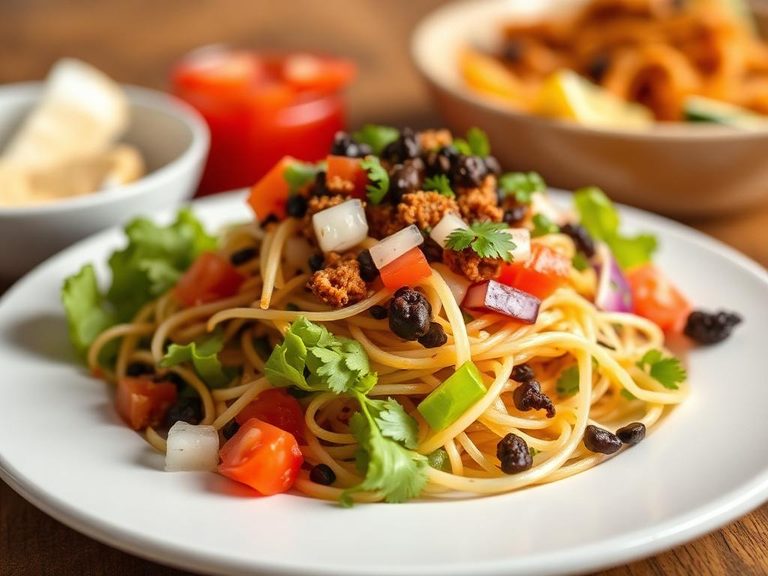
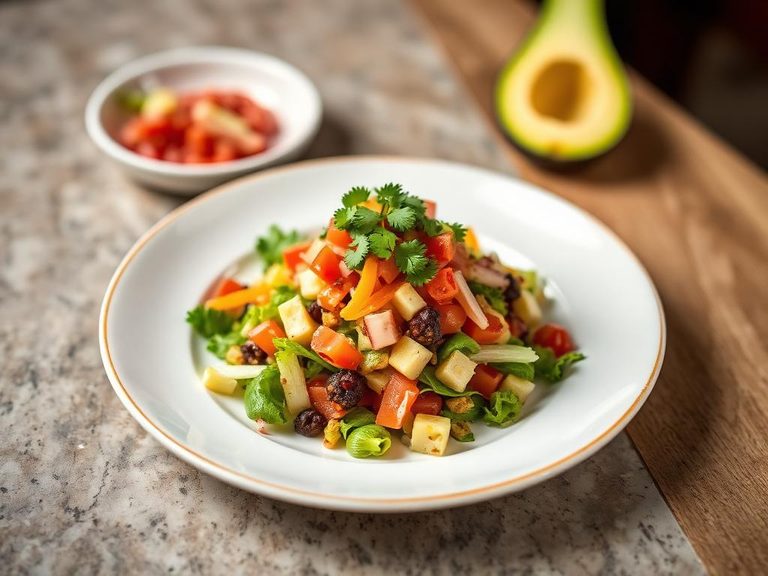
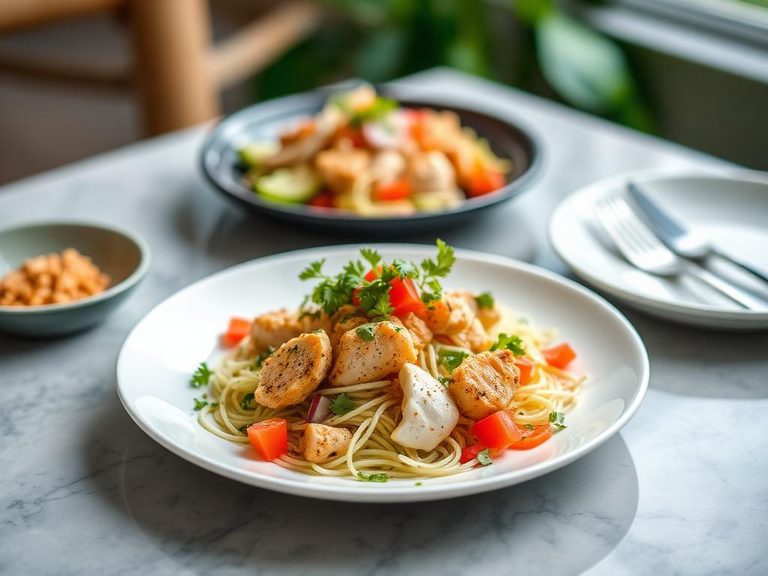
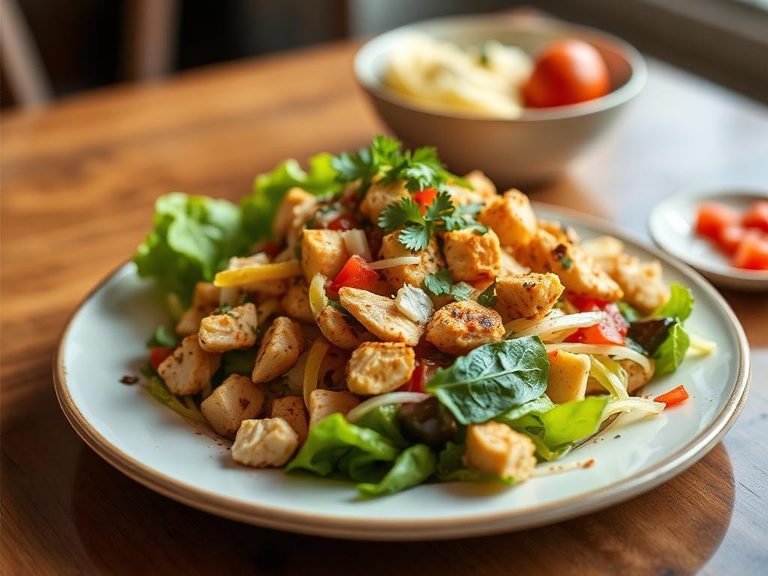
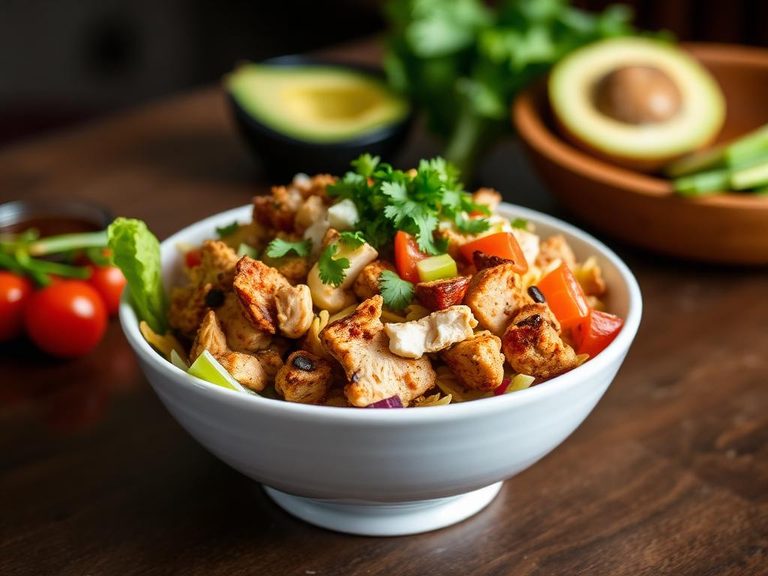
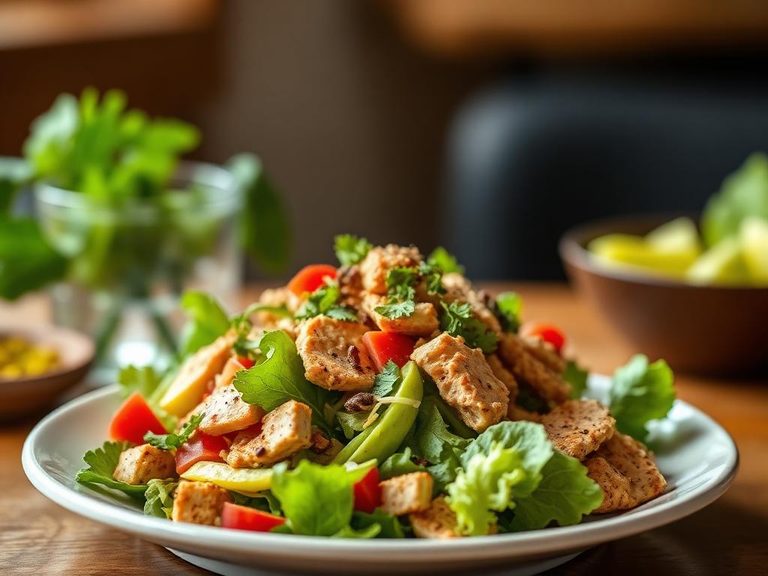
A vibrant, deconstructed taco or tostada salad features seasoned chicken atop a bed of crisp lettuce, diced tomatoes, cheese, and creamy avocado, all tossed in a zesty dressing. The texture is a satisfying crunch from the tortilla strips or shell, contrasted by tender chicken and cool, creamy toppings. With a moderate calorie count and a good protein-to-carb ratio, it's a balanced and flavorful meal.
Calorie split: 19% protein · 39% carbs · 43% fat
↓ Full nutrition💚 Why it's loved
People adore this dish for its perfect harmony of textures—crunchy, creamy, and fresh—and its bold, customizable flavors that range from smoky to spicy. It's a beloved staple in Tex-Mex cuisine, offering a fun, interactive eating experience that feels both indulgent and wholesome.
⚠️ Watch-outs & how to enjoy it better
The dish can be high in sodium from seasoned meat, cheese, and dressing, and the tortilla components may cause blood-sugar spikes for some. To counteract this, opt for grilled over fried chicken, use a light hand with salty toppings, and pair the salad with extra avocado or a side of beans to add healthy fats and fiber that slow sugar absorption.
Key benefits
- Provides a good source of lean protein from chicken for muscle maintenance.
- Contains fiber from lettuce, beans, and avocado to support digestion.
- Offers a balanced mix of macronutrients for sustained energy.
- Rich in vitamins A and C from fresh vegetable toppings.
- Highly customizable to fit various dietary preferences.
🍽️ Popular dishes
🌍 Where it's eaten
💡 Did you know?
The modern taco salad as we know it, served in an edible fried tortilla bowl, was popularized in the 1960s by a California restaurant chain seeking to create a 'healthier' Mexican option.
Full nutrition (USDA data · scales with serving)
| Water | 66.4 g |
| Energy | 167 kcal |
| Protein | 7.8 g |
| Total lipid (fat) | 8.0 g |
| Carbohydrate, by difference | 16.3 g |
| Fiber, total dietary | 2.8 g |
| Total Sugars | 1.8 g |
| Calcium, Ca | 82.0 mg |
| Iron, Fe | 1.6 mg |
| Magnesium, Mg | 20.0 mg |
| Phosphorus, P | 127 mg |
| Potassium, K | 220 mg |
| Sodium, Na | 315 mg |
| Zinc, Zn | 0.71 mg |
| Copper, Cu | 0.10 mg |
| Selenium, Se | 9.7 ug |
| Vitamin C, total ascorbic acid | 3.1 mg |
| Thiamin | 0.14 mg |
| Riboflavin | 0.13 mg |
| Niacin | 2.2 mg |
| Vitamin B-6 | 0.10 mg |
| Folate, total | 40.0 ug |
| Folic acid | 11.0 ug |
| Folate, food | 29.0 ug |
| Folate, DFE | 48.0 ug |
| Choline, total | 18.8 mg |
| Vitamin B-12 | 0.10 ug |
| Vitamin B-12, added | 0.00 ug |
| Vitamin A, RAE | 31.0 ug |
| Retinol | 15.0 ug |
| Carotene, beta | 170 ug |
| Carotene, alpha | 20.0 ug |
| Cryptoxanthin, beta | 14.0 ug |
| Lycopene | 272 ug |
| Lutein + zeaxanthin | 116 ug |
| Vitamin E (alpha-tocopherol) | 1.0 mg |
| Vitamin E, added | 0.00 mg |
| Vitamin D (D2 + D3) | 0.00 ug |
| Vitamin K (phylloquinone) | 11.5 ug |
| Alcohol, ethyl | 0.00 g |
| Caffeine | 0.00 mg |
| Theobromine | 0.00 mg |
Fat & fatty acid profile (per 100g)
| Fatty acids, total saturated | 2.3 g |
| SFA 4:0 | 0.03 g |
| SFA 6:0 | 0.02 g |
| SFA 8:0 | 0.02 g |
| SFA 10:0 | 0.04 g |
| SFA 12:0 | 0.04 g |
| SFA 14:0 | 0.15 g |
| SFA 16:0 | 1.4 g |
| SFA 18:0 | 0.53 g |
| Fatty acids, total monounsaturated | 3.1 g |
| MUFA 16:1 | 0.15 g |
| MUFA 18:1 | 2.9 g |
| MUFA 20:1 | 0.03 g |
| MUFA 22:1 | 0.00 g |
| Fatty acids, total polyunsaturated | 1.8 g |
| PUFA 18:2 | 1.6 g |
| PUFA 18:3 | 0.19 g |
| PUFA 18:4 | 0.00 g |
| PUFA 20:4 | 0.01 g |
| PUFA 20:5 n-3 (EPA) | 0.00 g |
| PUFA 22:5 n-3 (DPA) | 0.00 g |
| PUFA 22:6 n-3 (DHA) | 0.00 g |
| Cholesterol | 19.0 mg |
FAQ
Is a taco salad a healthy choice?
It can be, depending on preparation. A version with grilled chicken, plenty of vegetables, and a light dressing is nutrient-dense. However, versions with fried shells, heavy cheese, and creamy dressings can be high in calories, sodium, and saturated fat.
How can I make a taco salad lower in carbs?
Omit the tortilla strips or shell entirely and use a large lettuce leaf as the base. Focus on filling the bowl with extra non-starchy vegetables like bell peppers and cucumbers, and choose a protein like grilled chicken or lean ground turkey.
What's the best way to meal-prep a taco salad?
Store components separately to maintain freshness. Keep the dressing, wet ingredients (like salsa or tomatoes), and crunchy elements (like tortilla strips or nuts) apart from the greens and chicken. Assemble just before eating to prevent sogginess.
Nutrient density (calculated · NRF9.3)
Nutrient Rich Foods index: beneficial nutrients (protein, fiber, vitamins, minerals) minus saturated fat, added sugar & sodium, per 100 kcal.
NRF9.3 index — Fulgoni, Keast & Drewnowski, 2009. Computed from USDA nutrients.
Weight-loss friendliness (composite index)
Energy density 1.67 kcal/g · 19% calories from protein · 2.8 g fiber · 1.8 g sugar per 100 g.
Composite of energy density (Rolls et al., 1999), protein & fiber satiety, minus sugar. A calculated heuristic — ranks satiety-per-calorie, not a clinical measure.
Dietary load (calculated from USDA values)
Potential renal acid load. Positive = acid-forming, negative = alkaline-forming.
Sodium-to-potassium ratio: 1.43 (lower is better — aim for ≤ 1)
Sodium:potassium per WHO potassium guidance. Computed from USDA nutrients.