

Sushi, topped with eel
Common food

Photo: Wikipedia
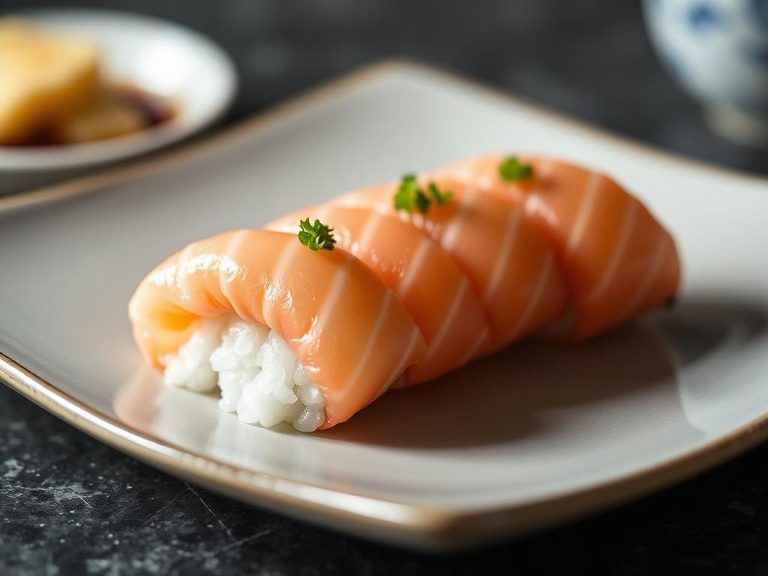
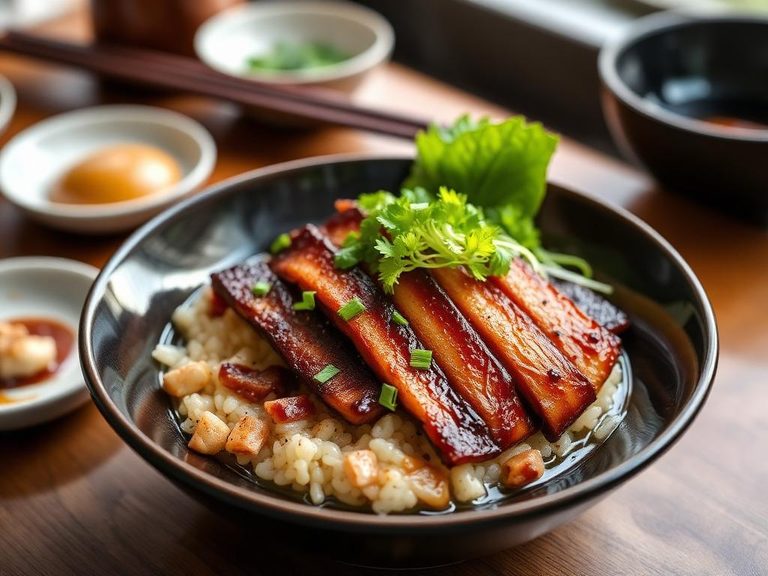
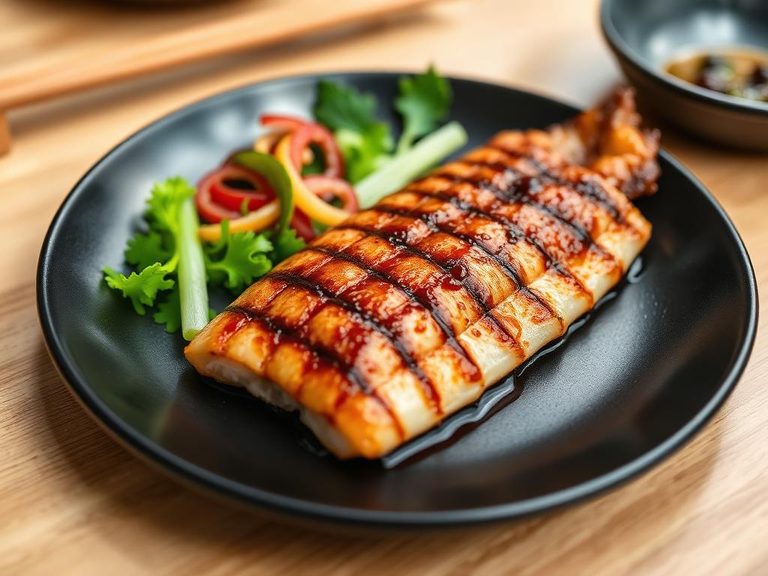
Unagi nigiri is a piece of tender, grilled freshwater eel glazed with a sweet, savory sauce and served atop a small bed of vinegared sushi rice. The eel has a rich, buttery texture that melts in your mouth, while the caramelized sauce adds a deep, umami sweetness. Nutritionally, it's a moderate source of protein with a notable carbohydrate content from the rice and glaze.
Calorie split: 25% protein · 44% carbs · 31% fat
↓ Full nutrition💚 Why it's loved
People adore it for the luxurious contrast between the smoky, sweet eel and the clean, tangy rice, a harmony of flavors and textures. It's a celebratory dish in Japan, often eaten on the hottest day of summer (Doyo no Ushi no Hi) for its supposed stamina-boosting properties.
⚠️ Watch-outs & how to enjoy it better
The sweet glaze and white rice can cause a quicker blood sugar spike, and the preparation is often high in sodium. To counteract this, pair it with a side of edamame or a simple seaweed salad to add fiber and protein, which slows digestion, and consider limiting the soy sauce or using a low-sodium version.
Key benefits
- Good source of complete protein for muscle maintenance.
- Contains omega-3 fatty acids from the eel.
- Provides B vitamins, especially B12, for energy metabolism.
- Offers minerals like phosphorus and manganese.
🍽️ Popular dishes
🌍 Where it's eaten
💡 Did you know?
The traditional Japanese method for preparing eel, especially in the Kanto region, involves splitting the eel from the back (instead of the belly) due to a historical superstition linked to seppuku (ritual suicide).
Full nutrition (USDA data · scales with serving)
| Water | 73.3 g |
| Energy | 126 kcal |
| Protein | 7.6 g |
| Total lipid (fat) | 4.2 g |
| Carbohydrate, by difference | 13.4 g |
| Fiber, total dietary | 0.60 g |
| Total Sugars | 0.80 g |
| Calcium, Ca | 9.0 mg |
| Iron, Fe | 0.26 mg |
| Magnesium, Mg | 10.0 mg |
| Phosphorus, P | 80.0 mg |
| Potassium, K | 100 mg |
| Sodium, Na | 308 mg |
| Zinc, Zn | 0.81 mg |
| Copper, Cu | 0.04 mg |
| Selenium, Se | 5.6 ug |
| Vitamin C, total ascorbic acid | 0.50 mg |
| Thiamin | 0.06 mg |
| Riboflavin | 0.02 mg |
| Niacin | 1.4 mg |
| Vitamin B-6 | 0.04 mg |
| Folate, total | 5.0 ug |
| Folic acid | 0.00 ug |
| Folate, food | 5.0 ug |
| Folate, DFE | 5.0 ug |
| Choline, total | 23.8 mg |
| Vitamin B-12 | 0.94 ug |
| Vitamin B-12, added | 0.00 ug |
| Vitamin A, RAE | 307 ug |
| Retinol | 307 ug |
| Carotene, beta | 0.00 ug |
| Carotene, alpha | 0.00 ug |
| Cryptoxanthin, beta | 0.00 ug |
| Lycopene | 0.00 ug |
| Lutein + zeaxanthin | 0.00 ug |
| Vitamin E (alpha-tocopherol) | 1.4 mg |
| Vitamin E, added | 0.00 mg |
| Vitamin D (D2 + D3) | 8.1 ug |
| Vitamin K (phylloquinone) | 0.00 ug |
| Alcohol, ethyl | 0.00 g |
| Caffeine | 0.00 mg |
| Theobromine | 0.00 mg |
Fat & fatty acid profile (per 100g)
| Fatty acids, total saturated | 0.84 g |
| SFA 4:0 | 0.00 g |
| SFA 6:0 | 0.00 g |
| SFA 8:0 | 0.00 g |
| SFA 10:0 | 0.00 g |
| SFA 12:0 | 0.00 g |
| SFA 14:0 | 0.20 g |
| SFA 16:0 | 0.57 g |
| SFA 18:0 | 0.07 g |
| Fatty acids, total monounsaturated | 2.5 g |
| MUFA 16:1 | 0.43 g |
| MUFA 18:1 | 1.0 g |
| MUFA 20:1 | 1.0 g |
| MUFA 22:1 | 0.00 g |
| Fatty acids, total polyunsaturated | 0.37 g |
| PUFA 18:2 | 0.11 g |
| PUFA 18:3 | 0.15 g |
| PUFA 18:4 | 0.00 g |
| PUFA 20:4 | 0.03 g |
| PUFA 20:5 n-3 (EPA) | 0.03 g |
| PUFA 22:5 n-3 (DPA) | 0.03 g |
| PUFA 22:6 n-3 (DHA) | 0.02 g |
| Cholesterol | 44.0 mg |
FAQ
Is eel sushi freshwater or saltwater?
The eel used for sushi, particularly unagi, is typically freshwater eel (Anguilla japonica). Saltwater eel, like conger eel (anago), is also used but has a lighter, less fatty flavor.
Why is eel sushi so expensive?
Freshwater eel populations have declined significantly, making them scarce. The preparation is also labor-intensive, involving specific butchering, skewering, steaming, and grilling techniques that require skilled chefs.
Can I eat eel sushi if I have a fish allergy?
Eel is a fish, so it should be avoided if you have a known fish allergy. Always inform the chef of any allergies, as cross-contamination is possible in sushi restaurants.
Nutrient density (calculated · NRF9.3)
Nutrient Rich Foods index: beneficial nutrients (protein, fiber, vitamins, minerals) minus saturated fat, added sugar & sodium, per 100 kcal.
NRF9.3 index — Fulgoni, Keast & Drewnowski, 2009. Computed from USDA nutrients.
Weight-loss friendliness (composite index)
Energy density 1.26 kcal/g · 24% calories from protein · 0.6 g fiber · 0.8 g sugar per 100 g.
Composite of energy density (Rolls et al., 1999), protein & fiber satiety, minus sugar. A calculated heuristic — ranks satiety-per-calorie, not a clinical measure.
Dietary load (calculated from USDA values)
Potential renal acid load. Positive = acid-forming, negative = alkaline-forming.
Sodium-to-potassium ratio: 3.08 (lower is better — aim for ≤ 1)
Sodium:potassium per WHO potassium guidance. Computed from USDA nutrients.