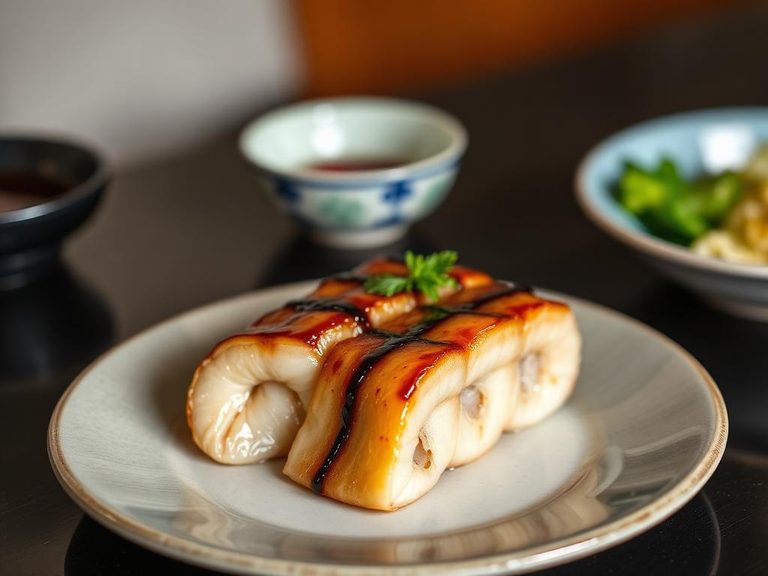
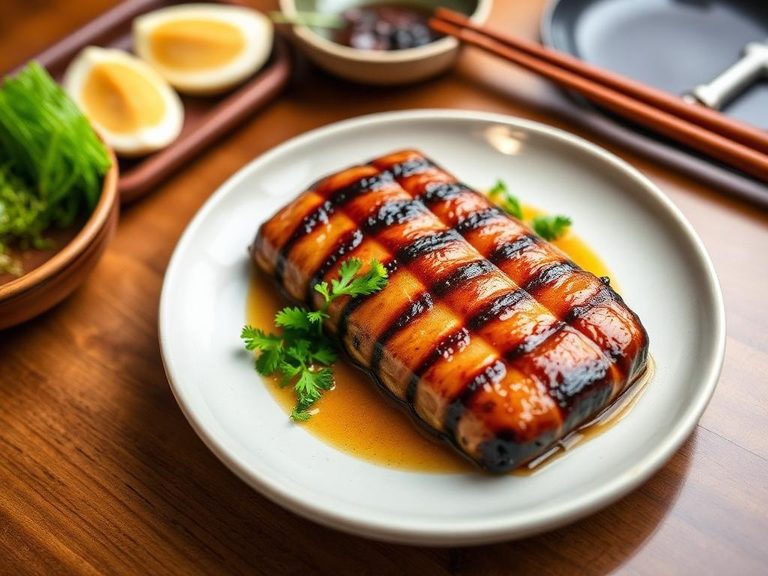
Kabayaki
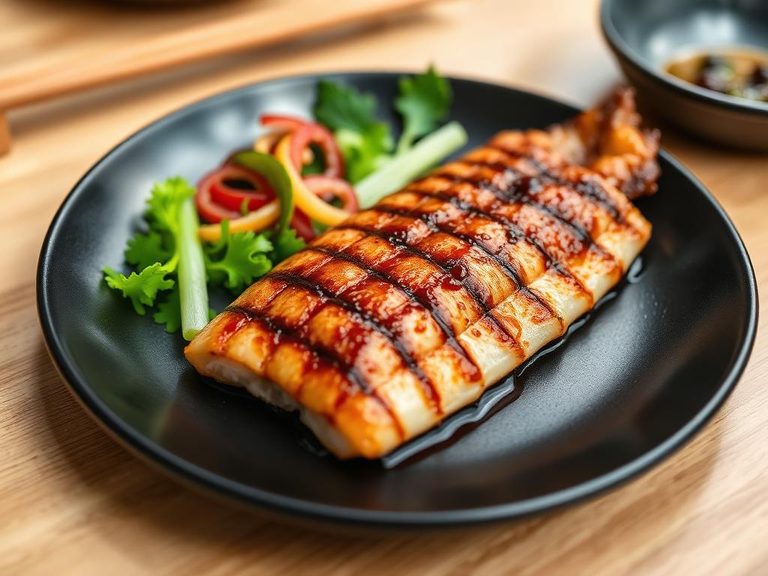
Kabayaki is a classic Japanese dish consisting of butterflied eel fillets, deboned, skewered, and grilled while being repeatedly basted with a sweet and savory soy-based sauce called 'tare'. The primary ingredients are freshwater eel (unagi), soy sauce, mirin, sugar, and sake. It is a quintessential summer delicacy in Japan, especially associated with the midsummer 'Doyo no Ushi no Hi' festival.
🍽️ Nutrition at a glance
Kabayaki is a protein-rich dish, providing a substantial amount of high-quality protein and healthy fats, including omega-3 fatty acids from the eel. A typical serving (around 100-150g) contains approximately 250-350 calories, with the calorie count influenced by the thickness of the sweet glaze.
Nutrition breakdown
| Calories | 236 kcal |
| Protein | 18.4 g |
| Carbs | 8.2 g |
| Fat | 14.7 g |
| Fiber | 0.1 g |
| Sugar | 5.6 g |
| Sodium | 480 mg |
| Vitamin A | 135 mcg RAE |
| Vitamin B12 | 14.5 mcg |
| Vitamin D | 18.1 mcg |
| Vitamin E | 1.8 mg |
| Omega-3 (EPA+DHA) | 1.3 g |
| Phosphorus | 280 mg |
| Selenium | 35 mcg |
| Cholesterol | 124 mg |
Per 1 fillet (approx. 100 g) · estimated, varies by recipe
💡 What's interesting
Culturally, eating unagi during the hottest days of summer is a tradition believed to provide stamina and vitality to combat the heat. Nutritionally, eel is an excellent source of vitamins A, B1, B2, and D, as well as minerals like phosphorus and calcium.