

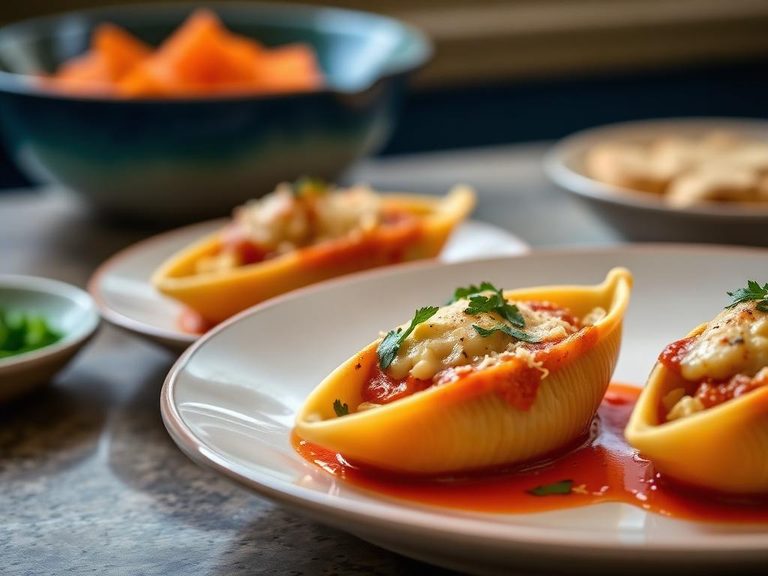
Stuffed shells, cheese-filled, no sauce
Common food

Photo: Wikipedia
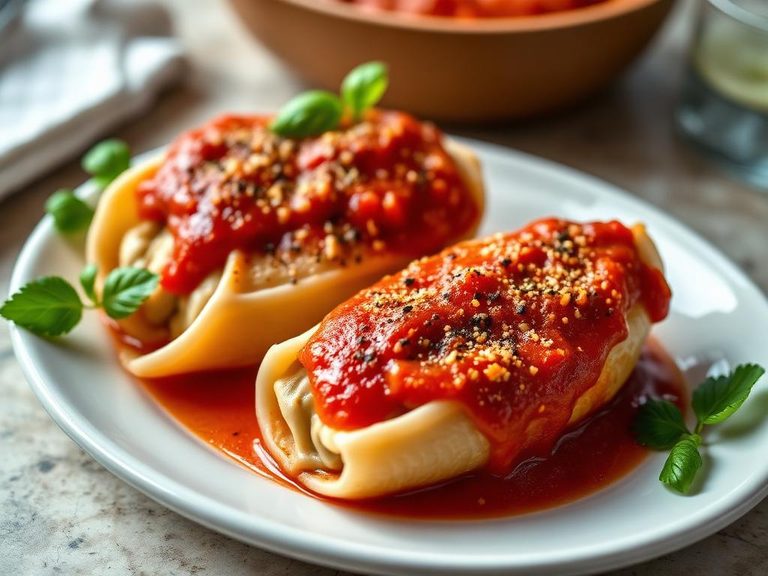
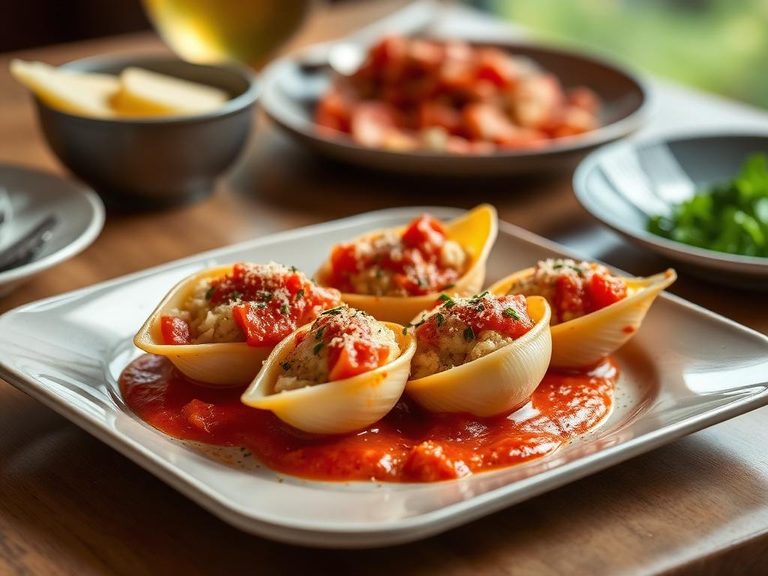
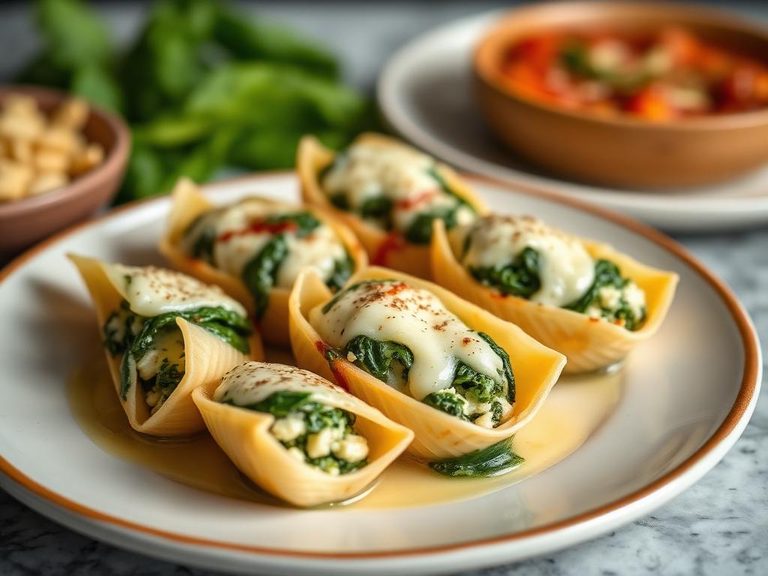
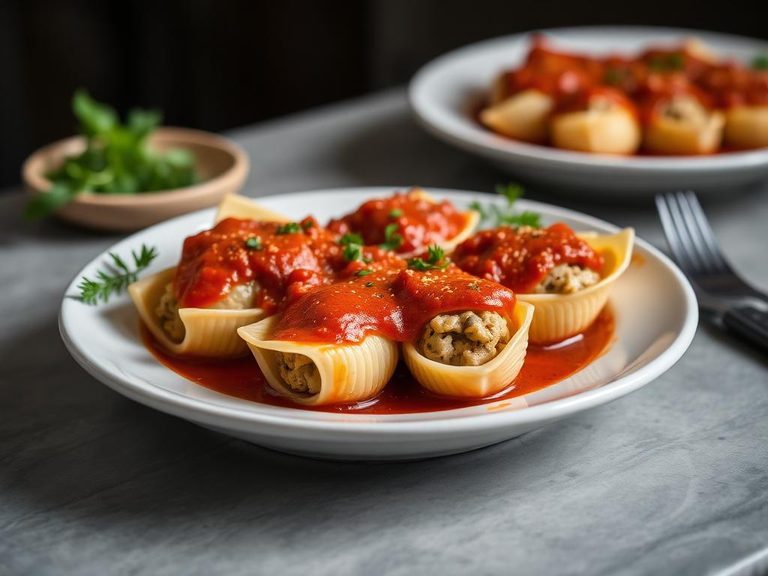
Cheese-filled pasta shells are large, ridged conch-shaped pasta pockets stuffed with a savory, creamy ricotta-based cheese filling. They offer a satisfying contrast between the tender, al dente pasta and the rich, smooth interior. Nutritionally, they provide a good source of protein and carbohydrates, making them a hearty, energy-dense meal component.
Calorie split: 19% protein · 43% carbs · 37% fat
↓ Full nutrition💚 Why it's loved
People love stuffed shells for their comforting, rich flavor and the delightful textural contrast between the pasta and the creamy filling. They are a beloved centerpiece of family-style Italian-American meals, often baked with sauce and extra cheese for a communal, satisfying dish.
⚠️ Watch-outs & how to enjoy it better
Without sauce, they can be dry and lack flavor complexity. The refined pasta and cheese filling can cause blood-sugar spikes in some individuals and are high in saturated fat and sodium. To counteract this, pair them with a fiber-rich vegetable side like roasted broccoli or a simple tomato sauce, and practice portion control by limiting serving size to 3-4 shells.
Key benefits
- Good source of protein for muscle maintenance
- Provides quick-release carbohydrates for energy
- Contains calcium from the cheese filling
- Versatile base for various sauces and preparations
- Offers a satisfying, filling meal
🍽️ Popular dishes
🌍 Where it's eaten
💡 Did you know?
The shell shape, known as 'conchiglie,' is not just for looks; the ridges and hollow are specifically designed to trap and hold thick sauces and fillings.
Full nutrition (USDA data · scales with serving)
| Water | 57.4 g |
| Energy | 205 kcal |
| Protein | 9.9 g |
| Total lipid (fat) | 8.5 g |
| Carbohydrate, by difference | 22.2 g |
| Fiber, total dietary | 0.70 g |
| Total Sugars | 0.53 g |
| Calcium, Ca | 175 mg |
| Iron, Fe | 1.7 mg |
| Magnesium, Mg | 19.0 mg |
| Phosphorus, P | 172 mg |
| Potassium, K | 151 mg |
| Sodium, Na | 428 mg |
| Zinc, Zn | 0.97 mg |
| Copper, Cu | 0.04 mg |
| Selenium, Se | 13.4 ug |
| Vitamin C, total ascorbic acid | 0.00 mg |
| Thiamin | 0.21 mg |
| Riboflavin | 0.30 mg |
| Niacin | 1.5 mg |
| Vitamin B-6 | 0.07 mg |
| Folate, total | 37.0 ug |
| Folic acid | 23.0 ug |
| Folate, food | 14.0 ug |
| Folate, DFE | 54.0 ug |
| Choline, total | 48.3 mg |
| Vitamin B-12 | 0.53 ug |
| Vitamin B-12, added | 0.00 ug |
| Vitamin A, RAE | 97.0 ug |
| Retinol | 97.0 ug |
| Carotene, beta | 2.0 ug |
| Carotene, alpha | 0.00 ug |
| Cryptoxanthin, beta | 2.0 ug |
| Lycopene | 0.00 ug |
| Lutein + zeaxanthin | 76.0 ug |
| Vitamin E (alpha-tocopherol) | 0.35 mg |
| Vitamin E, added | 0.00 mg |
| Vitamin D (D2 + D3) | 0.50 ug |
| Vitamin K (phylloquinone) | 0.80 ug |
| Alcohol, ethyl | 0.00 g |
| Caffeine | 0.00 mg |
| Theobromine | 0.00 mg |
Fat & fatty acid profile (per 100g)
| Fatty acids, total saturated | 4.5 g |
| SFA 4:0 | 0.14 g |
| SFA 6:0 | 0.11 g |
| SFA 8:0 | 0.07 g |
| SFA 10:0 | 0.17 g |
| SFA 12:0 | 0.20 g |
| SFA 14:0 | 0.64 g |
| SFA 16:0 | 2.3 g |
| SFA 18:0 | 0.75 g |
| Fatty acids, total monounsaturated | 2.1 g |
| MUFA 16:1 | 0.15 g |
| MUFA 18:1 | 2.0 g |
| MUFA 20:1 | 0.01 g |
| MUFA 22:1 | 0.00 g |
| Fatty acids, total polyunsaturated | 0.67 g |
| PUFA 18:2 | 0.60 g |
| PUFA 18:3 | 0.04 g |
| PUFA 18:4 | 0.00 g |
| PUFA 20:4 | 0.01 g |
| PUFA 20:5 n-3 (EPA) | 0.00 g |
| PUFA 22:5 n-3 (DPA) | 0.00 g |
| PUFA 22:6 n-3 (DHA) | 0.00 g |
| Cholesterol | 84.0 mg |
FAQ
What is the best cheese for the filling?
A classic filling uses whole-milk ricotta for creaminess, mixed with mozzarella for melt, Parmesan for sharpness, and often an egg for binding.
Can I make these ahead?
Yes, stuffed shells assemble beautifully in advance. Cover and refrigerate for up to 24 hours before baking, which can make weeknight meals faster.
Why are my shells breaking when I stuff them?
Overcooking the pasta makes it fragile. Cook shells until just pliable (about 7-8 minutes), then shock them in cold water to stop cooking and make them easier to handle.
Nutrient density (calculated · NRF9.3)
Nutrient Rich Foods index: beneficial nutrients (protein, fiber, vitamins, minerals) minus saturated fat, added sugar & sodium, per 100 kcal.
NRF9.3 index — Fulgoni, Keast & Drewnowski, 2009. Computed from USDA nutrients.
Weight-loss friendliness (composite index)
Energy density 2.05 kcal/g · 19% calories from protein · 0.7 g fiber · 0.5 g sugar per 100 g.
Composite of energy density (Rolls et al., 1999), protein & fiber satiety, minus sugar. A calculated heuristic — ranks satiety-per-calorie, not a clinical measure.
Dietary load (calculated from USDA values)
Potential renal acid load. Positive = acid-forming, negative = alkaline-forming.
Sodium-to-potassium ratio: 2.83 (lower is better — aim for ≤ 1)
Sodium:potassium per WHO potassium guidance. Computed from USDA nutrients.