

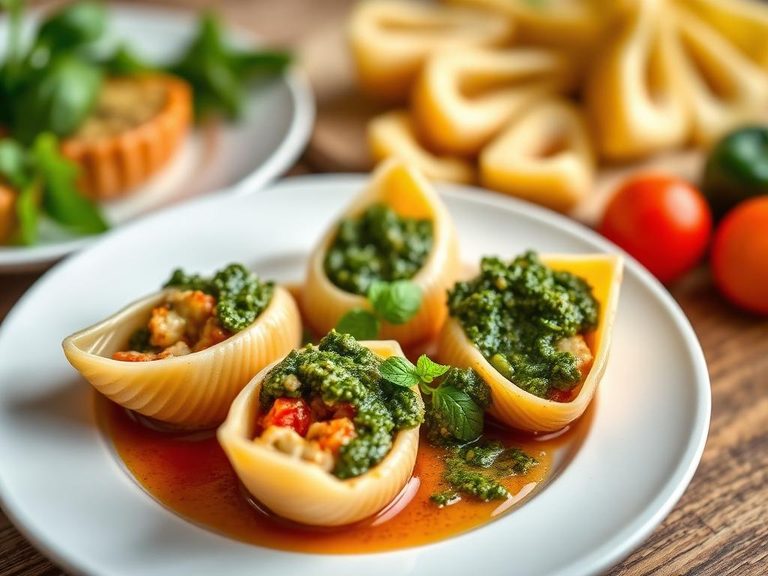
Stuffed shells, cheese- and spinach- filled, no sauce
Common food
These are large, ridged pasta shells, typically made from durum wheat semolina, that have been cooked and then filled with a creamy mixture of cheeses (like ricotta and mozzarella) and chopped spinach. The texture is a delightful contrast: the firm, slightly chewy pasta shell gives way to a soft, savory, and herbaceous filling. Nutritionally, they offer a good balance of protein and carbohydrates, with the spinach adding a boost of iron and vitamins.
Calorie split: 20% protein · 48% carbs · 32% fat
↓ Full nutrition💚 Why it's loved
People love stuffed shells for their comforting, hearty nature and the satisfying combination of tender pasta and rich, creamy filling. They are a classic, crowd-pleasing Italian-American comfort food, perfect for family dinners or potlucks.
⚠️ Watch-outs & how to enjoy it better
Without sauce, they can be relatively dry and may feel incomplete. The cheese filling is high in saturated fat and sodium, which should be considered for heart health. To counteract this, pair them with a tomato-based sauce (which adds lycopene and moisture) and a large side salad to increase volume and fiber. For a lighter version, use part-skim ricotta and reduce added salt.
Key benefits
- Good source of plant-based protein from the cheese and spinach filling.
- Provides complex carbohydrates for sustained energy.
- Contains iron and vitamins A & K from the spinach.
- A satisfying and portion-controlled pasta dish.
- Versatile base for various sauces and toppings.
🍽️ Popular dishes
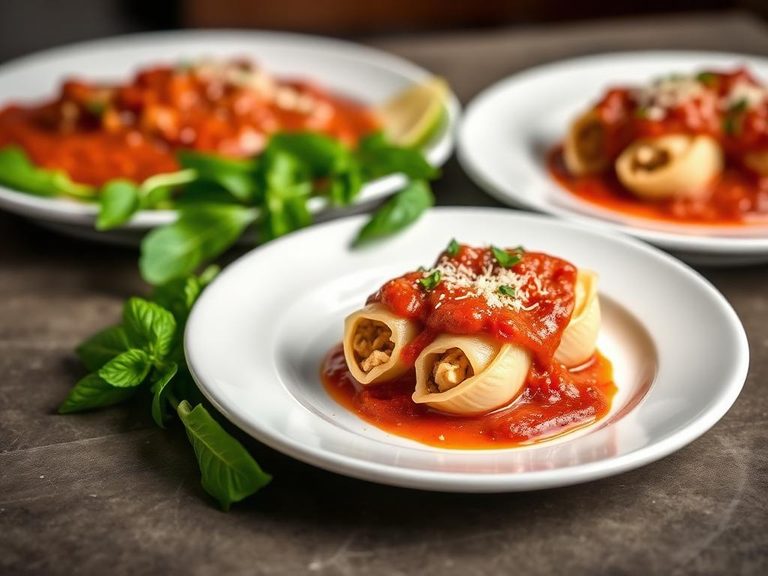
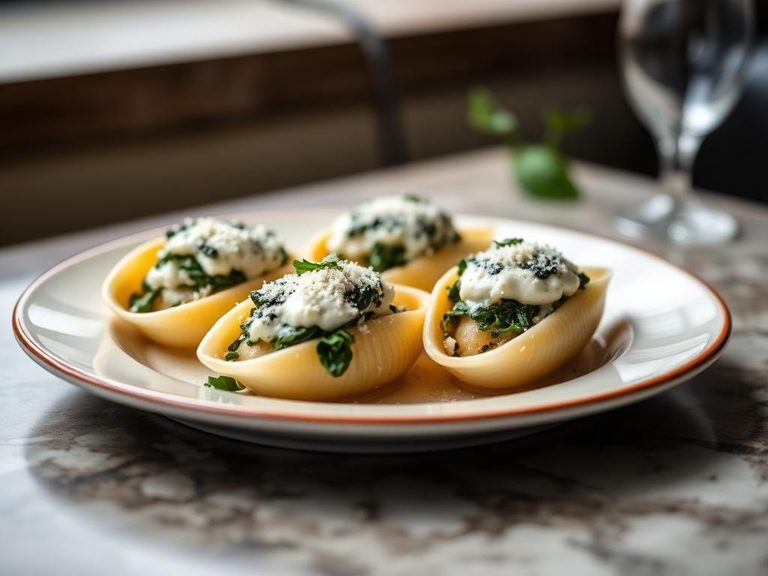
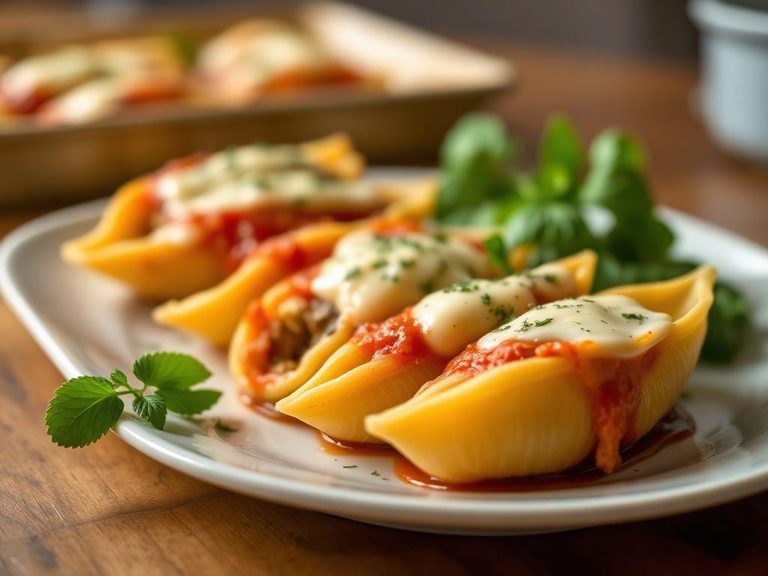
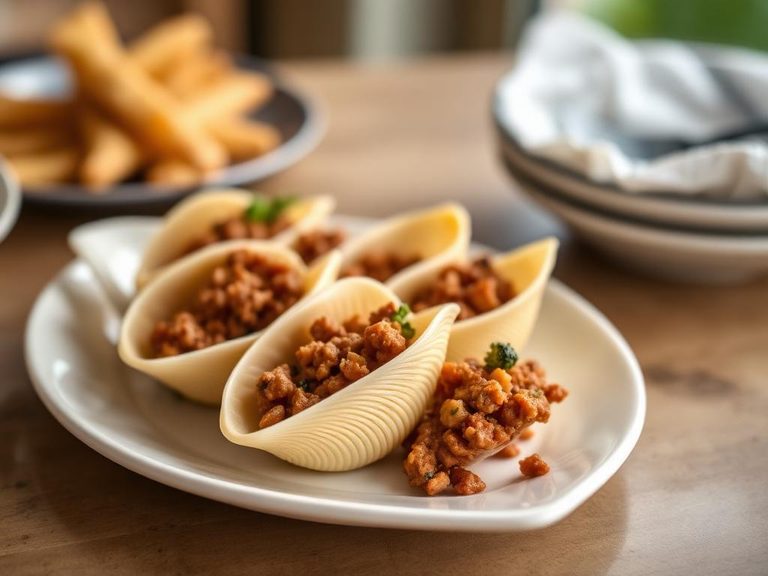
🌍 Where it's eaten
💡 Did you know?
The ridges on jumbo pasta shells aren't just decorative; they are designed to help the sauce and filling cling to the pasta, ensuring a more flavorful bite.
Full nutrition (USDA data · scales with serving)
| Water | 59.4 g |
| Energy | 187 kcal |
| Protein | 9.6 g |
| Total lipid (fat) | 6.6 g |
| Carbohydrate, by difference | 22.4 g |
| Fiber, total dietary | 1.0 g |
| Total Sugars | 0.32 g |
| Calcium, Ca | 154 mg |
| Iron, Fe | 1.9 mg |
| Magnesium, Mg | 35.0 mg |
| Phosphorus, P | 157 mg |
| Potassium, K | 209 mg |
| Sodium, Na | 439 mg |
| Zinc, Zn | 1.0 mg |
| Copper, Cu | 0.06 mg |
| Selenium, Se | 13.1 ug |
| Vitamin C, total ascorbic acid | 4.3 mg |
| Thiamin | 0.22 mg |
| Riboflavin | 0.29 mg |
| Niacin | 1.7 mg |
| Vitamin B-6 | 0.09 mg |
| Folate, total | 56.0 ug |
| Folic acid | 24.0 ug |
| Folate, food | 31.0 ug |
| Folate, DFE | 73.0 ug |
| Choline, total | 51.4 mg |
| Vitamin B-12 | 0.41 ug |
| Vitamin B-12, added | 0.00 ug |
| Vitamin A, RAE | 135 ug |
| Retinol | 73.0 ug |
| Carotene, beta | 744 ug |
| Carotene, alpha | 0.00 ug |
| Cryptoxanthin, beta | 4.0 ug |
| Lycopene | 0.00 ug |
| Lutein + zeaxanthin | 1685 ug |
| Vitamin E (alpha-tocopherol) | 0.71 mg |
| Vitamin E, added | 0.00 mg |
| Vitamin D (D2 + D3) | 0.50 ug |
| Vitamin K (phylloquinone) | 103 ug |
| Alcohol, ethyl | 0.00 g |
| Caffeine | 0.00 mg |
| Theobromine | 0.00 mg |
Fat & fatty acid profile (per 100g)
| Fatty acids, total saturated | 3.3 g |
| SFA 4:0 | 0.09 g |
| SFA 6:0 | 0.08 g |
| SFA 8:0 | 0.05 g |
| SFA 10:0 | 0.12 g |
| SFA 12:0 | 0.14 g |
| SFA 14:0 | 0.45 g |
| SFA 16:0 | 1.7 g |
| SFA 18:0 | 0.56 g |
| Fatty acids, total monounsaturated | 1.6 g |
| MUFA 16:1 | 0.11 g |
| MUFA 18:1 | 1.6 g |
| MUFA 20:1 | 0.01 g |
| MUFA 22:1 | 0.00 g |
| Fatty acids, total polyunsaturated | 0.59 g |
| PUFA 18:2 | 0.50 g |
| PUFA 18:3 | 0.05 g |
| PUFA 18:4 | 0.00 g |
| PUFA 20:4 | 0.01 g |
| PUFA 20:5 n-3 (EPA) | 0.00 g |
| PUFA 22:5 n-3 (DPA) | 0.00 g |
| PUFA 22:6 n-3 (DHA) | 0.00 g |
| Cholesterol | 79.0 mg |
FAQ
What's the best way to cook the shells before stuffing?
Boil the shells in well-salted water until they are al dente (firm to the bite), which is usually 1-2 minutes less than the package instructions. Drain and rinse briefly with cool water to stop the cooking and prevent sticking.
Can I make these ahead of time?
Yes. Assemble the stuffed shells in a baking dish, cover tightly, and refrigerate for up to 24 hours. When ready to bake, add a few minutes to the cooking time if they are cold from the fridge.
What can I use instead of spinach?
You can substitute with chopped kale, Swiss chard, or even broccoli florets. Make sure to cook and squeeze out all excess moisture from the greens before mixing with the cheese to prevent a watery filling.
Nutrient density (calculated · NRF9.3)
Nutrient Rich Foods index: beneficial nutrients (protein, fiber, vitamins, minerals) minus saturated fat, added sugar & sodium, per 100 kcal.
NRF9.3 index — Fulgoni, Keast & Drewnowski, 2009. Computed from USDA nutrients.
Weight-loss friendliness (composite index)
Energy density 1.87 kcal/g · 20% calories from protein · 1.0 g fiber · 0.3 g sugar per 100 g.
Composite of energy density (Rolls et al., 1999), protein & fiber satiety, minus sugar. A calculated heuristic — ranks satiety-per-calorie, not a clinical measure.
Dietary load (calculated from USDA values)
Potential renal acid load. Positive = acid-forming, negative = alkaline-forming.
Sodium-to-potassium ratio: 2.10 (lower is better — aim for ≤ 1)
Sodium:potassium per WHO potassium guidance. Computed from USDA nutrients.