

Stuffed pepper, with rice, meatless
Common food

Photo: Wikipedia
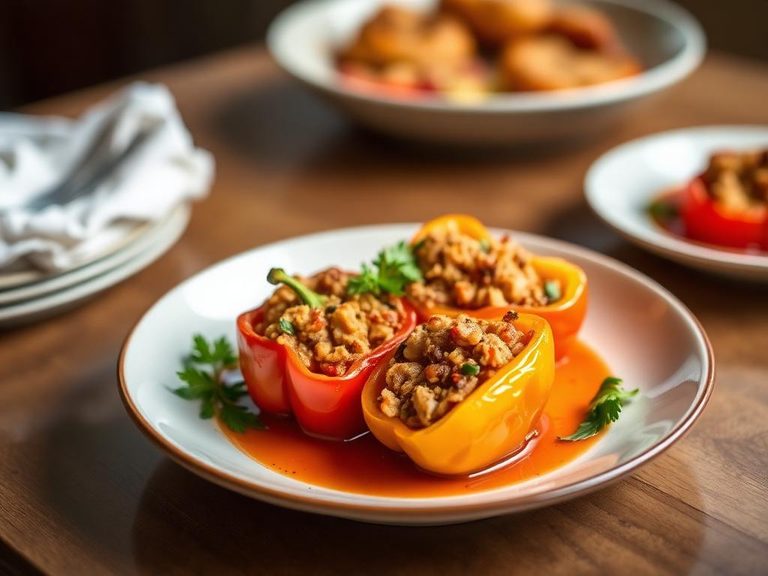
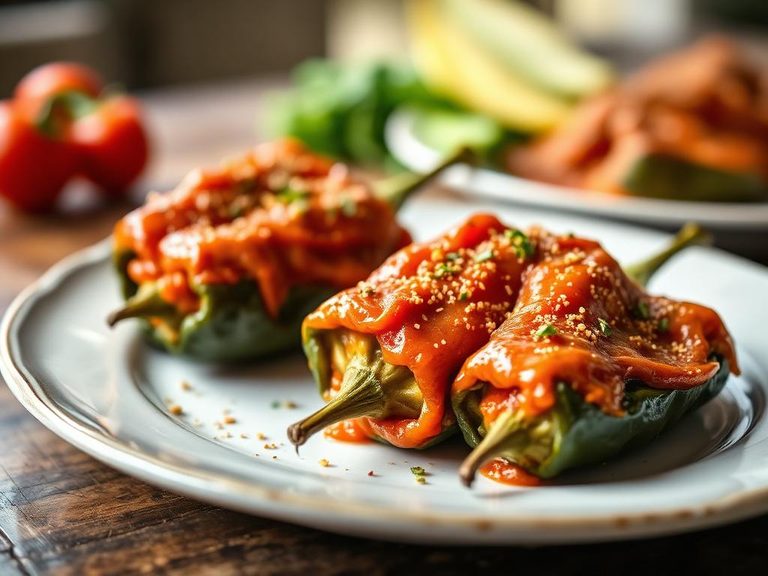
A hollowed-out bell pepper, typically green or red, generously filled with a savory mixture of rice, herbs, and spices. The texture offers a delightful contrast: a tender, slightly crisp pepper shell yielding to a soft, flavorful grain filling. Nutritionally, it's a light yet satisfying dish, with its calories coming primarily from healthy fats and complex carbohydrates.
Calorie split: 9% protein · 29% carbs · 62% fat
↓ Full nutrition💚 Why it's loved
People love it for its comforting, home-cooked appeal and the way the sweet, roasted pepper flavor melds with the savory, seasoned rice. It's a versatile canvas that can be adapted to countless flavor profiles, from Mediterranean to Mexican.
⚠️ Watch-outs & how to enjoy it better
The primary concern is its high fat content relative to its protein, which may not support blood sugar stability or satiety for some. To counteract this, pair it with a significant protein source like beans, lentils, or a side of Greek yogurt, and be mindful of portion size.
Key benefits
- Excellent source of Vitamin C from the pepper shell
- Provides complex carbohydrates for sustained energy
- Low in protein, making it a light meal or side
- Can be easily customized with various herbs and spices
- Naturally gluten-free if using gluten-free grains
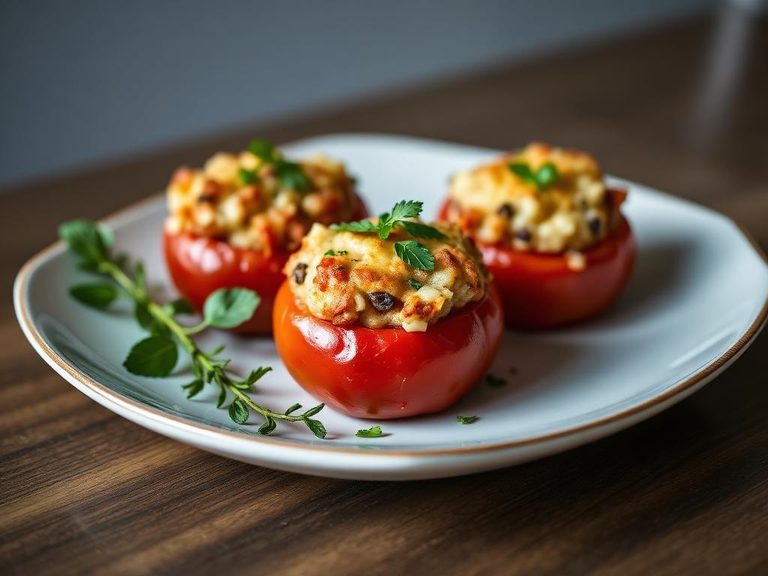
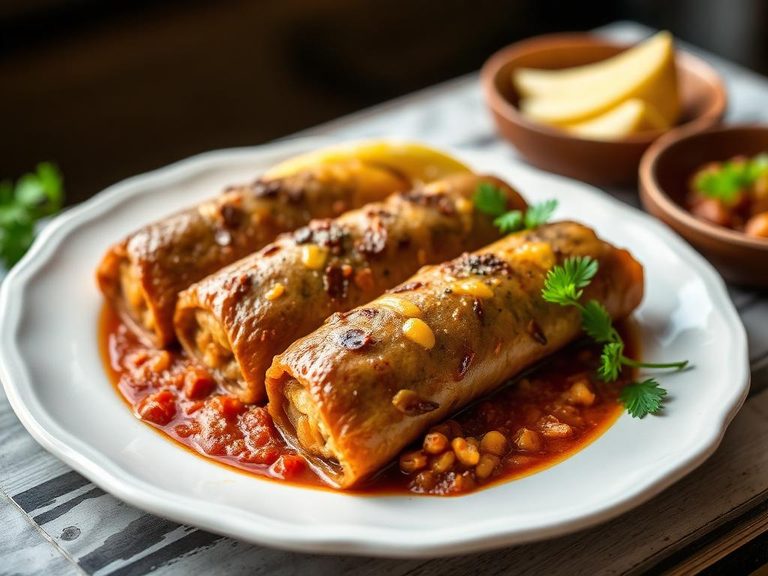
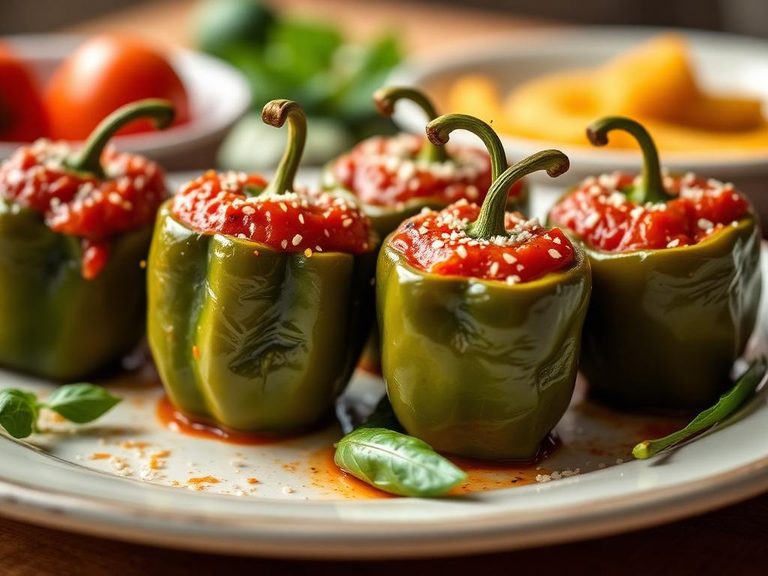
🍽️ Popular dishes
🌍 Where it's eaten
💡 Did you know?
The bell pepper is technically a fruit, specifically a berry, and its flesh is divided into chambers by internal walls called 'placenta,' which is where the seeds are attached.
Full nutrition (USDA data · scales with serving)
| Water | 72.0 g |
| Energy | 166 kcal |
| Protein | 3.8 g |
| Total lipid (fat) | 11.3 g |
| Carbohydrate, by difference | 12.0 g |
| Fiber, total dietary | 0.70 g |
| Total Sugars | 1.5 g |
| Calcium, Ca | 86.0 mg |
| Iron, Fe | 0.54 mg |
| Magnesium, Mg | 12.0 mg |
| Phosphorus, P | 72.0 mg |
| Potassium, K | 122 mg |
| Sodium, Na | 186 mg |
| Zinc, Zn | 0.61 mg |
| Copper, Cu | 0.06 mg |
| Selenium, Se | 5.5 ug |
| Vitamin C, total ascorbic acid | 45.4 mg |
| Thiamin | 0.08 mg |
| Riboflavin | 0.10 mg |
| Niacin | 0.86 mg |
| Vitamin B-6 | 0.16 mg |
| Folate, total | 31.0 ug |
| Folic acid | 16.0 ug |
| Folate, food | 15.0 ug |
| Folate, DFE | 43.0 ug |
| Choline, total | 5.4 mg |
| Vitamin B-12 | 0.06 ug |
| Vitamin B-12, added | 0.00 ug |
| Vitamin A, RAE | 43.0 ug |
| Retinol | 32.0 ug |
| Carotene, beta | 120 ug |
| Carotene, alpha | 11.0 ug |
| Cryptoxanthin, beta | 4.0 ug |
| Lycopene | 0.00 ug |
| Lutein + zeaxanthin | 189 ug |
| Vitamin E (alpha-tocopherol) | 1.8 mg |
| Vitamin E, added | 0.00 mg |
| Vitamin D (D2 + D3) | 0.10 ug |
| Vitamin K (phylloquinone) | 13.4 ug |
| Alcohol, ethyl | 0.00 g |
| Caffeine | 0.00 mg |
| Theobromine | 0.00 mg |
Fat & fatty acid profile (per 100g)
| Fatty acids, total saturated | 3.0 g |
| SFA 4:0 | 0.07 g |
| SFA 6:0 | 0.06 g |
| SFA 8:0 | 0.04 g |
| SFA 10:0 | 0.09 g |
| SFA 12:0 | 0.10 g |
| SFA 14:0 | 0.32 g |
| SFA 16:0 | 1.7 g |
| SFA 18:0 | 0.58 g |
| Fatty acids, total monounsaturated | 4.0 g |
| MUFA 16:1 | 0.08 g |
| MUFA 18:1 | 3.9 g |
| MUFA 20:1 | 0.06 g |
| MUFA 22:1 | 0.00 g |
| Fatty acids, total polyunsaturated | 3.1 g |
| PUFA 18:2 | 2.8 g |
| PUFA 18:3 | 0.36 g |
| PUFA 18:4 | 0.00 g |
| PUFA 20:4 | 0.01 g |
| PUFA 20:5 n-3 (EPA) | 0.00 g |
| PUFA 22:5 n-3 (DPA) | 0.00 g |
| PUFA 22:6 n-3 (DHA) | 0.00 g |
| Cholesterol | 10.0 mg |
FAQ
Is a meatless stuffed pepper a good source of protein?
Based on the nutrition data (3.75g protein per 100g), it is not a high-protein food. It's best considered a carbohydrate and fat source, so pairing it with protein-rich sides is recommended for a balanced meal.
Why is the fat content relatively high for a vegetable dish?
The fat likely comes from oil used to sauté the filling ingredients or from added fats like cheese or nuts within the rice mixture, which are common for flavor and texture.
Can I make it lower in fat?
Yes, you can reduce the oil used in cooking the filling and omit any high-fat additions like cheese or nuts. Focus on using herbs, spices, and acidic ingredients like lemon juice or tomatoes for flavor.
Nutrient density (calculated · NRF9.3)
Nutrient Rich Foods index: beneficial nutrients (protein, fiber, vitamins, minerals) minus saturated fat, added sugar & sodium, per 100 kcal.
NRF9.3 index — Fulgoni, Keast & Drewnowski, 2009. Computed from USDA nutrients.
Weight-loss friendliness (composite index)
Energy density 1.66 kcal/g · 9% calories from protein · 0.7 g fiber · 1.5 g sugar per 100 g.
Composite of energy density (Rolls et al., 1999), protein & fiber satiety, minus sugar. A calculated heuristic — ranks satiety-per-calorie, not a clinical measure.
Dietary load (calculated from USDA values)
Potential renal acid load. Positive = acid-forming, negative = alkaline-forming.
Sodium-to-potassium ratio: 1.52 (lower is better — aim for ≤ 1)
Sodium:potassium per WHO potassium guidance. Computed from USDA nutrients.