

Soy nuts
Common food

Photo: Wikipedia
Soy nuts are whole soybeans that have been soaked and roasted until they achieve a satisfyingly crunchy, nut-like texture. They boast a savory, slightly nutty flavor with a subtle earthiness. Nutritionally, they are a powerhouse, delivering an impressive 38.55g of protein and 17.7g of fiber per 100g, making them exceptionally filling.
Calorie split: 31% protein · 24% carbs · 45% fat
↓ Full nutrition💚 Why it's loved
People love soy nuts for their deeply satisfying crunch and savory, umami-rich flavor that makes them a fantastic standalone snack or salad topper. Their versatility allows them to be seasoned in countless ways, from spicy to smoky, fitting into diverse culinary traditions.
⚠️ Watch-outs & how to enjoy it better
As a common allergen, soy nuts are off-limits for those with soy allergies. Their high fiber content can cause digestive discomfort (gas, bloating) if consumed in large quantities without adequate water. To mitigate this, start with small portions, drink plenty of water, and consider soaking the beans before roasting if making them at home.
Key benefits
- Excellent source of complete plant-based protein.
- High in dietary fiber for digestive health.
- Rich in isoflavones, which are phytoestrogens.
- Provides a crunchy, low-carb alternative to traditional nuts.
- Good source of minerals like manganese and phosphorus.
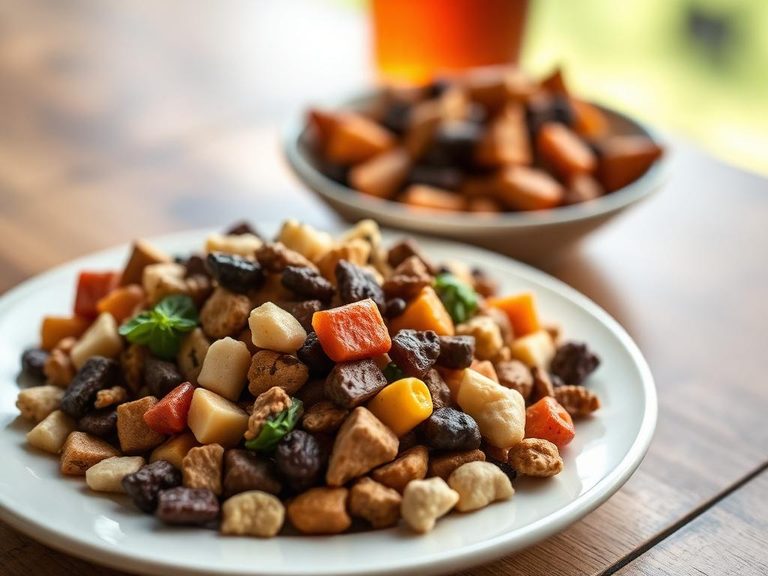
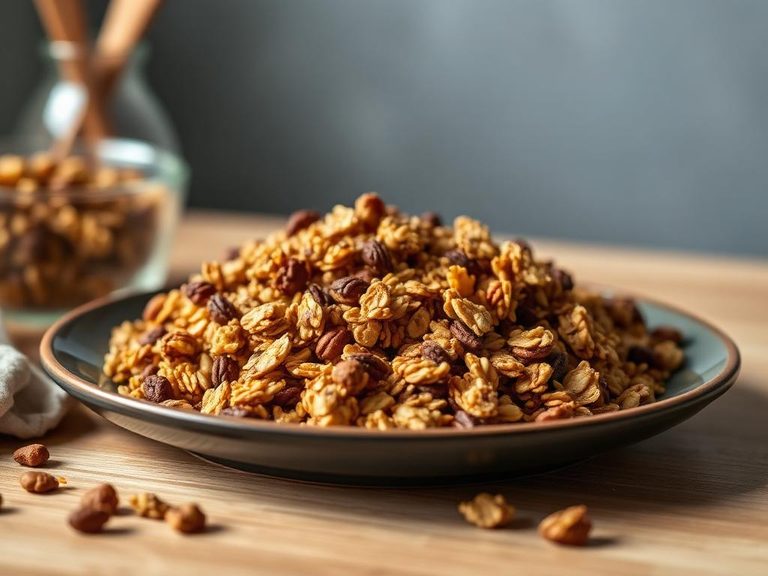
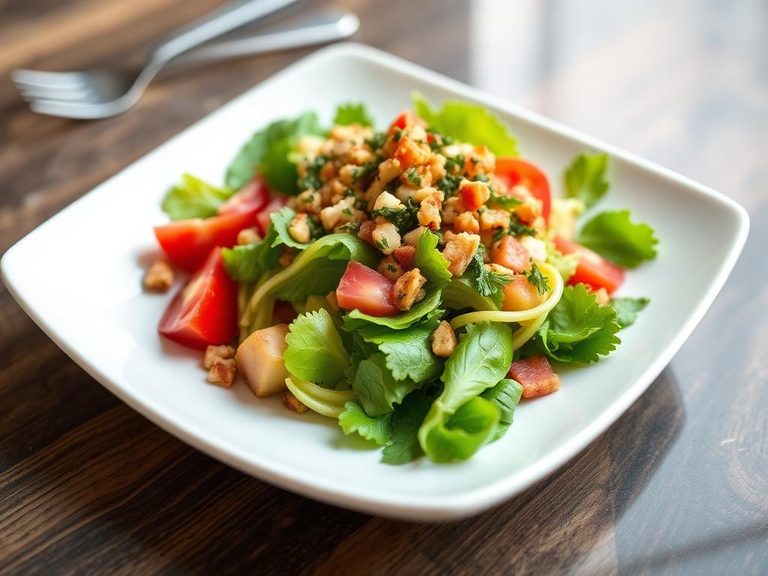
🍽️ Popular dishes
🌍 Where it's eaten
💡 Did you know?
Despite their name and crunch, soy nuts are not nuts at all; they are simply prepared soybeans, making them a safe snack for people with tree nut or peanut allergies.
Full nutrition (USDA data · scales with serving)
| Water | 1.9 g |
| Energy | 469 kcal |
| Protein | 38.5 g |
| Total lipid (fat) | 25.4 g |
| Carbohydrate, by difference | 30.2 g |
| Fiber, total dietary | 17.7 g |
| Total Sugars | 4.2 g |
| Calcium, Ca | 138 mg |
| Iron, Fe | 3.9 mg |
| Magnesium, Mg | 145 mg |
| Phosphorus, P | 363 mg |
| Potassium, K | 1470 mg |
| Sodium, Na | 163 mg |
| Zinc, Zn | 3.1 mg |
| Copper, Cu | 0.83 mg |
| Selenium, Se | 19.1 ug |
| Vitamin C, total ascorbic acid | 2.2 mg |
| Thiamin | 0.10 mg |
| Riboflavin | 0.14 mg |
| Niacin | 1.4 mg |
| Vitamin B-6 | 0.21 mg |
| Folate, total | 211 ug |
| Folic acid | 0.00 ug |
| Folate, food | 211 ug |
| Folate, DFE | 211 ug |
| Choline, total | 124 mg |
| Vitamin B-12 | 0.00 ug |
| Vitamin B-12, added | 0.00 ug |
| Vitamin A, RAE | 10.0 ug |
| Retinol | 0.00 ug |
| Carotene, beta | 120 ug |
| Carotene, alpha | 0.00 ug |
| Cryptoxanthin, beta | 0.00 ug |
| Lycopene | 0.00 ug |
| Lutein + zeaxanthin | 0.00 ug |
| Vitamin E (alpha-tocopherol) | 0.91 mg |
| Vitamin E, added | 0.00 mg |
| Vitamin D (D2 + D3) | 0.00 ug |
| Vitamin K (phylloquinone) | 50.4 ug |
| Alcohol, ethyl | 0.00 g |
| Caffeine | 0.00 mg |
| Theobromine | 0.00 mg |
Fat & fatty acid profile (per 100g)
| Fatty acids, total saturated | 3.7 g |
| SFA 4:0 | 0.00 g |
| SFA 6:0 | 0.00 g |
| SFA 8:0 | 0.00 g |
| SFA 10:0 | 0.00 g |
| SFA 12:0 | 0.00 g |
| SFA 14:0 | 0.07 g |
| SFA 16:0 | 2.7 g |
| SFA 18:0 | 0.91 g |
| Fatty acids, total monounsaturated | 5.6 g |
| MUFA 16:1 | 0.07 g |
| MUFA 18:1 | 5.5 g |
| MUFA 20:1 | 0.00 g |
| MUFA 22:1 | 0.00 g |
| Fatty acids, total polyunsaturated | 14.3 g |
| PUFA 18:2 | 12.6 g |
| PUFA 18:3 | 1.7 g |
| PUFA 18:4 | 0.00 g |
| PUFA 20:4 | 0.00 g |
| PUFA 20:5 n-3 (EPA) | 0.00 g |
| PUFA 22:5 n-3 (DPA) | 0.00 g |
| PUFA 22:6 n-3 (DHA) | 0.00 g |
| Cholesterol | 0.00 mg |
FAQ
How are soy nuts different from roasted peanuts?
Soy nuts are made from soybeans, while peanuts are legumes but are nutritionally and culinarily treated as nuts. Soy nuts have a higher protein content and a different, more bean-like flavor profile.
Can I make soy nuts at home?
Yes. Soak dried soybeans in water for 12-24 hours, drain, pat dry, then roast in an oven at a low temperature (around 300°F/150°C) until crunchy, stirring occasionally. Season before or after roasting.
Are soy nuts good for weight management?
Their high protein and fiber content promotes satiety, which can help with appetite control. However, they are calorie-dense (469 kcal/100g), so mindful portion control is important.
Nutrient density (calculated · NRF9.3)
Nutrient Rich Foods index: beneficial nutrients (protein, fiber, vitamins, minerals) minus saturated fat, added sugar & sodium, per 100 kcal.
NRF9.3 index — Fulgoni, Keast & Drewnowski, 2009. Computed from USDA nutrients.
Weight-loss friendliness (composite index)
Energy density 4.69 kcal/g · 33% calories from protein · 17.7 g fiber · 4.2 g sugar per 100 g.
Composite of energy density (Rolls et al., 1999), protein & fiber satiety, minus sugar. A calculated heuristic — ranks satiety-per-calorie, not a clinical measure.
Dietary load (calculated from USDA values)
Potential renal acid load. Positive = acid-forming, negative = alkaline-forming.
Sodium-to-potassium ratio: 0.11 (lower is better — aim for ≤ 1)
Sodium:potassium per WHO potassium guidance. Computed from USDA nutrients.