

Singapore Sling
Common food

Photo: Wikipedia
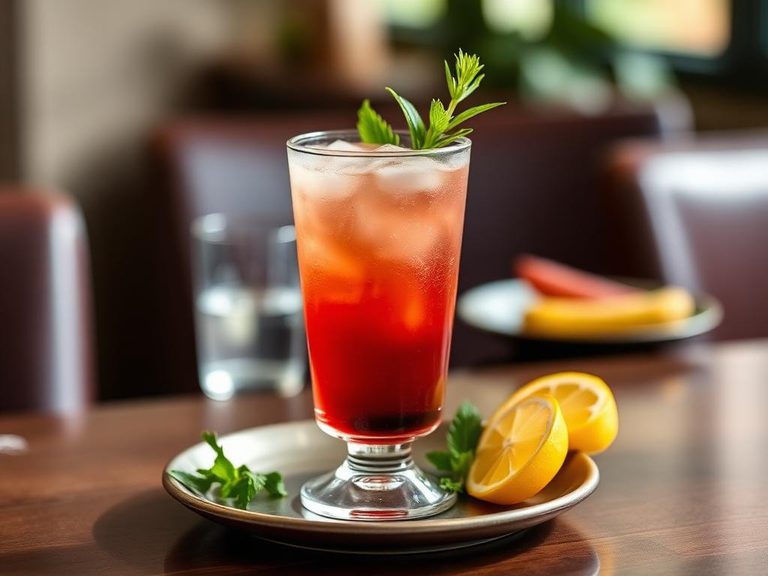
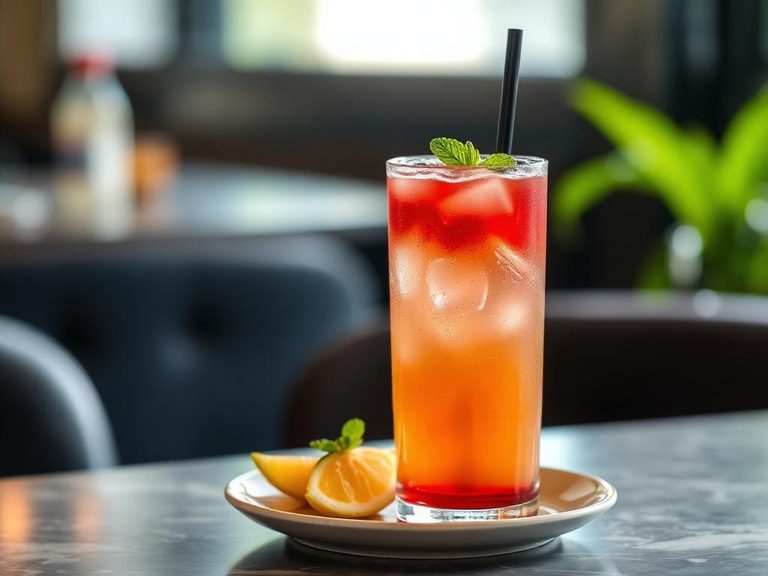
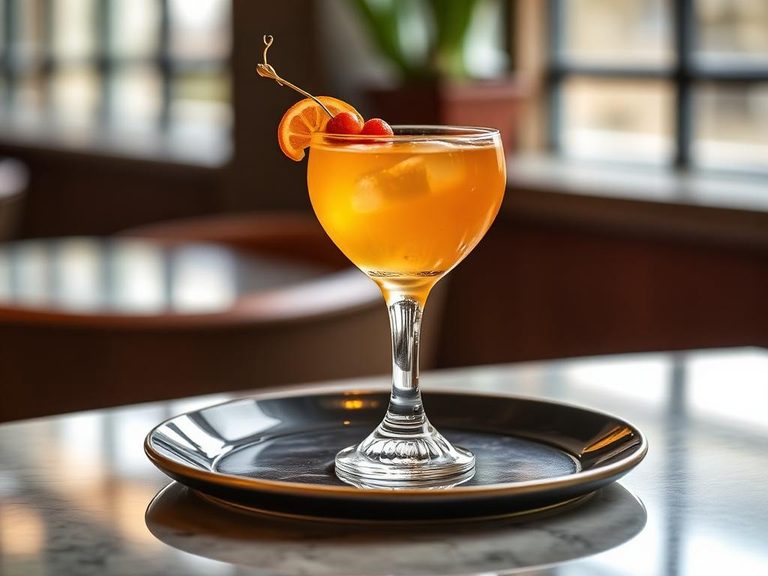
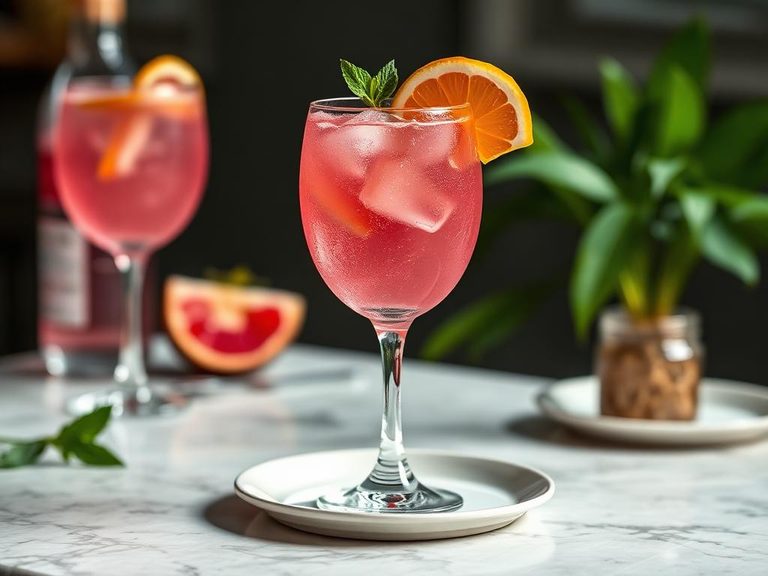
The Singapore Sling is a vibrant, tropical cocktail known for its pink hue and complex, fruity flavor profile. It typically features a base of gin, blended with cherry liqueur, Cointreau, Bénédictine, pineapple juice, lime juice, and grenadine, creating a sweet, tart, and slightly herbal taste with a frothy texture from shaking. Nutritionally, it's a low-protein, moderate-carb beverage, with its calories primarily derived from the sugars in the fruit juices and liqueurs.
Calorie split: 2% protein · 97% carbs · 1% fat
↓ Full nutrition💚 Why it's loved
People love the Singapore Sling for its iconic status as a luxurious, vacation-in-a-glass cocktail, offering a perfect balance of sweet, sour, and botanical notes. Its versatility allows for non-alcoholic 'virgin' versions, making it a popular choice for festive gatherings and as a symbol of classic hotel bar culture.
⚠️ Watch-outs & how to enjoy it better
The primary downside is its high sugar content from juices and liqueurs, which can lead to blood sugar spikes and contribute to empty calories. Those watching their sugar intake or with diabetes should be cautious. To counteract this, consider ordering a 'skinny' version with reduced syrup, pairing it with a protein-rich snack, or choosing a smaller portion size.
Key benefits
- Provides a quick source of energy from carbohydrates.
- Contains small amounts of antioxidants from pineapple and lime juice.
- Often served with a cherry, offering a minor source of vitamin C.
- Can be a social lubricant, aiding relaxation in moderation.
🍽️ Popular dishes
🌍 Where it's eaten
💡 Did you know?
The Singapore Sling was invented around 1915 by bartender Ngiam Tong Boon at the Long Bar in Singapore's Raffles Hotel, and its original recipe included ingredients like Bénédictine and cherry heering that gave it a deeper, more medicinal flavor than many modern versions.
Full nutrition (USDA data · scales with serving)
| Water | 83.0 g |
| Energy | 93.0 kcal |
| Protein | 0.12 g |
| Total lipid (fat) | 0.04 g |
| Carbohydrate, by difference | 7.3 g |
| Fiber, total dietary | 0.20 g |
| Total Sugars | 6.2 g |
| Calcium, Ca | 5.0 mg |
| Iron, Fe | 0.03 mg |
| Magnesium, Mg | 2.0 mg |
| Phosphorus, P | 4.0 mg |
| Potassium, K | 31.0 mg |
| Sodium, Na | 15.0 mg |
| Zinc, Zn | 0.10 mg |
| Copper, Cu | 0.01 mg |
| Selenium, Se | 0.10 ug |
| Vitamin C, total ascorbic acid | 3.8 mg |
| Thiamin | 0.01 mg |
| Riboflavin | 0.01 mg |
| Niacin | 0.05 mg |
| Vitamin B-6 | 0.01 mg |
| Folate, total | 2.0 ug |
| Folic acid | 0.00 ug |
| Folate, food | 2.0 ug |
| Folate, DFE | 2.0 ug |
| Choline, total | 1.4 mg |
| Vitamin B-12 | 0.00 ug |
| Vitamin B-12, added | 0.00 ug |
| Vitamin A, RAE | 1.0 ug |
| Retinol | 0.00 ug |
| Carotene, beta | 0.00 ug |
| Carotene, alpha | 0.00 ug |
| Cryptoxanthin, beta | 11.0 ug |
| Lycopene | 0.00 ug |
| Lutein + zeaxanthin | 3.0 ug |
| Vitamin E (alpha-tocopherol) | 0.06 mg |
| Vitamin E, added | 0.00 mg |
| Vitamin D (D2 + D3) | 0.00 ug |
| Vitamin K (phylloquinone) | 0.00 ug |
| Alcohol, ethyl | 9.4 g |
| Caffeine | 0.00 mg |
| Theobromine | 0.00 mg |
Fat & fatty acid profile (per 100g)
| Fatty acids, total saturated | 0.01 g |
| SFA 4:0 | 0.00 g |
| SFA 6:0 | 0.00 g |
| SFA 8:0 | 0.00 g |
| SFA 10:0 | 0.00 g |
| SFA 12:0 | 0.00 g |
| SFA 14:0 | 0.00 g |
| SFA 16:0 | 0.00 g |
| SFA 18:0 | 0.00 g |
| Fatty acids, total monounsaturated | 0.00 g |
| MUFA 16:1 | 0.00 g |
| MUFA 18:1 | 0.00 g |
| MUFA 20:1 | 0.00 g |
| MUFA 22:1 | 0.00 g |
| Fatty acids, total polyunsaturated | 0.01 g |
| PUFA 18:2 | 0.00 g |
| PUFA 18:3 | 0.00 g |
| PUFA 18:4 | 0.00 g |
| PUFA 20:4 | 0.00 g |
| PUFA 20:5 n-3 (EPA) | 0.00 g |
| PUFA 22:5 n-3 (DPA) | 0.00 g |
| PUFA 22:6 n-3 (DHA) | 0.00 g |
| Cholesterol | 0.00 mg |
FAQ
Is a Singapore Sling a strong alcoholic drink?
Its alcohol content is moderate, typically around 10-15% ABV, similar to many cocktails. The sweetness can mask the gin, so it's easy to underestimate its strength.
Can I make a non-alcoholic version?
Yes, a 'Singapore Sling Mocktail' replaces gin and liqueurs with non-alcoholic alternatives like seedlip, using the same juices and grenadine for flavor.
Why is my Singapore Sling not pink?
The pink color traditionally comes from grenadine (pomegranate syrup). If using a different cherry liqueur or omitting grenadine, the color may be more amber or pale.
Nutrient density (calculated · NRF9.3)
Nutrient Rich Foods index: beneficial nutrients (protein, fiber, vitamins, minerals) minus saturated fat, added sugar & sodium, per 100 kcal.
NRF9.3 index — Fulgoni, Keast & Drewnowski, 2009. Computed from USDA nutrients.
Weight-loss friendliness (composite index)
Energy density 0.93 kcal/g · 1% calories from protein · 0.2 g fiber · 6.2 g sugar per 100 g.
Composite of energy density (Rolls et al., 1999), protein & fiber satiety, minus sugar. A calculated heuristic — ranks satiety-per-calorie, not a clinical measure.
Dietary load (calculated from USDA values)
Potential renal acid load. Positive = acid-forming, negative = alkaline-forming.
Sodium-to-potassium ratio: 0.48 (lower is better — aim for ≤ 1)
Sodium:potassium per WHO potassium guidance. Computed from USDA nutrients.