

Scone
Common food

Photo: Wikipedia
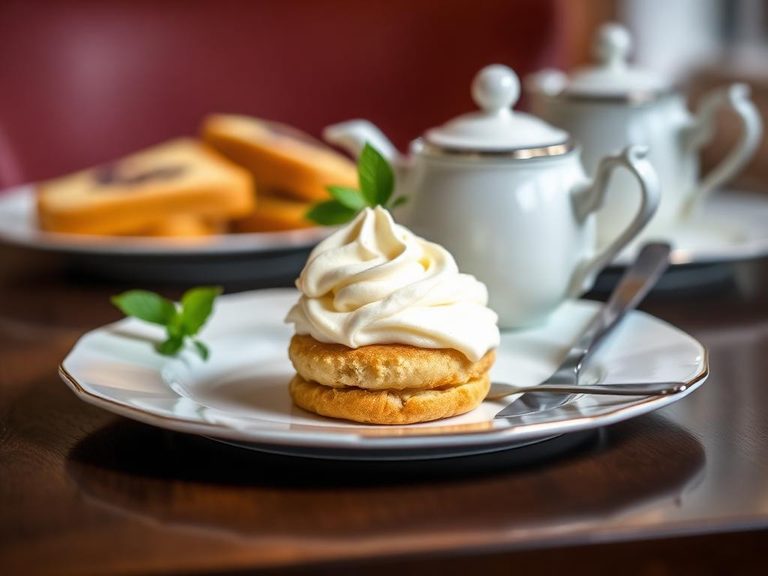
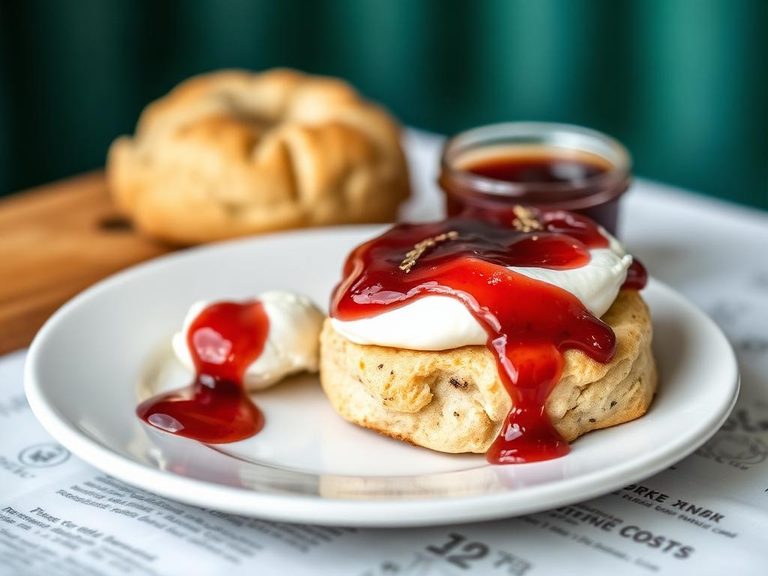
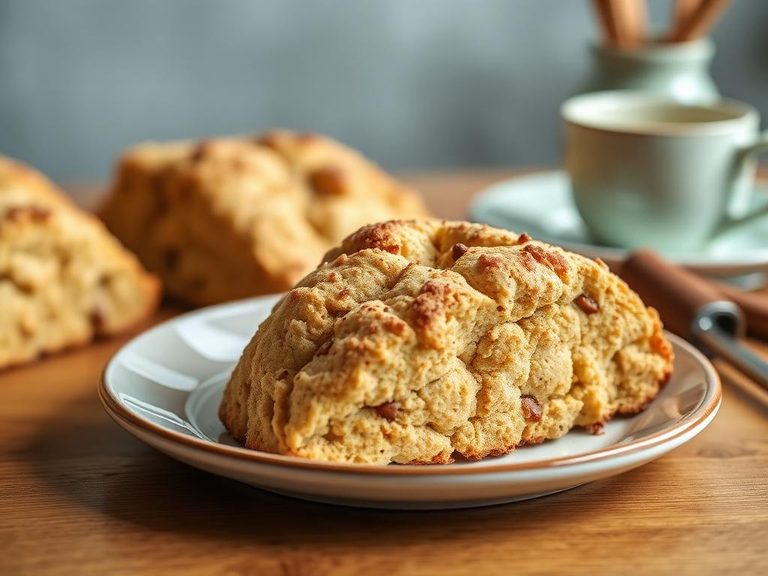
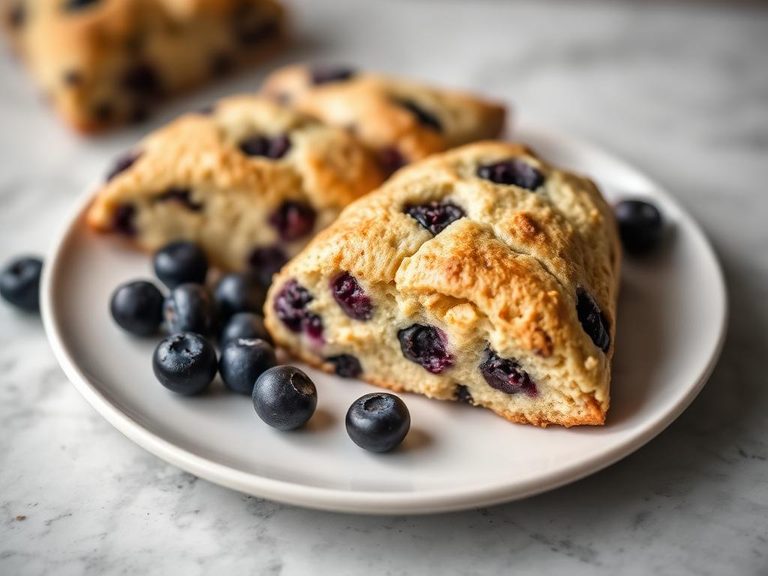
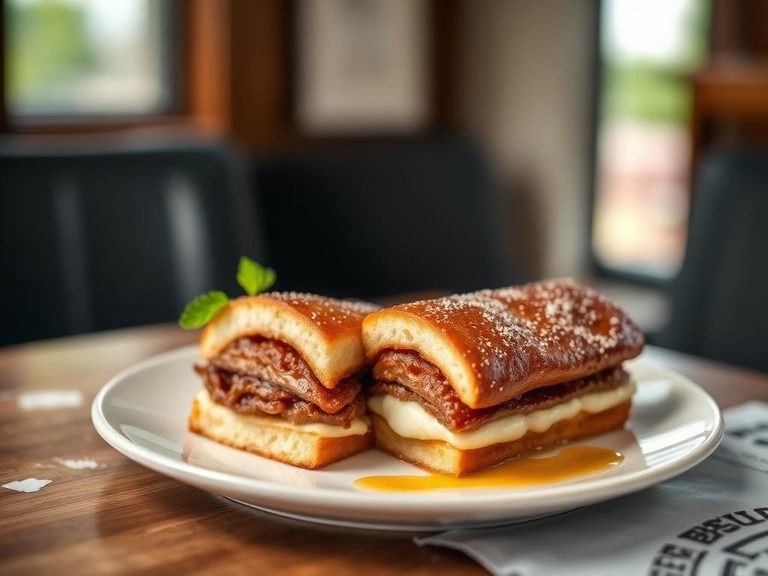
A scone is a tender, crumbly quick bread, often shaped into a wedge or round, with a golden-brown crust and a soft, slightly flaky interior. Its flavor is subtly buttery and sweet, serving as a perfect canvas for clotted cream, jam, or butter. Nutritionally, it is a dense source of carbohydrates, providing a quick energy boost, but is also notably high in fat and sugar per serving.
Calorie split: 7% protein · 50% carbs · 43% fat
↓ Full nutrition💚 Why it's loved
People love scones for their comforting, buttery flavor and the delightful textural contrast between their crisp exterior and soft, crumbly interior. They are deeply embedded in British afternoon tea culture, symbolizing a moment of indulgence and social connection.
⚠️ Watch-outs & how to enjoy it better
The high sugar and refined carbohydrate content can lead to blood-sugar spikes and subsequent energy crashes, making it a poor choice for those managing diabetes or seeking sustained energy. To counteract this, pair a small scone with a source of protein (like Greek yogurt) or healthy fat (like a handful of nuts) to slow digestion, and prioritize enjoying it as an occasional treat rather than a staple.
Key benefits
- Provides a quick source of energy from carbohydrates.
- Contains some protein from flour and dairy ingredients.
- Can be a comforting, psychologically satisfying treat.
- Versatile base for both sweet and savory additions.
- Convenient for portion control when baked as individual units.
🍽️ Popular dishes

🌍 Where it's eaten
💡 Did you know?
The word 'scone' may derive from the Stone of Destiny (Scone), where Scottish kings were crowned, linking this humble baked good to ancient royal tradition.
Full nutrition (USDA data · scales with serving)
| Water | 24.0 g |
| Energy | 382 kcal |
| Protein | 6.7 g |
| Total lipid (fat) | 18.4 g |
| Carbohydrate, by difference | 48.1 g |
| Fiber, total dietary | 1.2 g |
| Total Sugars | 13.4 g |
| Calcium, Ca | 211 mg |
| Iron, Fe | 2.9 mg |
| Magnesium, Mg | 17.0 mg |
| Phosphorus, P | 152 mg |
| Potassium, K | 118 mg |
| Sodium, Na | 446 mg |
| Zinc, Zn | 0.53 mg |
| Copper, Cu | 0.07 mg |
| Selenium, Se | 9.4 ug |
| Vitamin C, total ascorbic acid | 0.00 mg |
| Thiamin | 0.35 mg |
| Riboflavin | 0.24 mg |
| Niacin | 2.7 mg |
| Vitamin B-6 | 0.05 mg |
| Folate, total | 54.0 ug |
| Folic acid | 42.0 ug |
| Folate, food | 12.0 ug |
| Folate, DFE | 84.0 ug |
| Choline, total | 28.8 mg |
| Vitamin B-12 | 0.20 ug |
| Vitamin B-12, added | 0.00 ug |
| Vitamin A, RAE | 179 ug |
| Retinol | 176 ug |
| Carotene, beta | 35.0 ug |
| Carotene, alpha | 0.00 ug |
| Cryptoxanthin, beta | 2.0 ug |
| Lycopene | 0.00 ug |
| Lutein + zeaxanthin | 37.0 ug |
| Vitamin E (alpha-tocopherol) | 0.10 mg |
| Vitamin E, added | 0.00 mg |
| Vitamin D (D2 + D3) | 0.50 ug |
| Vitamin K (phylloquinone) | 1.6 ug |
| Alcohol, ethyl | 0.00 g |
| Caffeine | 0.00 mg |
| Theobromine | 0.00 mg |
Fat & fatty acid profile (per 100g)
| Fatty acids, total saturated | 9.7 g |
| SFA 4:0 | 0.42 g |
| SFA 6:0 | 0.30 g |
| SFA 8:0 | 0.17 g |
| SFA 10:0 | 0.40 g |
| SFA 12:0 | 0.46 g |
| SFA 14:0 | 1.5 g |
| SFA 16:0 | 4.6 g |
| SFA 18:0 | 1.6 g |
| Fatty acids, total monounsaturated | 3.8 g |
| MUFA 16:1 | 0.22 g |
| MUFA 18:1 | 3.4 g |
| MUFA 20:1 | 0.02 g |
| MUFA 22:1 | 0.00 g |
| Fatty acids, total polyunsaturated | 0.81 g |
| PUFA 18:2 | 0.73 g |
| PUFA 18:3 | 0.08 g |
| PUFA 18:4 | 0.00 g |
| PUFA 20:4 | 0.02 g |
| PUFA 20:5 n-3 (EPA) | 0.01 g |
| PUFA 22:5 n-3 (DPA) | 0.01 g |
| PUFA 22:6 n-3 (DHA) | 0.00 g |
| Cholesterol | 74.0 mg |
FAQ
What is the difference between a scone and a biscuit?
In the U.S., a 'biscuit' is typically a savory, flaky quick bread, while a 'scone' is sweeter, denser, and often contains egg. In the UK, 'biscuit' means a cookie, so the terms aren't directly comparable.
Why are my scones tough instead of tender?
Tough scones are usually caused by overworking the dough. The key is to mix the ingredients just until combined and to handle the dough as little as possible to avoid developing gluten.
Can scones be made healthier?
Yes, you can reduce sugar and fat, use whole-grain flours, and add ingredients like oats, nuts, or fruit for fiber. However, this will alter the traditional rich, crumbly texture.
Nutrient density (calculated · NRF9.3)
Nutrient Rich Foods index: beneficial nutrients (protein, fiber, vitamins, minerals) minus saturated fat, added sugar & sodium, per 100 kcal.
NRF9.3 index — Fulgoni, Keast & Drewnowski, 2009. Computed from USDA nutrients.
Weight-loss friendliness (composite index)
Energy density 3.82 kcal/g · 7% calories from protein · 1.2 g fiber · 13.4 g sugar per 100 g.
Composite of energy density (Rolls et al., 1999), protein & fiber satiety, minus sugar. A calculated heuristic — ranks satiety-per-calorie, not a clinical measure.
Dietary load (calculated from USDA values)
Potential renal acid load. Positive = acid-forming, negative = alkaline-forming.
Sodium-to-potassium ratio: 3.78 (lower is better — aim for ≤ 1)
Sodium:potassium per WHO potassium guidance. Computed from USDA nutrients.