

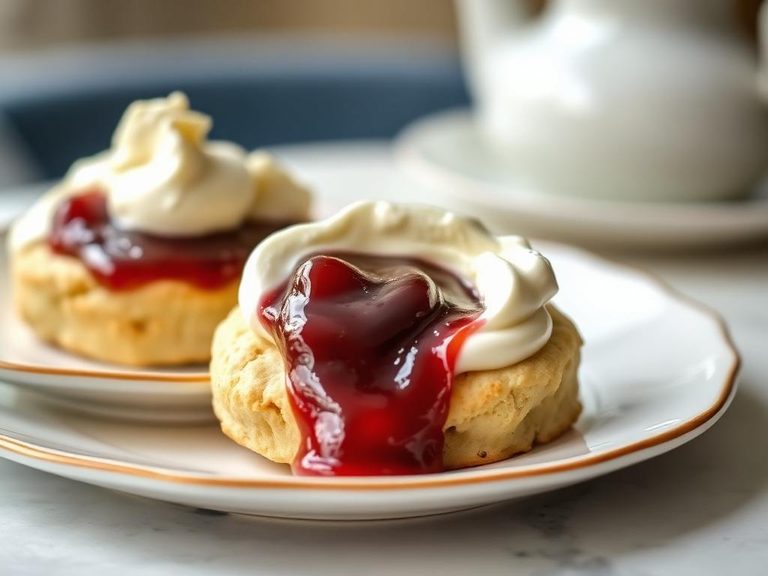
Scone with Clotted Cream and Jam

A classic British scone is a light, crumbly quick bread, typically served split in half and generously topped with thick, rich clotted cream and a sweet fruit jam. The core ingredients are flour, butter, milk, and a raising agent, with the clotted cream and jam being essential accompaniments. This combination is the centerpiece of the traditional English cream tea.
🍽️ Nutrition at a glance
This dish is high in both carbohydrates from the scone and jam, and fat from the butter in the scone and the clotted cream. It provides a quick energy boost and some calcium, but is generally considered an indulgent treat, with a single serving often ranging from 400 to 600 calories.
Nutrition breakdown
| Calories | 310 kcal |
| Protein | 4.5 g |
| Carbs | 38 g |
| Fat | 16 g |
| Fiber | 1.5 g |
| Sugar | 21 g |
| Sodium | 220 mg |
| Calcium | 60 mg |
| Iron | 1.5 mg |
| Potassium | 120 mg |
| Vitamin A | 150 IU |
| Vitamin C | 3 mg |
| Phosphorus | 80 mg |
| Magnesium | 10 mg |
| Selenium | 8 µg |
Per 1 scone (65 g) with 1 tbsp (15 g) clotted cream and 1 tbsp (20 g) jam · estimated, varies by recipe
💡 What's interesting
The order of assembly is a point of regional pride and debate in England: in Devon, the cream is spread first, then the jam, while in Cornwall, the jam goes on first. Nutritionally, clotted cream is unique for its extremely high butterfat content (at least 55%), which is achieved by slowly heating full-fat cow's milk.
🍽️ Related dishes







AI estimate may be inaccurate · Terms