

Rob Roy
Common food

Photo: Wikipedia
The Rob Roy is a classic, spirit-forward cocktail, typically a Scotch-based variation of the Manhattan. It offers a smooth, slightly smoky, and subtly sweet profile with a rich, amber hue. Its nutrition is almost entirely derived from the alcohol and any added sweet vermouth.
Calorie split: 1% protein · 99% carbs · 0% fat
↓ Full nutrition💚 Why it's loved
People love the Rob Roy for its sophisticated, balanced flavor that highlights the character of the Scotch, making it a favorite among whisky enthusiasts. It's also cherished for its simplicity and elegant presentation, often served in a classic cocktail glass.
⚠️ Watch-outs & how to enjoy it better
As a cocktail, its primary downside is the alcohol content, which can contribute to blood-sugar spikes and impaired judgment. To counteract this, consume it slowly with a meal, especially one containing protein and healthy fats to slow alcohol absorption, and always practice strict portion control.
Key benefits
- Contains antioxidants from Scotch whisky
- May offer a temporary, mild stress-relieving effect
- Low in sugar compared to many cocktails
- No fat or cholesterol
- Can be a low-calorie option if made with a splash of vermouth
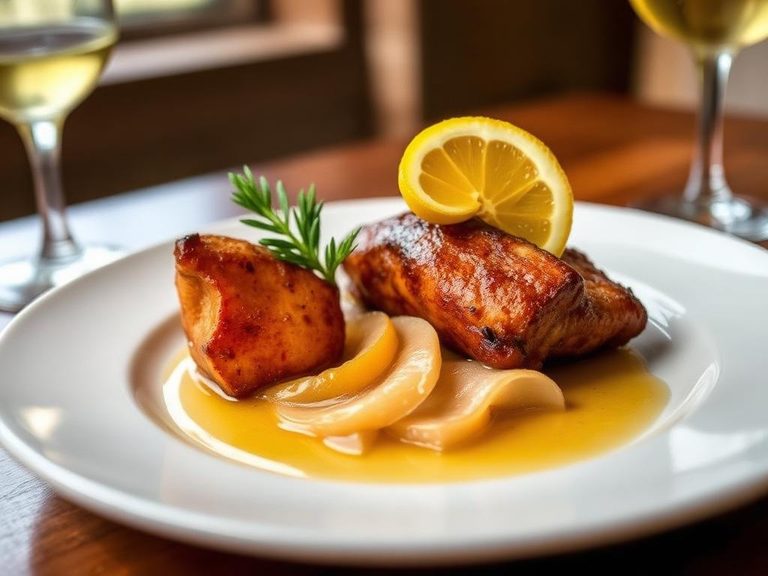
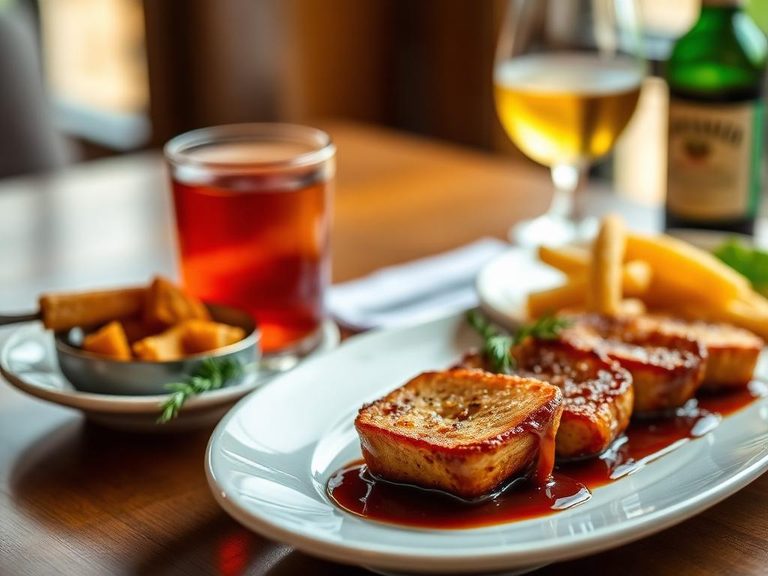
🍽️ Popular dishes



🌍 Where it's eaten
💡 Did you know?
The Rob Roy cocktail was first created in New York City in 1894 to honor the premiere of the operetta 'Rob Roy,' which was based on the legendary Scottish outlaw Robert Roy MacGregor.
Full nutrition (USDA data · scales with serving)
| Water | 67.6 g |
| Energy | 212 kcal |
| Protein | 0.05 g |
| Total lipid (fat) | 0.00 g |
| Carbohydrate, by difference | 3.6 g |
| Fiber, total dietary | 0.00 g |
| Total Sugars | 2.0 g |
| Calcium, Ca | 2.0 mg |
| Iron, Fe | 0.09 mg |
| Magnesium, Mg | 2.0 mg |
| Phosphorus, P | 5.0 mg |
| Potassium, K | 26.0 mg |
| Sodium, Na | 3.0 mg |
| Zinc, Zn | 0.05 mg |
| Copper, Cu | 0.03 mg |
| Selenium, Se | 0.10 ug |
| Vitamin C, total ascorbic acid | 0.00 mg |
| Thiamin | 0.01 mg |
| Riboflavin | 0.01 mg |
| Niacin | 0.07 mg |
| Vitamin B-6 | 0.00 mg |
| Folate, total | 0.00 ug |
| Folic acid | 0.00 ug |
| Folate, food | 0.00 ug |
| Folate, DFE | 0.00 ug |
| Choline, total | 1.3 mg |
| Vitamin B-12 | 0.00 ug |
| Vitamin B-12, added | 0.00 ug |
| Vitamin A, RAE | 0.00 ug |
| Retinol | 0.00 ug |
| Carotene, beta | 0.00 ug |
| Carotene, alpha | 0.00 ug |
| Cryptoxanthin, beta | 0.00 ug |
| Lycopene | 0.00 ug |
| Lutein + zeaxanthin | 0.00 ug |
| Vitamin E (alpha-tocopherol) | 0.00 mg |
| Vitamin E, added | 0.00 mg |
| Vitamin D (D2 + D3) | 0.00 ug |
| Vitamin K (phylloquinone) | 0.00 ug |
| Alcohol, ethyl | 28.6 g |
| Caffeine | 0.00 mg |
| Theobromine | 0.00 mg |
Fat & fatty acid profile (per 100g)
| Fatty acids, total saturated | 0.00 g |
| SFA 4:0 | 0.00 g |
| SFA 6:0 | 0.00 g |
| SFA 8:0 | 0.00 g |
| SFA 10:0 | 0.00 g |
| SFA 12:0 | 0.00 g |
| SFA 14:0 | 0.00 g |
| SFA 16:0 | 0.00 g |
| SFA 18:0 | 0.00 g |
| Fatty acids, total monounsaturated | 0.00 g |
| MUFA 16:1 | 0.00 g |
| MUFA 18:1 | 0.00 g |
| MUFA 20:1 | 0.00 g |
| MUFA 22:1 | 0.00 g |
| Fatty acids, total polyunsaturated | 0.00 g |
| PUFA 18:2 | 0.00 g |
| PUFA 18:3 | 0.00 g |
| PUFA 18:4 | 0.00 g |
| PUFA 20:4 | 0.00 g |
| PUFA 20:5 n-3 (EPA) | 0.00 g |
| PUFA 22:5 n-3 (DPA) | 0.00 g |
| PUFA 22:6 n-3 (DHA) | 0.00 g |
| Cholesterol | 0.00 mg |
FAQ
What is the difference between a Rob Roy and a Manhattan?
The primary difference is the base spirit. A Rob Roy is made with Scotch whisky, while a Manhattan is traditionally made with rye whiskey (or sometimes bourbon). This gives the Rob Roy a smokier, more peaty flavor profile.
Can I make a non-alcoholic version?
Yes, you can create a 'mocktail' version by substituting the Scotch with a non-alcoholic whisky alternative and using a non-alcoholic sweet vermouth. The flavor will be different but can mimic the herbal and sweet notes.
Is the Rob Roy a strong drink?
Yes, it is considered a spirit-forward cocktail. The standard recipe contains about 2 ounces (60ml) of Scotch whisky, making it potent. It's best enjoyed slowly.
Nutrient density (calculated · NRF9.3)
Nutrient Rich Foods index: beneficial nutrients (protein, fiber, vitamins, minerals) minus saturated fat, added sugar & sodium, per 100 kcal.
NRF9.3 index — Fulgoni, Keast & Drewnowski, 2009. Computed from USDA nutrients.
Weight-loss friendliness (composite index)
Energy density 2.12 kcal/g · 0% calories from protein · 0.0 g fiber · 2.0 g sugar per 100 g.
Composite of energy density (Rolls et al., 1999), protein & fiber satiety, minus sugar. A calculated heuristic — ranks satiety-per-calorie, not a clinical measure.
Dietary load (calculated from USDA values)
Potential renal acid load. Positive = acid-forming, negative = alkaline-forming.
Sodium-to-potassium ratio: 0.12 (lower is better — aim for ≤ 1)
Sodium:potassium per WHO potassium guidance. Computed from USDA nutrients.