

Porcupine balls with tomato-based sauce
Common food

Photo: Wikipedia
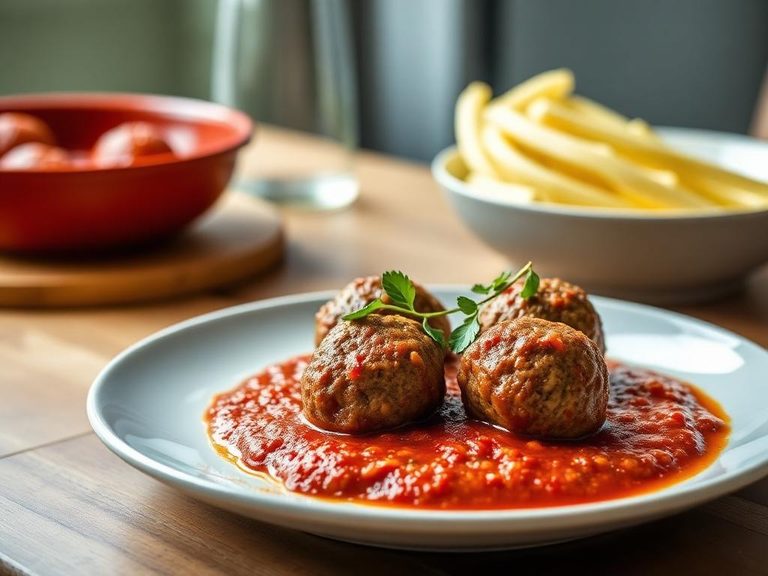
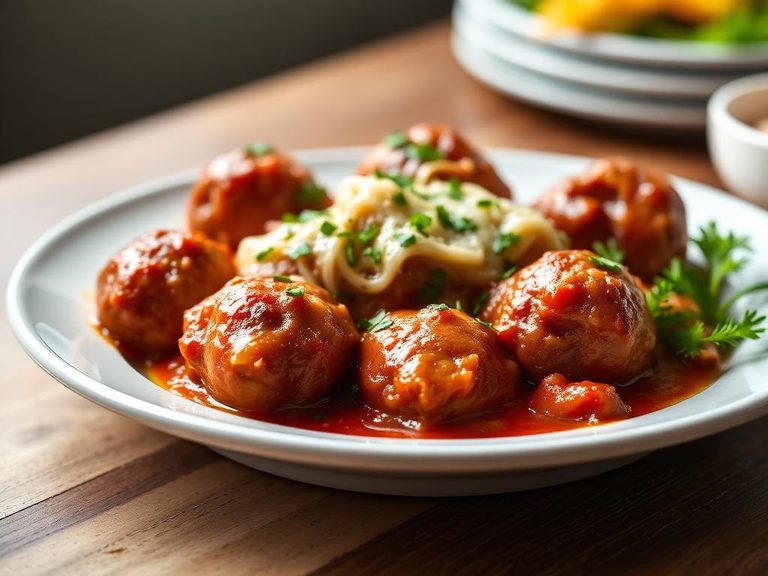
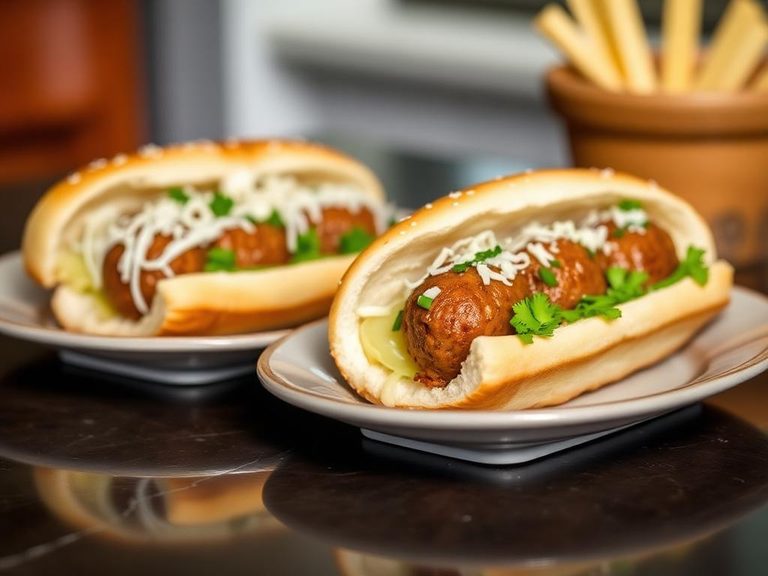
Porcupine balls are savory meatballs made with ground beef and rice, which pokes out during cooking like porcupine quills, all simmered in a rich, tangy tomato sauce. They offer a hearty, comforting texture with a satisfying chew from the rice and a savory, umami-rich flavor from the meat and sauce. Nutritionally, they provide a solid protein boost while being relatively moderate in calories and fat per serving.
Calorie split: 27% protein · 35% carbs · 37% fat
↓ Full nutrition💚 Why it's loved
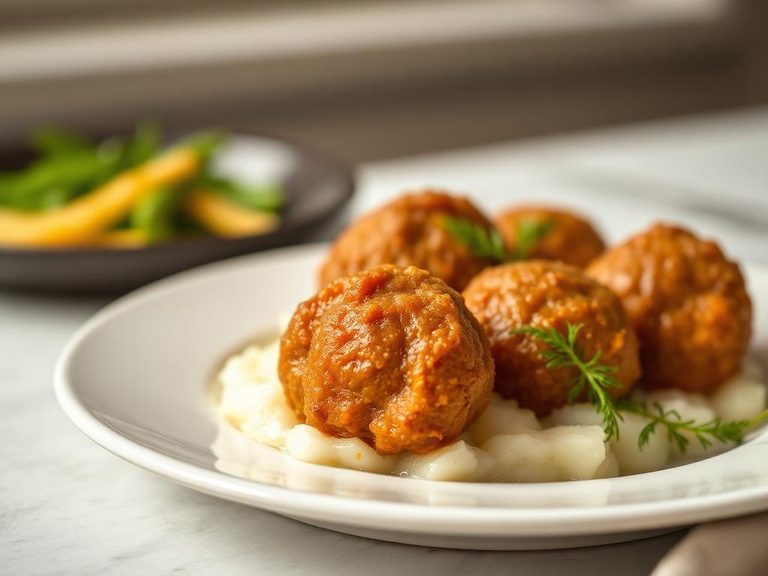
People love porcupine balls for their nostalgic, home-cooked appeal and the satisfying contrast between the tender meat and the soft, chewy rice grains. They're incredibly versatile, easily adapting to different sauces or being served over pasta, rice, or mashed potatoes.
⚠️ Watch-outs & how to enjoy it better
The dish can be high in sodium depending on the sauce and seasoning, and the combination of ground beef and rice may cause blood sugar spikes for some. To counteract this, use low-sodium broth or tomatoes, and pair the meal with a fiber-rich vegetable side like steamed broccoli or a leafy green salad to slow digestion.
Key benefits
- Good source of protein for muscle maintenance
- Contains B vitamins from beef and tomatoes
- Provides iron and zinc from red meat
- Tomato sauce offers lycopene, an antioxidant
- Comfort food that can be made with pantry staples
🍽️ Popular dishes
🌍 Where it's eaten
💡 Did you know?
The name 'porcupine balls' comes from the way the grains of rice protrude from the meatball as it cooks, resembling the quills of a porcupine.
Full nutrition (USDA data · scales with serving)
| Water | 68.2 g |
| Energy | 153 kcal |
| Protein | 10.4 g |
| Total lipid (fat) | 6.2 g |
| Carbohydrate, by difference | 13.4 g |
| Fiber, total dietary | 0.60 g |
| Total Sugars | 3.0 g |
| Calcium, Ca | 18.0 mg |
| Iron, Fe | 1.5 mg |
| Magnesium, Mg | 15.0 mg |
| Phosphorus, P | 91.0 mg |
| Potassium, K | 310 mg |
| Sodium, Na | 501 mg |
| Zinc, Zn | 2.4 mg |
| Copper, Cu | 0.07 mg |
| Selenium, Se | 10.1 ug |
| Vitamin C, total ascorbic acid | 4.4 mg |
| Thiamin | 0.08 mg |
| Riboflavin | 0.07 mg |
| Niacin | 2.5 mg |
| Vitamin B-6 | 0.18 mg |
| Folate, total | 20.0 ug |
| Folic acid | 15.0 ug |
| Folate, food | 5.0 ug |
| Folate, DFE | 31.0 ug |
| Choline, total | 33.4 mg |
| Vitamin B-12 | 0.96 ug |
| Vitamin B-12, added | 0.00 ug |
| Vitamin A, RAE | 7.0 ug |
| Retinol | 1.0 ug |
| Carotene, beta | 71.0 ug |
| Carotene, alpha | 0.00 ug |
| Cryptoxanthin, beta | 0.00 ug |
| Lycopene | 3314 ug |
| Lutein + zeaxanthin | 28.0 ug |
| Vitamin E (alpha-tocopherol) | 0.16 mg |
| Vitamin E, added | 0.00 mg |
| Vitamin D (D2 + D3) | 0.00 ug |
| Vitamin K (phylloquinone) | 1.7 ug |
| Alcohol, ethyl | 0.00 g |
| Caffeine | 0.00 mg |
| Theobromine | 0.00 mg |
Fat & fatty acid profile (per 100g)
| Fatty acids, total saturated | 2.4 g |
| SFA 4:0 | 0.00 g |
| SFA 6:0 | 0.00 g |
| SFA 8:0 | 0.00 g |
| SFA 10:0 | 0.00 g |
| SFA 12:0 | 0.00 g |
| SFA 14:0 | 0.18 g |
| SFA 16:0 | 1.3 g |
| SFA 18:0 | 0.72 g |
| Fatty acids, total monounsaturated | 2.7 g |
| MUFA 16:1 | 0.22 g |
| MUFA 18:1 | 2.3 g |
| MUFA 20:1 | 0.03 g |
| MUFA 22:1 | 0.01 g |
| Fatty acids, total polyunsaturated | 0.24 g |
| PUFA 18:2 | 0.19 g |
| PUFA 18:3 | 0.03 g |
| PUFA 18:4 | 0.00 g |
| PUFA 20:4 | 0.02 g |
| PUFA 20:5 n-3 (EPA) | 0.00 g |
| PUFA 22:5 n-3 (DPA) | 0.00 g |
| PUFA 22:6 n-3 (DHA) | 0.00 g |
| Cholesterol | 31.0 mg |
FAQ
What cut of beef is best for porcupine balls?
Ground chuck with an 80/20 lean-to-fat ratio is ideal. It provides enough fat for flavor and moisture without making the meatballs greasy, ensuring they stay tender during the long simmer.
Can I use brown rice instead of white?
Yes, but you'll need to adjust the cooking time. Brown rice takes longer to soften, so you may need to simmer the meatballs for an extra 15-20 minutes or partially cook the rice before mixing it into the meat.
Why are my porcupine balls falling apart?
This usually happens if the meat mixture is too wet or not bound well. Ensure you drain any excess liquid from the meat, mix the ingredients just until combined (don't overwork), and let the mixture rest in the fridge for 15 minutes before forming the balls.
Nutrient density (calculated · NRF9.3)
Nutrient Rich Foods index: beneficial nutrients (protein, fiber, vitamins, minerals) minus saturated fat, added sugar & sodium, per 100 kcal.
NRF9.3 index — Fulgoni, Keast & Drewnowski, 2009. Computed from USDA nutrients.
Weight-loss friendliness (composite index)
Energy density 1.53 kcal/g · 27% calories from protein · 0.6 g fiber · 3.0 g sugar per 100 g.
Composite of energy density (Rolls et al., 1999), protein & fiber satiety, minus sugar. A calculated heuristic — ranks satiety-per-calorie, not a clinical measure.
Dietary load (calculated from USDA values)
Potential renal acid load. Positive = acid-forming, negative = alkaline-forming.
Sodium-to-potassium ratio: 1.62 (lower is better — aim for ≤ 1)
Sodium:potassium per WHO potassium guidance. Computed from USDA nutrients.