

Porcupine balls with mushroom sauce
Common food

Photo: Wikipedia
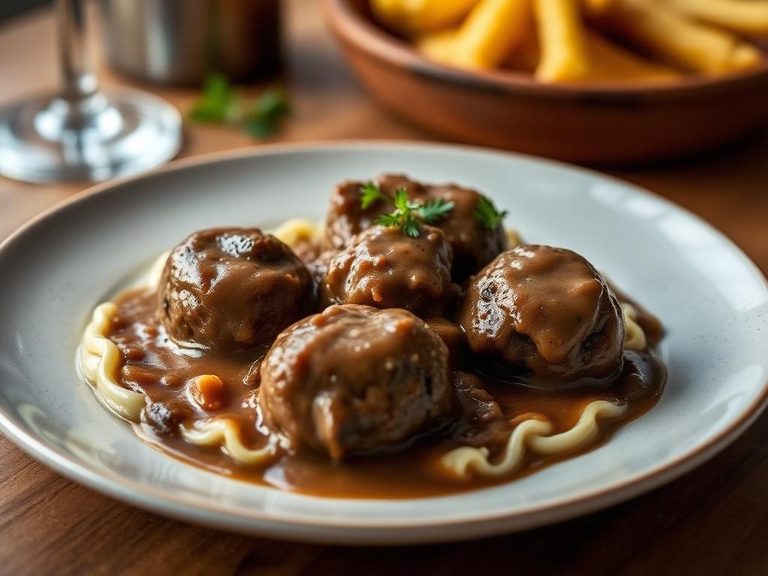
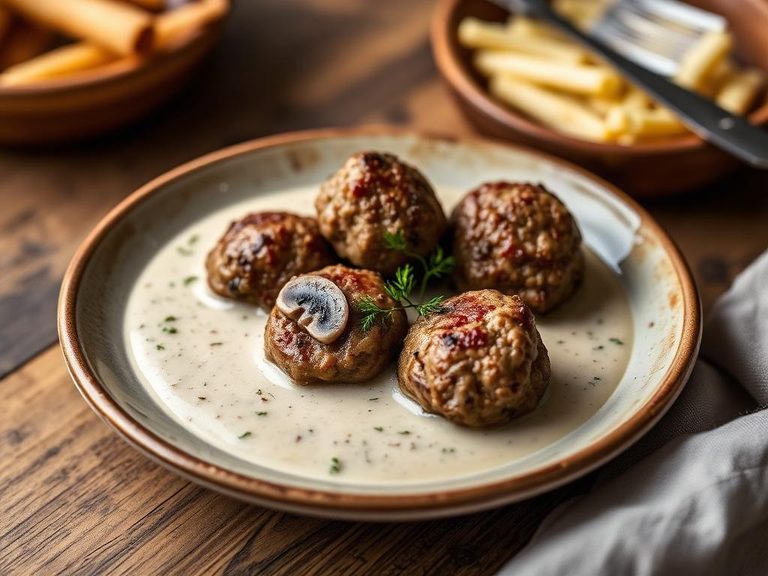
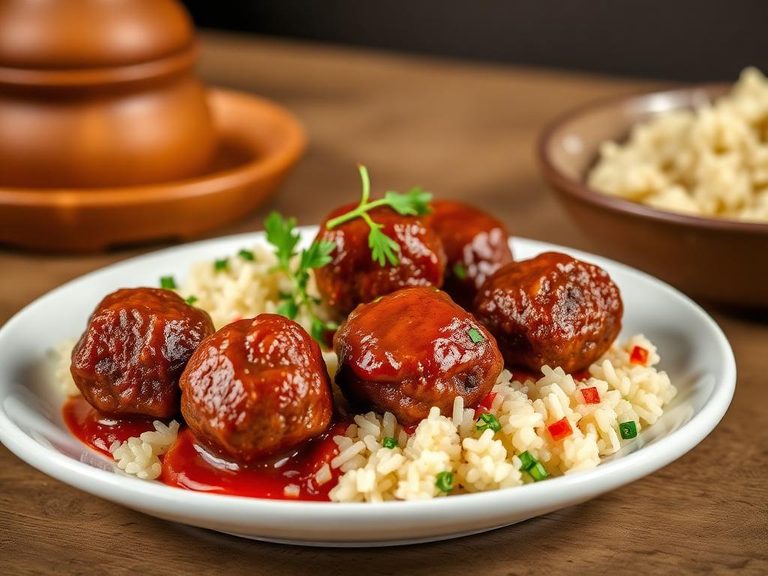
Porcupine balls are savory meatballs, typically made with ground beef and rice, that develop a spiky, porcupine-like texture as the rice cooks and protrudes. They are tender and juicy inside with a slightly chewy exterior, often simmered in a rich, umami-packed mushroom sauce. Nutritionally, they offer a solid protein boost with a moderate calorie count, making them a satisfying yet balanced comfort food.
Calorie split: 27% protein · 28% carbs · 45% fat
↓ Full nutrition💚 Why it's loved
People love porcupine balls for their comforting, nostalgic appeal and the satisfying contrast between the soft meatball and the chewy rice grains. The rich, earthy mushroom sauce elevates the dish, making it a hearty, flavorful meal that feels both homey and special.
⚠️ Watch-outs & how to enjoy it better
The dish can be high in sodium if the sauce is heavily seasoned, and the rice content may cause blood-sugar spikes for some. To counteract this, pair with non-starchy vegetables like steamed broccoli or a side salad, and use low-sodium broth or sauce bases to control salt intake.
Key benefits
- High-quality protein source for muscle maintenance
- Moderate calorie density supports portion control
- Mushroom sauce adds umami and B-vitamins
- Rice provides sustained energy from complex carbs
- Versatile for meal prep and family dinners
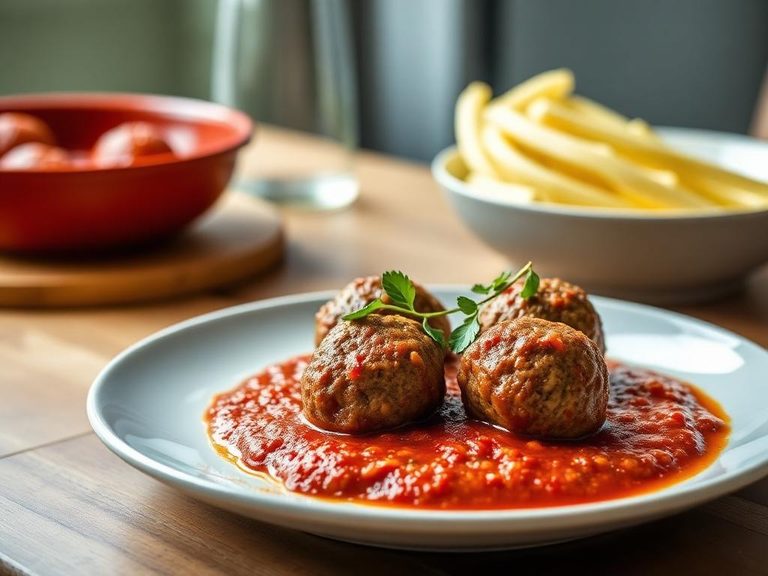
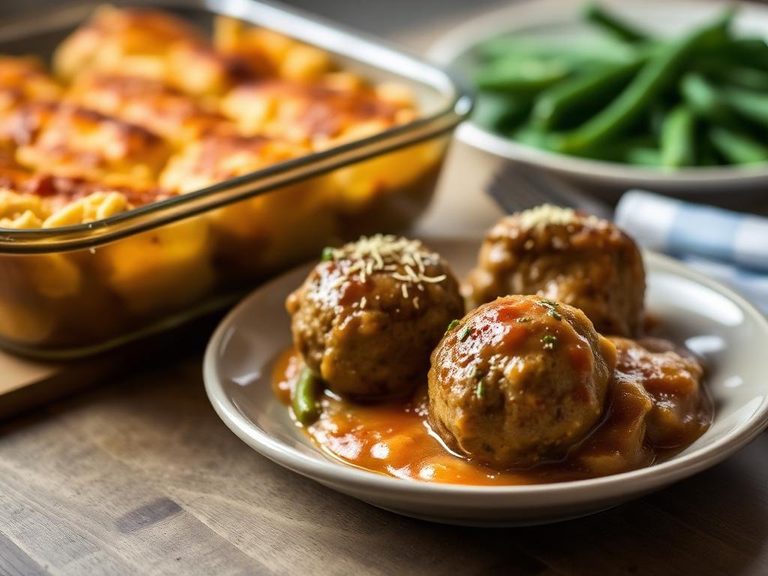
🍽️ Popular dishes
🌍 Where it's eaten
💡 Did you know?
The name 'porcupine balls' comes from the way the rice grains poke out of the meatballs during cooking, resembling porcupine quills, and the dish became a staple in American home cooking during the mid-20th century due to its affordability and simplicity.
Full nutrition (USDA data · scales with serving)
| Water | 69.4 g |
| Energy | 157 kcal |
| Protein | 10.3 g |
| Total lipid (fat) | 7.8 g |
| Carbohydrate, by difference | 10.7 g |
| Fiber, total dietary | 0.50 g |
| Total Sugars | 0.50 g |
| Calcium, Ca | 18.0 mg |
| Iron, Fe | 1.4 mg |
| Magnesium, Mg | 12.0 mg |
| Phosphorus, P | 89.0 mg |
| Potassium, K | 151 mg |
| Sodium, Na | 601 mg |
| Zinc, Zn | 2.4 mg |
| Copper, Cu | 0.06 mg |
| Selenium, Se | 10.0 ug |
| Vitamin C, total ascorbic acid | 0.50 mg |
| Thiamin | 0.07 mg |
| Riboflavin | 0.07 mg |
| Niacin | 2.3 mg |
| Vitamin B-6 | 0.16 mg |
| Folate, total | 21.0 ug |
| Folic acid | 15.0 ug |
| Folate, food | 6.0 ug |
| Folate, DFE | 32.0 ug |
| Choline, total | 32.8 mg |
| Vitamin B-12 | 0.96 ug |
| Vitamin B-12, added | 0.00 ug |
| Vitamin A, RAE | 2.0 ug |
| Retinol | 2.0 ug |
| Carotene, beta | 0.00 ug |
| Carotene, alpha | 0.00 ug |
| Cryptoxanthin, beta | 0.00 ug |
| Lycopene | 0.00 ug |
| Lutein + zeaxanthin | 2.0 ug |
| Vitamin E (alpha-tocopherol) | 0.21 mg |
| Vitamin E, added | 0.00 mg |
| Vitamin D (D2 + D3) | 0.10 ug |
| Vitamin K (phylloquinone) | 6.9 ug |
| Alcohol, ethyl | 0.00 g |
| Caffeine | 0.00 mg |
| Theobromine | 0.00 mg |
Fat & fatty acid profile (per 100g)
| Fatty acids, total saturated | 2.6 g |
| SFA 4:0 | 0.00 g |
| SFA 6:0 | 0.00 g |
| SFA 8:0 | 0.00 g |
| SFA 10:0 | 0.00 g |
| SFA 12:0 | 0.01 g |
| SFA 14:0 | 0.18 g |
| SFA 16:0 | 1.5 g |
| SFA 18:0 | 0.79 g |
| Fatty acids, total monounsaturated | 3.1 g |
| MUFA 16:1 | 0.22 g |
| MUFA 18:1 | 2.7 g |
| MUFA 20:1 | 0.03 g |
| MUFA 22:1 | 0.00 g |
| Fatty acids, total polyunsaturated | 1.1 g |
| PUFA 18:2 | 0.96 g |
| PUFA 18:3 | 0.13 g |
| PUFA 18:4 | 0.00 g |
| PUFA 20:4 | 0.02 g |
| PUFA 20:5 n-3 (EPA) | 0.00 g |
| PUFA 22:5 n-3 (DPA) | 0.00 g |
| PUFA 22:6 n-3 (DHA) | 0.00 g |
| Cholesterol | 31.0 mg |
FAQ
What are porcupine balls made of?
Porcupine balls are typically made from ground beef mixed with uncooked rice, onions, and seasonings, then simmered in a sauce like mushroom or tomato.
Why are they called porcupine balls?
They are called porcupine balls because the rice grains protrude from the meatballs during cooking, resembling porcupine quills.
Can I use other meats for porcupine balls?
Yes, ground turkey, chicken, or pork can be used as alternatives to beef, though the texture and flavor may vary slightly.
How do I prevent porcupine balls from falling apart?
To prevent them from falling apart, ensure the meat mixture is well-combined, use a binder like an egg, and simmer gently in the sauce without stirring too vigorously.
Nutrient density (calculated · NRF9.3)
Nutrient Rich Foods index: beneficial nutrients (protein, fiber, vitamins, minerals) minus saturated fat, added sugar & sodium, per 100 kcal.
NRF9.3 index — Fulgoni, Keast & Drewnowski, 2009. Computed from USDA nutrients.
Weight-loss friendliness (composite index)
Energy density 1.57 kcal/g · 26% calories from protein · 0.5 g fiber · 0.5 g sugar per 100 g.
Composite of energy density (Rolls et al., 1999), protein & fiber satiety, minus sugar. A calculated heuristic — ranks satiety-per-calorie, not a clinical measure.
Dietary load (calculated from USDA values)
Potential renal acid load. Positive = acid-forming, negative = alkaline-forming.
Sodium-to-potassium ratio: 3.98 (lower is better — aim for ≤ 1)
Sodium:potassium per WHO potassium guidance. Computed from USDA nutrients.