

Pesto sauce
Common food

Photo: Wikipedia
Pesto is a vibrant, uncooked sauce from Genoa, Italy, traditionally made by crushing fresh basil, pine nuts, garlic, Parmigiano-Reggiano, Pecorino, and olive oil into a coarse, emerald-green paste. Its texture is rich and slightly gritty, delivering a powerful burst of herbal, nutty, and salty flavors. Nutritionally, it is a calorie-dense, high-fat condiment, with nearly 60g of fat per 100g, primarily from heart-healthy olive oil.
Calorie split: 6% protein · 4% carbs · 90% fat
↓ Full nutrition💚 Why it's loved
People adore pesto for its intensely aromatic, fresh basil flavor and the luxurious, creamy-yet-textured mouthfeel it adds to dishes. It's celebrated for its incredible versatility, instantly elevating pasta, sandwiches, grilled meats, and vegetables with a taste of the Italian Riviera.
⚠️ Watch-outs & how to enjoy it better
Its high fat and calorie content can be a concern for those monitoring energy intake, and the significant amount of hard cheese adds sodium. Individuals with tree nut allergies (pine nuts) or lactose intolerance should be cautious. To enjoy it mindfully, practice strict portion control (a tablespoon or two is often enough), use it as a flavoring rather than a main sauce, and pair it with fiber-rich vegetables or lean proteins to create a balanced meal.
Key benefits
- Provides monounsaturated fats from olive oil, which support heart health.
- Basil contains antioxidants like rosmarinic acid and flavonoids.
- Contains allicin from garlic, which has anti-inflammatory properties.
- Offers a small amount of plant-based protein from pine nuts and cheese.
🍽️ Popular dishes
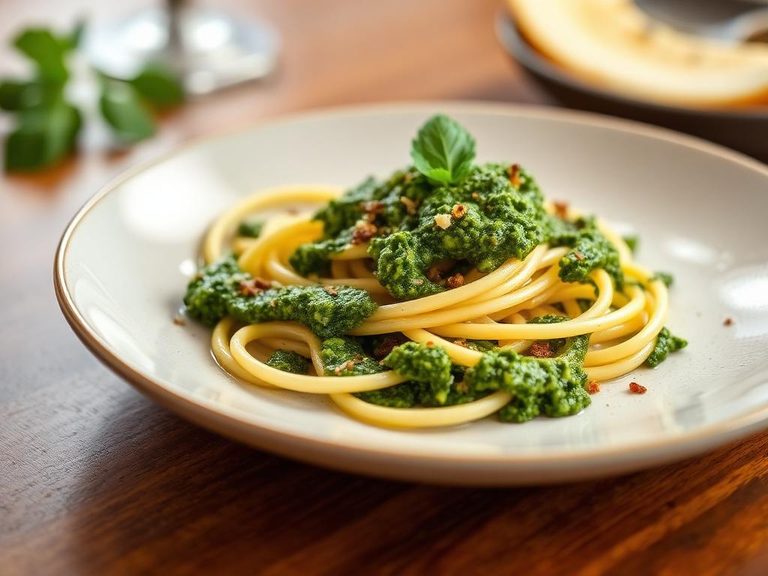
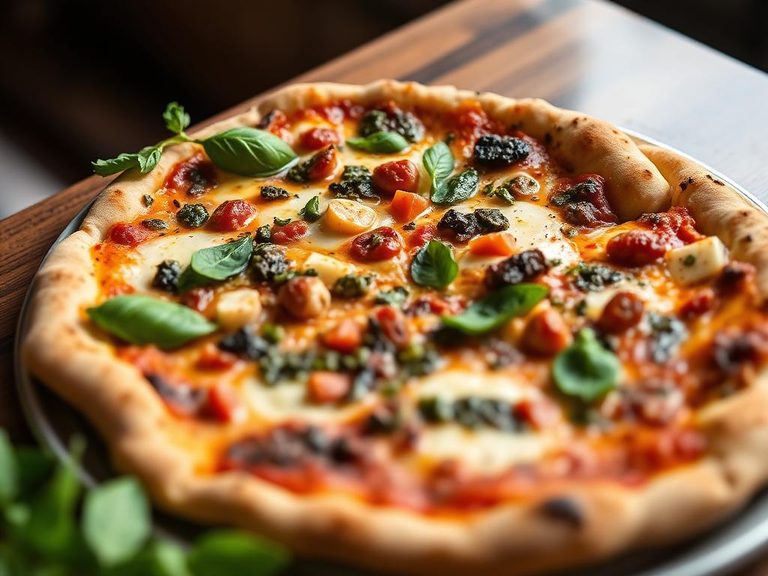
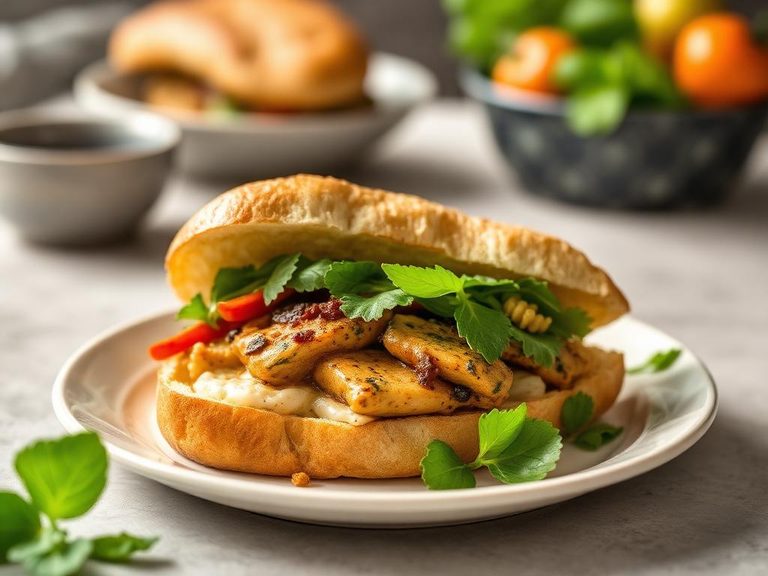
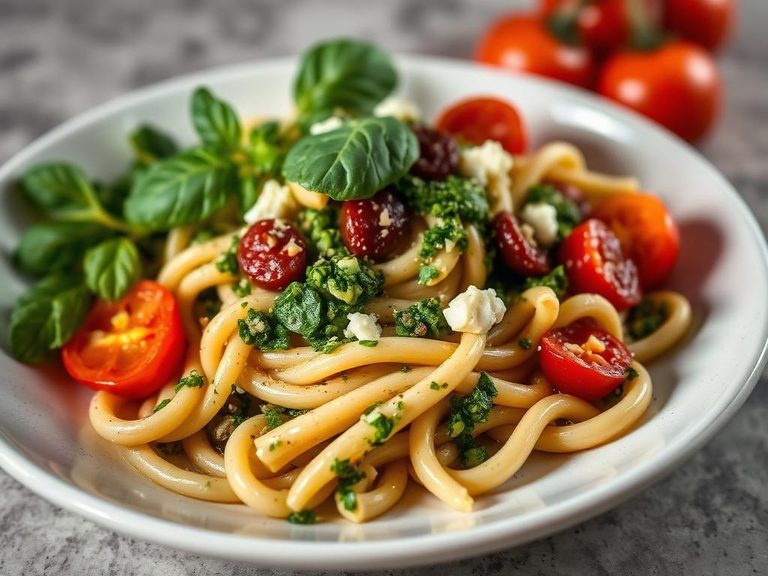
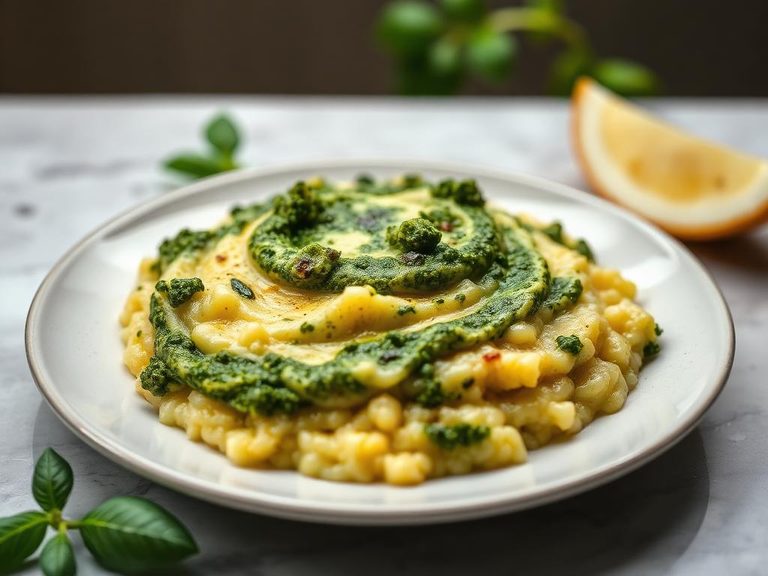
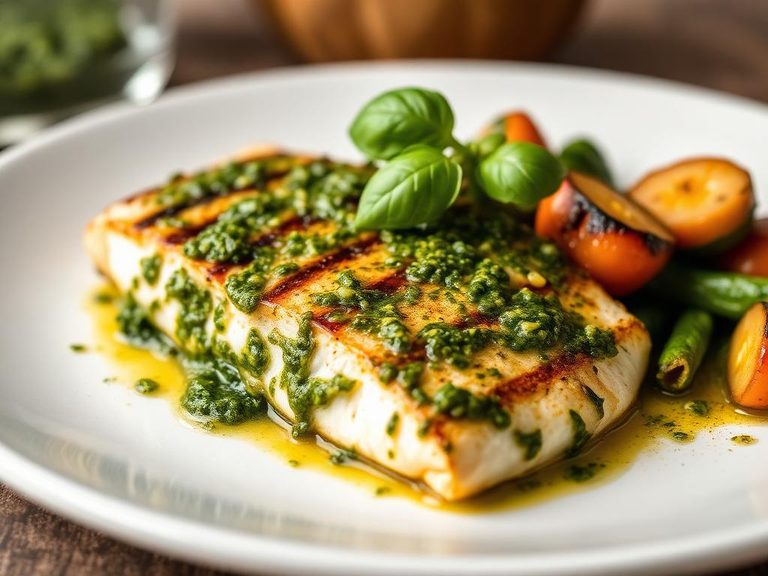
🌍 Where it's eaten
💡 Did you know?
The word 'pesto' comes from the Italian verb 'pestare,' which means 'to pound' or 'to crush,' referring to the traditional method of making it with a mortar and pestle.
Full nutrition (USDA data · scales with serving)
| Water | 22.8 g |
| Energy | 580 kcal |
| Protein | 8.6 g |
| Total lipid (fat) | 59.2 g |
| Carbohydrate, by difference | 5.7 g |
| Fiber, total dietary | 1.0 g |
| Total Sugars | 0.70 g |
| Calcium, Ca | 207 mg |
| Iron, Fe | 1.9 mg |
| Magnesium, Mg | 61.0 mg |
| Phosphorus, P | 230 mg |
| Potassium, K | 199 mg |
| Sodium, Na | 988 mg |
| Zinc, Zn | 2.1 mg |
| Copper, Cu | 0.31 mg |
| Selenium, Se | 7.0 ug |
| Vitamin C, total ascorbic acid | 3.6 mg |
| Thiamin | 0.08 mg |
| Riboflavin | 0.12 mg |
| Niacin | 0.94 mg |
| Vitamin B-6 | 0.09 mg |
| Folate, total | 19.0 ug |
| Folic acid | 0.00 ug |
| Folate, food | 19.0 ug |
| Folate, DFE | 19.0 ug |
| Choline, total | 14.8 mg |
| Vitamin B-12 | 0.25 ug |
| Vitamin B-12, added | 0.00 ug |
| Vitamin A, RAE | 91.0 ug |
| Retinol | 43.0 ug |
| Carotene, beta | 571 ug |
| Carotene, alpha | 0.00 ug |
| Cryptoxanthin, beta | 8.0 ug |
| Lycopene | 0.00 ug |
| Lutein + zeaxanthin | 1023 ug |
| Vitamin E (alpha-tocopherol) | 10.6 mg |
| Vitamin E, added | 0.00 mg |
| Vitamin D (D2 + D3) | 0.10 ug |
| Vitamin K (phylloquinone) | 95.5 ug |
| Alcohol, ethyl | 0.00 g |
| Caffeine | 0.00 mg |
| Theobromine | 0.00 mg |
Fat & fatty acid profile (per 100g)
| Fatty acids, total saturated | 10.3 g |
| SFA 4:0 | 0.10 g |
| SFA 6:0 | 0.08 g |
| SFA 8:0 | 0.05 g |
| SFA 10:0 | 0.12 g |
| SFA 12:0 | 0.14 g |
| SFA 14:0 | 0.46 g |
| SFA 16:0 | 7.1 g |
| SFA 18:0 | 1.8 g |
| Fatty acids, total monounsaturated | 33.3 g |
| MUFA 16:1 | 0.52 g |
| MUFA 18:1 | 32.5 g |
| MUFA 20:1 | 0.27 g |
| MUFA 22:1 | 0.00 g |
| Fatty acids, total polyunsaturated | 10.1 g |
| PUFA 18:2 | 9.6 g |
| PUFA 18:3 | 0.37 g |
| PUFA 18:4 | 0.00 g |
| PUFA 20:4 | 0.01 g |
| PUFA 20:5 n-3 (EPA) | 0.00 g |
| PUFA 22:5 n-3 (DPA) | 0.00 g |
| PUFA 22:6 n-3 (DHA) | 0.00 g |
| Cholesterol | 16.0 mg |
FAQ
Can I freeze pesto?
Yes, pesto freezes exceptionally well. The best method is to portion it into ice cube trays, freeze until solid, then transfer the cubes to a freezer bag. This prevents oxidation and preserves its bright color and flavor for up to 6 months.
Why did my pesto turn brown?
Pesto browns due to oxidation when the basil is exposed to air. To prevent this, ensure the basil leaves are completely dry before blending, cover the surface of the stored pesto directly with a thin layer of olive oil, and use a clean utensil each time you take some.
What can I use instead of pine nuts?
Common and delicious substitutes include walnuts (for a slightly more bitter note), almonds, pistachios, or even sunflower seeds for a nut-free version. Each will subtly alter the final flavor profile.
Nutrient density (calculated · NRF9.3)
Nutrient Rich Foods index: beneficial nutrients (protein, fiber, vitamins, minerals) minus saturated fat, added sugar & sodium, per 100 kcal.
NRF9.3 index — Fulgoni, Keast & Drewnowski, 2009. Computed from USDA nutrients.
Weight-loss friendliness (composite index)
Energy density 5.80 kcal/g · 6% calories from protein · 1.0 g fiber · 0.7 g sugar per 100 g.
Composite of energy density (Rolls et al., 1999), protein & fiber satiety, minus sugar. A calculated heuristic — ranks satiety-per-calorie, not a clinical measure.
Dietary load (calculated from USDA values)
Potential renal acid load. Positive = acid-forming, negative = alkaline-forming.
Sodium-to-potassium ratio: 4.96 (lower is better — aim for ≤ 1)
Sodium:potassium per WHO potassium guidance. Computed from USDA nutrients.