

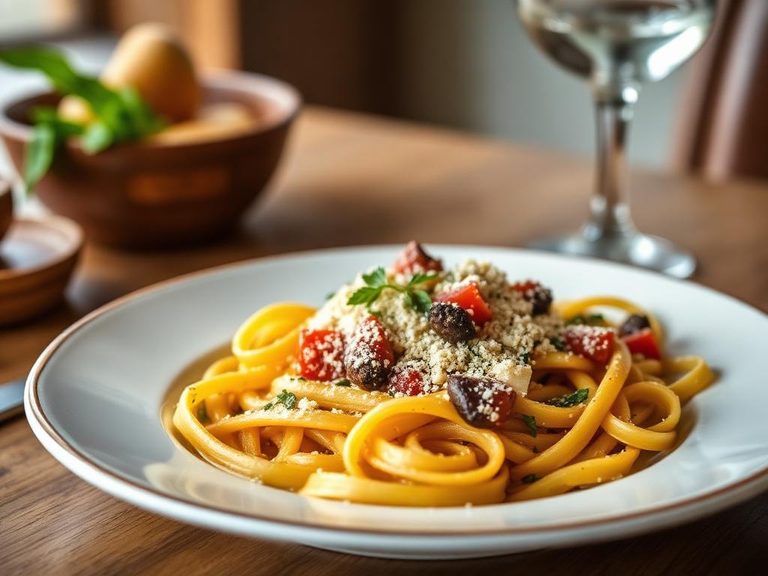
Pasta with tomato-based sauce, seafood, and added vegetables, ready-to-heat
Common food

Photo: Wikipedia
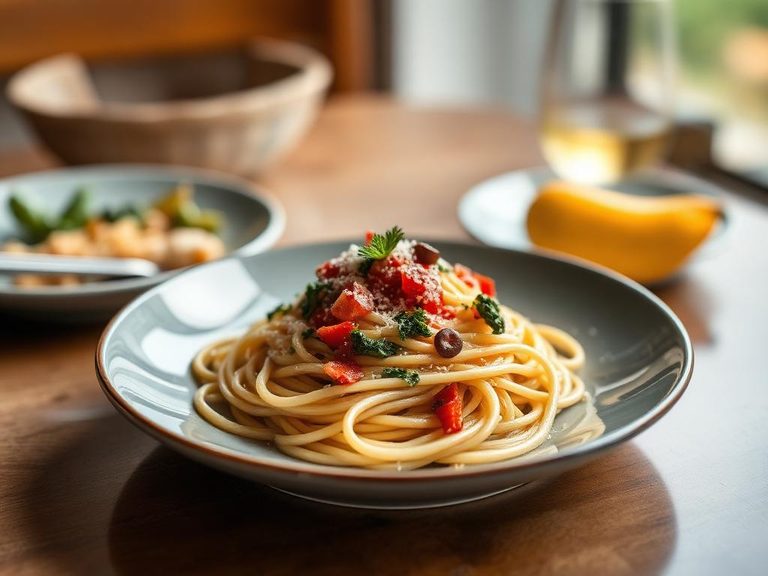
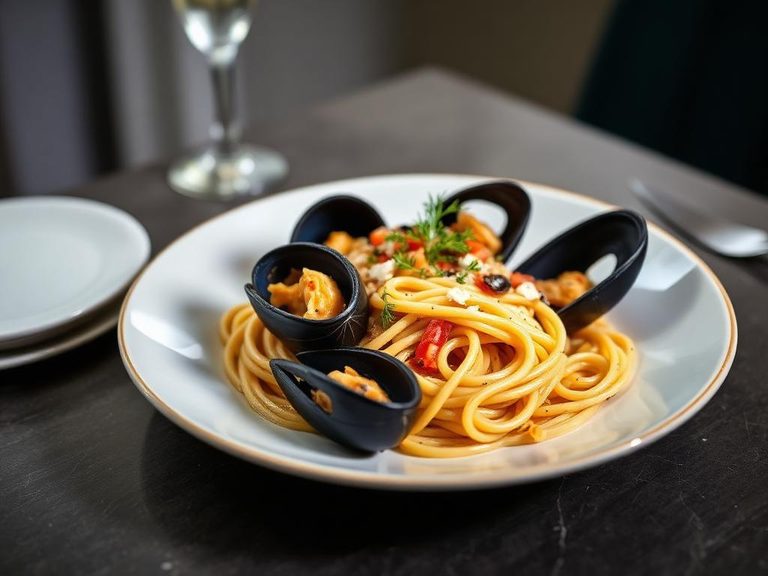
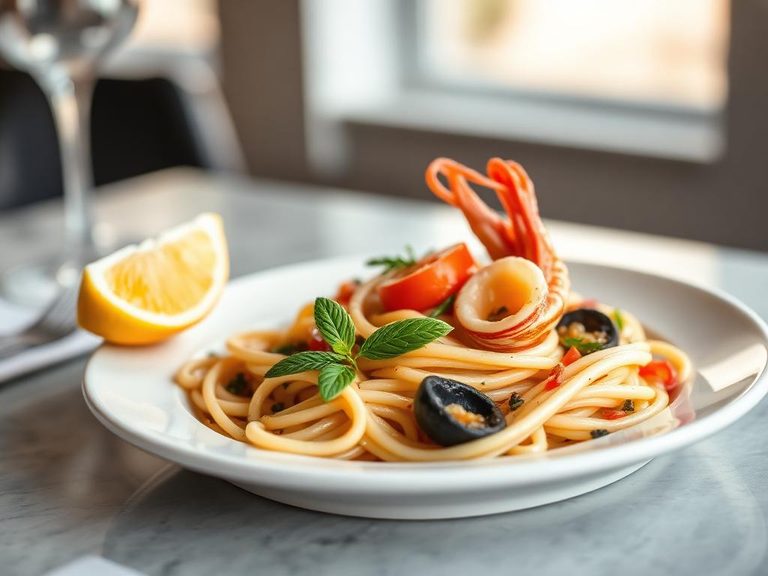
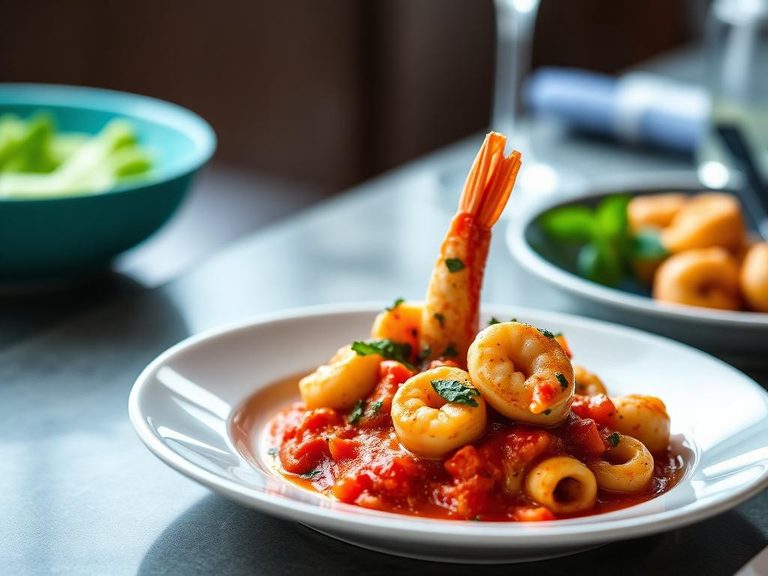
This is a convenient, ready-to-heat meal featuring tender pasta in a vibrant, savory tomato sauce, studded with tender morsels of seafood like shrimp or mussels and softened vegetables. It offers a satisfying, comforting texture with a balanced, slightly sweet and briny flavor profile. Nutritionally, it's a light yet protein-rich option, providing a good source of lean protein and complex carbohydrates for energy.
Calorie split: 18% protein · 61% carbs · 21% fat
↓ Full nutrition💚 Why it's loved
People love it for the harmonious blend of sweet, acidic tomato with the rich, umami depth of seafood, creating a complex and satisfying flavor. It's also cherished for its convenience and versatility, offering a taste of coastal Mediterranean comfort in a quick, single-serving format.
⚠️ Watch-outs & how to enjoy it better
Individuals monitoring sodium intake or blood sugar may need caution, as prepared sauces can be high in salt and the refined pasta can cause a glycemic spike. To counteract this, pair a controlled portion with a large side of leafy greens or a drizzle of olive oil to slow digestion, and check labels for low-sodium options.
Key benefits
- Good source of lean protein from seafood
- Provides complex carbohydrates for sustained energy
- Contains dietary fiber from vegetables and tomato
- Low in total fat, especially saturated fat
- Convenient source of micronutrients like lycopene from tomatoes
🍽️ Popular dishes
🌍 Where it's eaten
💡 Did you know?
The combination of tomatoes and seafood in Italian pasta is a relatively modern pairing, gaining popularity in the 19th century after tomatoes were fully embraced in Southern Italian cuisine.
Full nutrition (USDA data · scales with serving)
| Water | 71.6 g |
| Energy | 125 kcal |
| Protein | 5.5 g |
| Total lipid (fat) | 2.9 g |
| Carbohydrate, by difference | 18.8 g |
| Fiber, total dietary | 1.6 g |
| Total Sugars | 2.2 g |
| Calcium, Ca | 22.0 mg |
| Iron, Fe | 1.1 mg |
| Magnesium, Mg | 19.0 mg |
| Phosphorus, P | 68.0 mg |
| Potassium, K | 175 mg |
| Sodium, Na | 307 mg |
| Zinc, Zn | 0.47 mg |
| Copper, Cu | 0.11 mg |
| Selenium, Se | 18.8 ug |
| Vitamin C, total ascorbic acid | 4.8 mg |
| Thiamin | 0.15 mg |
| Riboflavin | 0.11 mg |
| Niacin | 2.2 mg |
| Vitamin B-6 | 0.09 mg |
| Folate, total | 44.0 ug |
| Folic acid | 33.0 ug |
| Folate, food | 11.0 ug |
| Folate, DFE | 68.0 ug |
| Choline, total | 16.7 mg |
| Vitamin B-12 | 0.86 ug |
| Vitamin B-12, added | 0.00 ug |
| Vitamin A, RAE | 19.0 ug |
| Retinol | 7.0 ug |
| Carotene, beta | 150 ug |
| Carotene, alpha | 1.0 ug |
| Cryptoxanthin, beta | 9.0 ug |
| Lycopene | 3717 ug |
| Lutein + zeaxanthin | 105 ug |
| Vitamin E (alpha-tocopherol) | 1.2 mg |
| Vitamin E, added | 0.00 mg |
| Vitamin D (D2 + D3) | 0.00 ug |
| Vitamin K (phylloquinone) | 6.3 ug |
| Alcohol, ethyl | 0.00 g |
| Caffeine | 0.00 mg |
| Theobromine | 0.00 mg |
Fat & fatty acid profile (per 100g)
| Fatty acids, total saturated | 0.41 g |
| SFA 4:0 | 0.00 g |
| SFA 6:0 | 0.00 g |
| SFA 8:0 | 0.00 g |
| SFA 10:0 | 0.00 g |
| SFA 12:0 | 0.00 g |
| SFA 14:0 | 0.01 g |
| SFA 16:0 | 0.30 g |
| SFA 18:0 | 0.08 g |
| Fatty acids, total monounsaturated | 0.96 g |
| MUFA 16:1 | 0.01 g |
| MUFA 18:1 | 0.93 g |
| MUFA 20:1 | 0.01 g |
| MUFA 22:1 | 0.00 g |
| Fatty acids, total polyunsaturated | 1.1 g |
| PUFA 18:2 | 0.91 g |
| PUFA 18:3 | 0.12 g |
| PUFA 18:4 | 0.00 g |
| PUFA 20:4 | 0.00 g |
| PUFA 20:5 n-3 (EPA) | 0.02 g |
| PUFA 22:5 n-3 (DPA) | 0.00 g |
| PUFA 22:6 n-3 (DHA) | 0.02 g |
| Cholesterol | 14.0 mg |
FAQ
Is this dish considered healthy?
It can be part of a healthy diet. It's low in fat and a good source of protein and carbs. However, be mindful of sodium and sugar content in the sauce. Pairing it with extra vegetables enhances its nutritional value.
What kind of seafood is typically used?
Common choices include shrimp, mussels, clams, squid, or a mixed seafood medley. The specific seafood can vary by brand and recipe.
How can I improve the flavor of a ready-to-heat version?
Enhance it by stirring in fresh herbs like basil or parsley, a squeeze of lemon juice, a sprinkle of red pepper flakes, or a small handful of grated Parmesan cheese before serving.
Nutrient density (calculated · NRF9.3)
Nutrient Rich Foods index: beneficial nutrients (protein, fiber, vitamins, minerals) minus saturated fat, added sugar & sodium, per 100 kcal.
NRF9.3 index — Fulgoni, Keast & Drewnowski, 2009. Computed from USDA nutrients.
Weight-loss friendliness (composite index)
Energy density 1.25 kcal/g · 18% calories from protein · 1.6 g fiber · 2.2 g sugar per 100 g.
Composite of energy density (Rolls et al., 1999), protein & fiber satiety, minus sugar. A calculated heuristic — ranks satiety-per-calorie, not a clinical measure.
Dietary load (calculated from USDA values)
Potential renal acid load. Positive = acid-forming, negative = alkaline-forming.
Sodium-to-potassium ratio: 1.75 (lower is better — aim for ≤ 1)
Sodium:potassium per WHO potassium guidance. Computed from USDA nutrients.