

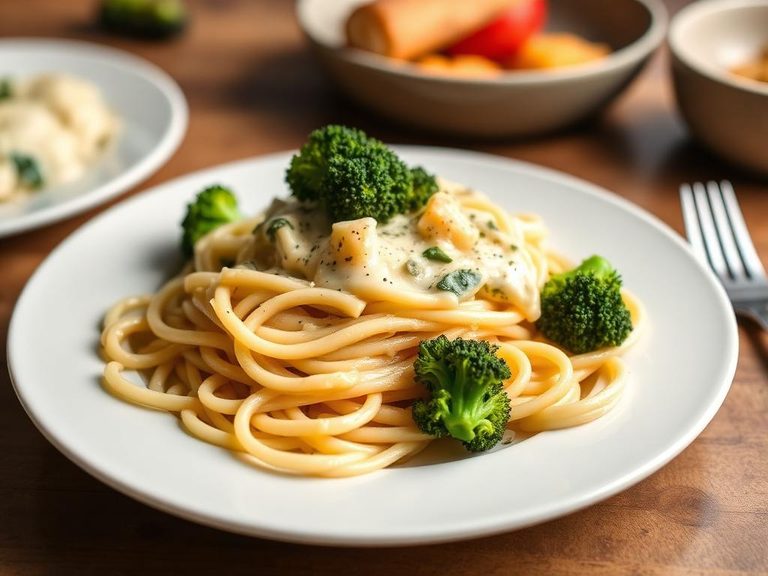
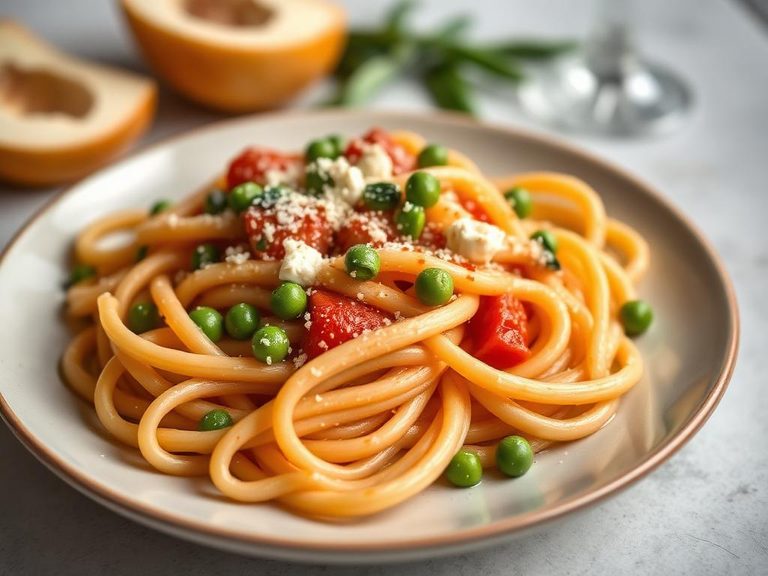
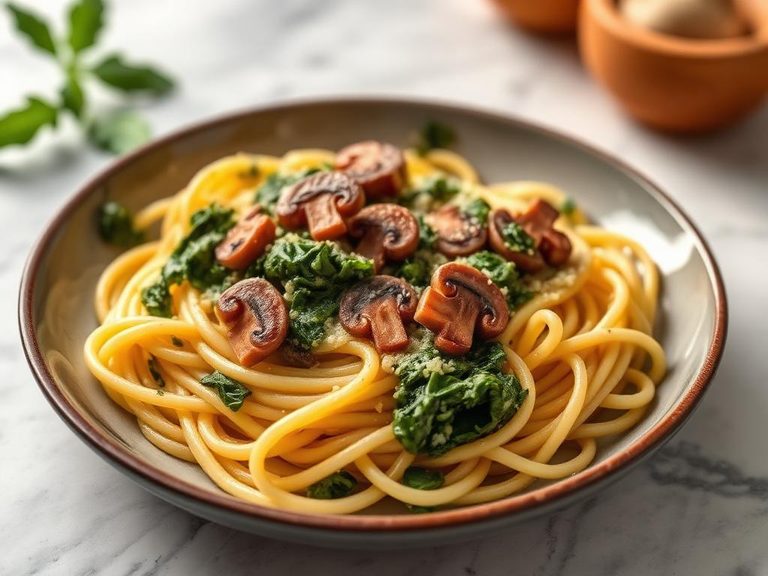
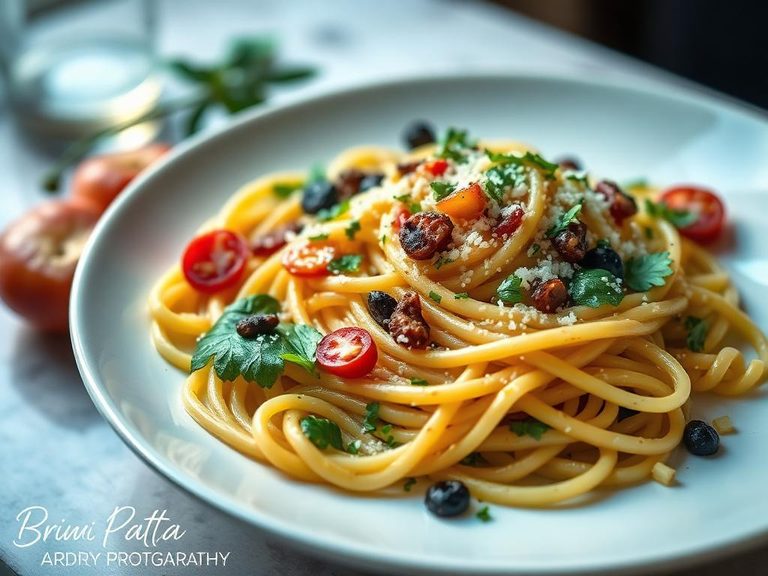
Pasta with cream sauce and added vegetables, from home recipe
Common food
This is a comforting home-cooked pasta dish where tender noodles are coated in a rich, velvety cream sauce, studded with a colorful medley of vegetables like spinach, peas, or bell peppers. The texture is a delightful contrast between the al dente pasta and the smooth, luxurious sauce. Per 100g, it's a relatively light meal at 141 kcal, offering a balanced mix of carbs for energy and fats for satiety.
Calorie split: 11% protein · 50% carbs · 39% fat
↓ Full nutrition💚 Why it's loved
People love this dish for its ultimate comfort-food appeal—the creamy sauce is deeply satisfying and coats every bite. It's also cherished for its incredible versatility, easily adapting to whatever vegetables are on hand, making it a beloved weeknight staple in many households.
⚠️ Watch-outs & how to enjoy it better
The cream sauce can make it high in saturated fat and calories if not portion-controlled, and the refined pasta carbs may cause blood-sugar spikes. To counteract this, pair it with a lean protein like grilled chicken or chickpeas, use whole-grain pasta for more fiber, and load up on non-starchy vegetables to increase volume without excess calories.
Key benefits
- Provides quick energy from carbohydrates.
- Contains dietary fiber from added vegetables.
- Offers a good balance of macronutrients for a satisfying meal.
- Vegetables add essential vitamins and minerals.
- Can be a versatile vehicle for a wide variety of seasonal produce.
🍽️ Popular dishes
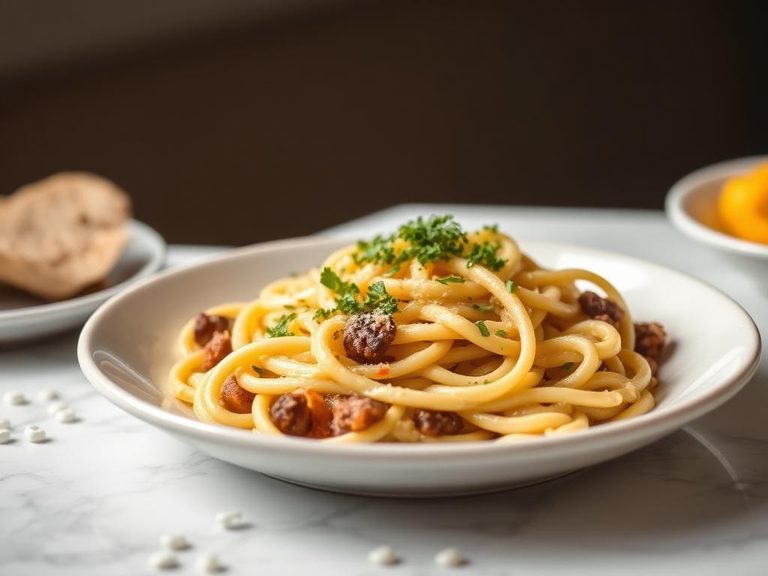
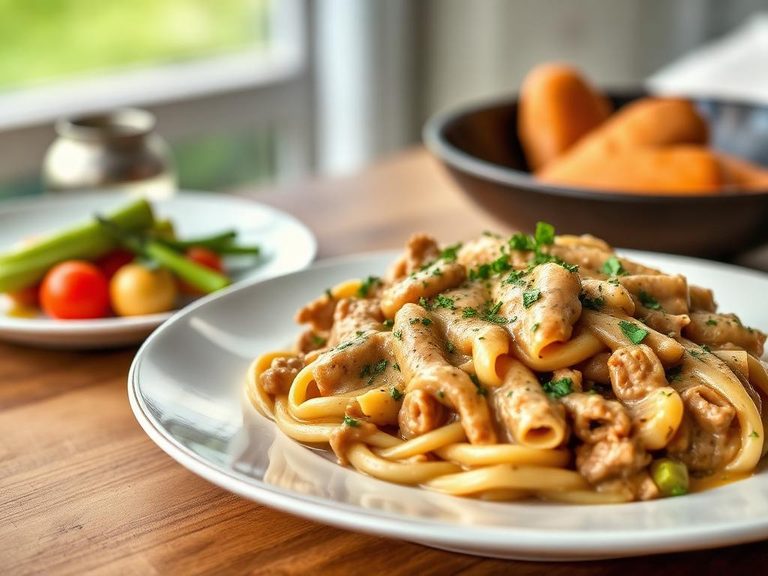
🌍 Where it's eaten
💡 Did you know?
The classic Italian 'Alfredo' sauce, often made with just butter and Parmesan, was invented by Alfredo di Lelio in Rome to entice his pregnant wife to eat, and it has no cream in its original form.
Full nutrition (USDA data · scales with serving)
| Water | 71.8 g |
| Energy | 141 kcal |
| Protein | 4.0 g |
| Total lipid (fat) | 6.0 g |
| Carbohydrate, by difference | 17.3 g |
| Fiber, total dietary | 1.1 g |
| Total Sugars | 0.99 g |
| Calcium, Ca | 29.0 mg |
| Iron, Fe | 0.72 mg |
| Magnesium, Mg | 13.0 mg |
| Phosphorus, P | 55.0 mg |
| Potassium, K | 72.0 mg |
| Sodium, Na | 204 mg |
| Zinc, Zn | 0.41 mg |
| Copper, Cu | 0.08 mg |
| Selenium, Se | 15.5 ug |
| Vitamin C, total ascorbic acid | 5.1 mg |
| Thiamin | 0.15 mg |
| Riboflavin | 0.12 mg |
| Niacin | 1.1 mg |
| Vitamin B-6 | 0.05 mg |
| Folate, total | 42.0 ug |
| Folic acid | 34.0 ug |
| Folate, food | 8.0 ug |
| Folate, DFE | 66.0 ug |
| Choline, total | 7.1 mg |
| Vitamin B-12 | 0.03 ug |
| Vitamin B-12, added | 0.00 ug |
| Vitamin A, RAE | 55.0 ug |
| Retinol | 50.0 ug |
| Carotene, beta | 47.0 ug |
| Carotene, alpha | 1.0 ug |
| Cryptoxanthin, beta | 11.0 ug |
| Lycopene | 0.00 ug |
| Lutein + zeaxanthin | 62.0 ug |
| Vitamin E (alpha-tocopherol) | 0.20 mg |
| Vitamin E, added | 0.00 mg |
| Vitamin D (D2 + D3) | 0.20 ug |
| Vitamin K (phylloquinone) | 1.0 ug |
| Alcohol, ethyl | 0.00 g |
| Caffeine | 0.00 mg |
| Theobromine | 0.00 mg |
Fat & fatty acid profile (per 100g)
| Fatty acids, total saturated | 3.2 g |
| SFA 4:0 | 0.12 g |
| SFA 6:0 | 0.09 g |
| SFA 8:0 | 0.06 g |
| SFA 10:0 | 0.14 g |
| SFA 12:0 | 0.17 g |
| SFA 14:0 | 0.52 g |
| SFA 16:0 | 1.5 g |
| SFA 18:0 | 0.51 g |
| Fatty acids, total monounsaturated | 1.2 g |
| MUFA 16:1 | 0.09 g |
| MUFA 18:1 | 1.3 g |
| MUFA 20:1 | 0.01 g |
| MUFA 22:1 | 0.00 g |
| Fatty acids, total polyunsaturated | 0.41 g |
| PUFA 18:2 | 0.30 g |
| PUFA 18:3 | 0.04 g |
| PUFA 18:4 | 0.00 g |
| PUFA 20:4 | 0.01 g |
| PUFA 20:5 n-3 (EPA) | 0.00 g |
| PUFA 22:5 n-3 (DPA) | 0.00 g |
| PUFA 22:6 n-3 (DHA) | 0.00 g |
| Cholesterol | 16.0 mg |
FAQ
How can I make the cream sauce lighter?
You can substitute part of the heavy cream with whole milk, evaporated milk, or a blend of puréed cauliflower or white beans for a creamy texture with less fat and more nutrients.
What vegetables work best in this dish?
Quick-cooking vegetables like spinach, peas, asparagus tips, and sliced mushrooms are excellent. For heartier veggies like broccoli or zucchini, blanch or sauté them separately first to avoid overcooking the pasta.
Is this dish gluten-free?
Not by default, as pasta is typically made from wheat. To make it gluten-free, use pasta made from rice, corn, quinoa, or legumes like chickpeas.
Nutrient density (calculated · NRF9.3)
Nutrient Rich Foods index: beneficial nutrients (protein, fiber, vitamins, minerals) minus saturated fat, added sugar & sodium, per 100 kcal.
NRF9.3 index — Fulgoni, Keast & Drewnowski, 2009. Computed from USDA nutrients.
Weight-loss friendliness (composite index)
Energy density 1.41 kcal/g · 11% calories from protein · 1.1 g fiber · 1.0 g sugar per 100 g.
Composite of energy density (Rolls et al., 1999), protein & fiber satiety, minus sugar. A calculated heuristic — ranks satiety-per-calorie, not a clinical measure.
Dietary load (calculated from USDA values)
Potential renal acid load. Positive = acid-forming, negative = alkaline-forming.
Sodium-to-potassium ratio: 2.83 (lower is better — aim for ≤ 1)
Sodium:potassium per WHO potassium guidance. Computed from USDA nutrients.