

Onion dip, yogurt based
Common food

Photo: Wikipedia
This is a creamy, tangy dip made by blending caramelized or raw onions into a base of yogurt. It offers a cool, smooth texture with a savory, slightly sweet onion flavor, providing a protein-rich alternative to traditional sour cream-based dips.
Calorie split: 17% protein · 10% carbs · 73% fat
↓ Full nutrition💚 Why it's loved
People love it for its perfect balance of cool creaminess and savory onion depth, making it a versatile companion for everything from chips to crudités. It's a staple at parties and a comforting snack in many households.
⚠️ Watch-outs & how to enjoy it better
The primary concern is its sodium content, which can be high depending on the recipe and added salt. To counteract this, look for low-sodium versions or make it at home to control salt. Those watching saturated fat intake should note that while lower than cream versions, it still contains fat from the yogurt base; opting for non-fat yogurt can reduce this.
Key benefits
- Higher in protein than sour cream-based dips
- Contains probiotics if made with live-culture yogurt
- Good source of calcium from the dairy base
- Lower in saturated fat than many cream-based dips
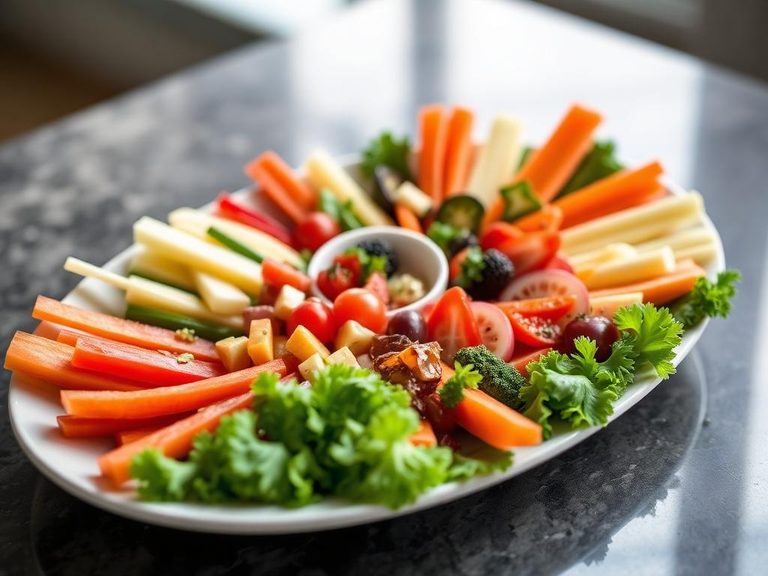
- Can be a vehicle for vegetable consumption
🍽️ Popular dishes

🌍 Where it's eaten
💡 Did you know?
The iconic 'French onion dip' in the U.S. was originally a 1950s creation using a packet of dried onion soup mix stirred into sour cream, a convenience food hack that became a cultural staple.
Full nutrition (USDA data · scales with serving)
| Water | 74.4 g |
| Energy | 160 kcal |
| Protein | 6.8 g |
| Total lipid (fat) | 12.9 g |
| Carbohydrate, by difference | 4.1 g |
| Fiber, total dietary | 0.20 g |
| Total Sugars | 3.4 g |
| Calcium, Ca | 93.0 mg |
| Iron, Fe | 0.08 mg |
| Magnesium, Mg | 10.0 mg |
| Phosphorus, P | 105 mg |
| Potassium, K | 126 mg |
| Sodium, Na | 507 mg |
| Zinc, Zn | 0.47 mg |
| Copper, Cu | 0.02 mg |
| Selenium, Se | 8.2 ug |
| Vitamin C, total ascorbic acid | 1.1 mg |
| Thiamin | 0.04 mg |
| Riboflavin | 0.17 mg |
| Niacin | 0.15 mg |
| Vitamin B-6 | 0.05 mg |
| Folate, total | 10.0 ug |
| Folic acid | 0.00 ug |
| Folate, food | 10.0 ug |
| Folate, DFE | 10.0 ug |
| Choline, total | 17.7 mg |
| Vitamin B-12 | 0.42 ug |
| Vitamin B-12, added | 0.00 ug |
| Vitamin A, RAE | 66.0 ug |
| Retinol | 66.0 ug |
| Carotene, beta | 5.0 ug |
| Carotene, alpha | 0.00 ug |
| Cryptoxanthin, beta | 1.0 ug |
| Lycopene | 0.00 ug |
| Lutein + zeaxanthin | 3.0 ug |
| Vitamin E (alpha-tocopherol) | 0.53 mg |
| Vitamin E, added | 0.00 mg |
| Vitamin D (D2 + D3) | 0.20 ug |
| Vitamin K (phylloquinone) | 25.0 ug |
| Alcohol, ethyl | 0.00 g |
| Caffeine | 0.00 mg |
| Theobromine | 0.00 mg |
Fat & fatty acid profile (per 100g)
| Fatty acids, total saturated | 2.7 g |
| SFA 4:0 | 0.04 g |
| SFA 6:0 | 0.03 g |
| SFA 8:0 | 0.02 g |
| SFA 10:0 | 0.05 g |
| SFA 12:0 | 0.05 g |
| SFA 14:0 | 0.16 g |
| SFA 16:0 | 1.6 g |
| SFA 18:0 | 0.62 g |
| Fatty acids, total monounsaturated | 2.9 g |
| MUFA 16:1 | 0.04 g |
| MUFA 18:1 | 2.8 g |
| MUFA 20:1 | 0.04 g |
| MUFA 22:1 | 0.00 g |
| Fatty acids, total polyunsaturated | 6.9 g |
| PUFA 18:2 | 6.0 g |
| PUFA 18:3 | 0.84 g |
| PUFA 18:4 | 0.00 g |
| PUFA 20:4 | 0.01 g |
| PUFA 20:5 n-3 (EPA) | 0.00 g |
| PUFA 22:5 n-3 (DPA) | 0.00 g |
| PUFA 22:6 n-3 (DHA) | 0.00 g |
| Cholesterol | 14.0 mg |
FAQ
Is onion dip healthy?
It can be a healthier option than many dips, especially when made with Greek yogurt, as it provides protein and calcium. However, its healthiness depends on the recipe; watch for added salt, sugar, and fat content.
Can I use non-dairy yogurt for onion dip?
Yes, you can use plant-based yogurts like coconut, soy, or almond. The texture and tang will vary slightly, and you may need to adjust seasoning.
How long does homemade onion dip last?
When stored in an airtight container in the refrigerator, homemade yogurt-based onion dip typically lasts for 3 to 5 days.
Nutrient density (calculated · NRF9.3)
Nutrient Rich Foods index: beneficial nutrients (protein, fiber, vitamins, minerals) minus saturated fat, added sugar & sodium, per 100 kcal.
NRF9.3 index — Fulgoni, Keast & Drewnowski, 2009. Computed from USDA nutrients.
Weight-loss friendliness (composite index)
Energy density 1.60 kcal/g · 17% calories from protein · 0.2 g fiber · 3.4 g sugar per 100 g.
Composite of energy density (Rolls et al., 1999), protein & fiber satiety, minus sugar. A calculated heuristic — ranks satiety-per-calorie, not a clinical measure.
Dietary load (calculated from USDA values)
Potential renal acid load. Positive = acid-forming, negative = alkaline-forming.
Sodium-to-potassium ratio: 4.02 (lower is better — aim for ≤ 1)
Sodium:potassium per WHO potassium guidance. Computed from USDA nutrients.