

Nutrition bar (South Beach Living Meal Bar)
Common food
A South Beach Living Meal Bar is a dense, chewy, and often chocolate-coated nutrition bar designed for convenient meal replacement or a substantial snack. It delivers a significant protein punch (over 16g per 100g) alongside a high carbohydrate content, making it a portable source of quick and sustained energy. Its texture is typically firm with a mix of nuts, soy crisps, and a sweet coating.
Calorie split: 17% protein · 62% carbs · 21% fat
↓ Full nutrition💚 Why it's loved
People love it for its satisfying, candy-bar-like taste and texture that makes healthy eating feel like a treat. Its portability and balanced macros make it a go-to for busy schedules, post-workout recovery, or curbing hunger between meals.
⚠️ Watch-outs & how to enjoy it better
The high sugar content (25g per 100g) can lead to blood sugar spikes, especially for those with insulin sensitivity. It may also contain common allergens like soy, nuts, or wheat. To counteract, pair it with a source of healthy fat or additional protein (like Greek yogurt) to slow sugar absorption, or choose a smaller portion (half a bar) and eat it slowly.
Key benefits
- High in protein for satiety and muscle support
- Provides a substantial calorie source for on-the-go energy
- Contains dietary fiber to aid digestion
- Convenient, shelf-stable meal or snack replacement
- Fortified with various vitamins and minerals
🍽️ Popular dishes
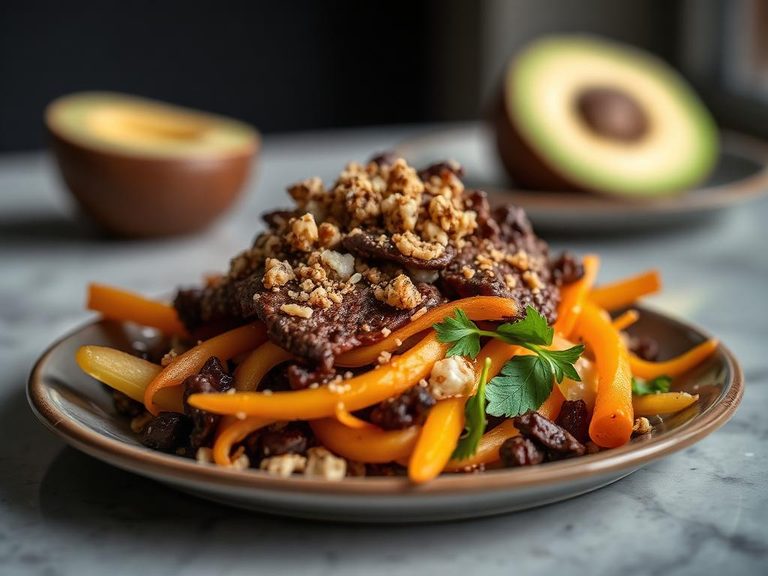
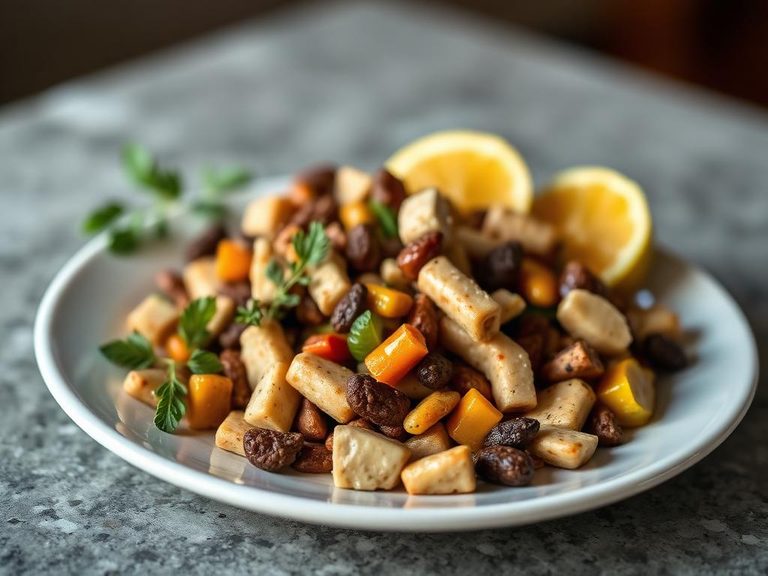

🌍 Where it's eaten
💡 Did you know?
The South Beach Diet, created by cardiologist Dr. Arthur Agatston, was originally designed to help his patients' heart health, not for weight loss, making these bars a product of a medical diet philosophy.
Full nutrition (USDA data · scales with serving)
| Water | 10.9 g |
| Energy | 386 kcal |
| Protein | 16.2 g |
| Total lipid (fat) | 8.9 g |
| Carbohydrate, by difference | 60.2 g |
| Fiber, total dietary | 5.1 g |
| Total Sugars | 25.0 g |
| Calcium, Ca | 668 mg |
| Iron, Fe | 5.0 mg |
| Magnesium, Mg | 250 mg |
| Phosphorus, P | 673 mg |
| Potassium, K | 289 mg |
| Sodium, Na | 253 mg |
| Zinc, Zn | 5.7 mg |
| Copper, Cu | 0.28 mg |
| Selenium, Se | 46.7 ug |
| Vitamin C, total ascorbic acid | 96.6 mg |
| Thiamin | 1.7 mg |
| Riboflavin | 1.9 mg |
| Niacin | 21.2 mg |
| Vitamin B-6 | 2.1 mg |
| Folate, total | 430 ug |
| Folic acid | 422 ug |
| Folate, food | 8.0 ug |
| Folate, DFE | 725 ug |
| Choline, total | 40.6 mg |
| Vitamin B-12 | 7.9 ug |
| Vitamin B-12, added | 7.9 ug |
| Vitamin A, RAE | 940 ug |
| Retinol | 940 ug |
| Carotene, beta | 0.00 ug |
| Carotene, alpha | 0.00 ug |
| Cryptoxanthin, beta | 0.00 ug |
| Lycopene | 0.00 ug |
| Lutein + zeaxanthin | 0.00 ug |
| Vitamin E (alpha-tocopherol) | 6.0 mg |
| Vitamin E, added | 6.0 mg |
| Vitamin D (D2 + D3) | 5.4 ug |
| Vitamin K (phylloquinone) | 129 ug |
| Alcohol, ethyl | 0.00 g |
| Caffeine | 0.00 mg |
| Theobromine | 0.00 mg |
Fat & fatty acid profile (per 100g)
| Fatty acids, total saturated | 5.4 g |
| SFA 4:0 | 0.01 g |
| SFA 6:0 | 0.01 g |
| SFA 8:0 | 0.17 g |
| SFA 10:0 | 0.17 g |
| SFA 12:0 | 2.1 g |
| SFA 14:0 | 0.71 g |
| SFA 16:0 | 0.93 g |
| SFA 18:0 | 1.1 g |
| Fatty acids, total monounsaturated | 2.4 g |
| MUFA 16:1 | 0.01 g |
| MUFA 18:1 | 2.2 g |
| MUFA 20:1 | 0.04 g |
| MUFA 22:1 | 0.00 g |
| Fatty acids, total polyunsaturated | 1.1 g |
| PUFA 18:2 | 1.00 g |
| PUFA 18:3 | 0.04 g |
| PUFA 18:4 | 0.00 g |
| PUFA 20:4 | 0.00 g |
| PUFA 20:5 n-3 (EPA) | 0.00 g |
| PUFA 22:5 n-3 (DPA) | 0.00 g |
| PUFA 22:6 n-3 (DHA) | 0.00 g |
| Cholesterol | 7.0 mg |
FAQ
Is this a good meal replacement?
It can serve as a convenient, calorie-controlled meal in a pinch, especially for breakfast or a light lunch. However, for a nutritionally complete meal, it's best paired with a piece of fruit or a vegetable to add micronutrients and fiber.
How does the protein content compare to a protein shake?
Per 100g, it has slightly less protein than many dedicated protein powders but offers more carbohydrates and fat for energy. It's a more balanced, whole-food-like option for sustained energy versus a pure protein supplement.
Can I eat this if I'm watching my sugar intake?
With 25g of sugar per 100g, it's relatively high in sugar. If you're monitoring intake, consider it an occasional treat, consume half a bar, or pair it with a protein/fat source to blunt the glycemic response.
Nutrient density (calculated · NRF9.3)
Nutrient Rich Foods index: beneficial nutrients (protein, fiber, vitamins, minerals) minus saturated fat, added sugar & sodium, per 100 kcal.
NRF9.3 index — Fulgoni, Keast & Drewnowski, 2009. Computed from USDA nutrients.
Weight-loss friendliness (composite index)
Energy density 3.86 kcal/g · 17% calories from protein · 5.1 g fiber · 25.0 g sugar per 100 g.
Composite of energy density (Rolls et al., 1999), protein & fiber satiety, minus sugar. A calculated heuristic — ranks satiety-per-calorie, not a clinical measure.
Dietary load (calculated from USDA values)
Potential renal acid load. Positive = acid-forming, negative = alkaline-forming.
Sodium-to-potassium ratio: 0.88 (lower is better — aim for ≤ 1)
Sodium:potassium per WHO potassium guidance. Computed from USDA nutrients.