

Nutrition bar (Clif Bar)
Common food

Photo: Wikipedia
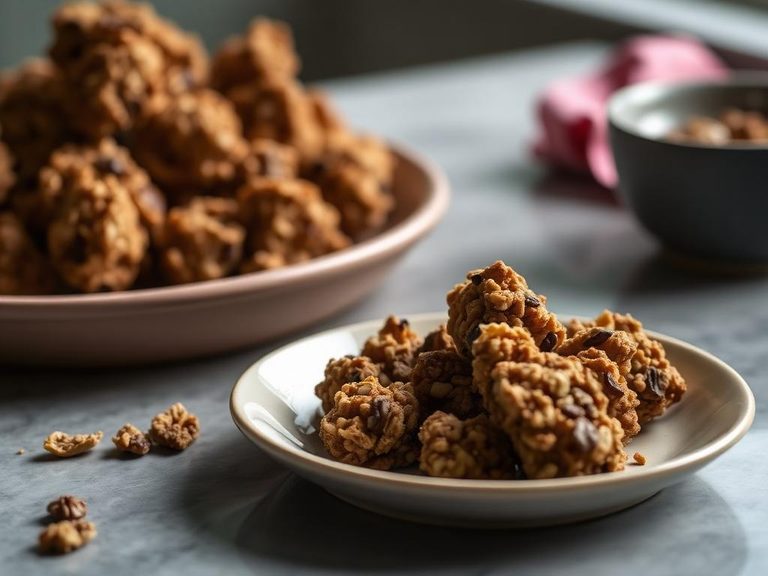
The Clif Bar is a dense, chewy, oat-based energy bar, often described as having a soft, cookie-like texture with a pronounced sweet, malty flavor and a subtle nutty undertone. It is specifically engineered for sustained energy during endurance activities, packing a significant carbohydrate load alongside plant-based protein. Nutritionally, it is a high-energy, high-carb food, with over 65g of carbohydrates per 100g, making it a potent fuel source rather than a balanced meal.
Calorie split: 16% protein · 70% carbs · 14% fat
↓ Full nutrition💚 Why it's loved
Athletes and outdoor enthusiasts love the Clif Bar for its reliable, long-lasting energy boost and its familiar, comforting taste that feels like a treat during strenuous activity. Its cultural status as the quintessential 'energy bar' is cemented by its ubiquitous presence at trailheads, race finish lines, and climbing gyms, symbolizing adventure and endurance.
⚠️ Watch-outs & how to enjoy it better
With 31.62g of sugar per 100g, it can cause rapid blood-sugar spikes and subsequent crashes, making it a poor choice for sedentary individuals or those managing insulin sensitivity. To counteract this, pair it with a source of fat or protein (like a handful of almonds or a cheese stick) to slow glucose absorption, or consume it immediately before or during intense exercise when the sugar is utilized as fuel. Additionally, it contains common allergens like soy and may have trace amounts of nuts; always check labels if you have allergies.
Key benefits
- Provides quick and sustained energy for endurance activities like hiking, cycling, and climbing.
- Contains plant-based protein from soy and oats to support muscle maintenance during exercise.
- Offers a convenient, portable, and shelf-stable calorie-dense snack for on-the-go consumption.
- Includes 7.4g of dietary fiber per 100g, which aids in digestive health and promotes satiety.
- Fortified with 24 vitamins and minerals to support overall nutritional needs during active periods.
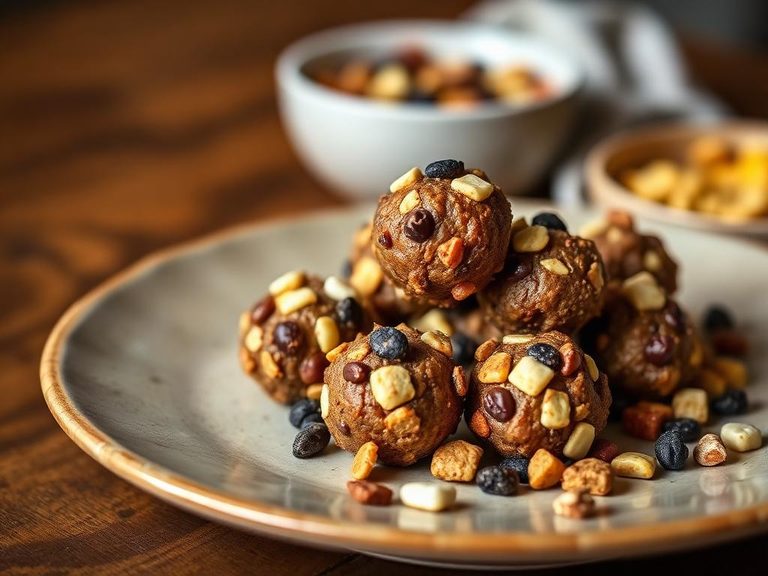
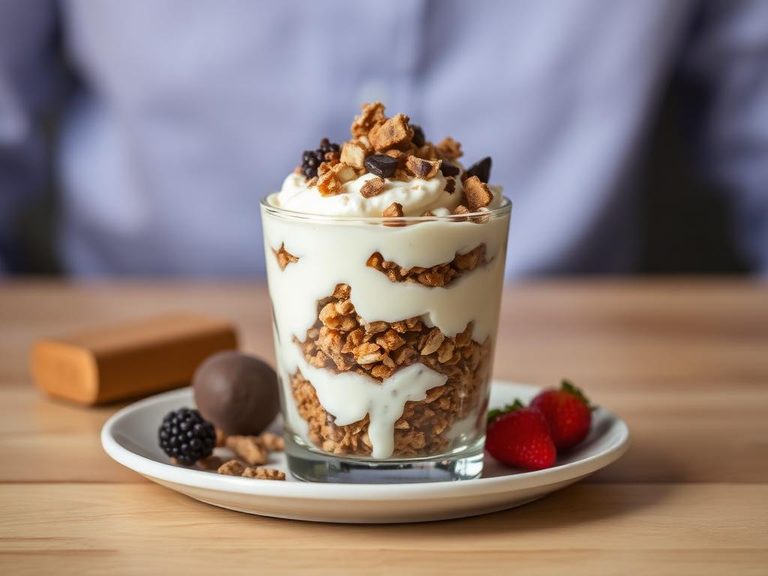
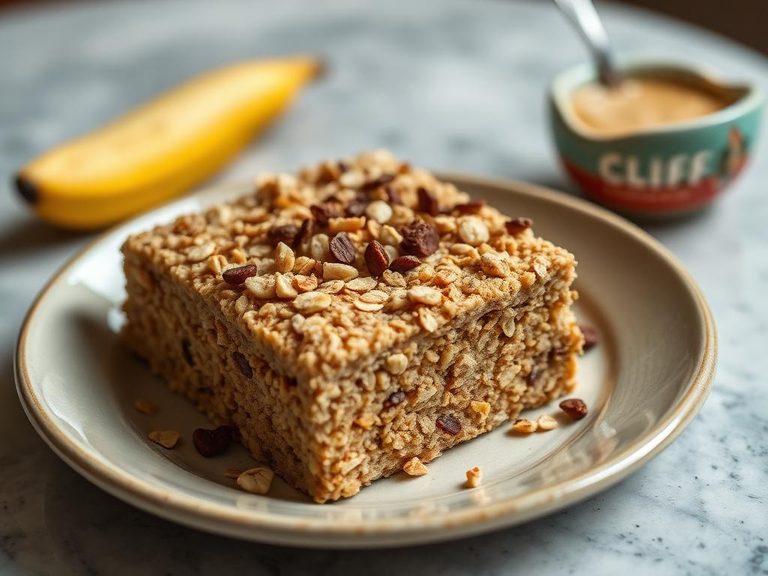
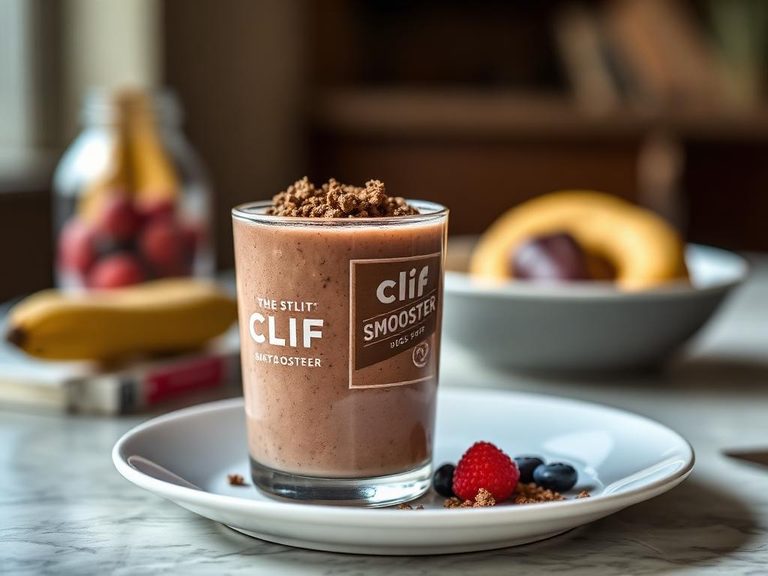
🍽️ Popular dishes
🌍 Where it's eaten
💡 Did you know?
The original Clif Bar was created in 1991 by Gary Erickson, who was inspired by a 175-mile bike ride where he found the energy bars he ate unpalatable, leading him to bake his own in his mother's kitchen.
Full nutrition (USDA data · scales with serving)
| Water | 11.0 g |
| Energy | 346 kcal |
| Protein | 14.7 g |
| Total lipid (fat) | 5.9 g |
| Carbohydrate, by difference | 65.4 g |
| Fiber, total dietary | 7.4 g |
| Total Sugars | 31.6 g |
| Calcium, Ca | 368 mg |
| Iron, Fe | 6.6 mg |
| Magnesium, Mg | 147 mg |
| Phosphorus, P | 294 mg |
| Potassium, K | 412 mg |
| Sodium, Na | 195 mg |
| Zinc, Zn | 4.4 mg |
| Copper, Cu | 0.44 mg |
| Selenium, Se | 20.6 ug |
| Vitamin C, total ascorbic acid | 88.2 mg |
| Thiamin | 0.55 mg |
| Riboflavin | 0.38 mg |
| Niacin | 4.4 mg |
| Vitamin B-6 | 0.59 mg |
| Folate, total | 118 ug |
| Folic acid | 0.00 ug |
| Folate, food | 118 ug |
| Folate, DFE | 118 ug |
| Choline, total | 46.2 mg |
| Vitamin B-12 | 1.3 ug |
| Vitamin B-12, added | 0.00 ug |
| Vitamin A, RAE | 1.0 ug |
| Retinol | 0.00 ug |
| Carotene, beta | 12.0 ug |
| Carotene, alpha | 0.00 ug |
| Cryptoxanthin, beta | 0.00 ug |
| Lycopene | 0.00 ug |
| Lutein + zeaxanthin | 37.0 ug |
| Vitamin E (alpha-tocopherol) | 0.24 mg |
| Vitamin E, added | 0.00 mg |
| Vitamin D (D2 + D3) | 0.00 ug |
| Vitamin K (phylloquinone) | 36.8 ug |
| Alcohol, ethyl | 0.00 g |
| Caffeine | 0.00 mg |
| Theobromine | 0.00 mg |
Fat & fatty acid profile (per 100g)
| Fatty acids, total saturated | 1.5 g |
| SFA 4:0 | 0.00 g |
| SFA 6:0 | 0.00 g |
| SFA 8:0 | 0.00 g |
| SFA 10:0 | 0.00 g |
| SFA 12:0 | 0.01 g |
| SFA 14:0 | 0.01 g |
| SFA 16:0 | 0.53 g |
| SFA 18:0 | 0.12 g |
| Fatty acids, total monounsaturated | 1.1 g |
| MUFA 16:1 | 0.01 g |
| MUFA 18:1 | 1.1 g |
| MUFA 20:1 | 0.00 g |
| MUFA 22:1 | 0.00 g |
| Fatty acids, total polyunsaturated | 2.2 g |
| PUFA 18:2 | 2.0 g |
| PUFA 18:3 | 0.22 g |
| PUFA 18:4 | 0.00 g |
| PUFA 20:4 | 0.00 g |
| PUFA 20:5 n-3 (EPA) | 0.00 g |
| PUFA 22:5 n-3 (DPA) | 0.00 g |
| PUFA 22:6 n-3 (DHA) | 0.00 g |
| Cholesterol | 0.00 mg |
FAQ
Is a Clif Bar a meal replacement?
No, it is designed as an energy supplement for endurance activities, not a balanced meal. It is high in carbohydrates and sugar but relatively low in fat and lacks the full spectrum of nutrients found in a complete meal.
Can I eat a Clif Bar if I'm not exercising?
Yes, but be mindful of portion size and timing. Its high carbohydrate and sugar content can lead to energy spikes and crashes if consumed without physical activity to utilize the fuel.
What are the main allergens in a Clif Bar?
Clif Bars typically contain soy and may be manufactured in facilities that process peanuts, tree nuts, and dairy. Always check the specific flavor's label for allergen information.
Nutrient density (calculated · NRF9.3)
Nutrient Rich Foods index: beneficial nutrients (protein, fiber, vitamins, minerals) minus saturated fat, added sugar & sodium, per 100 kcal.
NRF9.3 index — Fulgoni, Keast & Drewnowski, 2009. Computed from USDA nutrients.
Weight-loss friendliness (composite index)
Energy density 3.46 kcal/g · 17% calories from protein · 7.4 g fiber · 31.6 g sugar per 100 g.
Composite of energy density (Rolls et al., 1999), protein & fiber satiety, minus sugar. A calculated heuristic — ranks satiety-per-calorie, not a clinical measure.
Dietary load (calculated from USDA values)
Potential renal acid load. Positive = acid-forming, negative = alkaline-forming.
Sodium-to-potassium ratio: 0.47 (lower is better — aim for ≤ 1)
Sodium:potassium per WHO potassium guidance. Computed from USDA nutrients.