

Noodles, japanese, somen, cooked
Whole food · Cereal Grains and Pasta

Photo: Wikipedia
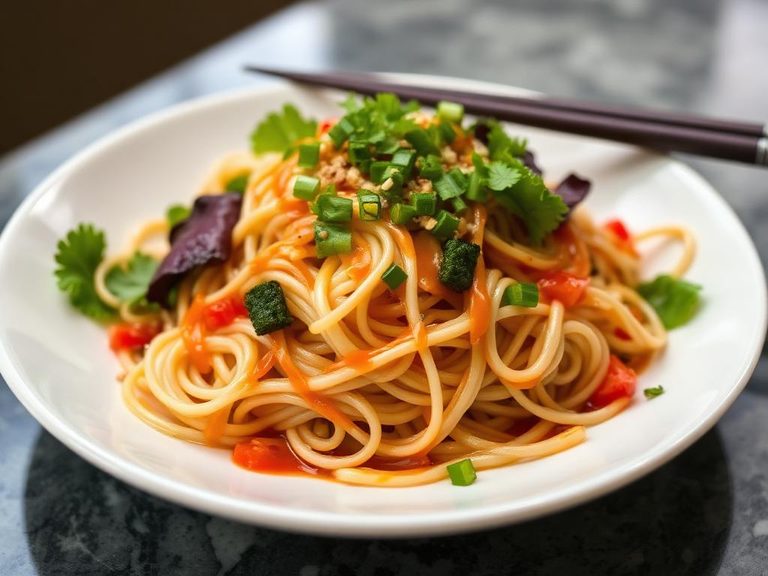
Somen are ultra-thin, delicate Japanese wheat noodles, prized for their silky, almost slippery texture and subtle, clean wheat flavor. Cooked somen are typically served chilled, making them a refreshing staple during Japan's humid summers. Nutritionally, they are a very low-fat, high-carbohydrate food, offering quick energy with minimal protein.
Calorie split: 13% protein · 86% carbs · 1% fat
↓ Full nutrition💚 Why it's loved
People love somen for its refreshing, cool quality on hot days and its incredible versatility as a blank canvas for flavorful dipping sauces, broths, and toppings. It's deeply tied to Japanese summer culture, often enjoyed in casual, communal settings.
⚠️ Watch-outs & how to enjoy it better
The high carbohydrate content can cause blood-sugar spikes, making portion control important for those managing blood glucose. Somen is made from wheat flour, a common allergen. To counteract, always pair with protein (like tempura shrimp or tofu) and vegetables, and use the dipping sauce sparingly to manage sodium intake.
Key benefits
- Excellent source of quick-release carbohydrates for energy
- Extremely low in fat and cholesterol
- Light and easy to digest
- Gluten-free varieties are available for specific diets
- A traditional, minimally processed food
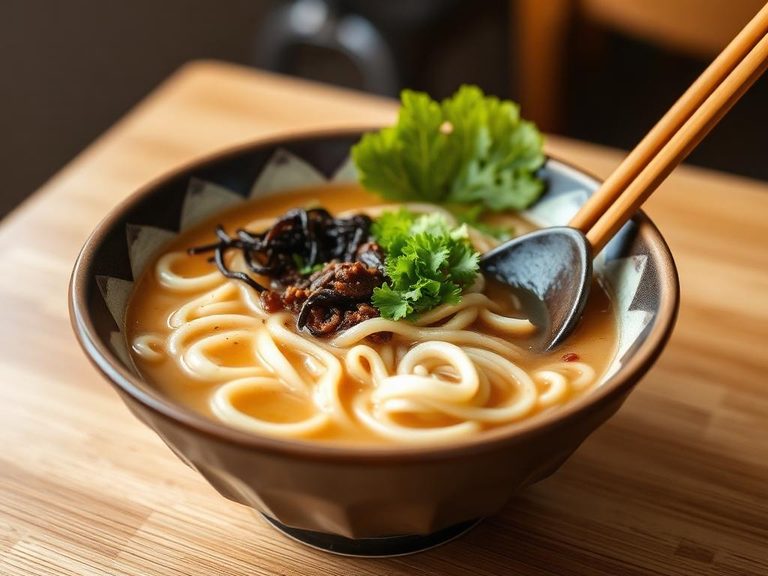
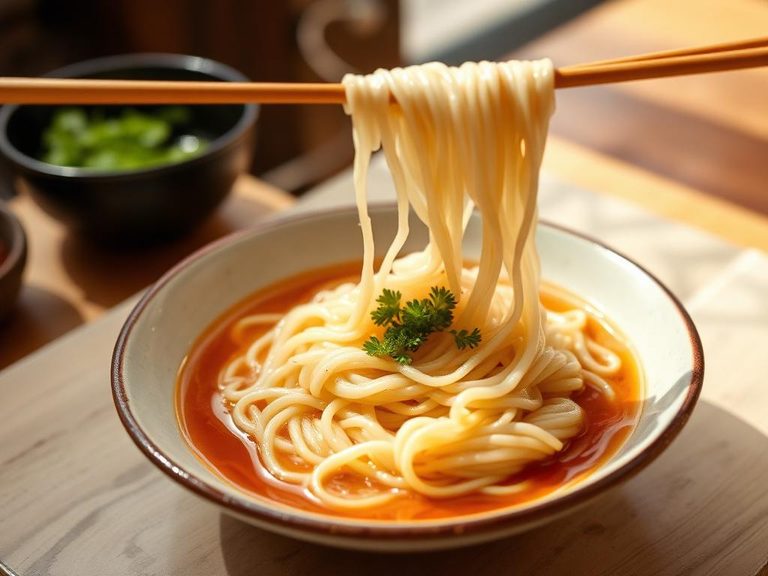
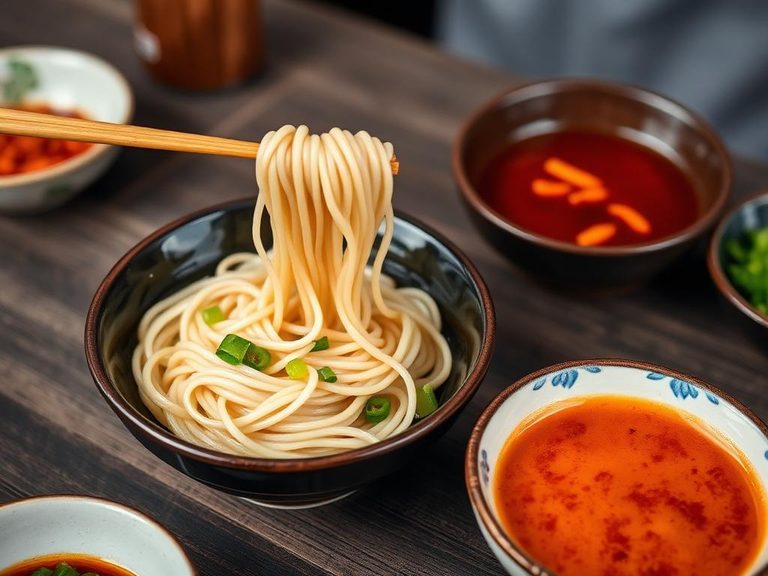
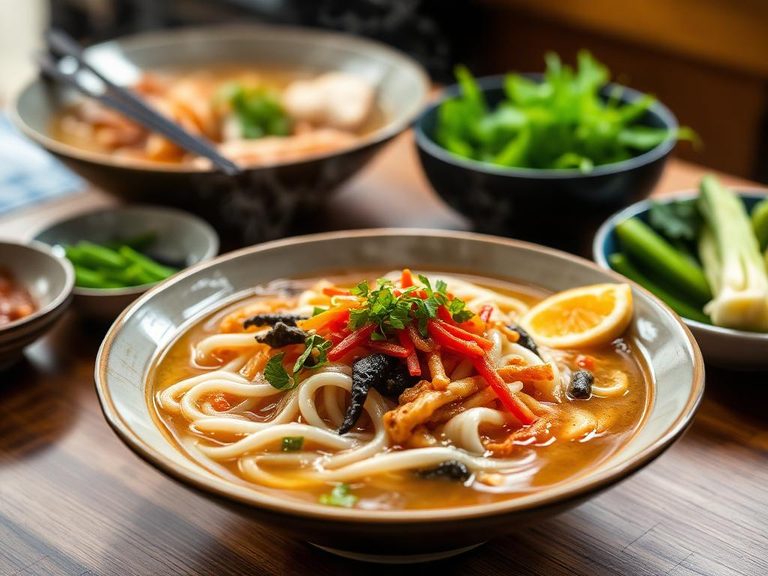
🍽️ Popular dishes
🌍 Where it's eaten
💡 Did you know?
The tradition of 'Nagashi Somen' involves sending the cooked noodles down a long, split bamboo flume filled with cold water, and diners must catch them with chopsticks before they float away.
Full nutrition (USDA data · scales with serving)
| Water | 67.9 g |
| Energy | 131 kcal |
| Energy | 548 kj |
| Protein | 4.0 g |
| Total lipid (fat) | 0.18 g |
| Ash | 0.36 g |
| Carbohydrate, by difference | 27.5 g |
| Calcium, Ca | 8.0 mg |
| Iron, Fe | 0.52 mg |
| Magnesium, Mg | 2.0 mg |
| Phosphorus, P | 27.0 mg |
| Potassium, K | 29.0 mg |
| Sodium, Na | 161 mg |
| Zinc, Zn | 0.22 mg |
| Copper, Cu | 0.03 mg |
| Manganese, Mn | 0.25 mg |
| Vitamin C, total ascorbic acid | 0.00 mg |
| Thiamin | 0.02 mg |
| Riboflavin | 0.03 mg |
| Niacin | 0.10 mg |
| Pantothenic acid | 0.17 mg |
| Vitamin B-6 | 0.01 mg |
| Folate, total | 2.0 ug |
| Folic acid | 0.00 ug |
| Folate, food | 2.0 ug |
| Folate, DFE | 2.0 ug |
| Vitamin B-12 | 0.00 ug |
| Vitamin A, RAE | 0.00 ug |
| Retinol | 0.00 ug |
| Vitamin A, IU | 0.00 iu |
| Vitamin D (D2 + D3), International Units | 0.00 iu |
| Vitamin D (D2 + D3) | 0.00 ug |
Fat & fatty acid profile (per 100g)
| Fatty acids, total saturated | 0.03 g |
| SFA 14:0 | 0.00 g |
| SFA 16:0 | 0.02 g |
| SFA 18:0 | 0.00 g |
| Fatty acids, total monounsaturated | 0.02 g |
| MUFA 18:1 | 0.02 g |
| Fatty acids, total polyunsaturated | 0.07 g |
| PUFA 18:2 | 0.07 g |
| PUFA 18:3 | 0.01 g |
| Cholesterol | 0.00 mg |
Amino acid profile (per 100g)
| Tryptophan | 0.05 g |
| Threonine | 0.11 g |
| Isoleucine | 0.15 g |
| Leucine | 0.27 g |
| Lysine | 0.08 g |
| Methionine | 0.06 g |
| Cystine | 0.11 g |
| Phenylalanine | 0.19 g |
| Tyrosine | 0.10 g |
| Valine | 0.17 g |
| Arginine | 0.15 g |
| Histidine | 0.08 g |
| Alanine | 0.12 g |
| Aspartic acid | 0.16 g |
| Glutamic acid | 1.4 g |
| Glycine | 0.13 g |
| Proline | 0.44 g |
| Serine | 0.19 g |
FAQ
What's the difference between somen and other Japanese noodles?
Somen is the thinnest of the traditional wheat noodles, much thinner than udon or ramen. It's typically served cold, unlike most ramen which is served in hot broth.
How is somen traditionally eaten?
The most classic way is chilled, dipped into a concentrated, savory broth called 'tsuyu' made from dashi, soy sauce, and mirin, often with garnishes like grated ginger or myoga.
Can I use somen in hot dishes?
Yes, while it's famous cold, somen can be added to light hot broths or hot pots (nabe) near the end of cooking, as it cooks very quickly.
Nutrient density (calculated · NRF9.3)
Nutrient Rich Foods index: beneficial nutrients (protein, fiber, vitamins, minerals) minus saturated fat, added sugar & sodium, per 100 kcal.
NRF9.3 index — Fulgoni, Keast & Drewnowski, 2009. Computed from USDA nutrients.
Weight-loss friendliness (composite index)
Energy density 1.31 kcal/g · 12% calories from protein · 0.0 g fiber · 0.0 g sugar per 100 g.
Composite of energy density (Rolls et al., 1999), protein & fiber satiety, minus sugar. A calculated heuristic — ranks satiety-per-calorie, not a clinical measure.
Dietary load (calculated from USDA values)
Potential renal acid load. Positive = acid-forming, negative = alkaline-forming.
Sodium-to-potassium ratio: 5.55 (lower is better — aim for ≤ 1)
Sodium:potassium per WHO potassium guidance. Computed from USDA nutrients.