Muffin, plain
Common food

Photo: Wikipedia
A plain muffin is a soft, cake-like quick bread with a tender, crumbly texture and a subtly sweet, buttery flavor. It's a carbohydrate-dense snack, with over half its calories coming from sugar and refined flour, offering quick energy but little fiber or protein.
💚 Why it's loved
People love its simple, comforting sweetness and soft, cakey texture that pairs perfectly with coffee or tea. Its versatility makes it a blank canvas for everything from fresh berries and cream to savory cheese spreads.
⚠️ Watch-outs & how to enjoy it better
Its high sugar and refined carbohydrate content can lead to rapid blood sugar spikes and subsequent energy crashes, making it a poor choice for sustained energy. To counteract this, pair it with a source of protein or healthy fat (like Greek yogurt, nuts, or cheese) to slow digestion, or choose a smaller portion.
Key benefits
- Provides a quick source of energy from carbohydrates
- Convenient and portable for on-the-go eating
- A versatile base for both sweet and savory toppings
- Can be easily homemade with simple pantry ingredients
- Often enjoyed as a comforting, nostalgic treat
🍽️ Popular dishes
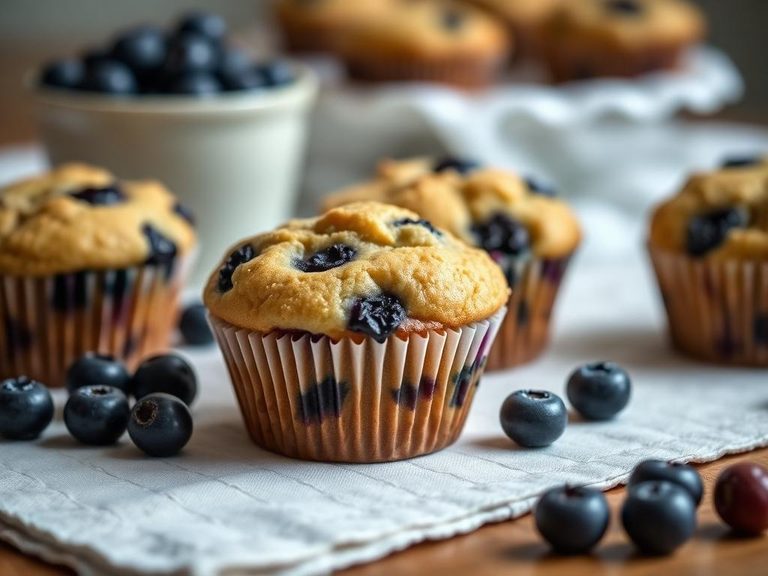
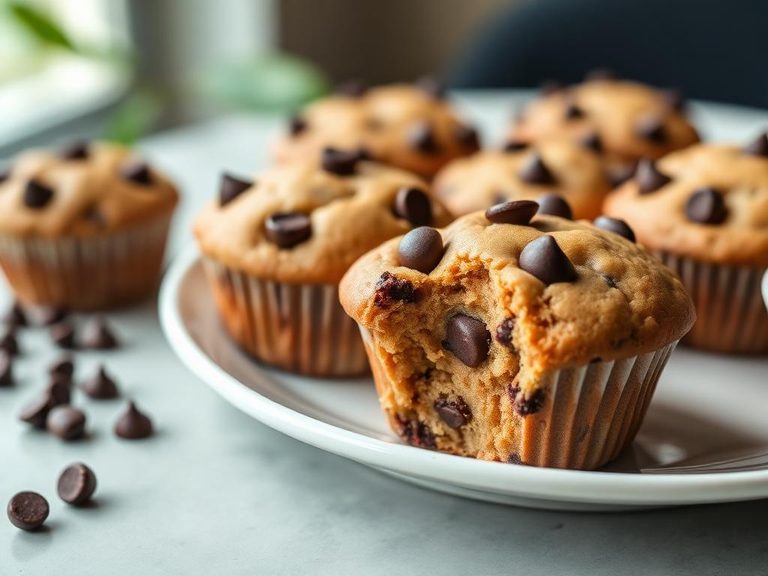
🌍 Where it's eaten
💡 Did you know?
The 'muffin' we know today is an American invention; the original English muffin was a yeast-leavened, griddle-cooked bread, not a batter-based cake.
Full nutrition (scales with serving)
| Water | 23.8 g |
| Energy | 374 kcal |
| Protein | 5.9 g |
| Total lipid (fat) | 16.2 g |
| Carbohydrate, by difference | 52.0 g |
| Fiber, total dietary | 0.80 g |
| Total Sugars | 27.5 g |
| Calcium, Ca | 165 mg |
| Iron, Fe | 2.3 mg |
| Magnesium, Mg | 15.0 mg |
| Phosphorus, P | 125 mg |
| Potassium, K | 130 mg |
| Sodium, Na | 358 mg |
| Zinc, Zn | 0.51 mg |
| Copper, Cu | 0.06 mg |
| Selenium, Se | 9.5 ug |
| Vitamin C, total ascorbic acid | 0.00 mg |
| Thiamin | 0.25 mg |
| Riboflavin | 0.22 mg |
| Niacin | 1.9 mg |
| Vitamin B-6 | 0.05 mg |
| Folate, total | 42.0 ug |
| Folic acid | 30.0 ug |
| Folate, food | 12.0 ug |
| Folate, DFE | 62.0 ug |
| Choline, total | 40.7 mg |
| Vitamin B-12 | 0.19 ug |
| Vitamin B-12, added | 0.00 ug |
| Vitamin A, RAE | 40.0 ug |
| Retinol | 39.0 ug |
| Carotene, beta | 1.0 ug |
| Carotene, alpha | 0.00 ug |
| Cryptoxanthin, beta | 2.0 ug |
| Lycopene | 0.00 ug |
| Lutein + zeaxanthin | 67.0 ug |
| Vitamin E (alpha-tocopherol) | 2.8 mg |
| Vitamin E, added | 0.00 mg |
| Vitamin D (D2 + D3) | 0.60 ug |
| Vitamin K (phylloquinone) | 14.1 ug |
| Fatty acids, total saturated | 2.7 g |
| SFA 4:0 | 0.01 g |
| SFA 6:0 | 0.01 g |
| SFA 8:0 | 0.01 g |
| SFA 10:0 | 0.02 g |
| SFA 12:0 | 0.02 g |
| SFA 14:0 | 0.07 g |
| SFA 16:0 | 1.8 g |
| SFA 18:0 | 0.56 g |
| Fatty acids, total monounsaturated | 6.5 g |
| MUFA 16:1 | 0.09 g |
| MUFA 18:1 | 6.3 g |
| MUFA 20:1 | 0.09 g |
| MUFA 22:1 | 0.00 g |
| Fatty acids, total polyunsaturated | 5.7 g |
| PUFA 18:2 | 5.0 g |
| PUFA 18:3 | 0.61 g |
| PUFA 18:4 | 0.00 g |
| PUFA 20:4 | 0.00 g |
| PUFA 20:5 n-3 (EPA) | 0.00 g |
| PUFA 22:5 n-3 (DPA) | 0.00 g |
| PUFA 22:6 n-3 (DHA) | 0.00 g |
| Cholesterol | 53.0 mg |
| Alcohol, ethyl | 0.00 g |
| Caffeine | 0.00 mg |
| Theobromine | 0.00 mg |
FAQ
What's the difference between a muffin and a cupcake?
Muffins are typically less sweet, denser, and often contain mix-ins like fruit or nuts. Cupcakes are essentially mini cakes, frosted, and have a finer, lighter crumb.
Can I make a plain muffin healthier?
Yes. Substitute half the all-purpose flour with whole wheat flour, reduce the sugar, add oats or nuts for fiber and protein, and use applesauce or yogurt to replace some of the fat.
Why do my muffins turn out tough?
Overmixing the batter develops gluten, leading to a tough texture. Mix just until the dry ingredients are moistened; lumps are okay.