

Macaroni or pasta salad with tuna
Common food
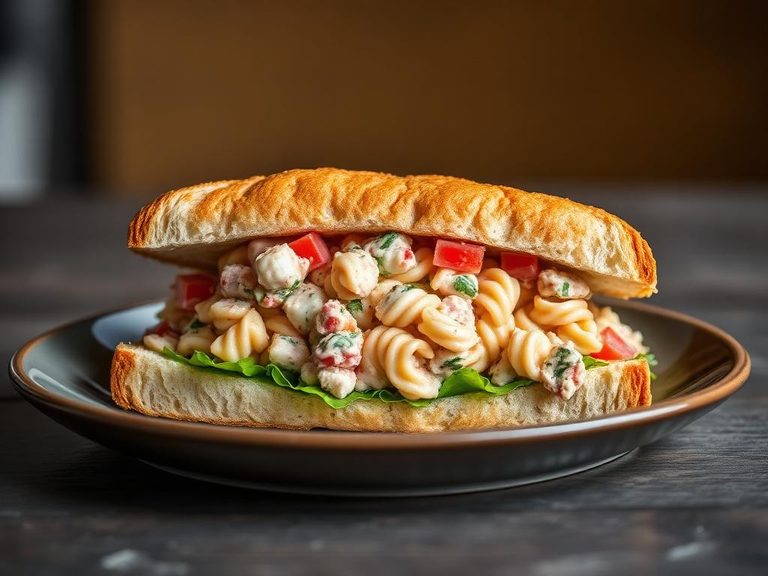
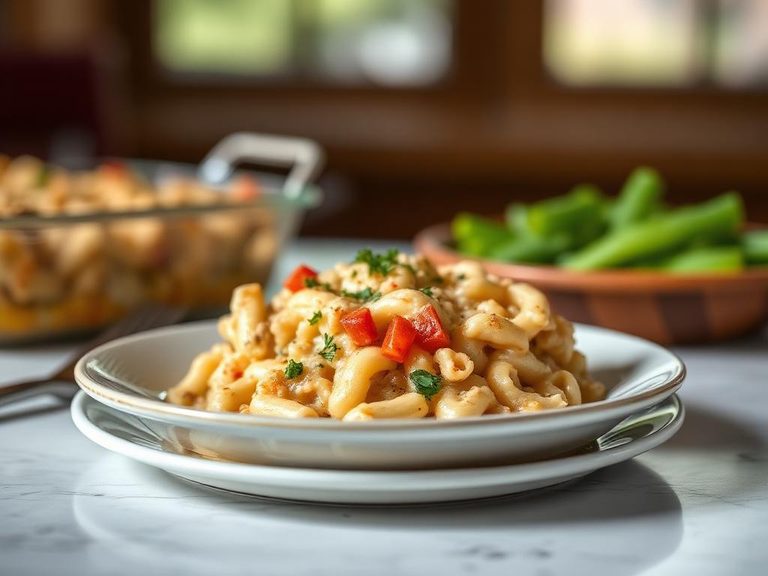
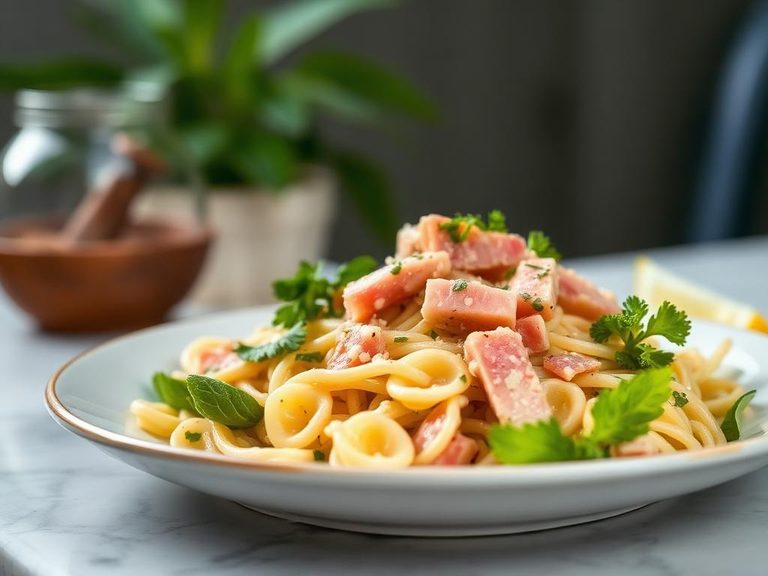
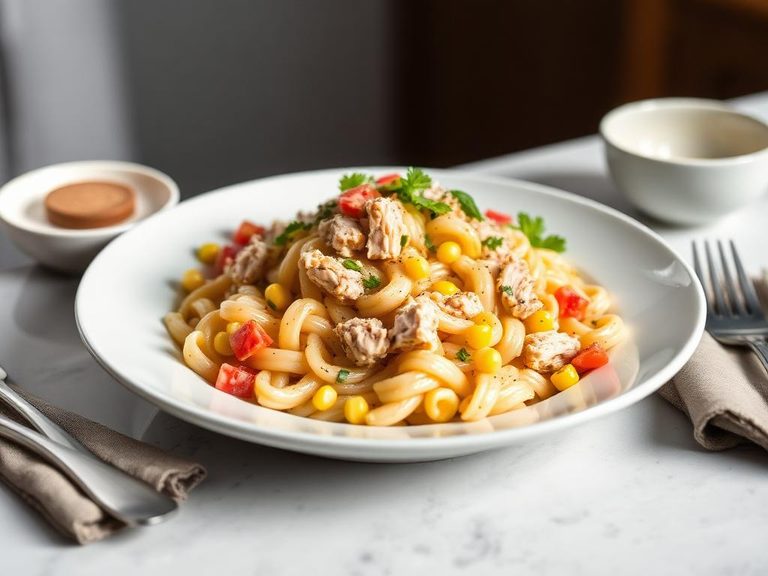
A chilled, creamy pasta salad featuring tender macaroni, flaky tuna, and a tangy mayonnaise-based dressing, often studded with crisp vegetables like celery or onion. It's a satisfyingly hearty yet light dish, balancing the soft pasta and savory fish with a cool, refreshing bite. With a balanced macronutrient profile, it provides a good source of protein and energy from carbohydrates in a single, convenient bowl.
Calorie split: 13% protein · 42% carbs · 45% fat
↓ Full nutrition💚 Why it's loved
People love it for its perfect balance of creamy, savory, and tangy flavors, and its incredibly versatile nature—it's a canvas for countless additions like hard-boiled eggs, peas, or herbs. It's a nostalgic, comforting staple at summer barbecues and potlucks across many cultures.
⚠️ Watch-outs & how to enjoy it better
The mayonnaise-based dressing can be high in calories and saturated fat, and the dish may lack sufficient fiber, potentially leading to quicker hunger. Those monitoring sodium or mercury intake should choose tuna packed in water and use low-sodium ingredients. To counteract, mix in extra vegetables like spinach or bell peppers for fiber, use a light mayo or Greek yogurt blend, and opt for skipjack or light tuna for lower mercury.
Key benefits
- Excellent source of lean protein from tuna for muscle maintenance.
- Provides quick-release carbohydrates for immediate energy.
- Convenient, no-cook meal ideal for picnics, lunches, and meal prep.
- Offers a balanced mix of protein, carbs, and fats for satiety.
- Can be a good source of omega-3 fatty acids depending on the tuna used.
🍽️ Popular dishes
🌍 Where it's eaten
💡 Did you know?
The classic American version, often called 'tuna mac,' became a pantry-hero dish in the mid-20th century, fueled by the post-WWII boom in canned tuna and convenient pasta.
Full nutrition (USDA data · scales with serving)
| Water | 61.7 g |
| Energy | 200 kcal |
| Protein | 6.7 g |
| Total lipid (fat) | 9.9 g |
| Carbohydrate, by difference | 20.9 g |
| Fiber, total dietary | 1.2 g |
| Total Sugars | 1.6 g |
| Calcium, Ca | 10.0 mg |
| Iron, Fe | 1.1 mg |
| Magnesium, Mg | 16.0 mg |
| Phosphorus, P | 61.0 mg |
| Potassium, K | 69.0 mg |
| Sodium, Na | 206 mg |
| Zinc, Zn | 0.45 mg |
| Copper, Cu | 0.08 mg |
| Selenium, Se | 27.1 ug |
| Vitamin C, total ascorbic acid | 1.5 mg |
| Thiamin | 0.18 mg |
| Riboflavin | 0.10 mg |
| Niacin | 2.6 mg |
| Vitamin B-6 | 0.09 mg |
| Folate, total | 48.0 ug |
| Folic acid | 41.0 ug |
| Folate, food | 7.0 ug |
| Folate, DFE | 77.0 ug |
| Choline, total | 13.2 mg |
| Vitamin B-12 | 0.41 ug |
| Vitamin B-12, added | 0.00 ug |
| Vitamin A, RAE | 7.0 ug |
| Retinol | 4.0 ug |
| Carotene, beta | 24.0 ug |
| Carotene, alpha | 4.0 ug |
| Cryptoxanthin, beta | 11.0 ug |
| Lycopene | 0.00 ug |
| Lutein + zeaxanthin | 22.0 ug |
| Vitamin E (alpha-tocopherol) | 0.52 mg |
| Vitamin E, added | 0.00 mg |
| Vitamin D (D2 + D3) | 0.20 ug |
| Vitamin K (phylloquinone) | 23.5 ug |
| Alcohol, ethyl | 0.00 g |
| Caffeine | 0.00 mg |
| Theobromine | 0.00 mg |
Fat & fatty acid profile (per 100g)
| Fatty acids, total saturated | 1.6 g |
| SFA 4:0 | 0.00 g |
| SFA 6:0 | 0.00 g |
| SFA 8:0 | 0.00 g |
| SFA 10:0 | 0.00 g |
| SFA 12:0 | 0.00 g |
| SFA 14:0 | 0.01 g |
| SFA 16:0 | 1.1 g |
| SFA 18:0 | 0.40 g |
| Fatty acids, total monounsaturated | 2.2 g |
| MUFA 16:1 | 0.01 g |
| MUFA 18:1 | 2.1 g |
| MUFA 20:1 | 0.03 g |
| MUFA 22:1 | 0.01 g |
| Fatty acids, total polyunsaturated | 5.7 g |
| PUFA 18:2 | 5.0 g |
| PUFA 18:3 | 0.69 g |
| PUFA 18:4 | 0.00 g |
| PUFA 20:4 | 0.01 g |
| PUFA 20:5 n-3 (EPA) | 0.00 g |
| PUFA 22:5 n-3 (DPA) | 0.00 g |
| PUFA 22:6 n-3 (DHA) | 0.03 g |
| Cholesterol | 11.0 mg |
FAQ
Can I make tuna pasta salad healthier?
Absolutely. Use whole-wheat or legume-based pasta for more fiber, swap some or all mayonnaise for mashed avocado or Greek yogurt, and load it up with extra chopped vegetables like cucumber, tomatoes, and spinach.
How long does it last in the fridge?
When stored in an airtight container, it typically stays fresh for 3-4 days. The pasta may absorb some dressing over time, so you might want to stir in a splash of vinegar or a spoonful of mayo before serving leftovers.
What's the best tuna to use?
For the best flavor and texture, use tuna packed in olive oil (drained) or water. 'Solid white albacore' is milder and firmer, while 'chunk light' (often skipjack) is stronger in flavor and more economical. For lower mercury, light tuna is generally a better choice.
Nutrient density (calculated · NRF9.3)
Nutrient Rich Foods index: beneficial nutrients (protein, fiber, vitamins, minerals) minus saturated fat, added sugar & sodium, per 100 kcal.
NRF9.3 index — Fulgoni, Keast & Drewnowski, 2009. Computed from USDA nutrients.
Weight-loss friendliness (composite index)
Energy density 2.00 kcal/g · 13% calories from protein · 1.2 g fiber · 1.6 g sugar per 100 g.
Composite of energy density (Rolls et al., 1999), protein & fiber satiety, minus sugar. A calculated heuristic — ranks satiety-per-calorie, not a clinical measure.
Dietary load (calculated from USDA values)
Potential renal acid load. Positive = acid-forming, negative = alkaline-forming.
Sodium-to-potassium ratio: 2.99 (lower is better — aim for ≤ 1)
Sodium:potassium per WHO potassium guidance. Computed from USDA nutrients.