

Macaroni or pasta salad, made with mayonnaise-type salad dressing
Common food

Photo: Wikipedia
A chilled, creamy side dish where tender pasta shapes are tossed in a rich, tangy mayonnaise-based dressing, often studded with crunchy vegetables like celery and onion. It offers a satisfying contrast of soft noodles and crisp mix-ins, with a cool, savory flavor profile. Nutritionally, it's a moderate-energy source primarily from carbohydrates, with a notable fat contribution from the dressing.
Calorie split: 11% protein · 66% carbs · 23% fat
↓ Full nutrition💚 Why it's loved
People love it for its comforting, nostalgic appeal and the perfect balance of creamy, tangy, and savory flavors. It's a beloved potluck staple because it's easy to make in large batches and tastes even better after the flavors meld in the fridge.
⚠️ Watch-outs & how to enjoy it better
The mayonnaise dressing can be high in saturated fat and calories, and the refined pasta may cause a quicker rise in blood sugar for some. To counteract this, mix in extra vegetables like bell peppers or peas for fiber, use a light or olive oil-based mayo, and pair it with a lean protein like grilled chicken or chickpeas to balance the meal.
Key benefits
- Provides quick energy from carbohydrates
- Contains some dietary fiber from pasta and added vegetables
- Offers a convenient, no-reheat meal or side
- Can be a vehicle for adding nutrient-dense vegetables
- Shelf-stable for several hours when chilled
🍽️ Popular dishes
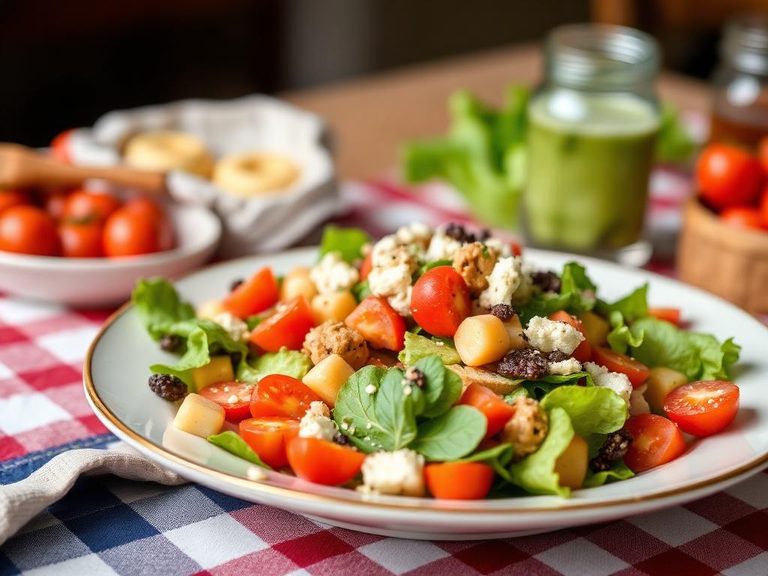
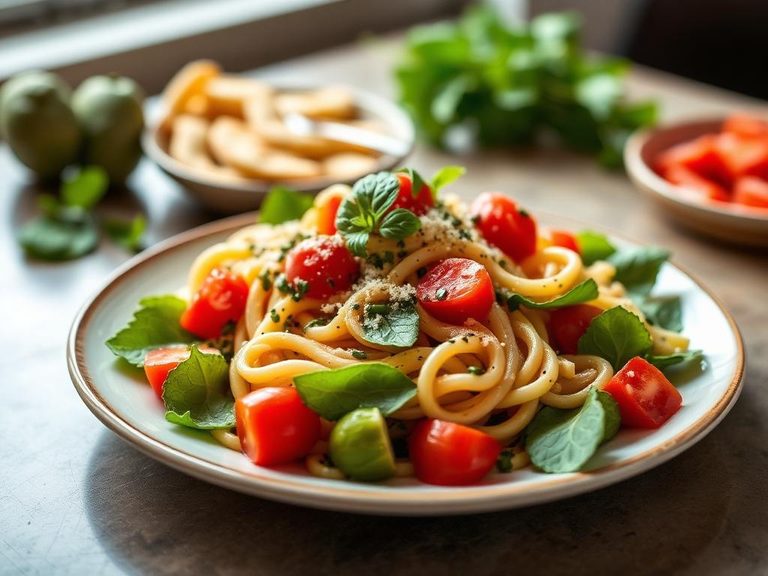
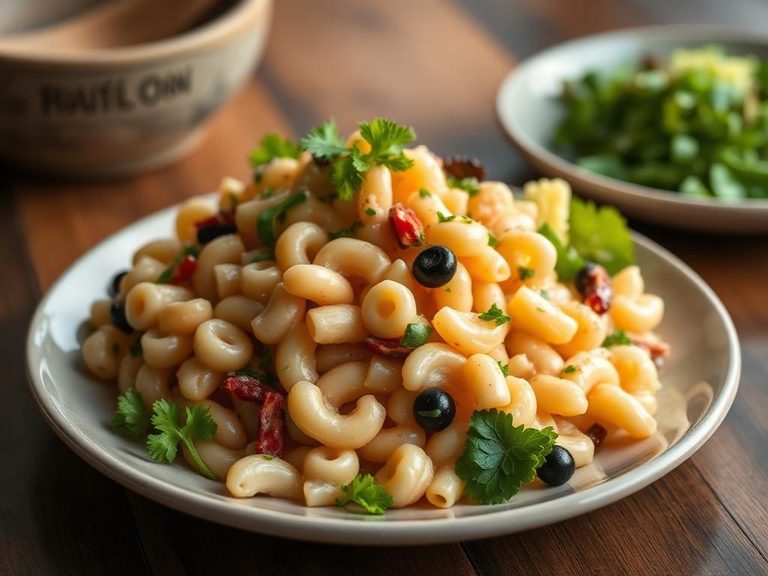
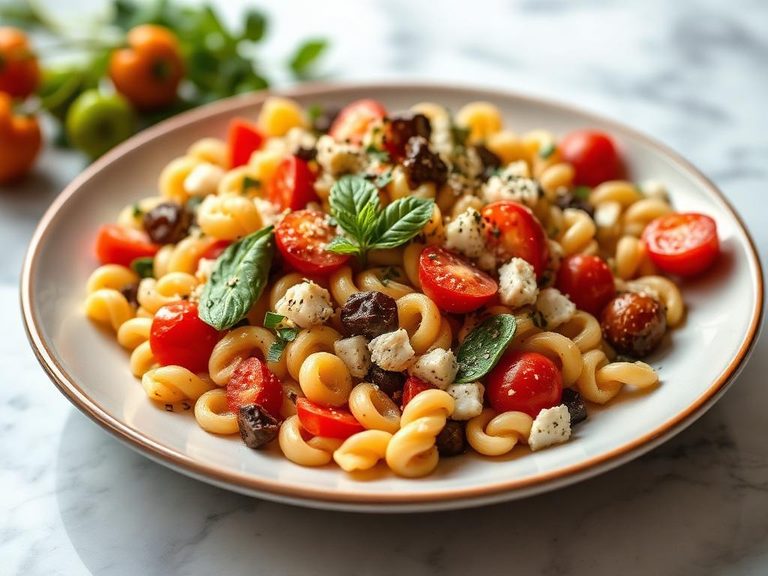
🌍 Where it's eaten
💡 Did you know?
The first known printed recipe for a 'macaroni salad' appeared in a 1914 American cookbook, but the dish likely evolved from earlier European pasta salads dressed with oil and vinegar.
Full nutrition (USDA data · scales with serving)
| Water | 64.3 g |
| Energy | 160 kcal |
| Protein | 4.4 g |
| Total lipid (fat) | 4.0 g |
| Carbohydrate, by difference | 26.6 g |
| Fiber, total dietary | 1.4 g |
| Total Sugars | 3.3 g |
| Calcium, Ca | 8.0 mg |
| Iron, Fe | 0.99 mg |
| Magnesium, Mg | 14.0 mg |
| Phosphorus, P | 46.0 mg |
| Potassium, K | 51.0 mg |
| Sodium, Na | 211 mg |
| Zinc, Zn | 0.39 mg |
| Copper, Cu | 0.08 mg |
| Selenium, Se | 19.3 ug |
| Vitamin C, total ascorbic acid | 1.8 mg |
| Thiamin | 0.20 mg |
| Riboflavin | 0.11 mg |
| Niacin | 1.3 mg |
| Vitamin B-6 | 0.04 mg |
| Folate, total | 56.0 ug |
| Folic acid | 48.0 ug |
| Folate, food | 8.0 ug |
| Folate, DFE | 90.0 ug |
| Choline, total | 7.5 mg |
| Vitamin B-12 | 0.01 ug |
| Vitamin B-12, added | 0.00 ug |
| Vitamin A, RAE | 4.0 ug |
| Retinol | 1.0 ug |
| Carotene, beta | 29.0 ug |
| Carotene, alpha | 5.0 ug |
| Cryptoxanthin, beta | 13.0 ug |
| Lycopene | 0.00 ug |
| Lutein + zeaxanthin | 28.0 ug |
| Vitamin E (alpha-tocopherol) | 0.32 mg |
| Vitamin E, added | 0.00 mg |
| Vitamin D (D2 + D3) | 0.00 ug |
| Vitamin K (phylloquinone) | 10.5 ug |
| Alcohol, ethyl | 0.00 g |
| Caffeine | 0.00 mg |
| Theobromine | 0.00 mg |
Fat & fatty acid profile (per 100g)
| Fatty acids, total saturated | 0.65 g |
| SFA 4:0 | 0.00 g |
| SFA 6:0 | 0.00 g |
| SFA 8:0 | 0.00 g |
| SFA 10:0 | 0.00 g |
| SFA 12:0 | 0.00 g |
| SFA 14:0 | 0.01 g |
| SFA 16:0 | 0.45 g |
| SFA 18:0 | 0.16 g |
| Fatty acids, total monounsaturated | 0.88 g |
| MUFA 16:1 | 0.00 g |
| MUFA 18:1 | 0.85 g |
| MUFA 20:1 | 0.01 g |
| MUFA 22:1 | 0.01 g |
| Fatty acids, total polyunsaturated | 2.1 g |
| PUFA 18:2 | 1.9 g |
| PUFA 18:3 | 0.24 g |
| PUFA 18:4 | 0.00 g |
| PUFA 20:4 | 0.00 g |
| PUFA 20:5 n-3 (EPA) | 0.00 g |
| PUFA 22:5 n-3 (DPA) | 0.00 g |
| PUFA 22:6 n-3 (DHA) | 0.00 g |
| Cholesterol | 3.0 mg |
FAQ
Is macaroni salad healthy?
It can be part of a balanced diet. Its healthiness depends heavily on the dressing—traditional mayo is high in fat and calories. You can make it healthier by using Greek yogurt or light mayo, loading it with vegetables, and watching portion sizes.
How long does it last in the fridge?
When stored in an airtight container, it's generally safe for 3-4 days. The pasta may absorb some dressing and soften over time, so it's best enjoyed within the first two days for optimal texture.
Can I make it without mayonnaise?
Absolutely! Popular alternatives include dressings based on olive oil and vinegar, Greek yogurt, sour cream, or even a creamy avocado-based sauce. Each will give the salad a distinct flavor profile.
Nutrient density (calculated · NRF9.3)
Nutrient Rich Foods index: beneficial nutrients (protein, fiber, vitamins, minerals) minus saturated fat, added sugar & sodium, per 100 kcal.
NRF9.3 index — Fulgoni, Keast & Drewnowski, 2009. Computed from USDA nutrients.
Weight-loss friendliness (composite index)
Energy density 1.60 kcal/g · 11% calories from protein · 1.4 g fiber · 3.3 g sugar per 100 g.
Composite of energy density (Rolls et al., 1999), protein & fiber satiety, minus sugar. A calculated heuristic — ranks satiety-per-calorie, not a clinical measure.
Dietary load (calculated from USDA values)
Potential renal acid load. Positive = acid-forming, negative = alkaline-forming.
Sodium-to-potassium ratio: 4.14 (lower is better — aim for ≤ 1)
Sodium:potassium per WHO potassium guidance. Computed from USDA nutrients.