

Iced Coffee, brewed, decaffeinated
Common food
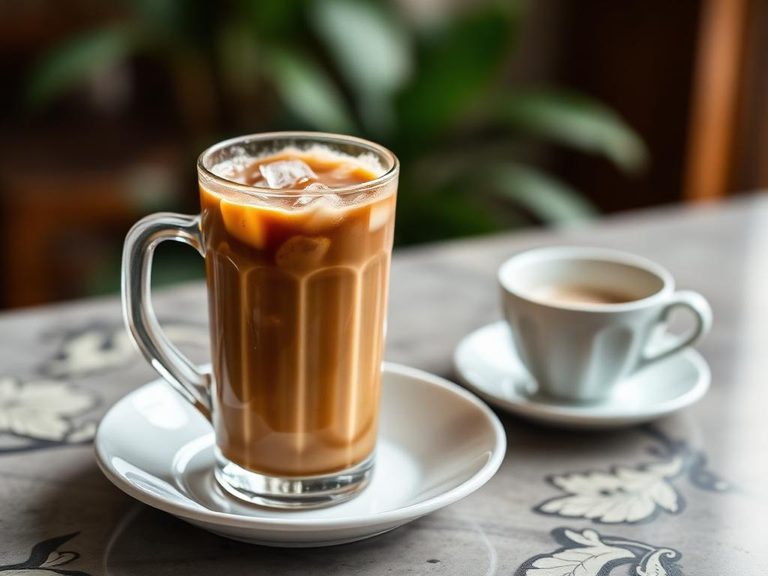
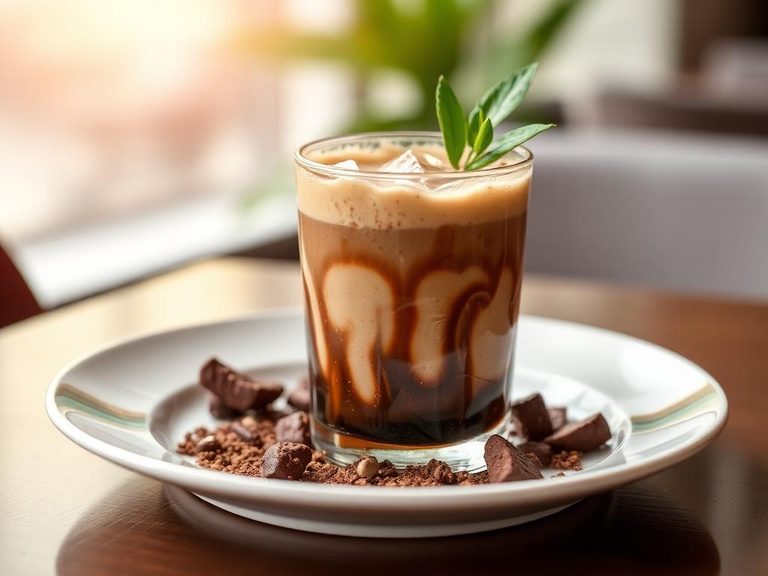
This is brewed coffee that has been decaffeinated and served chilled, resulting in a smooth, bold, and slightly acidic beverage with a clean, refreshing finish. Its nutrition profile is essentially a blank canvas, contributing negligible calories, protein, carbs, or fat per serving. The drink's character comes entirely from the coffee bean's origin and the decaffeination process, which removes most caffeine while aiming to preserve flavor.
Calorie split: 100% protein · 0% carbs · 0% fat
↓ Full nutrition💚 Why it's loved
People love it for delivering the deep, complex flavor of coffee—whether fruity, nutty, or chocolatey—in a refreshing, non-stimulating form. It's a cultural staple for those who enjoy the social and sensory aspects of coffee at any time of day, without the jitters or sleep disruption.
⚠️ Watch-outs & how to enjoy it better
Some find decaffeinated versions lack the full-bodied 'kick' or depth of regular coffee, and the decaffeination process can sometimes leave a faint chemical aftertaste. Those with acid reflux or sensitive stomachs may find the acidity uncomfortable; pairing it with a small amount of food or choosing a low-acid bean can help mitigate this.
Key benefits
- Provides the ritual and flavor of coffee without caffeine's stimulant effects.
- Extremely low in calories, making it suitable for calorie-controlled diets.
- Can be a hydrating alternative to sugary cold beverages.
- May contain antioxidants like chlorogenic acid from coffee beans.
- Offers a versatile base for both sweet and savory flavor additions.
🍽️ Popular dishes

🌍 Where it's eaten
💡 Did you know?
The most common commercial decaffeination method today uses a solvent called ethyl acetate, which is naturally found in ripe fruits like bananas and apples.
Full nutrition (USDA data · scales with serving)
| Water | 99.4 g |
| Energy | 0.00 kcal |
| Protein | 0.08 g |
| Total lipid (fat) | 0.00 g |
| Carbohydrate, by difference | 0.00 g |
| Fiber, total dietary | 0.00 g |
| Total Sugars | 0.00 g |
| Calcium, Ca | 2.0 mg |
| Iron, Fe | 0.04 mg |
| Magnesium, Mg | 4.0 mg |
| Phosphorus, P | 1.0 mg |
| Potassium, K | 42.0 mg |
| Sodium, Na | 2.0 mg |
| Zinc, Zn | 0.02 mg |
| Copper, Cu | 0.01 mg |
| Selenium, Se | 0.10 ug |
| Vitamin C, total ascorbic acid | 0.00 mg |
| Thiamin | 0.00 mg |
| Riboflavin | 0.00 mg |
| Niacin | 0.17 mg |
| Vitamin B-6 | 0.00 mg |
| Folate, total | 0.00 ug |
| Folic acid | 0.00 ug |
| Folate, food | 0.00 ug |
| Folate, DFE | 0.00 ug |
| Choline, total | 0.80 mg |
| Vitamin B-12 | 0.00 ug |
| Vitamin B-12, added | 0.00 ug |
| Vitamin A, RAE | 0.00 ug |
| Retinol | 0.00 ug |
| Carotene, beta | 0.00 ug |
| Carotene, alpha | 0.00 ug |
| Cryptoxanthin, beta | 0.00 ug |
| Lycopene | 0.00 ug |
| Lutein + zeaxanthin | 0.00 ug |
| Vitamin E (alpha-tocopherol) | 0.00 mg |
| Vitamin E, added | 0.00 mg |
| Vitamin D (D2 + D3) | 0.00 ug |
| Vitamin K (phylloquinone) | 0.10 ug |
| Alcohol, ethyl | 0.00 g |
| Caffeine | 1.0 mg |
| Theobromine | 0.00 mg |
Fat & fatty acid profile (per 100g)
| Fatty acids, total saturated | 0.00 g |
| SFA 4:0 | 0.00 g |
| SFA 6:0 | 0.00 g |
| SFA 8:0 | 0.00 g |
| SFA 10:0 | 0.00 g |
| SFA 12:0 | 0.00 g |
| SFA 14:0 | 0.00 g |
| SFA 16:0 | 0.00 g |
| SFA 18:0 | 0.00 g |
| Fatty acids, total monounsaturated | 0.00 g |
| MUFA 16:1 | 0.00 g |
| MUFA 18:1 | 0.00 g |
| MUFA 20:1 | 0.00 g |
| MUFA 22:1 | 0.00 g |
| Fatty acids, total polyunsaturated | 0.00 g |
| PUFA 18:2 | 0.00 g |
| PUFA 18:3 | 0.00 g |
| PUFA 18:4 | 0.00 g |
| PUFA 20:4 | 0.00 g |
| PUFA 20:5 n-3 (EPA) | 0.00 g |
| PUFA 22:5 n-3 (DPA) | 0.00 g |
| PUFA 22:6 n-3 (DHA) | 0.00 g |
| Cholesterol | 0.00 mg |
FAQ
Does decaffeinated coffee have zero caffeine?
No. The decaffeination process removes about 94-99% of the caffeine. A typical 8 oz cup of decaf still contains 2-15 mg of caffeine, compared to 80-100 mg in regular coffee.
Is iced decaf coffee just regular coffee poured over ice?
Often, yes. It's typically brewed at double strength to account for ice dilution, then chilled. Some methods brew it cold over 12-24 hours for a smoother, less acidic profile.
Can I make this at home without special equipment?
Absolutely. Brew a strong pot of decaf coffee using your preferred method (drip, French press, etc.), let it cool, then pour over a glass full of ice. For a concentrate, brew it very strong and dilute with water or milk to taste.
Dietary load (calculated from USDA values)
Potential renal acid load. Positive = acid-forming, negative = alkaline-forming.
Sodium-to-potassium ratio: 0.05 (lower is better — aim for ≤ 1)
Sodium:potassium per WHO potassium guidance. Computed from USDA nutrients.