

Greyhound
Common food

Photo: Wikipedia
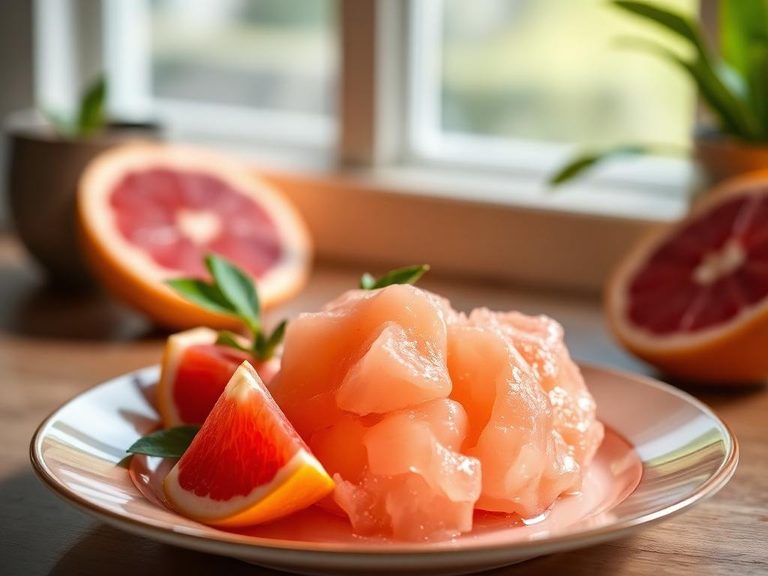
The Greyhound is a classic, effervescent highball cocktail, not a food item. It features a crisp, tart, and slightly bitter flavor profile from grapefruit juice, balanced by the clean, warming kick of gin or vodka. Nutritionally, it is a low-calorie, virtually fat-free alcoholic beverage with minimal protein.
Calorie split: 6% protein · 84% carbs · 11% fat
↓ Full nutrition💚 Why it's loved
People love the Greyhound for its refreshing, palate-cleansing tartness, making it a perfect aperitif or warm-weather sipper. Its simplicity and adaptability (easily made with gin or vodka) have cemented its place in classic cocktail culture.
⚠️ Watch-outs & how to enjoy it better
The primary downside is the alcohol content, which can impair judgment and health; those avoiding alcohol, pregnant, or with certain medical conditions should avoid it. The grapefruit juice can interact with numerous medications (e.g., statins, some blood pressure drugs) and may cause issues for those with acid reflux or citrus allergies. To mitigate, always check medication interactions, consume in moderation, and consider a non-alcoholic 'mocktail' version with sparkling water.
Key benefits
- Low in calories compared to many cocktails
- Contains vitamin C from grapefruit juice
- No fat or cholesterol
- Hydrating due to high water content
- Simple to prepare with few ingredients
🍽️ Popular dishes

🌍 Where it's eaten
💡 Did you know?
The Greyhound cocktail's name is believed to originate from the fact that it was a popular drink served on Greyhound bus lines in the United States during the mid-20th century.
Full nutrition (USDA data · scales with serving)
| Water | 84.5 g |
| Energy | 87.0 kcal |
| Protein | 0.42 g |
| Total lipid (fat) | 0.36 g |
| Carbohydrate, by difference | 6.3 g |
| Fiber, total dietary | 0.20 g |
| Total Sugars | 5.6 g |
| Calcium, Ca | 9.0 mg |
| Iron, Fe | 0.04 mg |
| Magnesium, Mg | 7.0 mg |
| Phosphorus, P | 13.0 mg |
| Potassium, K | 102 mg |
| Sodium, Na | 1.0 mg |
| Zinc, Zn | 0.04 mg |
| Copper, Cu | 0.03 mg |
| Selenium, Se | 0.10 ug |
| Vitamin C, total ascorbic acid | 23.9 mg |
| Thiamin | 0.04 mg |
| Riboflavin | 0.02 mg |
| Niacin | 0.11 mg |
| Vitamin B-6 | 0.01 mg |
| Folate, total | 12.0 ug |
| Folic acid | 0.00 ug |
| Folate, food | 12.0 ug |
| Folate, DFE | 12.0 ug |
| Choline, total | 5.8 mg |
| Vitamin B-12 | 0.00 ug |
| Vitamin B-12, added | 0.00 ug |
| Vitamin A, RAE | 2.0 ug |
| Retinol | 0.00 ug |
| Carotene, beta | 15.0 ug |
| Carotene, alpha | 2.0 ug |
| Cryptoxanthin, beta | 1.0 ug |
| Lycopene | 0.00 ug |
| Lutein + zeaxanthin | 8.0 ug |
| Vitamin E (alpha-tocopherol) | 0.17 mg |
| Vitamin E, added | 0.00 mg |
| Vitamin D (D2 + D3) | 0.00 ug |
| Vitamin K (phylloquinone) | 0.00 ug |
| Alcohol, ethyl | 8.3 g |
| Caffeine | 0.00 mg |
| Theobromine | 0.00 mg |
Fat & fatty acid profile (per 100g)
| Fatty acids, total saturated | 0.06 g |
| SFA 4:0 | 0.00 g |
| SFA 6:0 | 0.00 g |
| SFA 8:0 | 0.00 g |
| SFA 10:0 | 0.00 g |
| SFA 12:0 | 0.00 g |
| SFA 14:0 | 0.00 g |
| SFA 16:0 | 0.06 g |
| SFA 18:0 | 0.01 g |
| Fatty acids, total monounsaturated | 0.07 g |
| MUFA 16:1 | 0.01 g |
| MUFA 18:1 | 0.06 g |
| MUFA 20:1 | 0.00 g |
| MUFA 22:1 | 0.00 g |
| Fatty acids, total polyunsaturated | 0.13 g |
| PUFA 18:2 | 0.10 g |
| PUFA 18:3 | 0.03 g |
| PUFA 18:4 | 0.00 g |
| PUFA 20:4 | 0.00 g |
| PUFA 20:5 n-3 (EPA) | 0.00 g |
| PUFA 22:5 n-3 (DPA) | 0.00 g |
| PUFA 22:6 n-3 (DHA) | 0.00 g |
| Cholesterol | 1.0 mg |
FAQ
What's the difference between a Greyhound and a Salty Dog?
A Salty Dog is simply a Greyhound with a salted rim on the glass, adding a savory contrast to the tart juice.
Is a Greyhound made with gin or vodka?
Traditionally, a Greyhound is made with gin, but using vodka is a very common and accepted modern variation.
Can I make a non-alcoholic version?
Absolutely. Simply omit the spirit and use grapefruit juice mixed with club soda or sparkling water for a refreshing 'Virgin Greyhound' or 'Sparkling Grapefruit Soda'.
Nutrient density (calculated · NRF9.3)
Nutrient Rich Foods index: beneficial nutrients (protein, fiber, vitamins, minerals) minus saturated fat, added sugar & sodium, per 100 kcal.
NRF9.3 index — Fulgoni, Keast & Drewnowski, 2009. Computed from USDA nutrients.
Weight-loss friendliness (composite index)
Energy density 0.87 kcal/g · 2% calories from protein · 0.2 g fiber · 5.6 g sugar per 100 g.
Composite of energy density (Rolls et al., 1999), protein & fiber satiety, minus sugar. A calculated heuristic — ranks satiety-per-calorie, not a clinical measure.
Dietary load (calculated from USDA values)
Potential renal acid load. Positive = acid-forming, negative = alkaline-forming.
Sodium-to-potassium ratio: 0.01 (lower is better — aim for ≤ 1)
Sodium:potassium per WHO potassium guidance. Computed from USDA nutrients.