

Gelato, vanilla
Common food

Photo: Wikipedia
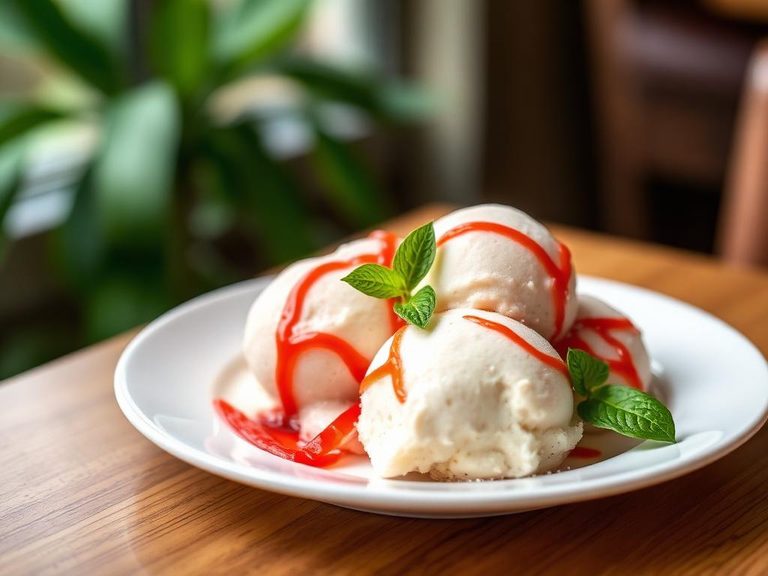
Gelato, vanilla is a dense, silky Italian ice cream with a lower fat content than its American counterpart, allowing the pure, floral notes of real vanilla bean to shine through. Its texture is uniquely elastic and smooth, melting slowly on the tongue due to a slower churning process that incorporates less air. Nutritionally, a 100g serving packs 249 kcal, primarily from 22.29g of carbohydrates (including 20.65g of sugar) and 16.2g of fat, with a modest 3.5g of protein.
Calorie split: 6% protein · 36% carbs · 59% fat
↓ Full nutrition💚 Why it's loved
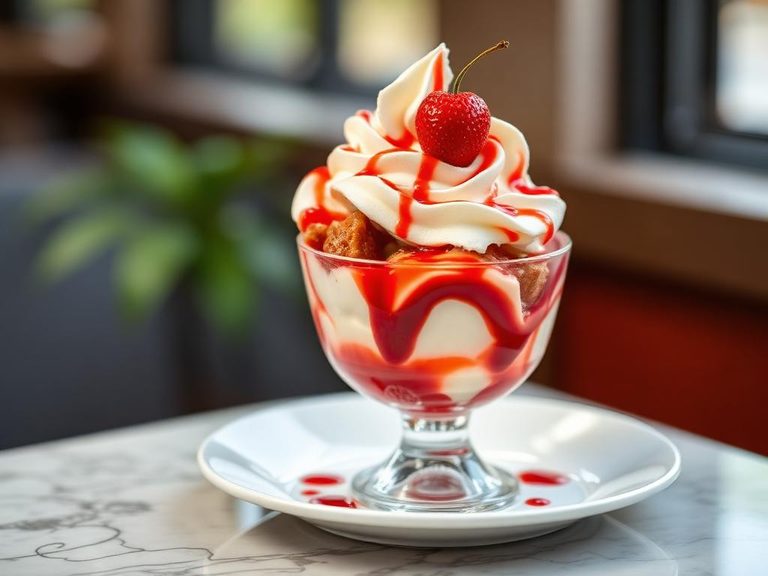
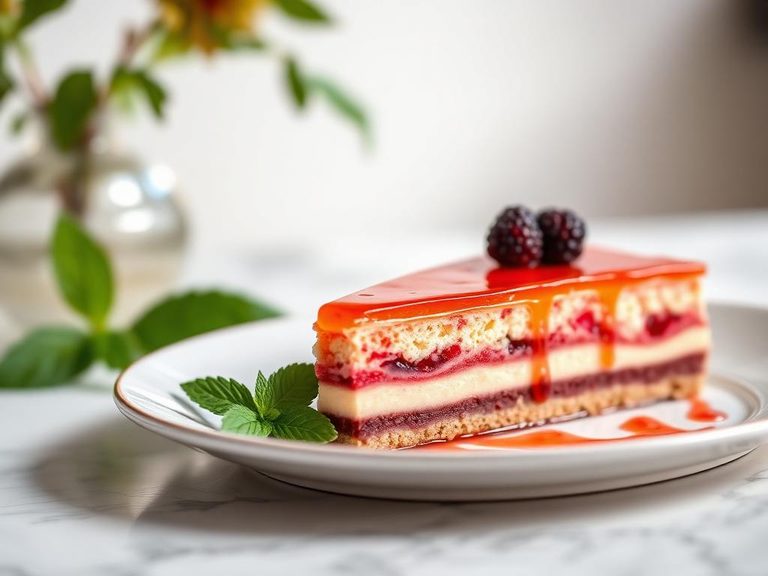
People adore vanilla gelato for its comforting, familiar sweetness and luxuriously smooth, dense texture that feels more substantial than regular ice cream. It's the ultimate versatile canvas, equally sublime on its own, drizzled with espresso in an affogato, or paired with warm fruit desserts.
⚠️ Watch-outs & how to enjoy it better
Its high sugar content (20.65g per 100g) can cause rapid blood-sugar spikes, making it a treat for diabetics or those monitoring glucose levels. To mitigate this, pair it with a source of protein or healthy fat (like a handful of nuts) to slow sugar absorption, and practice strict portion control. It also contains dairy, a common allergen.
Key benefits
- Provides a quick source of energy from carbohydrates
- Contains calcium and phosphorus from its dairy base
- Offers a small amount of high-quality protein
- Can be a source of antioxidants if made with real vanilla bean
- Serves as a vehicle for fat-soluble vitamins A and D from milk
🍽️ Popular dishes

🌍 Where it's eaten
💡 Did you know?
Gelato is churned at a slower speed than ice cream, incorporating about half the air, which results in its characteristic dense, elastic texture and more intense flavor delivery.
Full nutrition (USDA data · scales with serving)
| Water | 57.2 g |
| Energy | 249 kcal |
| Protein | 3.5 g |
| Total lipid (fat) | 16.2 g |
| Carbohydrate, by difference | 22.3 g |
| Fiber, total dietary | 0.00 g |
| Total Sugars | 20.6 g |
| Calcium, Ca | 117 mg |
| Iron, Fe | 0.34 mg |
| Magnesium, Mg | 11.0 mg |
| Phosphorus, P | 105 mg |
| Potassium, K | 157 mg |
| Sodium, Na | 61.0 mg |
| Zinc, Zn | 0.47 mg |
| Copper, Cu | 0.01 mg |
| Selenium, Se | 3.5 ug |
| Vitamin C, total ascorbic acid | 0.00 mg |
| Thiamin | 0.04 mg |
| Riboflavin | 0.17 mg |
| Niacin | 0.08 mg |
| Vitamin B-6 | 0.04 mg |
| Folate, total | 8.0 ug |
| Folic acid | 0.00 ug |
| Folate, food | 8.0 ug |
| Folate, DFE | 9.0 ug |
| Choline, total | 26.0 mg |
| Vitamin B-12 | 0.39 ug |
| Vitamin B-12, added | 0.00 ug |
| Vitamin A, RAE | 182 ug |
| Retinol | 179 ug |
| Carotene, beta | 32.0 ug |
| Carotene, alpha | 1.0 ug |
| Cryptoxanthin, beta | 1.0 ug |
| Lycopene | 0.00 ug |
| Lutein + zeaxanthin | 34.0 ug |
| Vitamin E (alpha-tocopherol) | 0.51 mg |
| Vitamin E, added | 0.00 mg |
| Vitamin D (D2 + D3) | 0.30 ug |
| Vitamin K (phylloquinone) | 1.3 ug |
| Alcohol, ethyl | 0.00 g |
| Caffeine | 0.00 mg |
| Theobromine | 0.00 mg |
Fat & fatty acid profile (per 100g)
| Fatty acids, total saturated | 10.3 g |
| SFA 4:0 | 0.49 g |
| SFA 6:0 | 0.29 g |
| SFA 8:0 | 0.17 g |
| SFA 10:0 | 0.38 g |
| SFA 12:0 | 0.42 g |
| SFA 14:0 | 1.5 g |
| SFA 16:0 | 4.2 g |
| SFA 18:0 | 1.9 g |
| Fatty acids, total monounsaturated | 4.5 g |
| MUFA 16:1 | 0.36 g |
| MUFA 18:1 | 4.1 g |
| MUFA 20:1 | 0.00 g |
| MUFA 22:1 | 0.00 g |
| Fatty acids, total polyunsaturated | 0.68 g |
| PUFA 18:2 | 0.44 g |
| PUFA 18:3 | 0.22 g |
| PUFA 18:4 | 0.00 g |
| PUFA 20:4 | 0.01 g |
| PUFA 20:5 n-3 (EPA) | 0.00 g |
| PUFA 22:5 n-3 (DPA) | 0.00 g |
| PUFA 22:6 n-3 (DHA) | 0.00 g |
| Cholesterol | 92.0 mg |
FAQ
How is gelato different from ice cream?
Gelato has less fat (uses more milk than cream), less air (is denser), and is served at a slightly warmer temperature, which enhances its soft, silky texture and flavor.
Is vanilla gelato gluten-free?
Pure vanilla gelato is typically gluten-free, but always check labels for potential cross-contamination or added ingredients like cookie pieces or thickeners that may contain gluten.
Can I make gelato at home without a machine?
Yes, you can make a 'no-churn' version by freezing a mixture of sweetened condensed milk, heavy cream, and vanilla extract, stirring it periodically to break up ice crystals, though the texture will be less authentic.
Nutrient density (calculated · NRF9.3)
Nutrient Rich Foods index: beneficial nutrients (protein, fiber, vitamins, minerals) minus saturated fat, added sugar & sodium, per 100 kcal.
NRF9.3 index — Fulgoni, Keast & Drewnowski, 2009. Computed from USDA nutrients.
Weight-loss friendliness (composite index)
Energy density 2.49 kcal/g · 6% calories from protein · 0.0 g fiber · 20.6 g sugar per 100 g.
Composite of energy density (Rolls et al., 1999), protein & fiber satiety, minus sugar. A calculated heuristic — ranks satiety-per-calorie, not a clinical measure.
Dietary load (calculated from USDA values)
Potential renal acid load. Positive = acid-forming, negative = alkaline-forming.
Sodium-to-potassium ratio: 0.39 (lower is better — aim for ≤ 1)
Sodium:potassium per WHO potassium guidance. Computed from USDA nutrients.