

Frozen yogurt cone, chocolate, waffle cone
Common food

Photo: Wikipedia
This is a classic frozen treat: a swirl of tangy, creamy chocolate frozen yogurt nestled in a crisp, grid-patterned waffle cone. The yogurt offers a smooth, melt-on-the-tongue texture with a rich cocoa flavor, while the cone provides a satisfying, buttery crunch. Nutritionally, it's a lighter dessert option, providing a good source of calcium and protein with less fat than traditional ice cream.
Calorie split: 9% protein · 69% carbs · 22% fat
↓ Full nutrition💚 Why it's loved
People love it for the perfect marriage of tangy-sweet, creamy yogurt and the nostalgic, crunchy waffle cone, making it a beloved handheld dessert. Its versatility allows for countless topping combinations, from sprinkles to fresh fruit, making it a customizable staple at fairs, boardwalks, and dessert shops.
⚠️ Watch-outs & how to enjoy it better
The primary downsides are the high sugar content, which can cause blood-sugar spikes, and the waffle cone's refined carbohydrates. Those monitoring sugar intake or with gluten sensitivities should be cautious. To counteract, pair it with a handful of nuts for added protein and healthy fats to slow sugar absorption, or opt for a smaller portion and enjoy it slowly.
Key benefits
- Good source of calcium for bone health.
- Provides protein from the yogurt base.
- Contains less fat than traditional ice cream.
- Offers a satisfying sweet treat with a probiotic potential.
- The waffle cone adds a textural contrast.
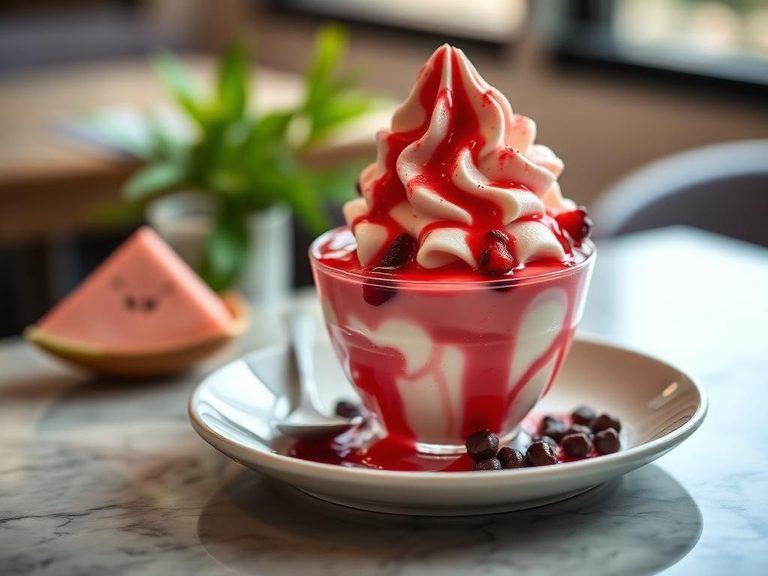
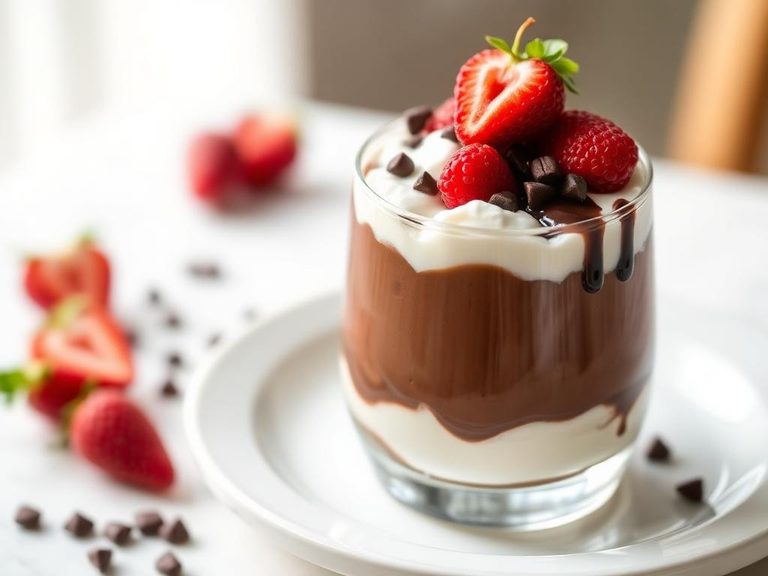
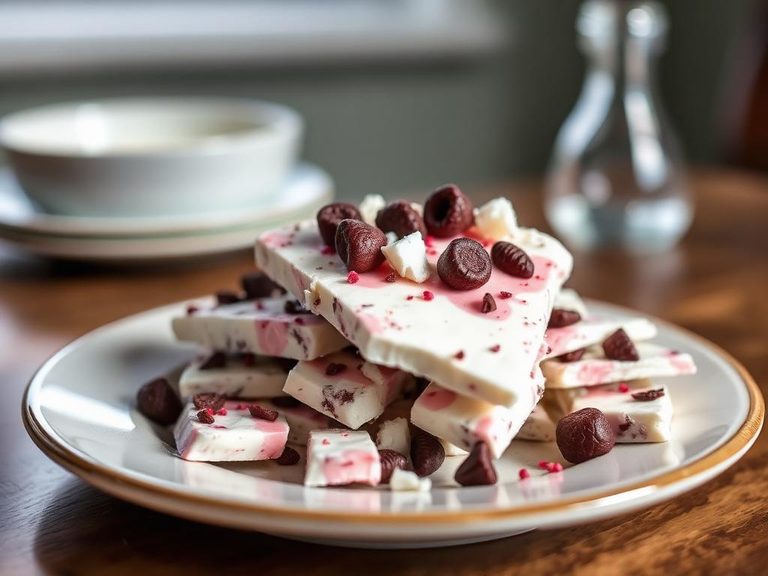
🍽️ Popular dishes


🌍 Where it's eaten
💡 Did you know?
The waffle cone's signature grid pattern isn't just for looks—it was originally designed to help the hot, pliable waffle wrap neatly around the mold without tearing.
Full nutrition (USDA data · scales with serving)
| Water | 67.2 g |
| Energy | 147 kcal |
| Protein | 3.3 g |
| Total lipid (fat) | 3.6 g |
| Carbohydrate, by difference | 25.3 g |
| Fiber, total dietary | 2.3 g |
| Total Sugars | 19.6 g |
| Calcium, Ca | 97.0 mg |
| Iron, Fe | 0.69 mg |
| Magnesium, Mg | 25.0 mg |
| Phosphorus, P | 90.0 mg |
| Potassium, K | 229 mg |
| Sodium, Na | 77.0 mg |
| Zinc, Zn | 0.31 mg |
| Copper, Cu | 0.07 mg |
| Selenium, Se | 2.1 ug |
| Vitamin C, total ascorbic acid | 0.00 mg |
| Thiamin | 0.07 mg |
| Riboflavin | 0.19 mg |
| Niacin | 0.43 mg |
| Vitamin B-6 | 0.04 mg |
| Folate, total | 20.0 ug |
| Folic acid | 8.0 ug |
| Folate, food | 12.0 ug |
| Folate, DFE | 25.0 ug |
| Choline, total | 13.8 mg |
| Vitamin B-12 | 0.07 ug |
| Vitamin B-12, added | 0.00 ug |
| Vitamin A, RAE | 37.0 ug |
| Retinol | 36.0 ug |
| Carotene, beta | 8.0 ug |
| Carotene, alpha | 0.00 ug |
| Cryptoxanthin, beta | 0.00 ug |
| Lycopene | 0.00 ug |
| Lutein + zeaxanthin | 1.0 ug |
| Vitamin E (alpha-tocopherol) | 0.09 mg |
| Vitamin E, added | 0.00 mg |
| Vitamin D (D2 + D3) | 0.10 ug |
| Vitamin K (phylloquinone) | 0.40 ug |
| Alcohol, ethyl | 0.00 g |
| Caffeine | 3.0 mg |
| Theobromine | 100 mg |
Fat & fatty acid profile (per 100g)
| Fatty acids, total saturated | 2.2 g |
| SFA 4:0 | 0.09 g |
| SFA 6:0 | 0.06 g |
| SFA 8:0 | 0.04 g |
| SFA 10:0 | 0.08 g |
| SFA 12:0 | 0.10 g |
| SFA 14:0 | 0.31 g |
| SFA 16:0 | 0.94 g |
| SFA 18:0 | 0.43 g |
| Fatty acids, total monounsaturated | 0.99 g |
| MUFA 16:1 | 0.06 g |
| MUFA 18:1 | 0.85 g |
| MUFA 20:1 | 0.00 g |
| MUFA 22:1 | 0.00 g |
| Fatty acids, total polyunsaturated | 0.18 g |
| PUFA 18:2 | 0.15 g |
| PUFA 18:3 | 0.03 g |
| PUFA 18:4 | 0.00 g |
| PUFA 20:4 | 0.00 g |
| PUFA 20:5 n-3 (EPA) | 0.00 g |
| PUFA 22:5 n-3 (DPA) | 0.00 g |
| PUFA 22:6 n-3 (DHA) | 0.00 g |
| Cholesterol | 12.0 mg |
FAQ
Is frozen yogurt healthier than ice cream?
Generally, yes. Frozen yogurt typically has less fat and fewer calories than traditional ice cream, and it may contain live, active cultures (probiotics). However, it can have a similar or even higher sugar content, so it's not a free pass.
Why does the waffle cone get soggy?
The moisture from the melting frozen yogurt absorbs into the cone's porous, baked structure. To delay this, eat it quickly, or ask for the yogurt to be served in a cup alongside the cone for dipping.
Can I make this at home?
Absolutely. You can make chocolate frozen yogurt by blending frozen bananas, cocoa powder, and Greek yogurt. For the cone, a simple waffle cone recipe requires a waffle cone maker or a thin, round pan to shape the hot waffle.
Nutrient density (calculated · NRF9.3)
Nutrient Rich Foods index: beneficial nutrients (protein, fiber, vitamins, minerals) minus saturated fat, added sugar & sodium, per 100 kcal.
NRF9.3 index — Fulgoni, Keast & Drewnowski, 2009. Computed from USDA nutrients.
Weight-loss friendliness (composite index)
Energy density 1.47 kcal/g · 9% calories from protein · 2.3 g fiber · 19.6 g sugar per 100 g.
Composite of energy density (Rolls et al., 1999), protein & fiber satiety, minus sugar. A calculated heuristic — ranks satiety-per-calorie, not a clinical measure.
Dietary load (calculated from USDA values)
Potential renal acid load. Positive = acid-forming, negative = alkaline-forming.
Sodium-to-potassium ratio: 0.34 (lower is better — aim for ≤ 1)
Sodium:potassium per WHO potassium guidance. Computed from USDA nutrients.