

Frozen yogurt cone, chocolate
Common food

Photo: Wikipedia
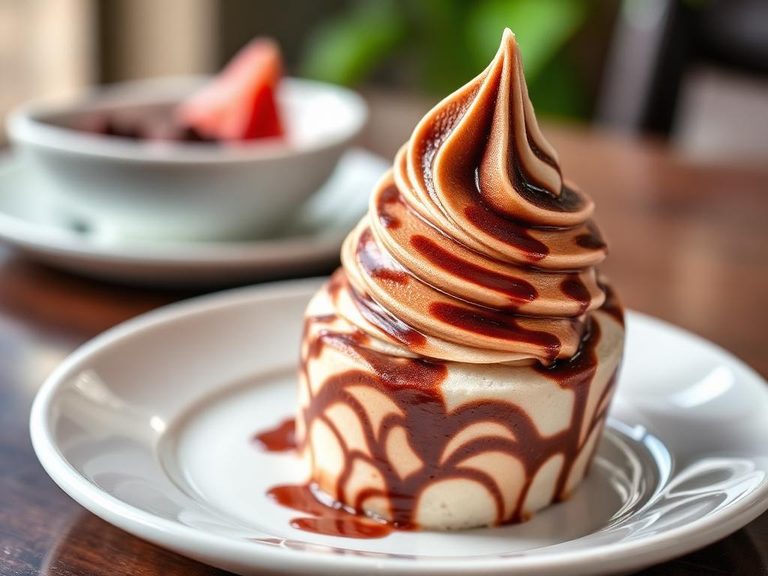
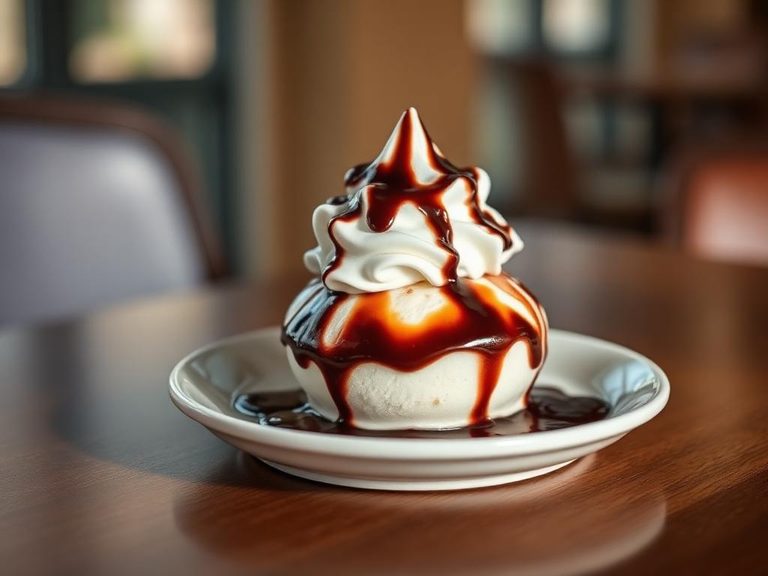
A frozen yogurt cone with chocolate is a creamy, tangy frozen dairy dessert swirled or coated in a rich chocolate shell or mixed with chocolate flavoring. The texture is typically smooth and dense, offering a refreshing contrast between the cold, slightly tart yogurt base and the sweet, indulgent chocolate. Nutritionally, it provides a moderate calorie count with a notable amount of carbohydrates, primarily from sugars.
Calorie split: 9% protein · 67% carbs · 24% fat
↓ Full nutrition💚 Why it's loved
People love it for the perfect balance of tangy yogurt and sweet chocolate, creating a nostalgic and satisfying treat. Its versatility allows for various toppings and mix-ins, making it a customizable dessert for many occasions.
⚠️ Watch-outs & how to enjoy it better
The high sugar content can lead to blood sugar spikes, making it less suitable for those managing diabetes or watching their sugar intake. To counteract this, pair it with a source of protein or healthy fat (like nuts) to slow sugar absorption, and practice portion control by enjoying a smaller serving.
Key benefits
- Provides a source of calcium from the yogurt base.
- Offers a refreshing, low-fat frozen treat option compared to traditional ice cream.
- Contains some dietary fiber, which can aid digestion.
- Serves as a quick source of energy from its carbohydrate content.
🍽️ Popular dishes

🌍 Where it's eaten
💡 Did you know?
Frozen yogurt's popularity surged in the 1970s and 1980s as a 'healthier' alternative to ice cream, with chains like TCBY (The Country's Best Yogurt) pioneering the trend.
Full nutrition (USDA data · scales with serving)
| Water | 68.6 g |
| Energy | 142 kcal |
| Protein | 3.2 g |
| Total lipid (fat) | 3.7 g |
| Carbohydrate, by difference | 23.9 g |
| Fiber, total dietary | 2.3 g |
| Total Sugars | 18.7 g |
| Calcium, Ca | 97.0 mg |
| Iron, Fe | 0.59 mg |
| Magnesium, Mg | 25.0 mg |
| Phosphorus, P | 89.0 mg |
| Potassium, K | 229 mg |
| Sodium, Na | 71.0 mg |
| Zinc, Zn | 0.30 mg |
| Copper, Cu | 0.06 mg |
| Selenium, Se | 2.0 ug |
| Vitamin C, total ascorbic acid | 0.00 mg |
| Thiamin | 0.05 mg |
| Riboflavin | 0.19 mg |
| Niacin | 0.31 mg |
| Vitamin B-6 | 0.04 mg |
| Folate, total | 18.0 ug |
| Folic acid | 7.0 ug |
| Folate, food | 12.0 ug |
| Folate, DFE | 23.0 ug |
| Choline, total | 13.9 mg |
| Vitamin B-12 | 0.07 ug |
| Vitamin B-12, added | 0.00 ug |
| Vitamin A, RAE | 37.0 ug |
| Retinol | 36.0 ug |
| Carotene, beta | 9.0 ug |
| Carotene, alpha | 0.00 ug |
| Cryptoxanthin, beta | 0.00 ug |
| Lycopene | 0.00 ug |
| Lutein + zeaxanthin | 1.0 ug |
| Vitamin E (alpha-tocopherol) | 0.12 mg |
| Vitamin E, added | 0.00 mg |
| Vitamin D (D2 + D3) | 0.10 ug |
| Vitamin K (phylloquinone) | 0.40 ug |
| Alcohol, ethyl | 0.00 g |
| Caffeine | 3.0 mg |
| Theobromine | 102 mg |
Fat & fatty acid profile (per 100g)
| Fatty acids, total saturated | 2.2 g |
| SFA 4:0 | 0.09 g |
| SFA 6:0 | 0.06 g |
| SFA 8:0 | 0.04 g |
| SFA 10:0 | 0.08 g |
| SFA 12:0 | 0.10 g |
| SFA 14:0 | 0.32 g |
| SFA 16:0 | 0.97 g |
| SFA 18:0 | 0.43 g |
| Fatty acids, total monounsaturated | 1.00 g |
| MUFA 16:1 | 0.07 g |
| MUFA 18:1 | 0.86 g |
| MUFA 20:1 | 0.00 g |
| MUFA 22:1 | 0.00 g |
| Fatty acids, total polyunsaturated | 0.23 g |
| PUFA 18:2 | 0.19 g |
| PUFA 18:3 | 0.04 g |
| PUFA 18:4 | 0.00 g |
| PUFA 20:4 | 0.00 g |
| PUFA 20:5 n-3 (EPA) | 0.00 g |
| PUFA 22:5 n-3 (DPA) | 0.00 g |
| PUFA 22:6 n-3 (DHA) | 0.00 g |
| Cholesterol | 12.0 mg |
FAQ
Is frozen yogurt healthier than ice cream?
Generally, frozen yogurt can be lower in fat and calories than traditional ice cream, but it often contains similar or higher amounts of sugar. The probiotic content in some yogurts may offer digestive benefits, but this can vary by brand and processing.
Can I eat frozen yogurt if I'm lactose intolerant?
It depends. Some frozen yogurts are made with live and active cultures that can aid in lactose digestion, but they still contain lactose. Lactose-free versions or those made with alternative milks are safer options.
How should I store leftover frozen yogurt?
Store it in an airtight container in the freezer to prevent ice crystal formation and freezer burn. For best texture, let it sit at room temperature for a few minutes before serving after freezing.
Nutrient density (calculated · NRF9.3)
Nutrient Rich Foods index: beneficial nutrients (protein, fiber, vitamins, minerals) minus saturated fat, added sugar & sodium, per 100 kcal.
NRF9.3 index — Fulgoni, Keast & Drewnowski, 2009. Computed from USDA nutrients.
Weight-loss friendliness (composite index)
Energy density 1.42 kcal/g · 9% calories from protein · 2.3 g fiber · 18.7 g sugar per 100 g.
Composite of energy density (Rolls et al., 1999), protein & fiber satiety, minus sugar. A calculated heuristic — ranks satiety-per-calorie, not a clinical measure.
Dietary load (calculated from USDA values)
Potential renal acid load. Positive = acid-forming, negative = alkaline-forming.
Sodium-to-potassium ratio: 0.31 (lower is better — aim for ≤ 1)
Sodium:potassium per WHO potassium guidance. Computed from USDA nutrients.