

Fried okra
Common food

Photo: Wikipedia
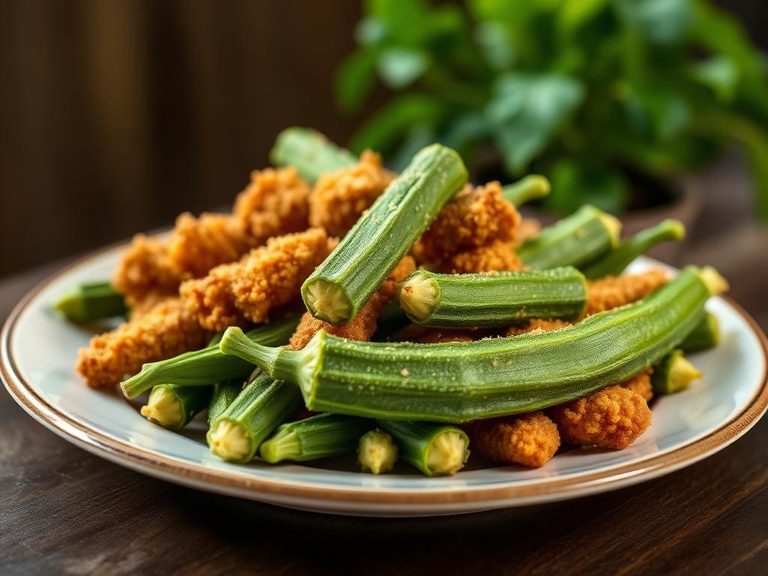
Fried okra is a beloved Southern staple where sliced okra pods are coated in a seasoned cornmeal crust and pan-fried to a golden, crispy perfection. The exterior offers a satisfying crunch, while the interior becomes tender and slightly creamy, often with a mild, grassy flavor. Nutritionally, a 100g serving provides a notable 12.84g of fat, primarily from the frying oil, alongside a modest 3.88g of plant-based protein.
Calorie split: 7% protein · 41% carbs · 52% fat
↓ Full nutrition💚 Why it's loved
People adore fried okra for its irresistible textural contrast—the shattering cornmeal crust giving way to a soft, slightly mucilaginous interior. It's a quintessential comfort food in the American South, deeply tied to cultural identity and family gatherings.
⚠️ Watch-outs & how to enjoy it better
The primary downside is its high fat content (12.84g per 100g) from frying, which increases calorie density. To counteract this, practice portion control and pair it with a lean protein like grilled chicken or a vinegar-based slaw to balance the meal. Those monitoring blood sugar should be mindful of the refined cornmeal coating, which can cause spikes; combining it with fiber-rich vegetables helps mitigate this effect.
Key benefits
- Provides plant-based protein (3.88g per 100g)
- Contains dietary fiber (1.6g per 100g)
- Source of vitamin C and vitamin K
- Offers minerals like magnesium and folate
- Can be part of a balanced diet in moderation
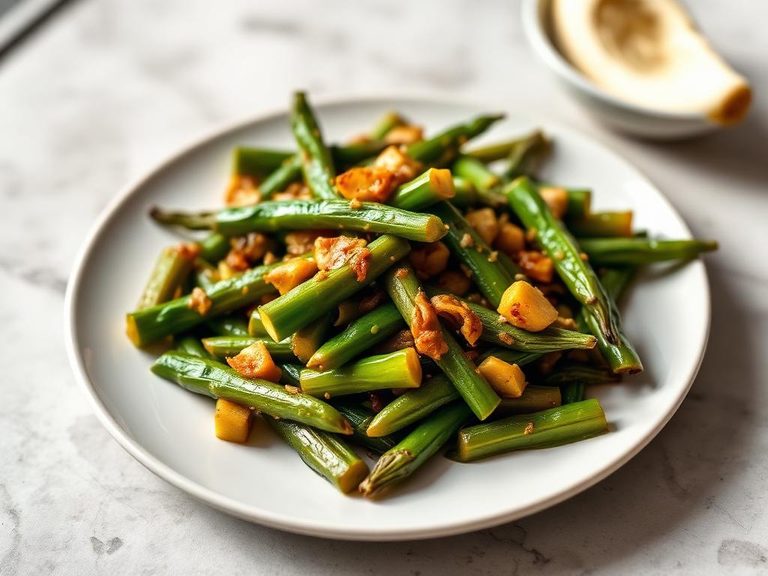
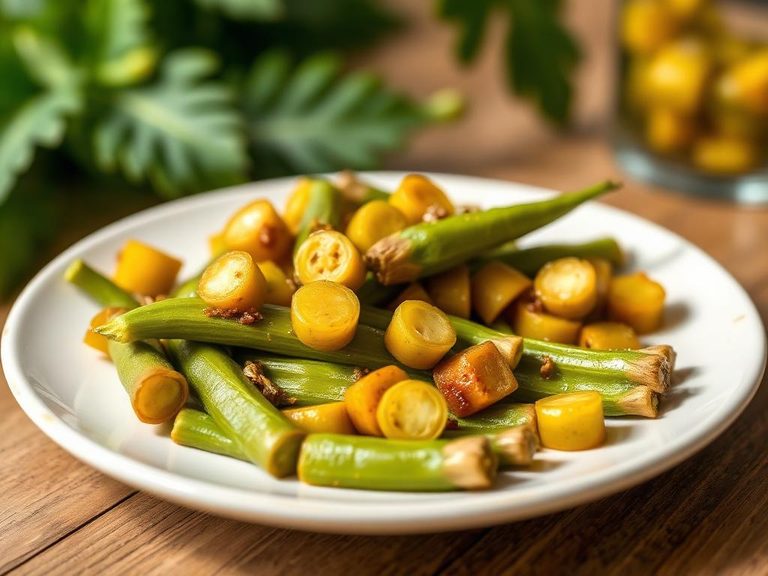
🍽️ Popular dishes
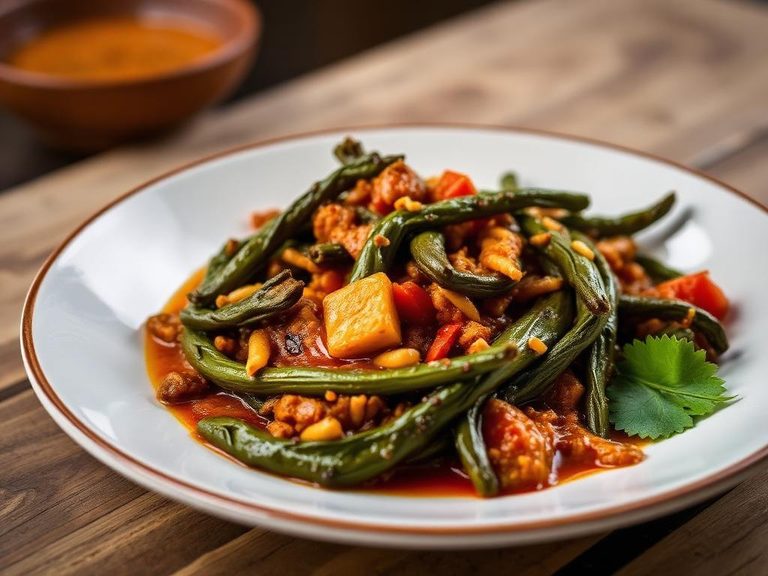
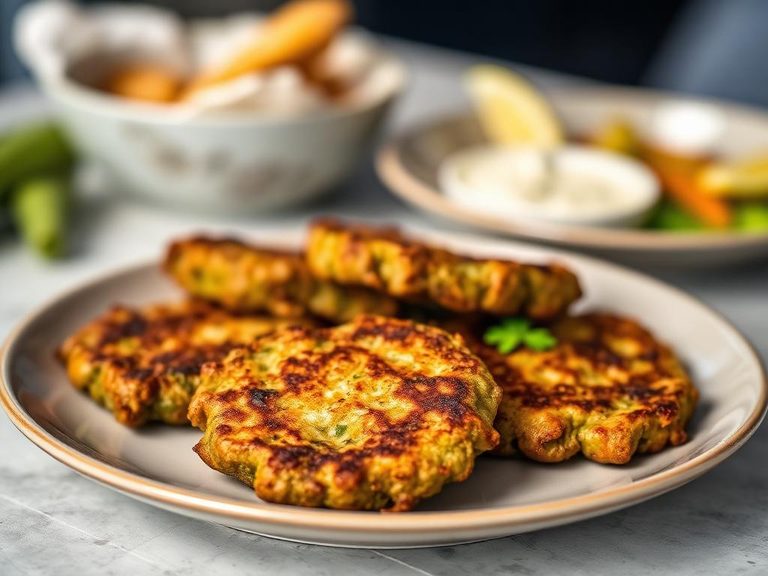
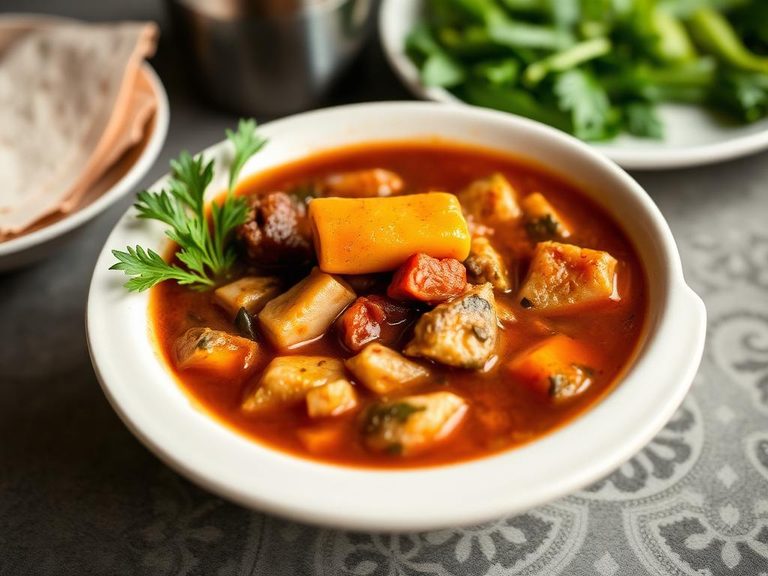
🌍 Where it's eaten
💡 Did you know?
Okra's mucilaginous (slimy) quality, which some find off-putting, is actually a prized natural thickener in classic dishes like gumbo, where it helps create the stew's signature rich, velvety texture.
Full nutrition (USDA data · scales with serving)
| Water | 59.6 g |
| Energy | 219 kcal |
| Protein | 3.9 g |
| Total lipid (fat) | 12.8 g |
| Carbohydrate, by difference | 22.4 g |
| Fiber, total dietary | 1.6 g |
| Total Sugars | 1.4 g |
| Calcium, Ca | 52.0 mg |
| Iron, Fe | 1.7 mg |
| Magnesium, Mg | 23.0 mg |
| Phosphorus, P | 53.0 mg |
| Potassium, K | 111 mg |
| Sodium, Na | 316 mg |
| Zinc, Zn | 0.44 mg |
| Copper, Cu | 0.08 mg |
| Selenium, Se | 5.5 ug |
| Vitamin C, total ascorbic acid | 3.6 mg |
| Thiamin | 0.28 mg |
| Riboflavin | 0.16 mg |
| Niacin | 2.0 mg |
| Vitamin B-6 | 0.04 mg |
| Folate, total | 79.0 ug |
| Folic acid | 33.0 ug |
| Folate, food | 46.0 ug |
| Folate, DFE | 102 ug |
| Choline, total | 15.8 mg |
| Vitamin B-12 | 0.04 ug |
| Vitamin B-12, added | 0.00 ug |
| Vitamin A, RAE | 10.0 ug |
| Retinol | 5.0 ug |
| Carotene, beta | 69.0 ug |
| Carotene, alpha | 0.00 ug |
| Cryptoxanthin, beta | 0.00 ug |
| Lycopene | 0.00 ug |
| Lutein + zeaxanthin | 176 ug |
| Vitamin E (alpha-tocopherol) | 2.4 mg |
| Vitamin E, added | 0.00 mg |
| Vitamin D (D2 + D3) | 0.10 ug |
| Vitamin K (phylloquinone) | 30.4 ug |
| Alcohol, ethyl | 0.00 g |
| Caffeine | 0.00 mg |
| Theobromine | 0.00 mg |
Fat & fatty acid profile (per 100g)
| Fatty acids, total saturated | 1.8 g |
| SFA 4:0 | 0.00 g |
| SFA 6:0 | 0.00 g |
| SFA 8:0 | 0.00 g |
| SFA 10:0 | 0.00 g |
| SFA 12:0 | 0.00 g |
| SFA 14:0 | 0.01 g |
| SFA 16:0 | 1.3 g |
| SFA 18:0 | 0.39 g |
| Fatty acids, total monounsaturated | 5.2 g |
| MUFA 16:1 | 0.05 g |
| MUFA 18:1 | 5.1 g |
| MUFA 20:1 | 0.08 g |
| MUFA 22:1 | 0.00 g |
| Fatty acids, total polyunsaturated | 4.8 g |
| PUFA 18:2 | 4.3 g |
| PUFA 18:3 | 0.54 g |
| PUFA 18:4 | 0.00 g |
| PUFA 20:4 | 0.00 g |
| PUFA 20:5 n-3 (EPA) | 0.00 g |
| PUFA 22:5 n-3 (DPA) | 0.00 g |
| PUFA 22:6 n-3 (DHA) | 0.00 g |
| Cholesterol | 11.0 mg |
FAQ
Why is my fried okra soggy instead of crispy?
Sogginess usually results from overcrowding the pan, which steams rather than fries the okra, or from using wet okra. Ensure okra is completely dry after washing, use a hot skillet with enough oil, and fry in batches.
Can I make fried okra healthier?
Yes. You can oven-bake or air-fry it with a light spray of oil to drastically reduce fat content. Using a whole-grain cornmeal or adding almond flour to the coating can also boost fiber and nutrients.
Is fried okra gluten-free?
Traditional fried okra is often gluten-free if coated solely in cornmeal. However, some recipes use wheat flour in the coating or dredge, so always check ingredients or prepare it yourself to ensure it's safe for gluten sensitivities.
Nutrient density (calculated · NRF9.3)
Nutrient Rich Foods index: beneficial nutrients (protein, fiber, vitamins, minerals) minus saturated fat, added sugar & sodium, per 100 kcal.
NRF9.3 index — Fulgoni, Keast & Drewnowski, 2009. Computed from USDA nutrients.
Weight-loss friendliness (composite index)
Energy density 2.19 kcal/g · 7% calories from protein · 1.6 g fiber · 1.4 g sugar per 100 g.
Composite of energy density (Rolls et al., 1999), protein & fiber satiety, minus sugar. A calculated heuristic — ranks satiety-per-calorie, not a clinical measure.
Dietary load (calculated from USDA values)
Potential renal acid load. Positive = acid-forming, negative = alkaline-forming.
Sodium-to-potassium ratio: 2.85 (lower is better — aim for ≤ 1)
Sodium:potassium per WHO potassium guidance. Computed from USDA nutrients.