

Fluid replacement, 5% glucose in water
Common food

Photo: Wikipedia
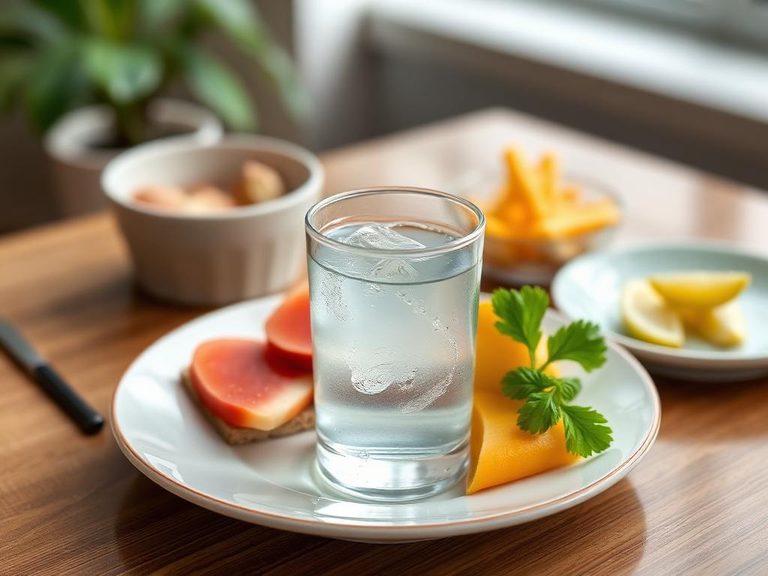
Fluid replacement, 5% glucose in water, is a clear, colorless, and nearly tasteless isotonic solution designed for rapid hydration and energy delivery. Its thin, watery texture makes it easy to consume in large quantities, especially during illness or intense physical activity. Nutritionally, it provides a minimal 0.12g of carbohydrates per 100g, primarily as glucose, to help replenish electrolytes and blood sugar without adding significant calories.
Calorie split: 0% protein · 100% carbs · 0% fat
↓ Full nutrition💚 Why it's loved
People appreciate its simplicity and effectiveness as a quick, no-fuss way to stay hydrated and energized, especially when feeling unwell or after a workout. Its neutral flavor makes it easy to tolerate even when appetite is low.
⚠️ Watch-outs & how to enjoy it better
Its plain, watery taste can be unappealing to some, and the glucose content may cause blood-sugar spikes in individuals with diabetes or insulin resistance. To mitigate this, pair it with a small amount of protein or fat (like a handful of nuts) to slow glucose absorption, and monitor portions carefully.
Key benefits
- Rapidly replenishes fluids and electrolytes
- Provides quick energy via glucose
- Gentle on the stomach during illness
- Helps prevent dehydration during exercise
- Low in calories and fat-free
🍽️ Popular dishes

🌍 Where it's eaten
💡 Did you know?
The World Health Organization recommends a specific glucose-saline solution for treating dehydration, and this 5% glucose variant is a common component in oral rehydration salts used worldwide.
Full nutrition (USDA data · scales with serving)
| Water | 99.7 g |
| Energy | 0.00 kcal |
| Protein | 0.00 g |
| Total lipid (fat) | 0.00 g |
| Carbohydrate, by difference | 0.12 g |
| Fiber, total dietary | 0.00 g |
| Total Sugars | 0.12 g |
| Calcium, Ca | 3.0 mg |
| Iron, Fe | 0.00 mg |
| Magnesium, Mg | 1.0 mg |
| Phosphorus, P | 0.00 mg |
| Potassium, K | 4.0 mg |
| Sodium, Na | 9.0 mg |
| Zinc, Zn | 0.01 mg |
| Copper, Cu | 0.01 mg |
| Selenium, Se | 0.00 ug |
| Vitamin C, total ascorbic acid | 0.00 mg |
| Thiamin | 0.00 mg |
| Riboflavin | 0.00 mg |
| Niacin | 0.00 mg |
| Vitamin B-6 | 0.00 mg |
| Folate, total | 0.00 ug |
| Folic acid | 0.00 ug |
| Folate, food | 0.00 ug |
| Folate, DFE | 0.00 ug |
| Choline, total | 0.00 mg |
| Vitamin B-12 | 0.00 ug |
| Vitamin B-12, added | 0.00 ug |
| Vitamin A, RAE | 0.00 ug |
| Retinol | 0.00 ug |
| Carotene, beta | 0.00 ug |
| Carotene, alpha | 0.00 ug |
| Cryptoxanthin, beta | 0.00 ug |
| Lycopene | 0.00 ug |
| Lutein + zeaxanthin | 0.00 ug |
| Vitamin E (alpha-tocopherol) | 0.00 mg |
| Vitamin E, added | 0.00 mg |
| Vitamin D (D2 + D3) | 0.00 ug |
| Vitamin K (phylloquinone) | 0.00 ug |
| Alcohol, ethyl | 0.00 g |
| Caffeine | 0.00 mg |
| Theobromine | 0.00 mg |
Fat & fatty acid profile (per 100g)
| Fatty acids, total saturated | 0.00 g |
| SFA 4:0 | 0.00 g |
| SFA 6:0 | 0.00 g |
| SFA 8:0 | 0.00 g |
| SFA 10:0 | 0.00 g |
| SFA 12:0 | 0.00 g |
| SFA 14:0 | 0.00 g |
| SFA 16:0 | 0.00 g |
| SFA 18:0 | 0.00 g |
| Fatty acids, total monounsaturated | 0.00 g |
| MUFA 16:1 | 0.00 g |
| MUFA 18:1 | 0.00 g |
| MUFA 20:1 | 0.00 g |
| MUFA 22:1 | 0.00 g |
| Fatty acids, total polyunsaturated | 0.00 g |
| PUFA 18:2 | 0.00 g |
| PUFA 18:3 | 0.00 g |
| PUFA 18:4 | 0.00 g |
| PUFA 20:4 | 0.00 g |
| PUFA 20:5 n-3 (EPA) | 0.00 g |
| PUFA 22:5 n-3 (DPA) | 0.00 g |
| PUFA 22:6 n-3 (DHA) | 0.00 g |
| Cholesterol | 0.00 mg |
FAQ
What is fluid replacement, 5% glucose in water?
It is a clear, isotonic solution containing 5% glucose (sugar) in water, designed to replenish fluids and provide quick energy, often used for hydration during illness or exercise.
Is it suitable for people with diabetes?
While it can be used in moderation, the glucose content may cause blood-sugar spikes. Individuals with diabetes should consult a healthcare provider before use and consider pairing it with protein or fat to slow absorption.
How does it differ from plain water?
Unlike plain water, it contains glucose to provide energy and help with electrolyte balance, making it more effective for rapid rehydration in cases of dehydration or intense activity.
Dietary load (calculated from USDA values)
Potential renal acid load. Positive = acid-forming, negative = alkaline-forming.
Sodium-to-potassium ratio: 2.25 (lower is better — aim for ≤ 1)
Sodium:potassium per WHO potassium guidance. Computed from USDA nutrients.