

Creamsicle
Common food
Photo: Wikipedia
The Creamsicle is a nostalgic frozen treat, typically a vanilla ice cream or sherbet core coated in a vibrant orange-flavored ice shell. Its signature appeal lies in the delightful contrast between the creamy, sweet interior and the crisp, tangy exterior, creating a refreshing, multi-textured experience. Nutritionally, it's a high-carbohydrate, sugary snack with minimal protein or fat, making it a pure indulgence rather than a substantial food source.
Calorie split: 4% protein · 79% carbs · 17% fat
↓ Full nutrition💚 Why it's loved
People adore the Creamsicle for its perfect balance of sweet and tangy, a nostalgic flavor that evokes summer and childhood. Its iconic orange-and-white color and the satisfying crack of the ice shell make it a beloved, versatile treat for all ages.
⚠️ Watch-outs & how to enjoy it better
The high sugar content (18.46g per 100g) can cause rapid blood-sugar spikes, making it unsuitable for those managing diabetes or insulin resistance. To mitigate this, pair it with a source of protein or healthy fat (like a handful of nuts) and practice strict portion control, enjoying it as an occasional treat rather than a daily habit.
Key benefits
- Provides quick energy from simple carbohydrates
- Offers a refreshing, cooling sensation
- Serves as a classic, comforting dessert or snack
- Low in fat compared to many ice cream varieties
- Contains no fiber, making it easy to digest for some
🍽️ Popular dishes
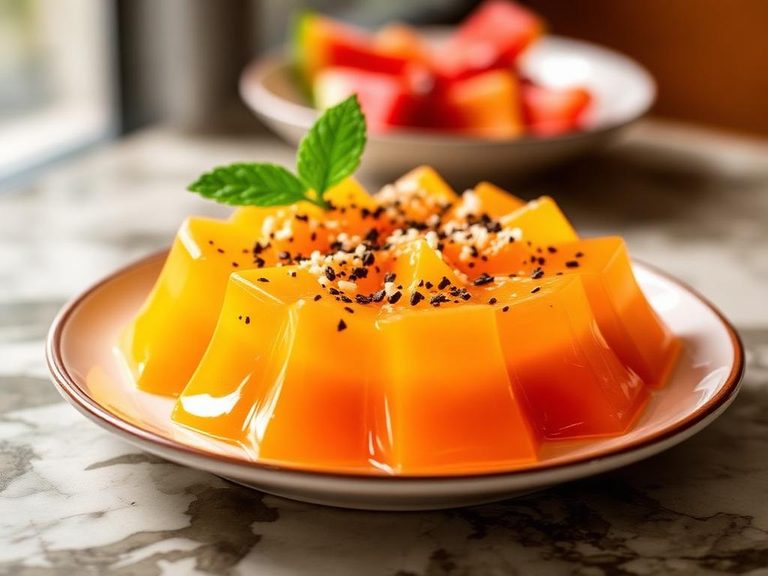
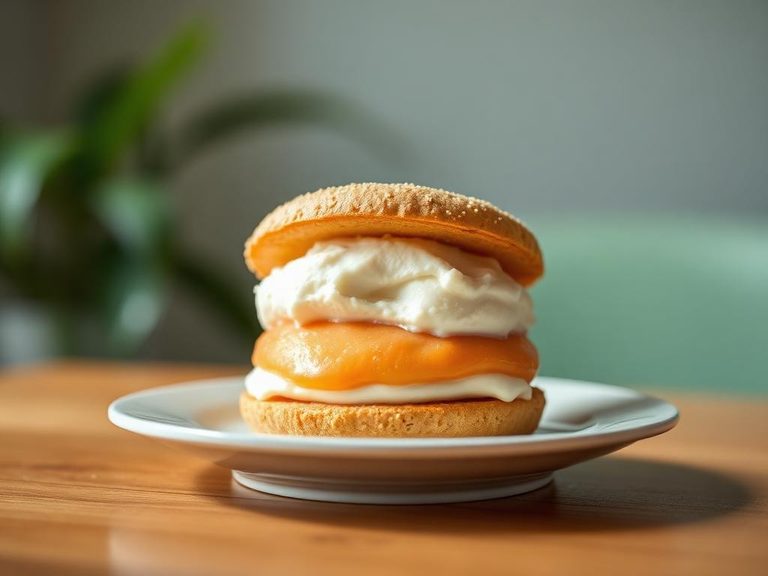
🌍 Where it's eaten
💡 Did you know?
The original Creamsicle was invented in 1923 by Frank Epperson, who had previously invented the Popsicle, and was initially called the 'Creamsicle' because it was a cream-filled ice pop.
Full nutrition (USDA data · scales with serving)
| Water | 61.8 g |
| Energy | 165 kcal |
| Protein | 1.5 g |
| Total lipid (fat) | 3.1 g |
| Carbohydrate, by difference | 32.8 g |
| Fiber, total dietary | 0.00 g |
| Total Sugars | 18.5 g |
| Calcium, Ca | 62.0 mg |
| Iron, Fe | 0.00 mg |
| Magnesium, Mg | 12.0 mg |
| Phosphorus, P | 84.0 mg |
| Potassium, K | 174 mg |
| Sodium, Na | 46.0 mg |
| Zinc, Zn | 0.66 mg |
| Copper, Cu | 0.02 mg |
| Selenium, Se | 1.8 ug |
| Vitamin C, total ascorbic acid | 13.8 mg |
| Thiamin | 0.04 mg |
| Riboflavin | 0.21 mg |
| Niacin | 0.11 mg |
| Vitamin B-6 | 0.04 mg |
| Folate, total | 6.0 ug |
| Folic acid | 0.00 ug |
| Folate, food | 6.0 ug |
| Folate, DFE | 6.0 ug |
| Choline, total | 20.4 mg |
| Vitamin B-12 | 0.36 ug |
| Vitamin B-12, added | 0.00 ug |
| Vitamin A, RAE | 93.0 ug |
| Retinol | 92.0 ug |
| Carotene, beta | 10.0 ug |
| Carotene, alpha | 0.00 ug |
| Cryptoxanthin, beta | 2.0 ug |
| Lycopene | 0.00 ug |
| Lutein + zeaxanthin | 2.0 ug |
| Vitamin E (alpha-tocopherol) | 0.09 mg |
| Vitamin E, added | 0.00 mg |
| Vitamin D (D2 + D3) | 0.10 ug |
| Vitamin K (phylloquinone) | 0.30 ug |
| Alcohol, ethyl | 0.00 g |
| Caffeine | 0.00 mg |
| Theobromine | 0.00 mg |
Fat & fatty acid profile (per 100g)
| Fatty acids, total saturated | 1.8 g |
| SFA 4:0 | 0.10 g |
| SFA 6:0 | 0.06 g |
| SFA 8:0 | 0.04 g |
| SFA 10:0 | 0.07 g |
| SFA 12:0 | 0.07 g |
| SFA 14:0 | 0.30 g |
| SFA 16:0 | 0.82 g |
| SFA 18:0 | 0.35 g |
| Fatty acids, total monounsaturated | 0.82 g |
| MUFA 16:1 | 0.05 g |
| MUFA 18:1 | 0.77 g |
| MUFA 20:1 | 0.00 g |
| MUFA 22:1 | 0.00 g |
| Fatty acids, total polyunsaturated | 0.14 g |
| PUFA 18:2 | 0.09 g |
| PUFA 18:3 | 0.05 g |
| PUFA 18:4 | 0.00 g |
| PUFA 20:4 | 0.00 g |
| PUFA 20:5 n-3 (EPA) | 0.00 g |
| PUFA 22:5 n-3 (DPA) | 0.00 g |
| PUFA 22:6 n-3 (DHA) | 0.00 g |
| Cholesterol | 8.0 mg |
FAQ
What is the main difference between a Creamsicle and a regular popsicle?
A Creamsicle has a creamy, often vanilla-flavored ice cream or sherbet core, while a regular popsicle is typically a solid block of flavored ice or juice.
Is a Creamsicle a healthy snack?
No, it is a high-sugar, low-nutrient dessert. It provides quick energy but lacks significant protein, fiber, or vitamins, so it should be consumed in moderation.
Can I make a Creamsicle at home?
Yes, you can make homemade Creamsicles by filling popsicle molds with a layer of orange juice or sherbet and a layer of vanilla ice cream or yogurt, then freezing them.
What are common allergens in a Creamsicle?
Common allergens include milk (from the ice cream or sherbet) and sometimes soy or egg in the ice cream base. Always check the ingredient label if you have allergies.
Nutrient density (calculated · NRF9.3)
Nutrient Rich Foods index: beneficial nutrients (protein, fiber, vitamins, minerals) minus saturated fat, added sugar & sodium, per 100 kcal.
NRF9.3 index — Fulgoni, Keast & Drewnowski, 2009. Computed from USDA nutrients.
Weight-loss friendliness (composite index)
Energy density 1.65 kcal/g · 4% calories from protein · 0.0 g fiber · 18.5 g sugar per 100 g.
Composite of energy density (Rolls et al., 1999), protein & fiber satiety, minus sugar. A calculated heuristic — ranks satiety-per-calorie, not a clinical measure.
Dietary load (calculated from USDA values)
Potential renal acid load. Positive = acid-forming, negative = alkaline-forming.
Sodium-to-potassium ratio: 0.26 (lower is better — aim for ≤ 1)
Sodium:potassium per WHO potassium guidance. Computed from USDA nutrients.